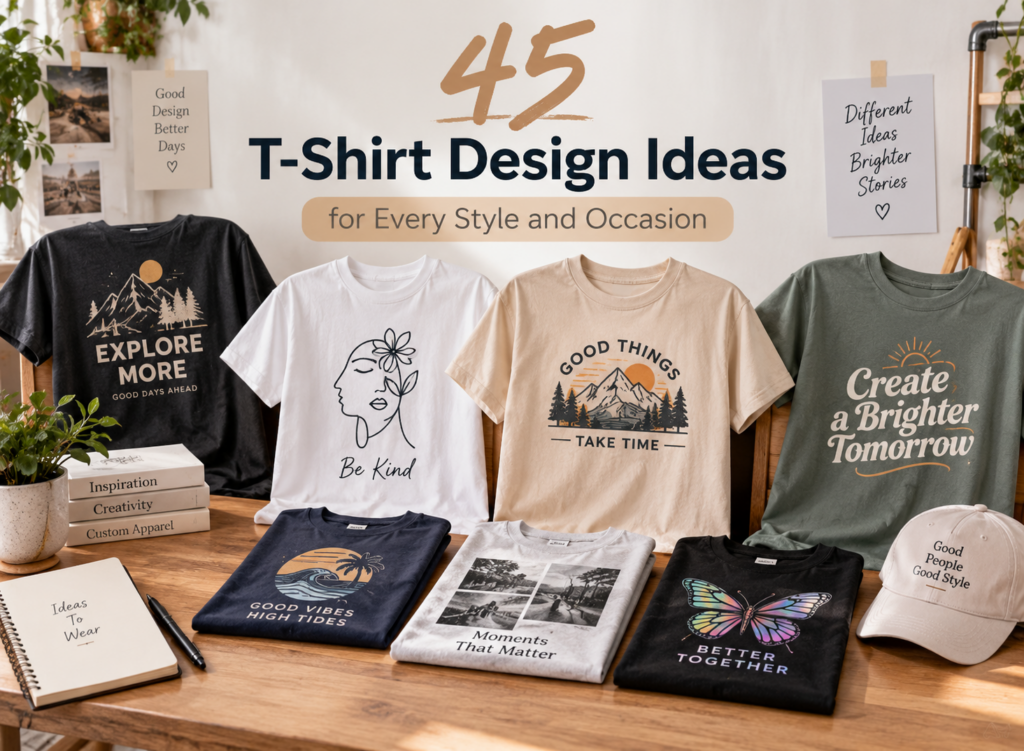
Custom T-shirts can do much more than display a logo or a simple graphic. The right design can represent a community, celebrate a milestone, promote an event, support a cause, strengthen brand identity, or become merchandise people genuinely enjoy wearing.
Finding inspiration is usually not the difficult part. The harder decision is narrowing different T-shirt design ideas into a direction that suits the people wearing the shirt and still works when it becomes a real garment. A concept that looks impressive on a screen may need changes in artwork scale, placement, color, or printing method before it works in production.
The 45 ideas below cover graphic styles, typography, layouts, hobbies, seasonal themes, business apparel, events, schools, and sports. Whether you are looking for T-shirt design inspiration, unique shirt designs, ideas for designs on T-shirts, or a direction for custom shirts, use the examples to find a concept first, then check the later sections before preparing artwork for production.
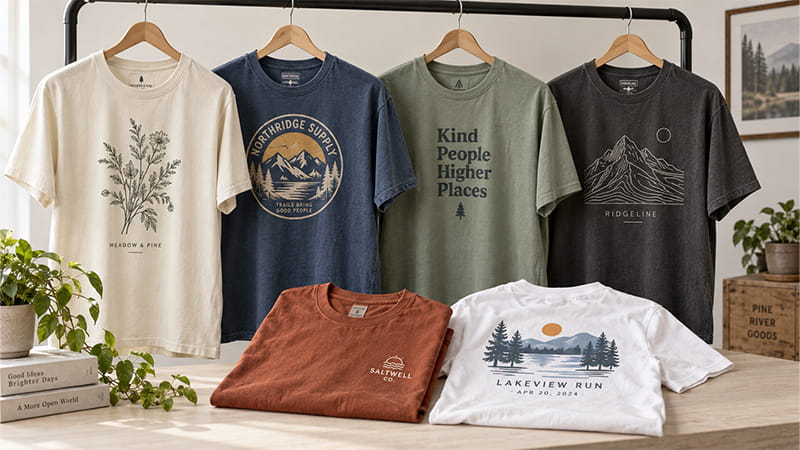
Graphic T-Shirt Design Ideas
Graphic T-shirt design ideas are useful when the artwork itself needs to carry the personality of the shirt. From simple illustrations to visual storytelling, the strongest graphics create a recognizable focal point rather than filling every available area.
1. Minimalist Line Art Designs
Minimalist line art uses clean outlines and simple shapes to create a modern, understated look. Plants, animals, buildings, products, faces, and everyday objects can all be reduced to a few recognizable lines.
This style works especially well for lifestyle brands, cafés, creative projects, and events where a large, heavily promotional graphic would feel out of place. It can also adapt easily across several garment colors when the artwork is kept clear and simple.
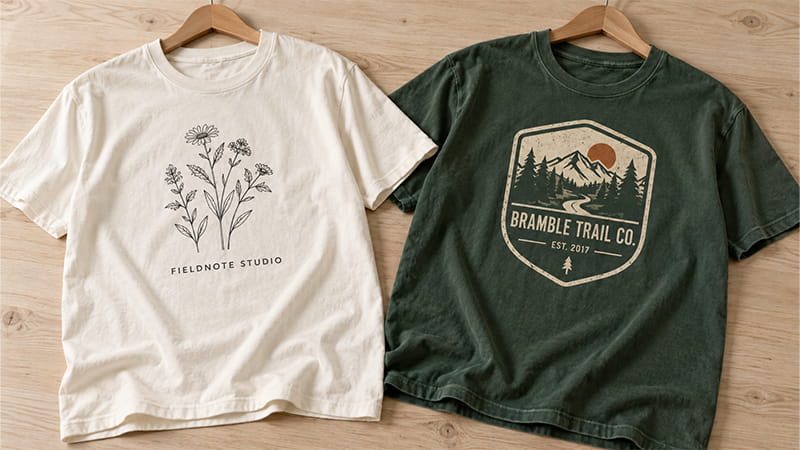
2. Vintage-Inspired T-Shirt Designs
Vintage-inspired designs use retro typography, faded colors, distressed textures, badge layouts, and older visual references to create a sense of history.
They are well suited to anniversary shirts, outdoor projects, restaurants, local businesses, tourism merchandise, and community events. Whenever possible, use details connected to the real story—a founding year, old packaging, an early product, or a local reference—rather than applying a generic distressed effect.
3. Y2K-Inspired T-Shirt Designs
Y2K designs bring back the visual language of the late 1990s and early 2000s through futuristic fonts, chrome effects, gradients, digital graphics, and playful shapes.
The style works naturally for youth-focused brands, music events, gaming communities, and fashion merchandise. Keeping one dominant Y2K element usually creates a cleaner result than combining every effect in a single shirt.
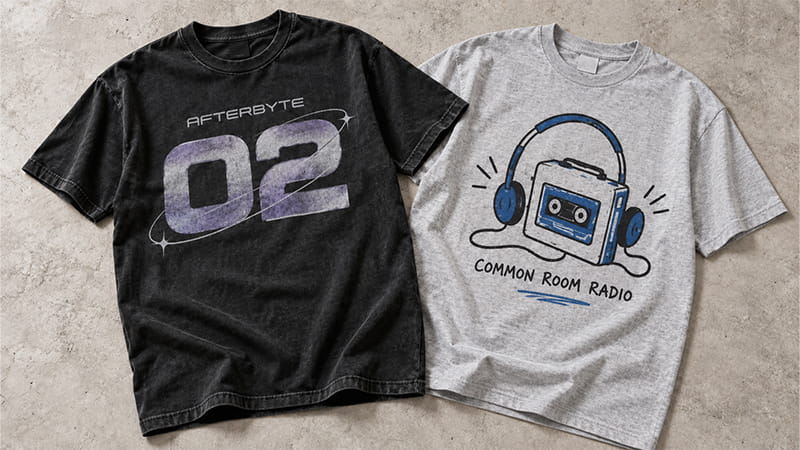
4. Hand-Drawn Illustration Designs
Hand-drawn graphics can make a shirt feel more personal than highly polished digital artwork. Sketch-style characters, handwritten elements, illustrated objects, and imperfect lines add personality without requiring an extremely complicated composition.
Schools, clubs, cafés, local businesses, and community events can use this approach when a friendly or approachable look is more appropriate than formal branding.
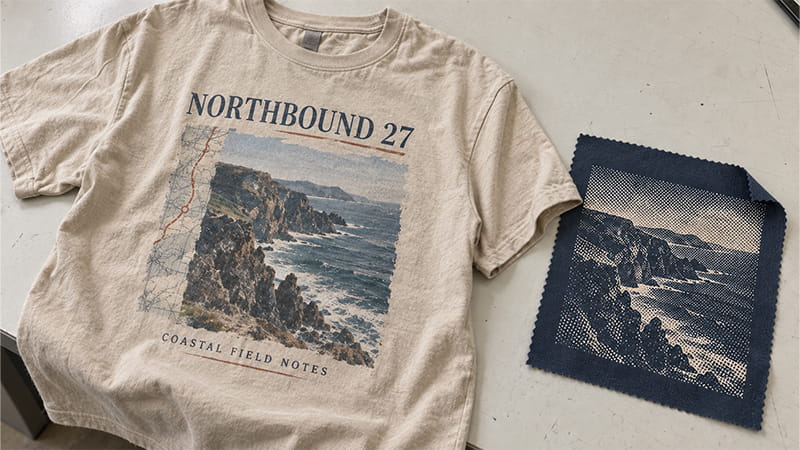
5. Collage-Style Designs
Collage designs combine photographs, illustrations, textures, typography, and graphic elements within one composition. They can be particularly useful for event stories, destinations, brand journeys, music themes, or creative campaigns that need more than one visual reference.
The goal is not to fit more elements onto the shirt; it is to make several elements support one clear idea.
If a collage includes third-party photographs, illustrations, logos, or other creative material, confirm that the necessary rights are available before commercial production.
6. Halftone Graphic Designs
Halftone effects use dots and tonal transitions to turn photographs and illustrations into artwork with a printed, retro-inspired character.
Portraits, landmarks, sports imagery, musicians, and event photography can work particularly well in this style. Halftones can also help a photograph feel more integrated with the shirt instead of appearing like a rectangular image placed on the fabric.
7. Geometric Pattern Designs
Geometric designs use lines, blocks, circles, grids, and repeated shapes to create a structured visual language.
They can suit technology brands, creative teams, architecture-related businesses, modern events, and merchandise collections. Scale, spacing, repetition, and negative space often have more impact here than simply adding more shapes.
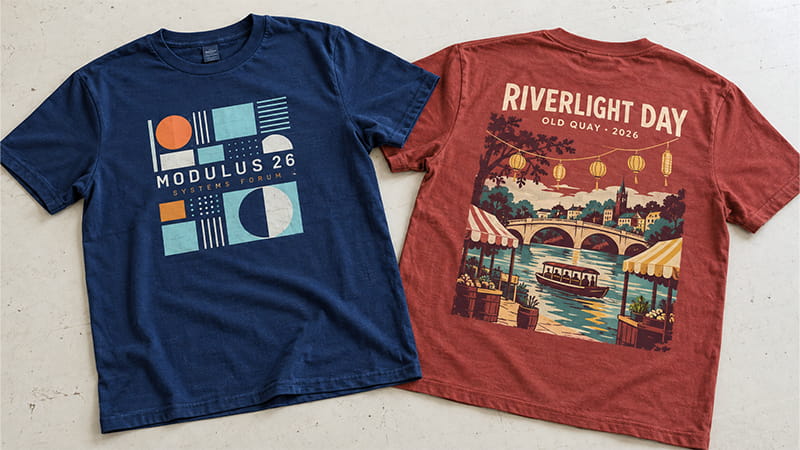
8. Storytelling Illustration Designs
Some memorable custom T-shirt designs use several related elements to tell a story rather than relying on one isolated graphic.
A company journey, travel route, local culture, team achievement, product story, or event experience can be translated into a visual composition. This gives the artwork meaning beyond decoration and can make branded or commemorative shirts more distinctive.
Typography T-Shirt Design Ideas
Typography-based T-shirt design ideas use words, phrases, numbers, dates, and lettering as the main visual element. The font is not simply a container for the message; it becomes part of the personality of the design.
9. Bold Statement Typography
Large lettering can turn a short phrase into the entire design. This works well for event themes, team slogans, community messages, campaigns, and merchandise.
When the message needs to be understood quickly, readability usually matters more than decorative complexity.
Consider how the text looks at the intended print size rather than judging it only while zoomed in on a design screen.
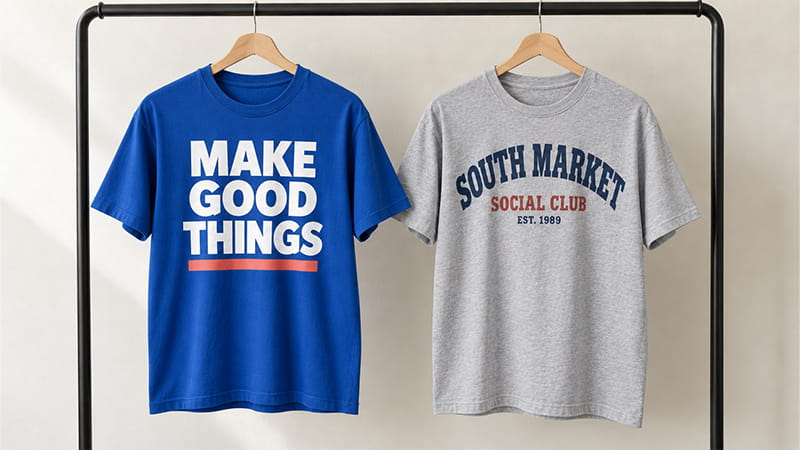
10. Retro Typography Designs
Retro fonts, arched layouts, badge compositions, and old-school lettering can give a shirt an immediately recognizable personality.
This style fits sports-inspired merchandise, cafés, outdoor brands, local businesses, anniversaries, and events. Pairing the typography with a meaningful year, location, or small graphic can make the result feel more specific.
11. Handwritten Typography
Handwritten lettering gives shirts a more personal and informal character. Brush lettering, marker-style words, signatures, and loose scripts can work for lifestyle brands, restaurants, creative projects, and community events.
The main risk is readability. A beautiful script that becomes difficult to understand at the actual print size may need simplified letterforms or more spacing.
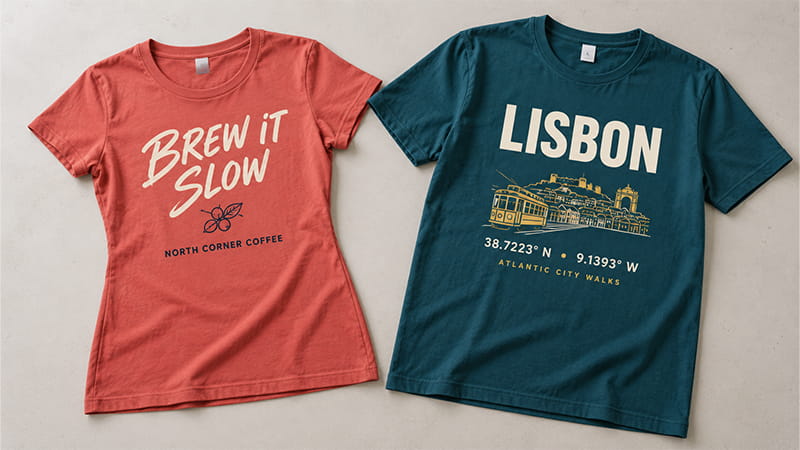
12. Location-Based Typography
City names, neighborhoods, coordinates, airport codes, landmarks, and local phrases can become the focus of a shirt without requiring a detailed illustration.
Location-based designs work naturally for tourism projects, museums, souvenir collections, hotels, festivals, travel communities, and local businesses because the shirt becomes associated with a real place or memory.
13. Number-Based Designs
Numbers can represent founding years, race distances, team numbers, graduation years, anniversaries, achievements, or important dates.
Rather than treating the number as supporting information, enlarge it or integrate it into the main composition. This works especially well for schools, sports teams, company milestones, races, and commemorative apparel.
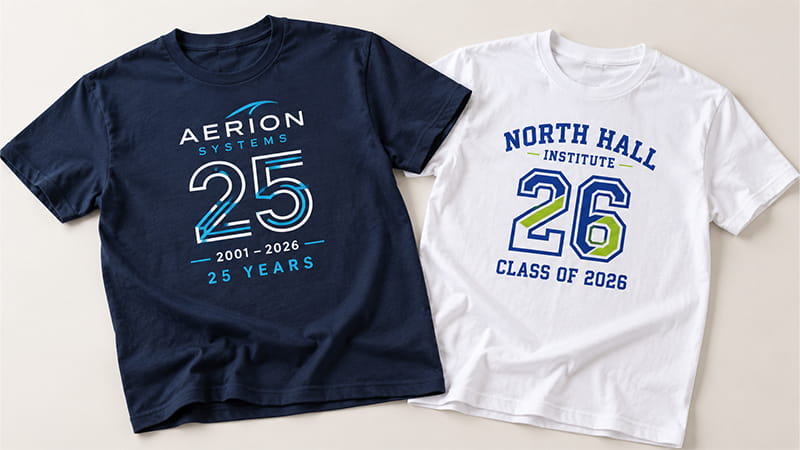
T-Shirt Placement and Layout Ideas
A strong graphic can still feel wrong if its shape and placement do not work together. The chest, full front, back, sleeve, pocket area, and all-over print area each create different visual possibilities.
Artwork shape and placement should be planned together rather than treated as two separate decisions.
For practical starting points for front, back, sleeve, and polo positions, see the T-shirt logo placement guide. TOMAS Crafts recommends confirming final placement on the actual garment, size range, and decoration method before bulk production.
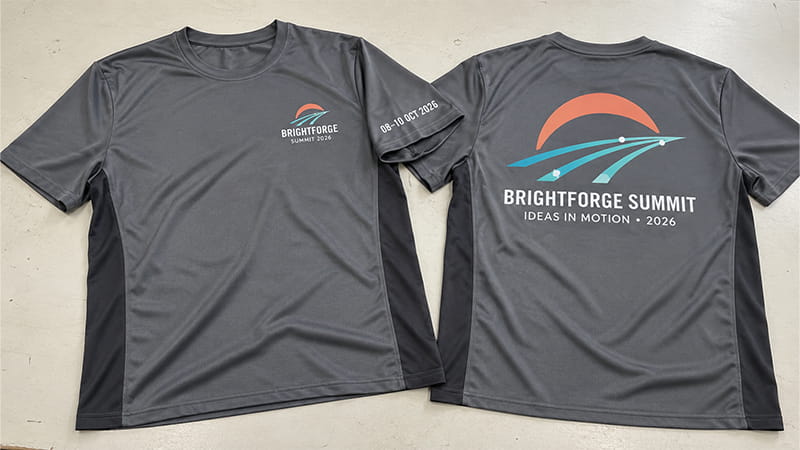
14. Front and Back Combination Designs
Using both sides of the shirt creates room for visual hierarchy. A small logo, icon, or phrase can sit on the front while the larger illustration, event theme, or storytelling graphic appears on the back.
This format is useful for company teams, conferences, festivals, sports groups, and branded merchandise because identification and creative artwork do not have to compete in the same print area.
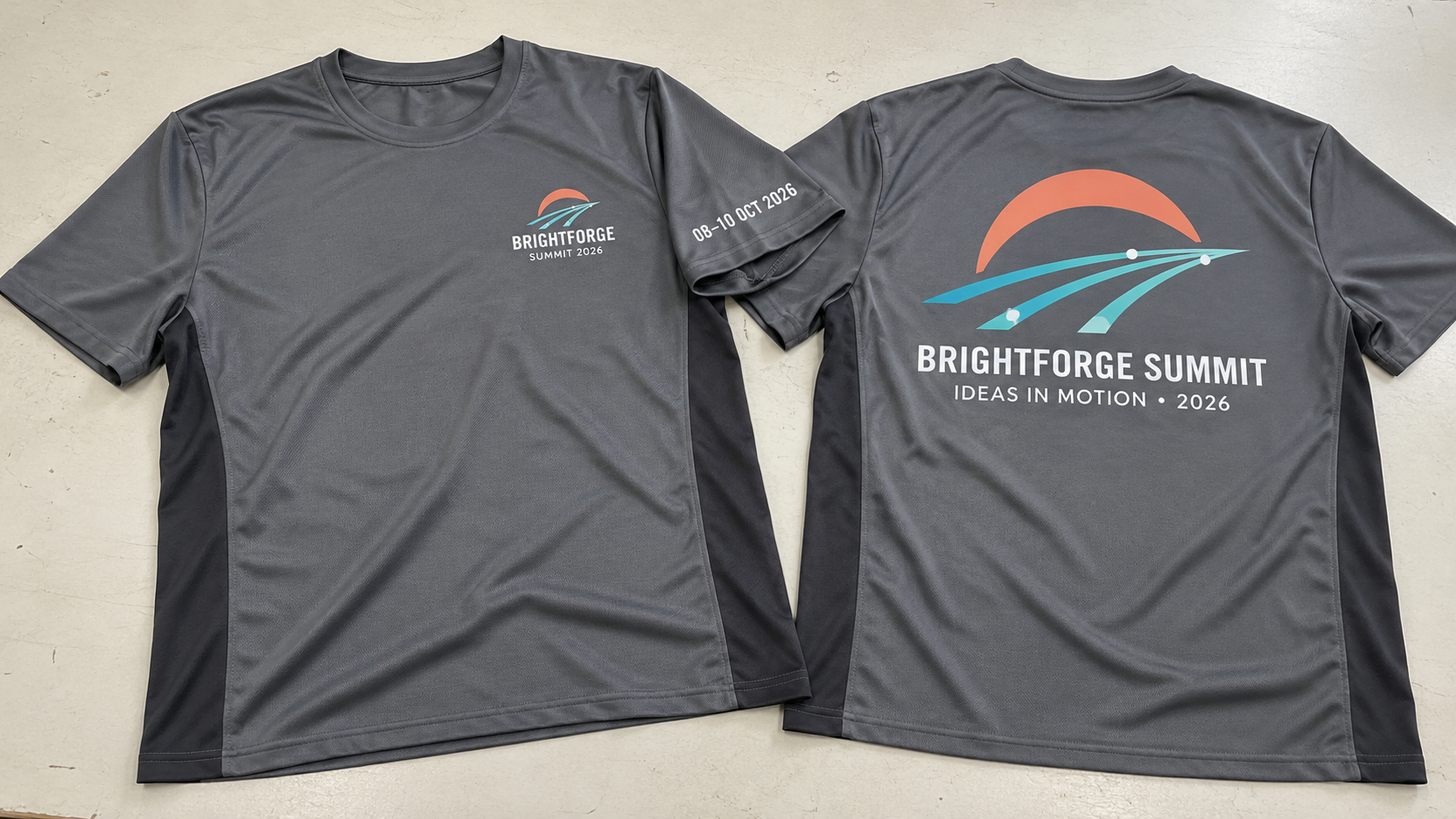
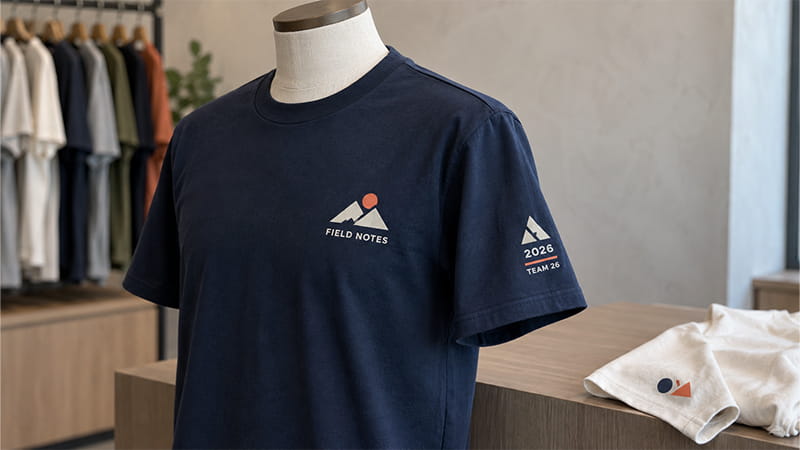
15. Sleeve Print Designs
Sleeves are useful for secondary information such as dates, team names, small logos, sponsor marks, or short phrases.
They can add identity without overcrowding the main graphic. For bulk projects, available sleeve width and seam clearance should be checked on the selected garment rather than assumed from a flat digital template.
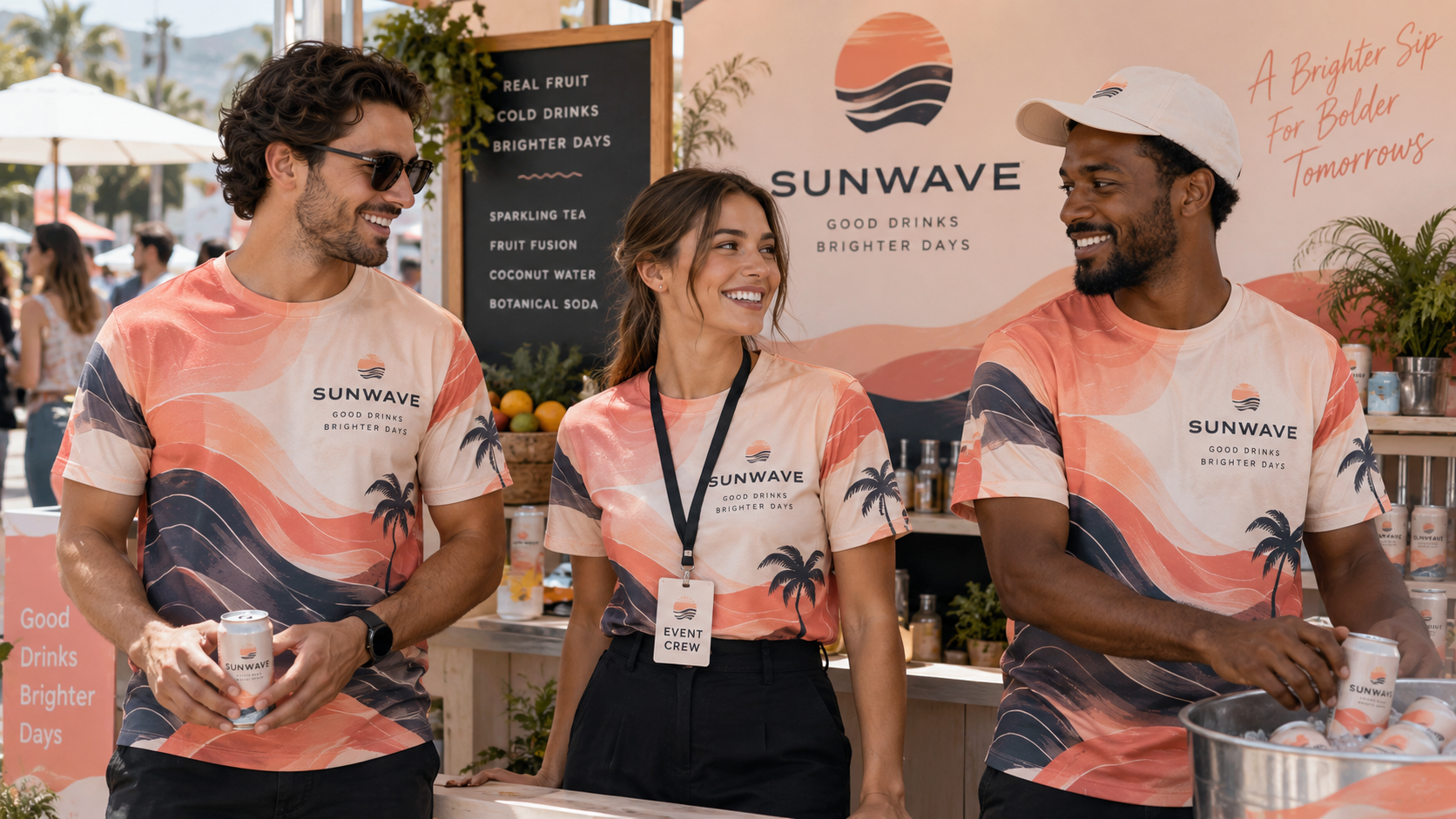
16. All-Over Print T shirt Designs
All-over prints turn the entire garment into the design surface. They work well for sportswear, creative merchandise, fashion-inspired projects, and special campaigns.
A repeat pattern, gradient, abstract artwork, or large visual system usually works better than simply enlarging a conventional chest graphic.
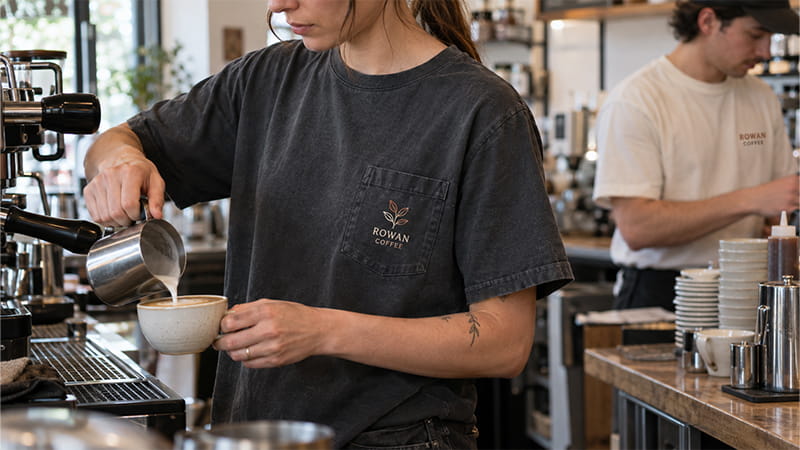
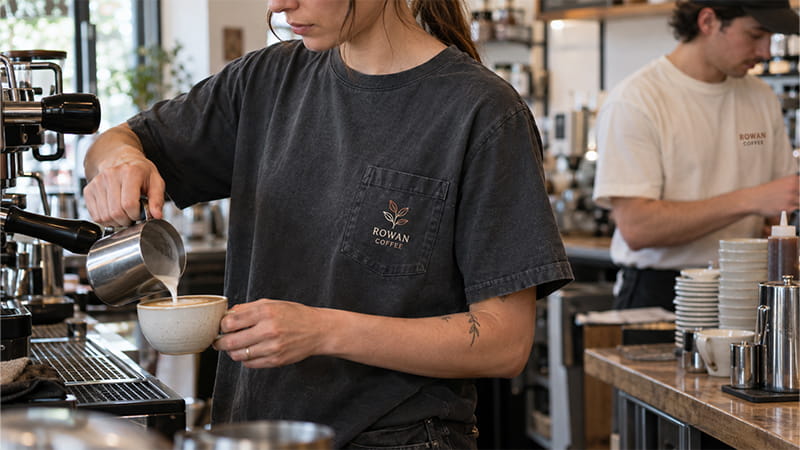
17. Pocket-Area Designs
A small left-chest or pocket-area design creates a quieter, more understated result.
This layout is useful for cafés, lifestyle brands, staff apparel, and companies that want recognizable branding without making the front of the shirt feel dominated by a logo.
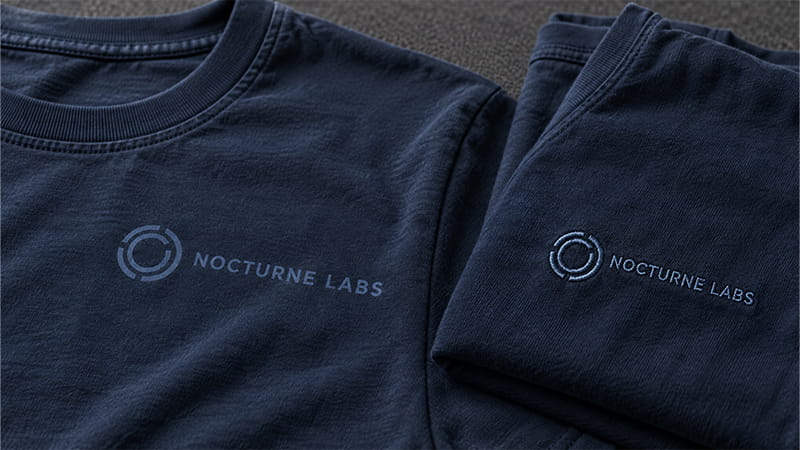
18. Tone-on-Tone Designs
Tone-on-tone designs use a print or embroidery color close to the garment color, creating contrast through texture and subtle tonal difference.
This approach can work well for branded apparel and merchandise when the desired impression is restrained rather than highly promotional. Always check the actual color combination because subtle contrast should not become invisible contrast.
Hobby and Lifestyle T-Shirt Design Ideas
Hobby and lifestyle T-shirt ideas connect the shirt with something the wearer already cares about. The more specific the reference is, the easier it becomes to avoid a generic stock-graphic look.
19. Travel-Inspired T-Shirt Designs
Travel designs can use maps, coordinates, route lines, local symbols, landscapes, transportation references, and destination illustrations.
A shirt based on a real journey, neighborhood, or landmark can feel more personal than simply printing a city name. These designs work for travel groups, tourism businesses, museums, attractions, souvenir shops, resorts, and destination events.
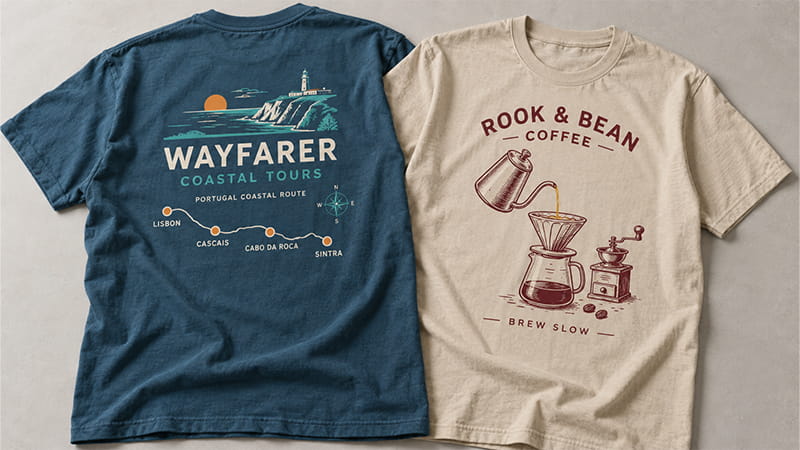
20. Coffee and Café-Inspired Designs
Coffee-themed designs can draw from brewing tools, beans, cups, espresso equipment, café typography, signature drinks, or the character of a particular shop.
For cafés and beverage brands, the strongest merchandise often uses the culture around the product rather than turning the shirt into a large advertisement.
21. Outdoor and Adventure Designs
Mountains, forests, camping, trails, contour lines, elevation data, park references, and local landscapes all provide material for outdoor shirts.
Adding a real trail, campsite, mountain profile, or event route makes the artwork more specific and can work well for outdoor brands, hiking communities, tourism programs, camps, and adventure events.
22. Pet-Themed T-Shirt Designs
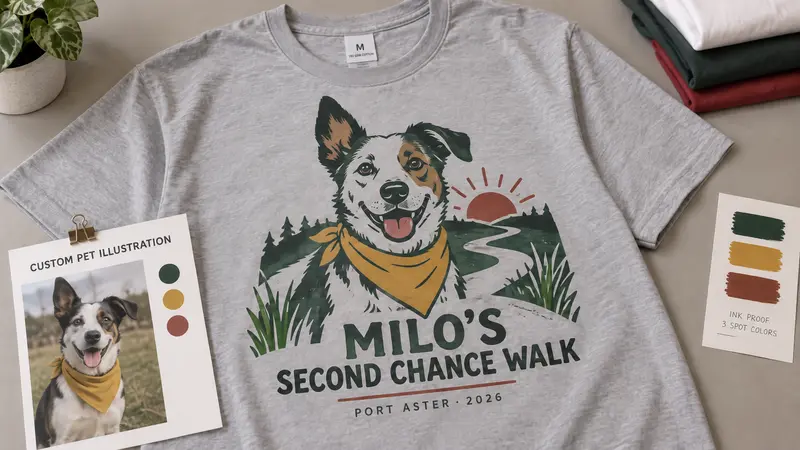
Pet shirts can feature custom illustrations, breed references, humorous expressions, silhouettes, paw-inspired elements, or owner-and-pet themes.
The emotional connection already exists, so originality often comes from the illustration style or a specific story rather than adding more text.
23. Food and Beverage Designs
Signature dishes, ingredients, menu typography, cooking tools, local foods, food characters, and packaging-inspired illustrations can all become T-shirt graphics.
Restaurants, food festivals, beverage companies, culinary events, and destination businesses can use the food itself as the design subject instead of depending entirely on the business logo.
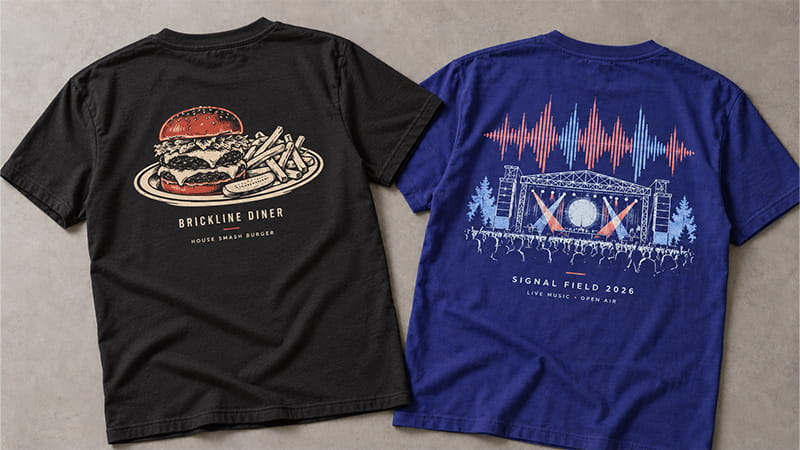
24. Music-Inspired Designs
Music designs can use instruments, waveforms, stage graphics, tour-poster layouts, abstract interpretations of genres, or original visual references connected to a performance.
For concerts and festivals, combining the visual with a date or venue can turn the shirt into a record of the experience.
When designing commercial shirts, avoid assuming that an artist name, album artwork, lyric, or other recognizable third-party material can be freely reproduced.
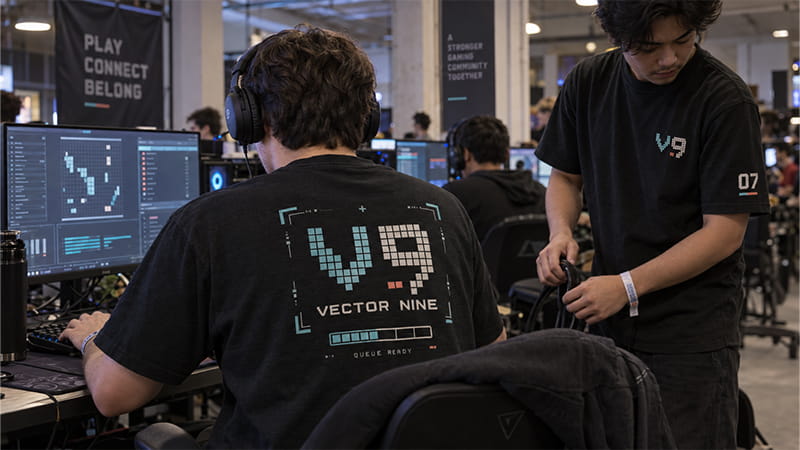
25. Gaming-Inspired Designs
Pixel graphics, original game-like interfaces, loading bars, controllers, digital typography, and esports team elements can communicate gaming culture without copying an existing game.
For clubs, esports events, and gaming communities, inside references or original team graphics often create stronger identity than generic controller artwork.
Seasonal and Occasion-Based T-Shirt Design Ideas
Seasonal T-shirt design ideas connect with celebrations, milestones, and limited-time events. The occasion provides the context, but the design still needs a visual direction beyond simply adding a holiday icon.
26. Holiday-Themed T-Shirts
Holiday shirts can use seasonal illustrations, patterns, themed typography, staff messages, or campaign graphics.
They work for company celebrations, community events, customer promotions, and group activities. For recurring programs, a consistent visual system can also make it easier to create a new variation each year.
27. Halloween T-Shirt Designs
Halloween designs can range from classic spooky graphics to minimalist ghosts, original characters, vintage horror styling, or humorous typography.
Using a distinctive illustration style or unexpected composition can make familiar Halloween subjects feel less generic.
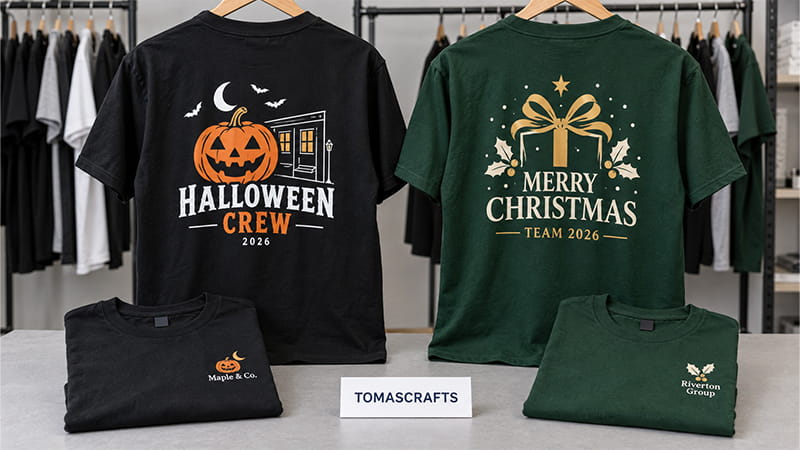
28. Christmas T-Shirt Designs
Christmas shirts can use winter illustrations, festive patterns, tree or ornament motifs, team messages, humorous seasonal graphics, or designs connected to a specific company or event.
For employee programs and corporate celebrations, a more restrained graphic can give the shirt value beyond the day of the event.
29. Birthday T-Shirt Designs
Names, ages, dates, inside jokes, personal interests, and theme graphics can turn birthday shirts into something specific to the person or group.
For milestone birthdays, the year or age can become a major visual element rather than a small piece of supporting text.
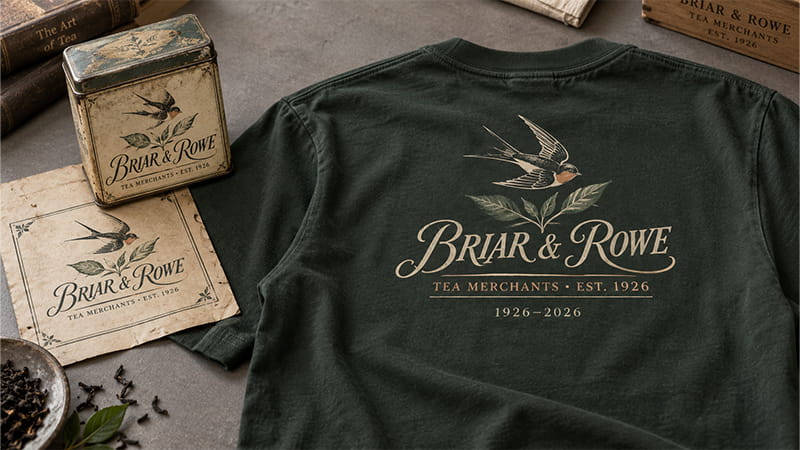
30. Anniversary and Milestone Designs
Anniversary shirts can celebrate company milestones, school reunions, community history, personal achievements, and organizational anniversaries.
An archive logo, founding year, historic product, old photograph, first location, or milestone number can provide stronger material than a generic “anniversary” graphic.
Business and Brand T-Shirt Design Ideas
Company T-shirt ideas need to solve a different problem from personal designs. Brand recognition matters, but making the logo larger is not always the best way to achieve it.
The strongest branded shirts balance brand visibility with wearability.
For companies ordering custom shirts for employees, events, campaigns, trade shows, or merchandise, this often means using the wider brand identity—not only the primary logo—as design material.
31. Minimal Logo Apparel
A small logo combined with clean spacing can create a professional, easy-to-wear result.
This approach works well for employee apparel, café teams, conferences, retail staff, and company merchandise where the shirt should remain useful outside a single event.
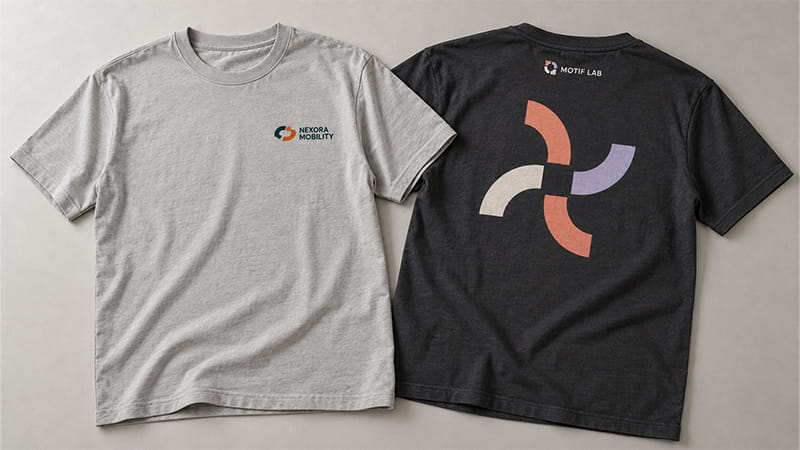
32. Deconstructed Logo Designs
A brand identity may contain useful elements beyond the complete logo: icons, initials, patterns, shapes, typography, colors, or recognizable visual details.
Turning one of those elements into the main graphic can create custom T-shirt designs that remain branded without looking like standard promotional uniforms.
33. Employee Team Shirt Designs
Employee apparel can combine the company identity with department names, internal themes, team graphics, regional references, or event-specific elements.
For organizations with several teams, one master design can be adapted through smaller secondary changes rather than developing unrelated shirts for every department. This keeps brand identity more consistent and simplifies artwork approval.
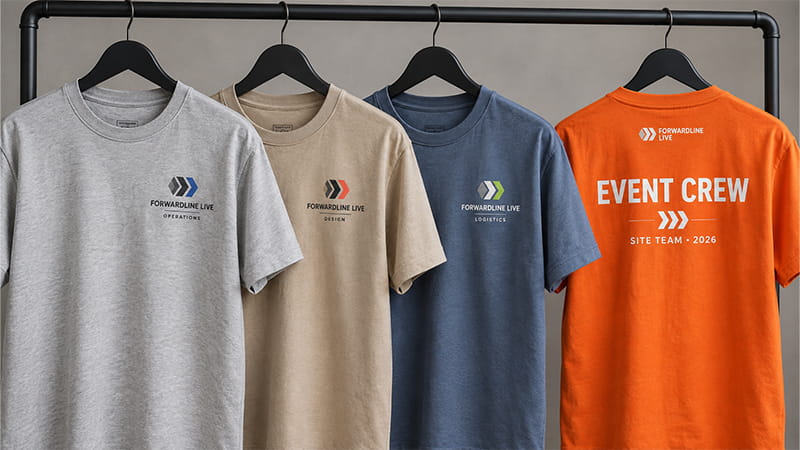
34. Trade Show and Event Staff Shirts
Trade show shirts need to work in a visually busy environment. Visitors should be able to recognize staff without reading several lines of information.
A clear logo, staff identifier, campaign graphic, or stronger back print can work better than trying to fit the entire marketing message on the garment.
For event staff apparel, visibility is a design requirement—not an afterthought.
35. Brand Merchandise Designs
Brand merchandise has a different goal from staff identification. Customers or fans need a reason to choose the shirt even when they are not working for the company.
Product illustrations, mascots, local references, limited-edition artwork, campaign visuals, or lifestyle graphics can make branded merchandise feel more like a product and less like advertising.
Event, School, and Team T-Shirt Design Ideas
Event T-shirt design ideas work best when the artwork reflects something participants recognize about the experience. Schools and sports groups have an additional advantage: an existing sense of identity, school pride, or team spirit that can become part of the visual direction.
36. Conference and Seminar T-Shirt Designs
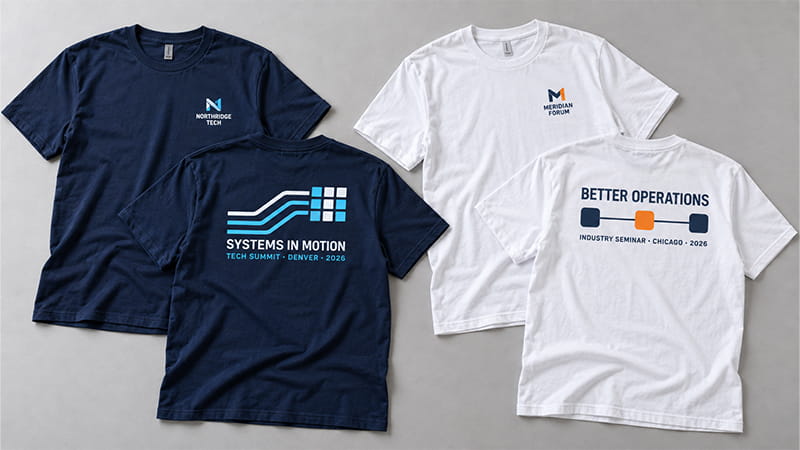
Conference shirts can be built around the central theme instead of relying only on the event logo, sponsor list, and date.
A technology conference might turn its theme into abstract graphics, while an industry seminar might use a relevant illustration or short statement. The result can still carry event branding while feeling more like merchandise.
37. Festival T-Shirt Designs
Festival shirts have natural storytelling material: performers, venue, location, food, culture, date, event artwork, and atmosphere.
Rather than fitting every event detail onto the shirt, choose the elements most closely associated with the experience.
38. Charity and Fundraising T-Shirt Designs
Charity shirts need to communicate the cause clearly enough that supporters understand what they are representing.
A recognizable symbol, short campaign message, event identity, or community illustration can lead the design while organizer and sponsor information remains secondary.

39. Marathon and Sports Event T-Shirt Designs
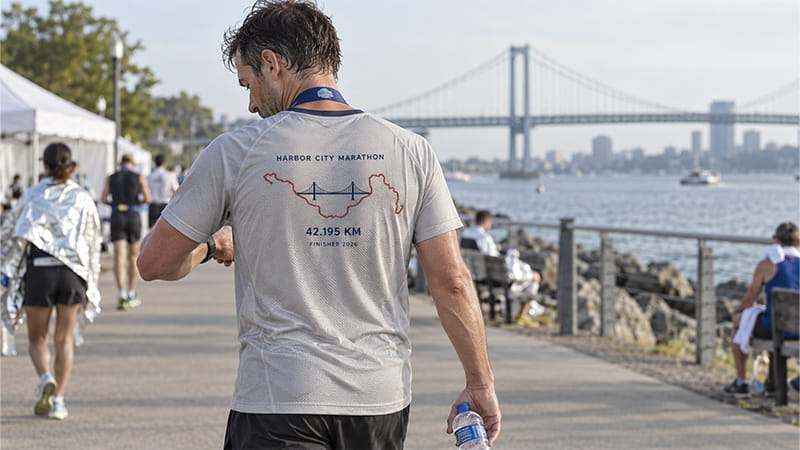
Marathon shirts can use the route, distance, elevation profile, location, finish-line reference, year, or finisher status as design material.
Specific details from the actual event often create a stronger keepsake than a generic running graphic.
The same principle applies to cycling events, swimming competitions, tournaments, and other participatory sports.
40. Souvenir T-Shirt Designs
Souvenir shirts work best when they capture something distinctive about a destination or experience.
Landmarks, native plants, local architecture, maps, cultural elements, historical references, and original illustrations can give tourists something more memorable than a generic destination name.
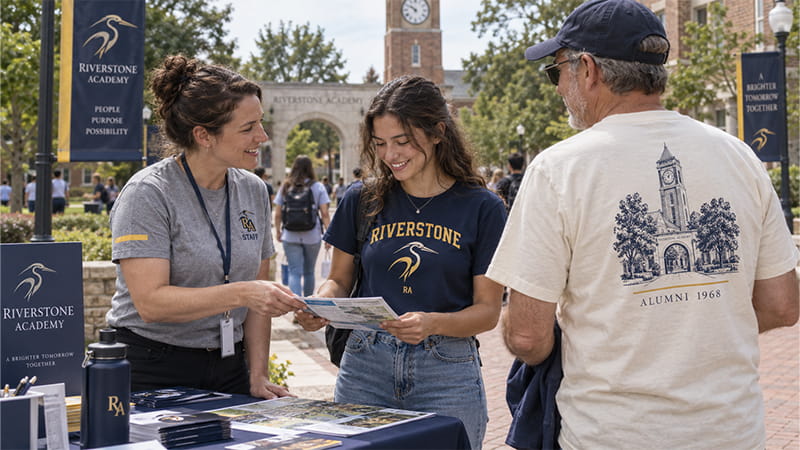
41. School Spirit T-Shirt Designs
School colors, mascots, initials, founding years, campus landmarks, and recognizable traditions can all communicate school pride.
A coherent visual system also makes it easier to create related versions for students, teachers, staff, alumni, and supporters without making every shirt identical.
42. Sports Team T-Shirt Designs
Team names, player numbers, mascots, slogans, athletic typography, and season references can all become part of sports T-shirt designs.
The shirt does not need to imitate a match jersey. Training groups, coaching staff, supporters, and travel teams may need different layouts while still maintaining the same team identity.
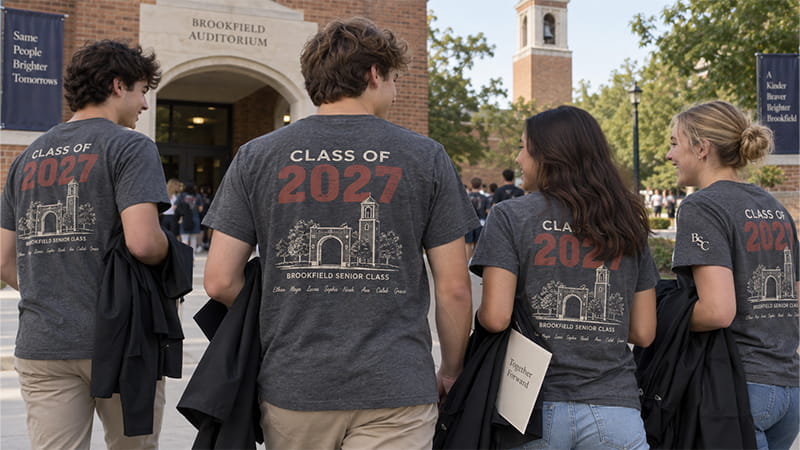
43. Graduation and Class-Year T-Shirt Designs
A class year gives graduation shirts an obvious focal point, but it can be combined with school landmarks, signatures, majors, student artwork, or references a particular graduating class recognizes.
This turns the shirt from a generic “Class of” design into something connected to the students’ actual experience.
44. Student Club T-Shirt Designs
Robotics, music, drama, debate, STEM, student council, and other clubs already have their own activities and visual references.
Using the tools, symbols, inside jokes, or projects associated with the club usually creates a stronger design than placing the club name over an unrelated stock graphic.
45. Tournament and Championship T-Shirt Designs
Tournament and championship shirts can incorporate a bracket, venue, year, season record, participating teams, score, trophy reference, or championship message.
Organizer shirts may need space for several teams or sponsors, while winner or supporter merchandise can place more emphasis on the achievement itself.
How to Choose the Right T-Shirt Design Idea
After exploring dozens of T-shirt ideas, choosing the right one becomes easier when you evaluate the wearer, purpose, visual focus, and eventual production requirements together.
Consider Who Will Wear the Shirt
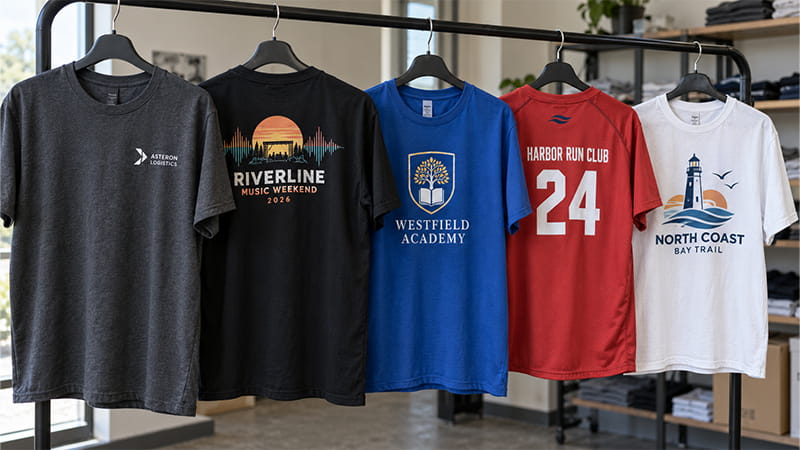
A music festival audience, corporate team, school club, sports organization, tourist, and retail customer will not respond to the same level of branding or visual complexity.
A bold back graphic may make sense for festival merchandise, while employee apparel may benefit from a smaller brand treatment that fits everyday use.
A design that fits the target audience is more valuable than a design that simply follows a popular visual trend.
Match the Design With the Purpose
A trade show shirt needs to identify staff. A marathon shirt represents participation or achievement. A souvenir should recall a place. Brand merchandise needs to stand on its own as a product.
Those goals affect logo size, typography, artwork style, placement, garment choice, and printing method.
If you are moving from inspiration into artwork development, the TOMAS Crafts guide on how to design T-shirts explains how purpose, audience, shirt style, artwork, print placement, and file preparation work together.
Let One Visual Idea Lead
A shirt may need a logo, event name, date, sponsor, slogan, illustration, URL, and other information, but those elements should not all receive equal emphasis.
Choose one visual idea to lead, then use the remaining elements to support it.
This creates a clearer hierarchy and makes the design easier to understand from a normal viewing distance.
Think About Wearability
A custom shirt can meet every branding requirement and still fail if people do not want to wear it.
For merchandise, employee gifts, conference apparel, and many promotional projects, think about what the shirt will look like after the event is over. Reducing oversized logos, improving graphic balance, or moving secondary information to the back or sleeve can make the garment more useful for longer.
How to Make a T-Shirt Design Work in Real Production
A creative concept becomes a successful custom shirt only when the artwork, garment, placement, decoration method, and size range work together.
This is where seemingly small details can make a significant difference between a design mockup and the finished apparel.
Check Artwork at the Actual Print Size
Design software lets you zoom into tiny details that will never be viewed that way on a shirt.
Before approval, check thin lines, small lettering, gaps, textures, and illustration details at the intended print dimensions.
A high-resolution artwork file can keep details sharp, but it cannot make tiny text readable at actual print size.
Treat Garment Color and Print Area as Part of the Design
The T-shirt itself is part of the artwork. Fabric color affects contrast and mood, while available print area affects the scale and proportions of the composition.
A tall poster-style design may work well on the full back but feel cramped when reduced to a left-chest position. A small badge may look balanced on the chest and lost across a wide back.
For more detailed placement planning, use the T-shirt logo placement guide as a starting reference, then confirm the final position on the selected garment.
Match the Artwork to the Printing Method
Screen printing, direct-to-garment printing (DTG), DTF, sublimation, heat transfer, and embroidery do not reproduce every type of artwork in exactly the same way.
A simple multi-shirt bulk order with solid-color graphics may have different production priorities from a detailed full-color merchandise design or a polyester sports shirt. The fabric, artwork, quantity, color count, budget, and intended use all affect the choice.
The best decoration method is the one that preserves the parts of the design that matter most while fitting the garment and project requirements.
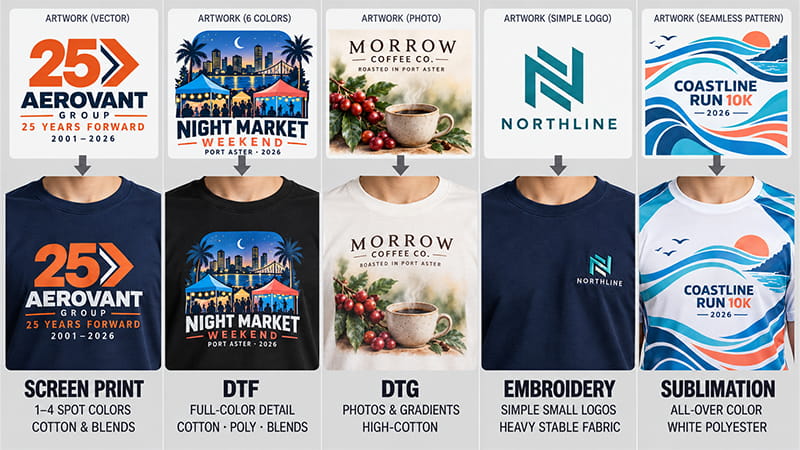
The TOMAS Crafts guide to T-shirt printing methods compares screen printing, DTG, DTF, sublimation, heat transfer, HTV, embroidery, and other options for different artwork and project types.
Check Copyright and Trademark Issues Before Production
Visual inspiration and commercial production are not the same thing. Artwork found online, photographs, game characters, sports marks, company logos, illustrations, music references, and other recognizable creative material may involve intellectual-property rights.
The U.S. Copyright Office’s guidance for visual and graphic artists explains that copyright can protect original pictorial, graphic, and sculptural artwork. The USPTO trademark guidance explains that a trademark can include words, phrases, symbols, designs, or combinations that identify goods or services.
If a commercial T-shirt design depends on artwork or branding you do not own, confirm permission or licensing before approving production.
Review a Physical Sample Before Bulk Orders
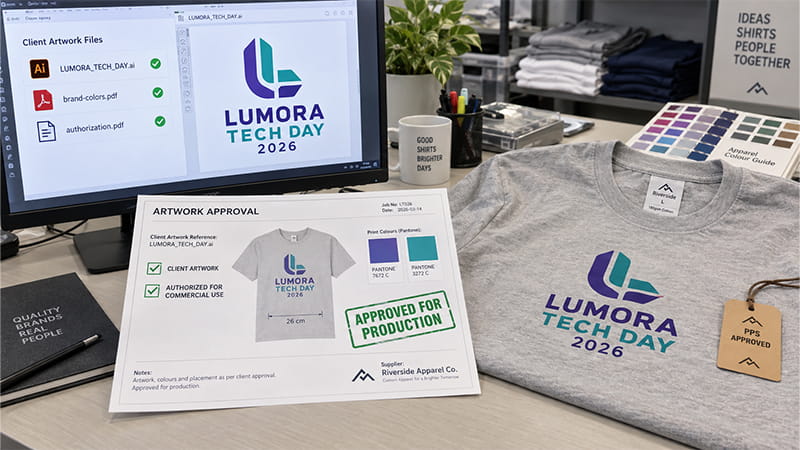
Digital mockups are useful for judging the overall composition, but they cannot completely show print texture, garment color, fabric behavior, or how the design sits on a real body.
For bulk orders, a physical sample allows the buyer to check artwork scale, color, position, decoration quality, garment feel, and overall visual balance before full production.
From a supplier perspective, this is one of the most useful stages for catching issues that look minor on screen but become obvious on a finished garment.
Sample approval is cheaper and easier than correcting the same issue across an entire production run.
Check the Design Across Different Shirt Sizes
A print size that looks balanced on one garment size does not automatically look identical across the full size range.
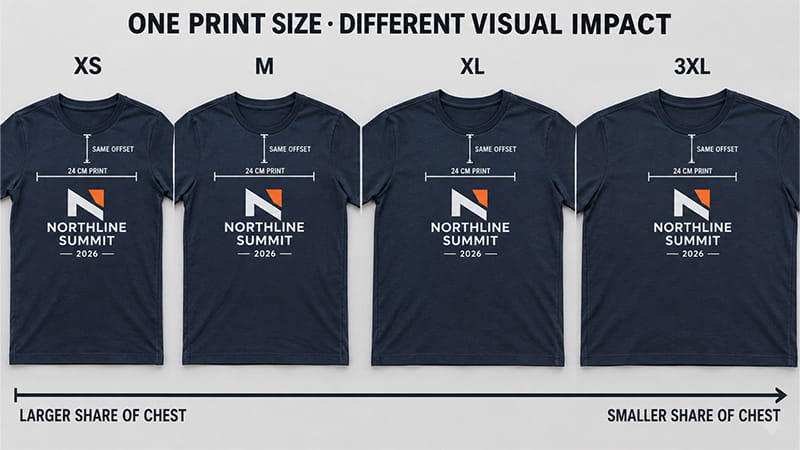
The same graphic may occupy more visual space on an XS and noticeably less on a 3XL. For mixed-size employee, school, sports, or event orders, review how the artwork relates to the smaller and larger garments rather than relying only on one medium-size mockup.
For larger custom apparel projects, TOMAS Crafts can help coordinate garment options, artwork, decoration methods, samples, size mixes, and bulk production within one sourcing process. The broader range of custom apparel solutions includes T-shirts and other branded clothing for employee programs, events, promotions, and teams.
FAQs About T-Shirt Design Ideas
What Makes a Good T-Shirt Design?
A good T-shirt design has one clear visual focus, readable elements, intentional placement, and a style that suits both the wearer and the purpose.
It also needs to work beyond the design file. A strong design should remain clear at actual print size and still feel balanced when it appears on a real garment.
How Do I Come Up With My Own T-Shirt Design Ideas?
Start with who will wear the shirt and why it is being created. Then choose one visual direction—such as typography, illustration, a place, milestone, hobby, or brand element—and add a detail that makes the idea specific.
For example, an outdoor shirt could use the contour of a real trail instead of a generic mountain, while an event shirt could turn its route, venue, or theme into the main graphic.
What Are Some Unique T-Shirt Design Ideas?
Unique T-shirt designs often come from reinterpreting a familiar subject rather than searching for an entirely new one. A logo can become a pattern, a landscape can become contour-line artwork, a race route can become the main graphic, or a company product can become an illustration instead of relying on a standard logo print.
How Do I Choose a T-Shirt Design for a Brand, Event, or Team?
Start with what the shirt needs to accomplish. Staff apparel may need clear identification, event merchandise should reflect the experience, while team shirts should strengthen a shared identity.
The audience and purpose should guide the design direction first. From there, you can choose the graphics, typography, placement, garment, and decoration method that support that goal.
Conclusion
The best T-shirt design ideas do more than fill an empty print area. They connect the artwork with the wearer, purpose, and experience behind the shirt.
Whether you are creating brand merchandise, employee apparel, event shirts, school designs, sports apparel, souvenirs, or a personal project, start with one clear idea and make sure it still works at real print size, on the selected garment, and with the intended decoration method.
Creative direction gets the shirt noticed; thoughtful production decisions determine whether the finished product lives up to the idea.
Turn Your T-Shirt Idea Into a Custom Apparel Project
TOMAS Crafts supports brands, event organizers, schools, teams, distributors, and promotional buyers with one-stop custom apparel sourcing, including garment selection, artwork review, printing or embroidery, sampling, packaging, and bulk production.
For projects that extend beyond T-shirts, we can also coordinate apparel with other customized promotional products under one sourcing plan, helping keep branding, colors, and project execution consistent. Explore our custom apparel solutions.