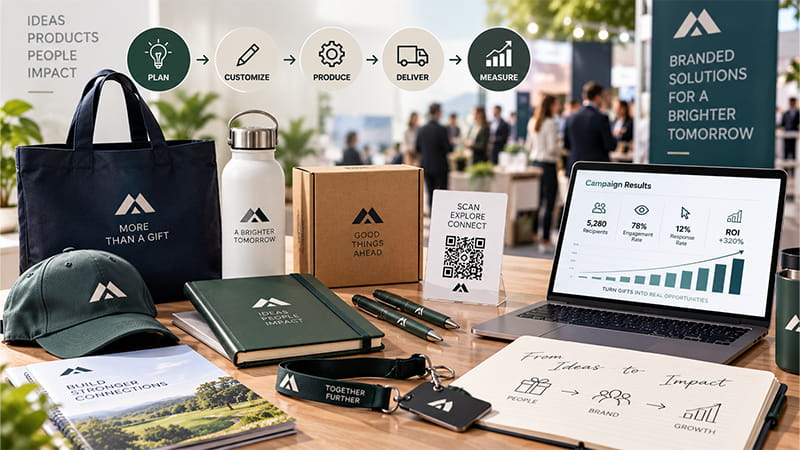
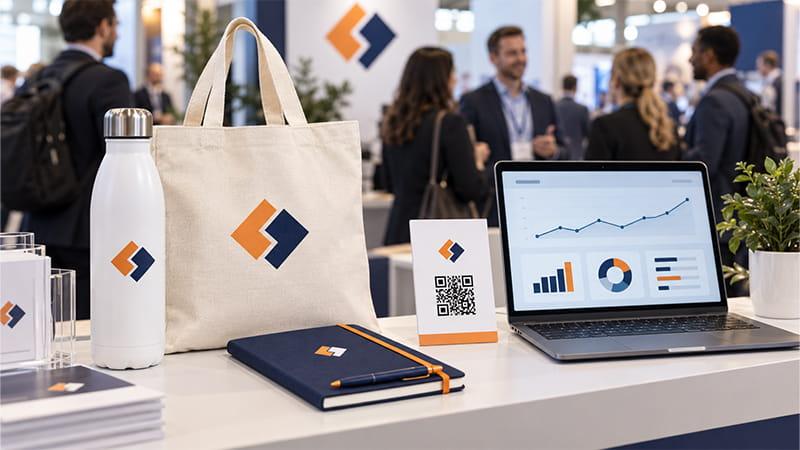
Promotional materials can keep a brand present after an ad, meeting, or event ends. A logo alone does not make an item effective. This guide draws on marketing research and a documented TOMAS conference project. It explains why promotional products work, how to choose and source them, and how to connect distribution to measurable campaign results.
Quick answer: Promotional materials work best when they are useful, relevant, and well made. Distribute them at the right moment and connect them to a measurable next action. They should support other marketing channels rather than replace them automatically.
What Are Promotional Materials?
Promotional materials are physical or printed items used to communicate a brand, offer, or campaign message. Examples include branded pens and reusable water bottles, brochures, packaging, banners, and trade show displays.
The phrases promotion materials and promo products are common search or industry variations. Promotional materials and promotional products are the standard terms. Branded merchandise and promotional gifts usually refer to the tangible product portion of this category.
This guide focuses on tangible promotional products. Buyers must specify the material, decoration, packaging, inspection, and delivery. Those decisions determine whether the item is useful, on brand, and campaign-ready.
Promotional materials generally fall into two groups:
- Branded promotional products: Common choices include T-shirts, polo shirts, hats, tote bags, drawstring bags, backpacks, and drinkware. Other options include pens, notebooks, lanyards, lip balms, tech accessories, power banks, desk items, and curated promotional gifts.
- Supporting campaign materials: Business cards, brochures, catalogs, mailers, product packaging, signs, table covers, banners, and exhibition displays.
A reusable bottle and a brochure have different jobs. The bottle may create repeated brand exposure after a demonstration. The brochure can carry detailed information to a buyer. Each material needs a clear role.
Promotional Materials vs. Advertising and Sales Promotions
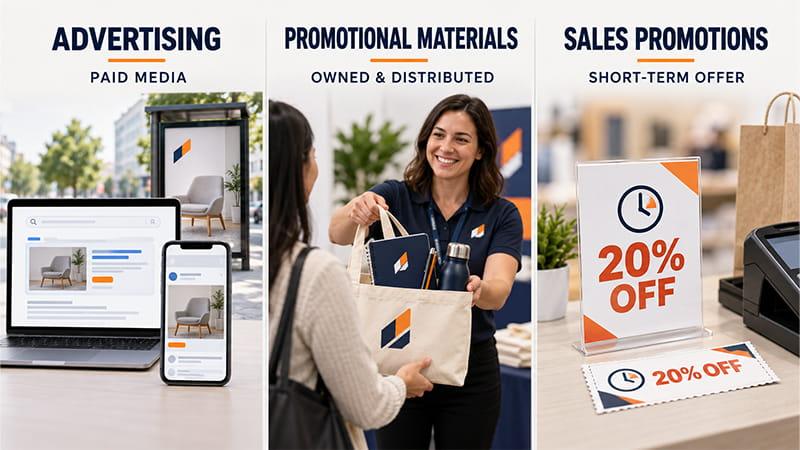
Promotional materials are not identical to advertising. Advertising is paid communication delivered through media such as search, social platforms, print, outdoor, television, or sponsorship. A branded item is owned and distributed by the business, often during a physical interaction or fulfillment process.
They are also different from sales promotions. Coupons, discounts, contests, and limited-time offers encourage a short-term action. A tote, mug, or notebook may support that offer, but the product itself is not the discount. OpenStax’s overview of the promotion mix explains why advertising and sales promotion are related but distinct tools within a broader mix.
Why Promotional Materials Can Support Effective Advertising
Promotional products can extend a campaign into an everyday task. A pen supports writing, a tote carries event materials, and a bottle stays on a desk. Each use creates an opportunity for brand visibility, although it does not guarantee recall.
Useful Products Create Repeat Brand Touchpoints
Usefulness creates an opportunity for visibility. It does not guarantee attention or sales. An item must fit the recipient’s routine, work properly, and feel appropriate for the relationship. A compact phone stand may suit remote employees, while custom tote bags make more sense at a trade show where attendees need to carry materials.
Durability also matters. A low-cost pen that skips or a water bottle that leaks can create the wrong association. An affordable product can still perform well when its basic function, finish, and logo application are reliable. Quality should match the expected use, not simply the highest available specification.
A 2023 peer-reviewed experiment tested promotional products in university settings. The researchers compared the products alone and alongside television or print advertising. They found positive effects on credibility, attitudes, purchase intent, and referral intent. The result does not prove that every giveaway works. It supports treating promotional products as part of a media mix rather than as decoration. See the study in the Journal of Marketing Communications.
Physical Materials Strengthen Digital, Event, and Relationship Marketing
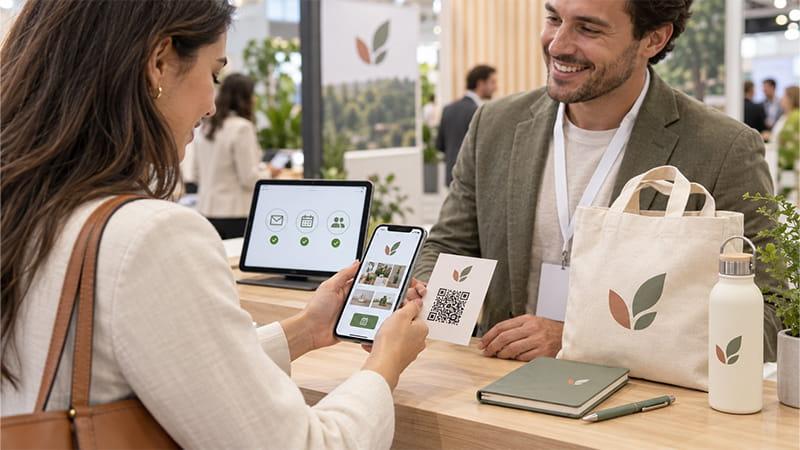
Branded merchandise becomes more useful to a campaign when it connects physical distribution to another channel. A QR code on an insert can open a product guide. A notebook given after a demonstration can be followed by a sales email. A welcome kit can direct new employees to onboarding resources. A client gift can support an account review or renewal conversation.
Promotional products provide a physical touchpoint; a landing page, salesperson, event program, email, or CRM sequence carries the next message. The two should support the same journey.
Promotional items can support several relationship types:
- Customers: Thank-you gifts, launch kits, loyalty programs, and service reminders.
- Prospects: Trade show giveaways, product samples, meeting gifts, and direct-mail kits.
- Employees: Welcome kits, recognition gifts, safety programs, and company events.
- Partners: Co-branded merchandise, training materials, sales kits, and milestone gifts.
For more product-led campaign inspiration, compare TOMAS’s promotional product ideas before building a shortlist.
When Promotional Materials Work, and When They Waste Budget
Promotional materials work only under the right conditions. The same branded mug may suit an office program, feel inconvenient at a standing event, and create weight or breakage risk in international mail.
Five Conditions to Confirm Before Ordering
Before approving a campaign, answer five questions:
- Recipient: Exactly who should receive the item?
- Use: What practical task or situation does it support?
- Timing: Why should the recipient receive it at this moment?
- Action: What should happen next: a scan, registration, reply, meeting, or continued use?
- Tracking: How will distribution and the intended response be recorded?
If any answer is unclear, pause product selection. Price, novelty, and popularity cannot rescue an undefined campaign brief.
Common Reasons Campaigns Fail and When Another Channel Is Better
Campaigns often waste budget because the item is chosen before the objective. Other problems include poor function, oversized branding, hard-to-carry promotional products, weak artwork, skipped samples, late ordering, uncontrolled giveaways, and no follow-up. A cheap product is expensive when most units remain in storage or damage brand perception.
Another channel may be better when the job is informational, immediate, or narrowly targeted. Email suits timely updates, digital ads support scalable testing, printed material carries specifications, and direct sales follow-up serves complex B2B decisions.
Promotional items marketing works best when the physical item has a clear role. Another channel may perform that role better. Do not order merchandise merely because competitors hand it out.
How to Choose Business Promotional Materials by Goal and Audience
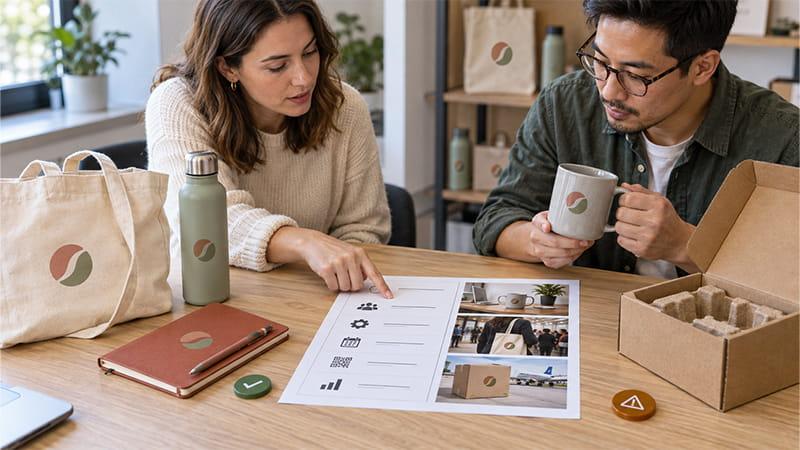
Product selection should begin with a business decision, not a catalog page. Define the goal, recipient, desired action, distribution setting, and delivery date before comparing promo products.
Start With the Goal, Audience, and Desired Action
Describe the intended outcome in one sentence: “After receiving this item, the recipient should…” Possible actions include visiting a landing page, completing a demonstration, or joining an employee program. The recipient might also attend a meeting or continue using a product associated with the brand.
Avoid combining too many objectives. Low-cost promo products for broad brand visibility need different distribution and tracking from premium promotional gifts for client retention. Separate the audience into tiers before setting the budget.
Compare Promotional Materials by Campaign Use
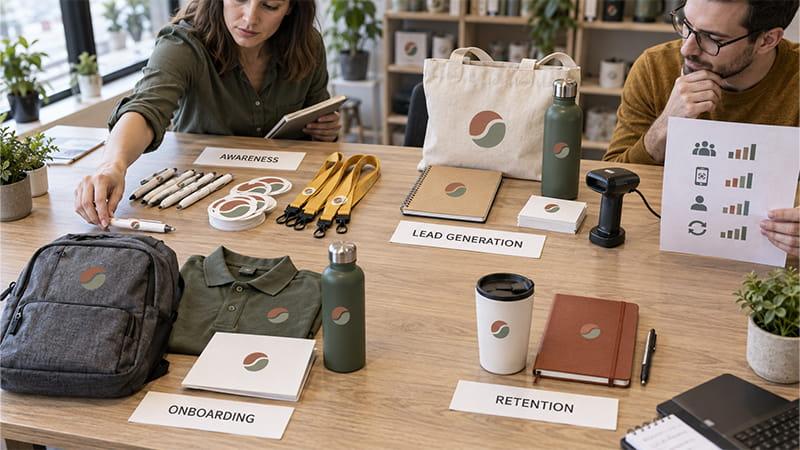
| Campaign goal | Audience | Recommended materials | Distribution method | Primary KPI |
|---|---|---|---|---|
| Broad awareness | Community visitors or high-volume attendees | Pens, stickers, lanyards, T-shirts, simple tote bags | Staff-controlled counter or activity station | Items distributed and campaign visits |
| Trade show lead generation | Booth visitors and qualified prospects | Custom tote bags, notebooks, water bottles, phone stands, tech accessories | After badge scan, demo, or conversation | Qualified scans, meetings, and follow-up replies |
| Product launch or direct mail | Selected prospects or customers | Sample kit, branded merch, printed insert, compact gift box | Addressed shipment with campaign URL | Deliveries, page visits, sample requests, and responses |
| Customer retention | Active clients and account stakeholders | Branded mugs, travel mugs, office sets, premium notebooks | Account meeting or milestone delivery | Account engagement, renewal activity, or repeat orders |
| Employee onboarding | New employees | Apparel, backpack, bottle, notebook, welcome materials | Role-based welcome kit | Participation, onboarding completion, and feedback |
| Partner or speaker appreciation | Partners, speakers, or VIPs | Curated promotional gifts, premium drinkware, travel products | Named presentation or scheduled delivery | Acknowledgment, meeting, or relationship follow-up |
| Sustainability-led program | Audiences aligned with documented sourcing goals | RPET totes, recycled notebooks, durable refillable items | Event, employee, or customer program | Distribution, use feedback, and verified claims |
| Wellness initiative | Employees, members, or event attendees | Reusable water bottles, fitness accessories, lip balms, small wellness kits | Registration, challenge, or program milestone | Registration and program participation |
The table is a starting point, not a guaranteed list of best sellers. Popular promotional products such as tote bags, drinkware, apparel, and pens are familiar and easy to understand, but performance still depends on context, quality, style, and distribution.
For booth-specific choices, see TOMAS’s trade show giveaway guide.
Evaluate Usefulness, Durability, Perceived Value, and Claims
Compare promotional products against the recipient’s routine. Ask where each item will be used, how it will be carried, what could fail, and whether the logo reduces usability. Test product function before ordering: bottles for leaks, pens for writing quality, tote bags for handle comfort, and power banks with intended devices.
High perceived value comes from relevance, function, presentation, and execution, not price alone. A well-made notebook can feel more thoughtful than an expensive electronic item with unclear compatibility. Subtle branded merchandise may also be worn more often than apparel dominated by a large company logo.
Claims require evidence. For custom tote bags described as containing recycled materials, confirm the composition and supporting documents. For reusable promotional products, check durability, cleaning, replacement parts, and packaging. Avoid environmental language that cannot be tied to the exact product.
Set Budget Tiers and Confirm Distribution Conditions
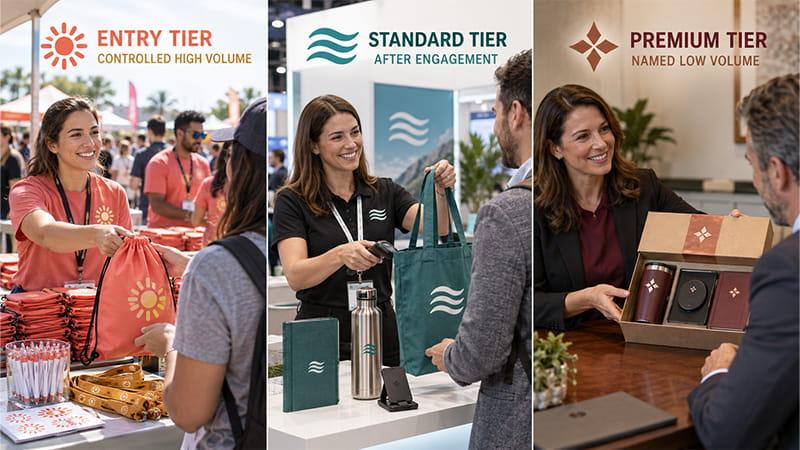
Use budget tiers to protect both reach and relevance:
- Entry tier: Affordable promo products for broad but controlled distribution, including pens, lanyards, stickers, and simple drawstring bags.
- Standard tier: Practical items for engaged recipients, such as quality tote bags, notebooks, drinkware, T-shirts, and phone accessories.
- Premium tier: Lower-volume promotional gifts for clients, speakers, partners, and qualified opportunities, including travel mugs, dress shirts, branded tech, and coordinated gift sets.
Calculate the complete campaign cost. Unit price is only one part. Add artwork, setup, samples, packaging, kitting, inspection, freight, duties, storage, delivery appointments, and replacement units where applicable.
Distribution changes product selection. Large tote bags may offer high visibility but increase carton volume. Glass drinkware can be awkward for attendee travel. Batteries add testing and transport requirements, while liquids, cosmetics, food, and children’s products may trigger destination-specific rules.
Design and Branding Options
Decoration affects appearance, durability, cost, minimum order quantity, and production time. It must suit the product surface and artwork.
Full-Color Printing, Embroidery, Engraving, and Finishes
| Method | Common uses | Strength | Main check |
|---|---|---|---|
| Screen printing | T-shirts, tote bags, flat products | Efficient for solid colors and repeated designs | Ink coverage, curing, and registration |
| Pad printing | Pens, small plastic promotional items, curved items | Works on compact or irregular print areas | Artwork detail and surface adhesion |
| UV or full-color digital print | Packaging, notebooks, flat accessories | Supports gradients and multicolor artwork | Resolution, rub resistance, and color shift |
| Heat transfer | Apparel, bags, and detailed fabric graphics | Suitable for detailed or full-color designs | Fabric compatibility, hand feel, and edge adhesion |
| Embroidery | Polo shirts, hats, jackets, and bags | Durable, dimensional finish | Stitch count, small text, backing, and fabric distortion |
| Laser engraving | Metal pens, bottles, awards, and tech cases | Permanent, restrained appearance | Engraving contrast and coating consistency |
| Debossing or embossing | Notebook covers, leather-like goods, and packaging | Subtle premium texture | Depth, heat response, and artwork simplicity |
Review the substrate, coating, print area, quantity, artwork colors, and expected wear. TOMAS’s types of printing guide compares the main processes.
Logo Size, Placement, and Brand Color Control
A larger logo can reduce use, especially on apparel and premium gifts. Tone-on-tone embroidery, small engraving, and branded packaging often look more polished than filling the entire print area.
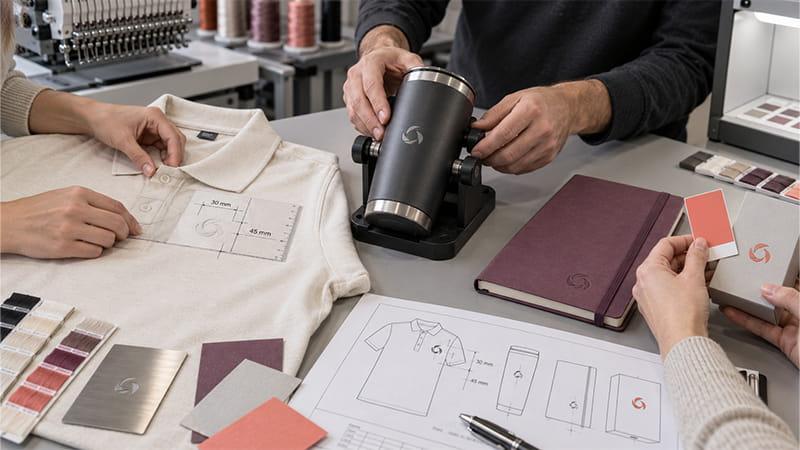
Check artwork at production size. Fine lines may close during embroidery, engraving, or screen printing. Curved surfaces can distort artwork, while clips and handles change orientation. Approve dimensions in millimeters and a placement drawing for each promotional product.
Brand colors change across fabric, coated metal, recycled paper, and plastic. Provide a Pantone or physical reference, approve realistic tolerances, and retain a swatch or sample for reorders.
Samples, Pricing, Production, and Fulfillment
Ordering should convert an idea into one approved specification. Two similar tote bags can differ in fabric weight, seams, handles, print behavior, and packing volume.
What Determines MOQ and Complete Landed Cost
Minimum order quantity depends on the promotional product, material, stock status, decoration, colors, print positions, packaging, and artwork versions. Custom tooling, fabrics, colors, or boxes usually have different minimums from in-stock promo products.
Ask for an itemized quotation that identifies:
- Product model, material, size, color, and quantity
- Decoration method, artwork colors, positions, and dimensions
- Setup, tooling, or plate charges
- Sample type and approval route
- Individual and outer packaging
- Kitting, labeling, and carton marks
- Inspection requirements
- Freight, duties, delivery term, and destination
Do not assume every supplier offers free samples. Stock samples, printed samples, digital proofs, and pre-production samples answer different questions and may have separate costs. Compare landed cost, not unit price alone.
Artwork Proofs, Physical Samples, and Quality Approval
A digital proof confirms artwork, approximate size, location, spelling, and layout. It cannot reveal material feel, actual substrate color, adhesion, stitching, function, packaging fit, or curved-surface distortion.
Use a physical sample for fixed event dates, multiple promotional products, premium recipients, unfamiliar materials, electronics, close color requirements, or custom packaging. Record the approved specification, artwork, color reference, decoration, packaging, date, and approver.
Bulk inspection should use the approved reference. Check quantity, workmanship, dimensions, logo position, color tolerance, function, kit contents, packaging, labels, and carton marks as relevant to the product.
Production Schedule, Compliance, Kitting, and Delivery
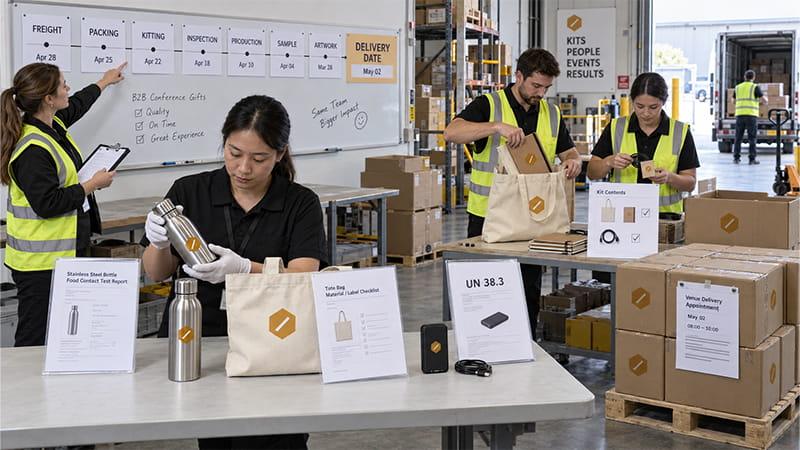
Build backward from the delivery date. Include artwork, samples, bulk production, inspection, kitting, export packing, freight, customs, receiving, and venue appointments. Holidays, tooling, failed samples, personalization, and split destinations add risk.
Compliance depends on the item, intended user, destination, and transport method. Children’s promotional products, food-contact drinkware, cosmetics, textiles, and electronics do not share one document set. For lithium-battery products, the U.S. Pipeline and Hazardous Materials Safety Administration explains the UN 38.3 test summary requirement in its July 2024 lithium battery test summary guidance.
TOMAS can request product-specific documents, coordinate samples and inspection, and identify packaging or shipping risks. The buyer or importer should confirm requirements for the final product and destination.
How to Measure Promotional Items Marketing Results
Counting how many promotional products left the warehouse measures distribution, not campaign effectiveness. Measurement must begin with the goal and a trackable recipient action.
Match KPIs to the Campaign Goal
| Goal | Useful KPIs |
|---|---|
| Awareness | Direct traffic, branded search trends, campaign reach, or recipient feedback |
| Engagement | QR scans, landing-page visits, downloads, registrations, and promo-code use |
| Lead generation | Qualified leads, demonstrations, meetings, proposals, and opportunities created |
| Customer relationship | Account engagement, repeat orders, renewal activity, or event participation |
| Employee program | Enrollment, onboarding completion, challenge participation, or feedback |
Promotional materials often work beside email, event contact, digital advertising, and sales follow-up. Record those touchpoints instead of attributing every scan or visit to the gift alone.
Build Tracking Into the Campaign Before Distribution
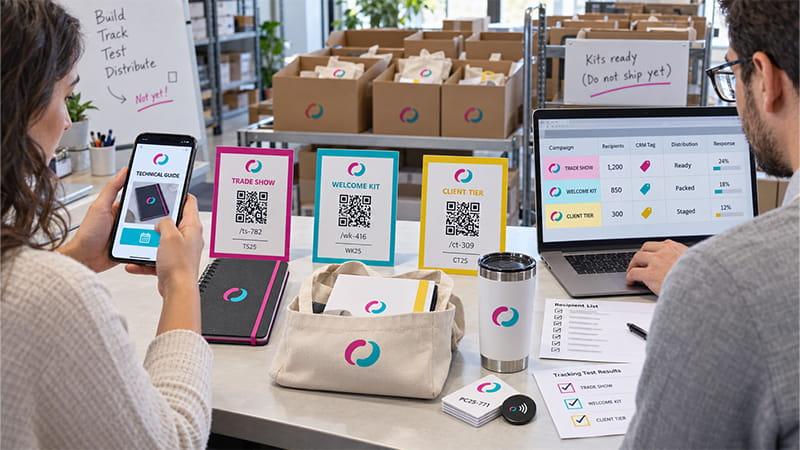
Tracking options include campaign-specific URLs, dynamic QR codes, promo codes, NFC tags where appropriate, CRM campaign tags, recipient lists, and distribution records. Assign a unique route to each event or recipient tier when comparisons matter.
Match the landing page to distribution. A trade show QR code might open a technical guide or meeting calendar; a welcome-kit code may lead to onboarding tasks. The next action should be useful, visible, and easy to complete.
When practical, compare results with a prior event, a similar audience without merchandise, or another distribution method. A documented baseline is more useful than an unsupported impression estimate.
Calculate Cost per Recipient, Cost per Response, and Campaign ROI
Use transparent formulas:
Cost per recipient = total campaign cost / number of verified recipients
Cost per response = total campaign cost / number of tracked responses
Campaign ROI = (attributable gross profit – total campaign cost) / total campaign cost x 100
In a hypothetical 6,000campaignwith800verifiedrecipientsand60trackedresponses,∗∗costperrecipientis6,000campaignwith800verifiedrecipientsand60trackedresponses,∗∗costperrecipientis7.50** and cost per response is $100. If gross profit cannot be attributed confidently, report cost per response and qualified opportunities instead of forcing an ROI figure.
Do not treat physical cost per recipient as equivalent to CPC, CPM, or media impressions. Compare digital, email, events, print, and branded merchandise against their assigned goals.
TOMAS Experience: Planning 500 Conference Kits for Singapore
Customer details are anonymized at the client’s request. The documented facts below show fulfillment performance; the project did not measure advertising impressions, leads, revenue, or ROI.
Project Brief and Delivery Risk
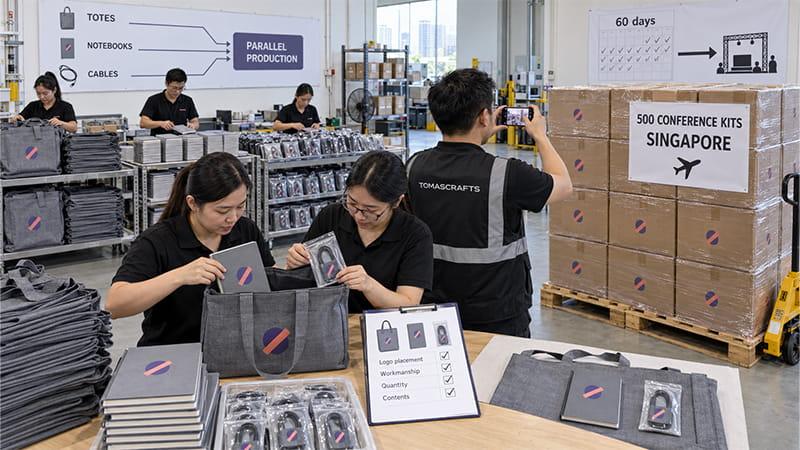
A B2B technology equipment distributor needed 500 conference giveaway kits for a Singapore trade show. Each kit included a polyester tote, an A5 notebook, and a 3-in-1 charging cable. The schedule allowed 60 days for branding, inspection, kitting, and delivery.
The main risk was coordination. Fabric, paper, and electronics required different production and decoration processes, but the logo color, size, and placement still needed to look consistent. If one component arrived late or failed approval, every completed kit could be delayed.
TOMAS Actions, Verified Outcome, and Practical Lesson
TOMAS reduced variables by selecting in-stock models and using one logo layout. Specifications and artwork were confirmed within two days, followed by photo and video sample checks. The three components then moved into parallel production.
Before shipment, TOMAS checked logo placement, workmanship, quantity, and kit contents. The finished sets were packed in labeled export cartons. Air express was released after the customer approved final packing photos.
The 500 kits arrived within the 60-day schedule and before event setup, without reprinting or split shipment. More project details appear in the TOMAS conference swag guide.
What this case demonstrates: The campaign had a fixed delivery date. In-stock promotional products and one artwork system reduced the number of variables. Parallel production and kit-level inspection helped control coordination risk. The case shows delivery control, not advertising ROI. Measuring marketing performance still requires campaign visits, follow-up responses, qualified meetings, or attributable revenue.
What Does a Promotional Marketing Firm Do?
A promotional marketing firm turns a campaign objective into promotional products that can be sourced, customized, approved, distributed, and measured. Service scope varies by provider.
A promotional marketing firm may clarify the campaign brief, build budget tiers, and recommend products. It may also compare suppliers and decoration methods. Other services can include artwork approval, sampling, production follow-up, quality checks, kitting, delivery, and campaign tracking. Confirm the exact scope before ordering.
TOMAS Crafts is a promotional product sourcing and project coordination partner. TOMAS can compare custom promotional products and communicate specifications with suitable suppliers. TOMAS can also coordinate branding, samples, inspection, packaging, and delivery planning. This role does not mean TOMAS manufactures every product category.
Promotional Firm vs. Advertising Agency, Distributor, and Manufacturer
| Provider | Primary role |
|---|---|
| Advertising agency | Campaign strategy, media planning, creative communication, and advertising execution |
| Promotional marketing firm | Merchandise planning and campaign execution support |
| Distributor or sourcing partner | Product selection, supplier coordination, customization, quality, and logistics |
| Manufacturer | Production within a defined product category and set of processes |
One business may cover several roles. Buyers should confirm who owns product specifications, samples, quality approval, delivery coordination, and measurement before ordering.
Conclusion: Make Promotional Materials Part of a Measurable Strategy
Promotional materials are not effective simply because they carry a logo. Their value comes from the fit among the recipient, use case, distribution moment, and next action. If those four decisions are unclear, choosing a popular product will not fix the campaign.
Treat promotional products, artwork, samples, packaging, delivery, follow-up, and measurement as one campaign plan. This gives the recipient something worth using and gives the business evidence to decide whether the campaign should be repeated, changed, or stopped.
Plan a Measurable Promotional Materials Campaign With TOMAS
Not sure which item fits the campaign? Send TOMAS four essentials: campaign goal, quantity, destination, and required date. TOMAS can compare suitable promotional products and prepare a focused shortlist. The first review can flag branding, sample, packaging, compliance, and delivery risks before specifications are finalized. Add a recipient profile and budget range to narrow the options. Logo files and tracking requirements can follow once the product direction is clear.
Request a Campaign-Based Product Shortlist and Quote
Prefer to explore first? Browse TOMAS promotional gifts.
FAQs
1. What are examples of promotional materials for a business?
Branded promotional items include pens, T-shirts, polo shirts, hats, tote bags, and backpacks. Notebooks, reusable water bottles, tech accessories, lanyards, and gift sets are also common. Printed and display materials include business cards, brochures, catalogs, packaging, signs, table covers, banners, and trade show displays.
2. Why are promotional materials effective in advertising?
Promotional materials can create a physical brand touchpoint tied to a useful activity. The product should be relevant, functional, and well made. It should also reach the recipient at the right moment and connect to digital content or sales follow-up. These materials do not guarantee recall, leads, or sales. Measure them against a defined campaign goal.
3. How can a business measure promotional product campaign results?
Start with the intended outcome. Use campaign URLs, QR codes, and CRM tags, plus recipient lists and distribution records. Track visits, registrations, qualified leads, meetings, proposals, repeat orders, or participation. Calculate cost per verified recipient and cost per response. Report ROI only when the business can support its attributable gross profit figure.
4. What is a promotional marketing firm, and what does it do?
A promotional marketing firm can help plan the campaign and select products. It may also coordinate suppliers, customization, artwork, samples, quality checks, packaging, fulfillment, delivery, and measurement. Service scope varies. Before ordering, confirm who owns each approval and task.