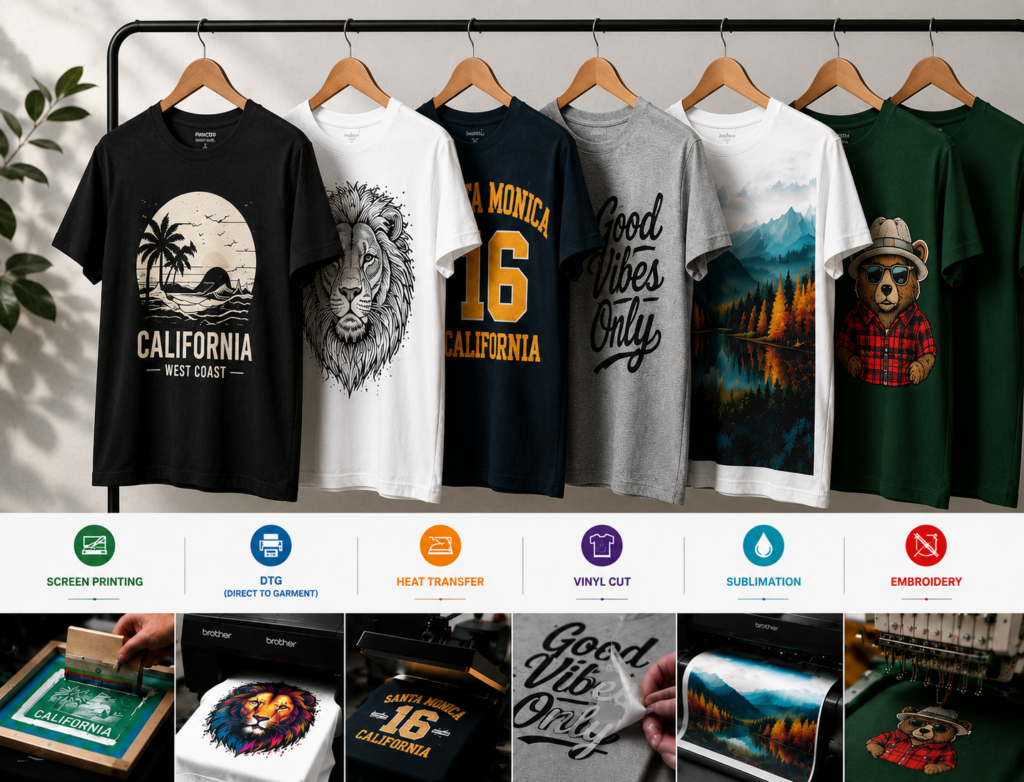
Choosing the right T-shirt printing method affects more than how your logo looks. It also affects color accuracy, hand feel, wash durability, fabric compatibility, cost, and production time.
A simple one-color event logo may work best with screen printing. A full-color merch design may need DTF or DTG. A polyester sports T-shirt may need a different method from a cotton company T-shirt.
This guide compares 8 types of T-shirt printing and shows how to choose the right logo method for your fabric, artwork, quantity, budget, and project use.
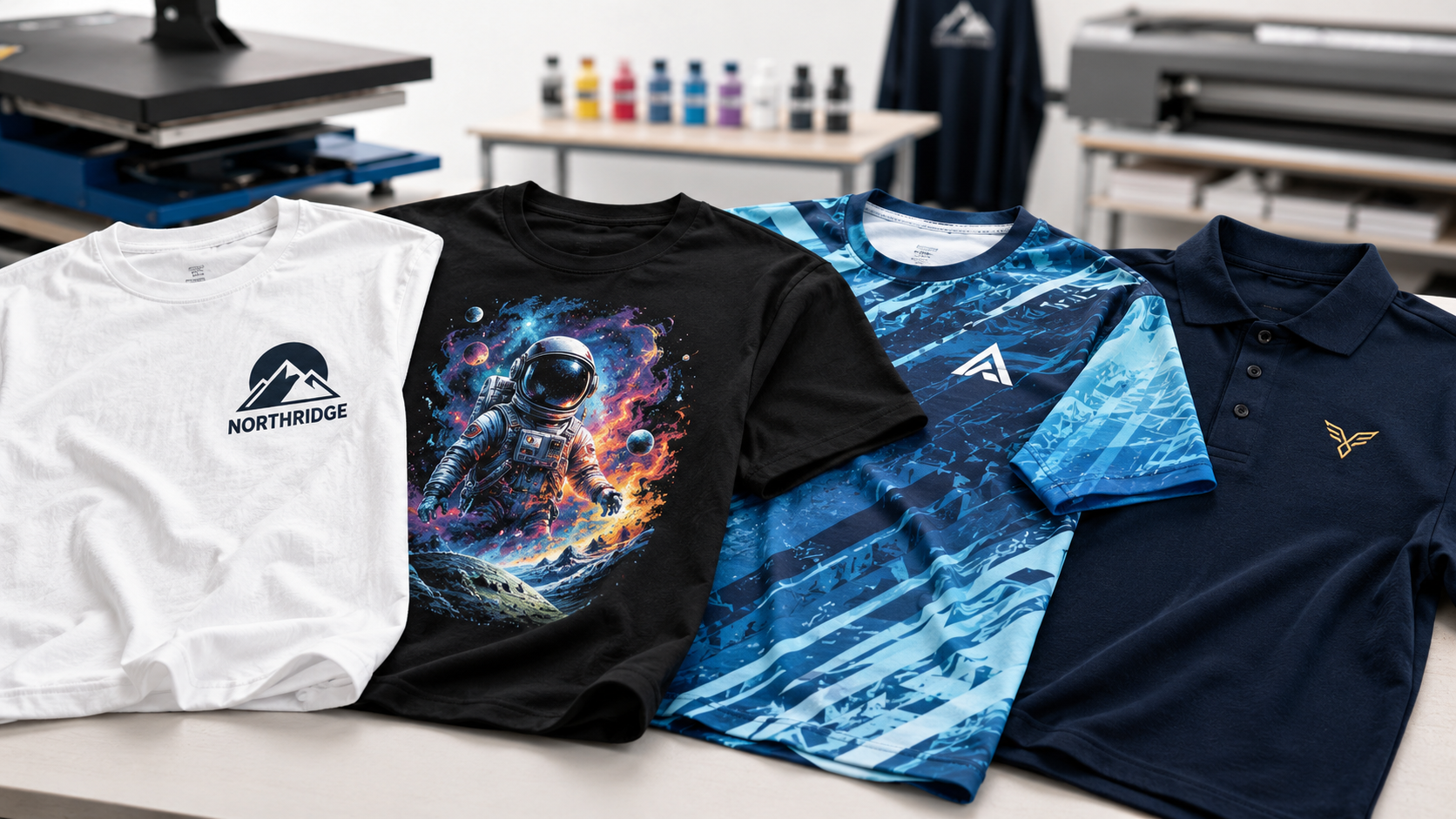
Quick pick: Use screen printing for simple bulk logos, DTF or DTG for full-color artwork, sublimation for polyester sports shirts, HTV for names and numbers, and embroidery for small premium logos.
T-Shirt Printing Methods Compared at a Glance
Here is the fast comparison before we look at each method in detail.
| Printing Method | Best For | Best Fabric | Main Concern |
| Screen printing | Simple logos, solid colors, bulk orders | Cotton / cotton blends | Setup cost and color count |
| DTG printing | Full-color artwork and photo-style designs | Cotton / cotton-heavy shirts | Unit cost and wash durability |
| DTF printing | Vivid full-color logos across different fabrics | Cotton, polyester, blends | Print feel and wash test |
| Heat transfer printing | Short runs, quick campaigns, colorful graphics | Many fabrics | Feel and durability vary |
| Dye sublimation / AOP | All-over prints and sports shirts | Polyester | Not suitable for cotton |
| Vinyl / HTV | Names, numbers, letters, staff IDs | Many fabrics | Not good for detailed graphics |
| Plastisol transfer | Special finishes and textured effects | Cotton / blends | Less efficient for simple bulk orders |
| Embroidery | Premium small logos | Heavier tees, polos, hoodies | Not suitable for large detailed designs |
No method is best for every order. The right choice depends on logo design, fabric, quantity, print position, budget, and deadline.
How to Decide Which T-Shirt Printing Method to Use
Before choosing a printing method, check five practical details: logo complexity, T-shirt fabric, order quantity, timeline, and final use.
Start with your logo design. A simple one-color logo is usually easier to manage with screen printing. A full-color logo, gradient, or photo-style design may work better with DTF or DTG. If the logo has tiny text or thin lines, check whether the method can keep those details clear after production.
Confirm the T-shirt fabric. Cotton often works well with screen printing, DTG, DTF, and heat transfer. Polyester sports shirts usually need sublimation, DTF, or heat transfer. Do not confirm the printing method before checking the actual fabric.
Match the method to your order quantity. For small batches and sample runs, compare DTG, DTF, or heat transfer. For medium orders, DTF or screen printing may work, depending on color count and fabric. For larger repeat orders with simple artwork, screen printing is often easier to control.
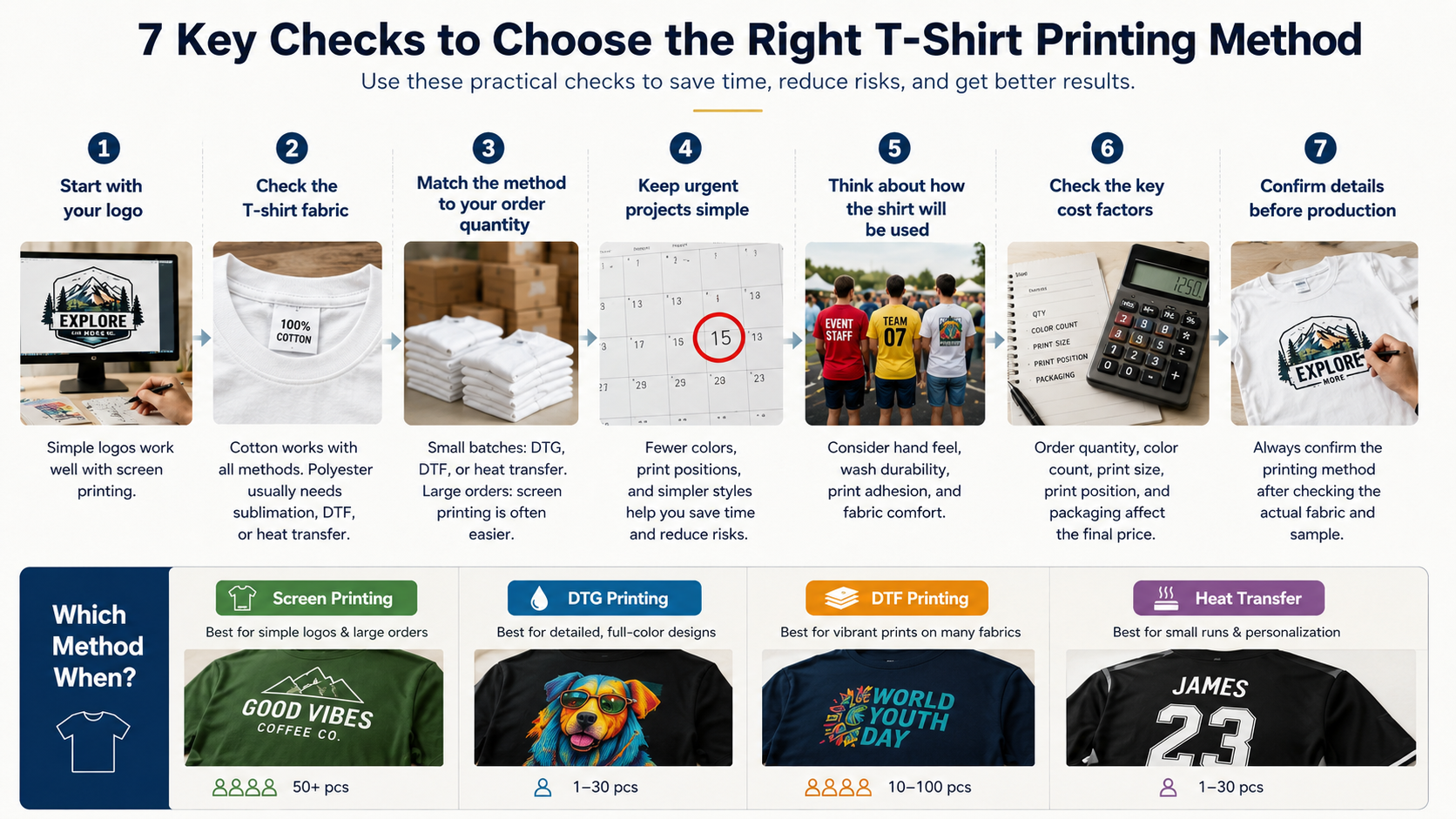
Keep urgent projects simple. If the event date is close, reduce the risk. Use fewer print positions, fewer colors, standard T-shirt styles, and simple packaging. Sleeve prints, special finishes, custom labels, and gift boxes all add proofing time.
Think about how the shirt will be used. A trade show giveaway does not need the same print feel or durability as a staff uniform or sports event shirt. If the T-shirt will be worn many times, check hand feel, wash durability, print adhesion, and fabric comfort before bulk production.
For cost, start with the basics: order quantity, color count, print size, print position, and packaging. These details often affect the quote more than buyers expect.
Match Your Logo Design to the Right Printing Method
Start with the logo itself. A simple one-color logo and a full-color illustration should not always use the same printing method.
| Logo Design Type | Better Printing Method | Buyer Note |
|---|---|---|
| Simple one-color logo | Screen printing | Good for bulk event or staff T-shirts |
| Two- or three-color logo | Screen printing or DTF | Choose based on quantity and detail |
| Full-color logo | DTF or DTG | Good for colorful artwork and gradients |
| Small chest logo | Embroidery or screen printing | Embroidery gives a more premium look |
| Large front artwork | Screen printing, DTF, or DTG | Choose based on color count and order volume |
| Names and numbers | Vinyl / HTV | Good for teams, staff shirts, and event IDs |
| Photo-style artwork | DTG or DTF | Better for image detail |
| All-over graphics | Sublimation / AOP | Best for polyester full-body designs |
| Tiny text or thin lines | Avoid embroidery when possible | Small details may disappear in stitches |
Logo style also affects the final result. A wordmark, icon, badge, or combination logo may need a different print size, position, or decoration method on the shirt. If the logo shape is still being decided, confirm the logo style before choosing the final printing method.
For bulk business orders, this table is often the easiest place to start. After that, check the T-shirt fabric, quantity, and project use before approving samples.
8 Types of T-Shirt Printing Methods for Custom Logos
1. Screen Printing
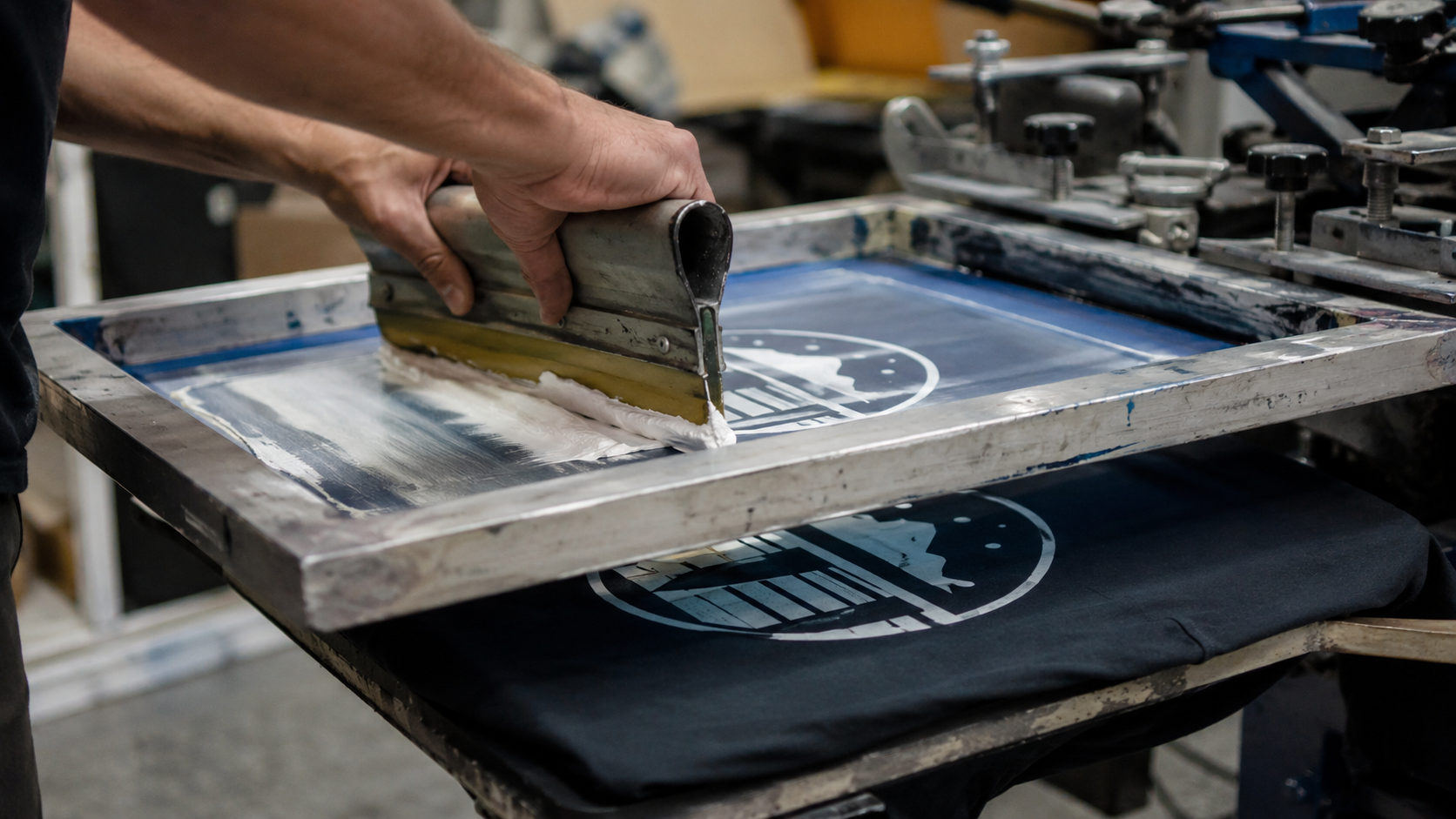
For simple bulk logo T-shirts, screen printing is usually one of the first methods to compare. You may also see it called silkscreen printing. The basic screen printing process uses a mesh screen, ink, and a squeegee to push the design onto the shirt.
This method works well for simple logos, solid colors, and repeat designs. It is commonly used for event shirts, school shirts, staff uniforms, and promotional T-shirts. If you need 100+ shirts with the same one-color or two-color logo, screen printing is often practical because the setup cost becomes easier to spread across a larger quantity.
Screen printing is less suitable for photo-style artwork, gradients, frequent personalization, or logos with many small color details. If your design is complex or full-color, DTF or DTG may be easier to manage.
2. DTG Printing
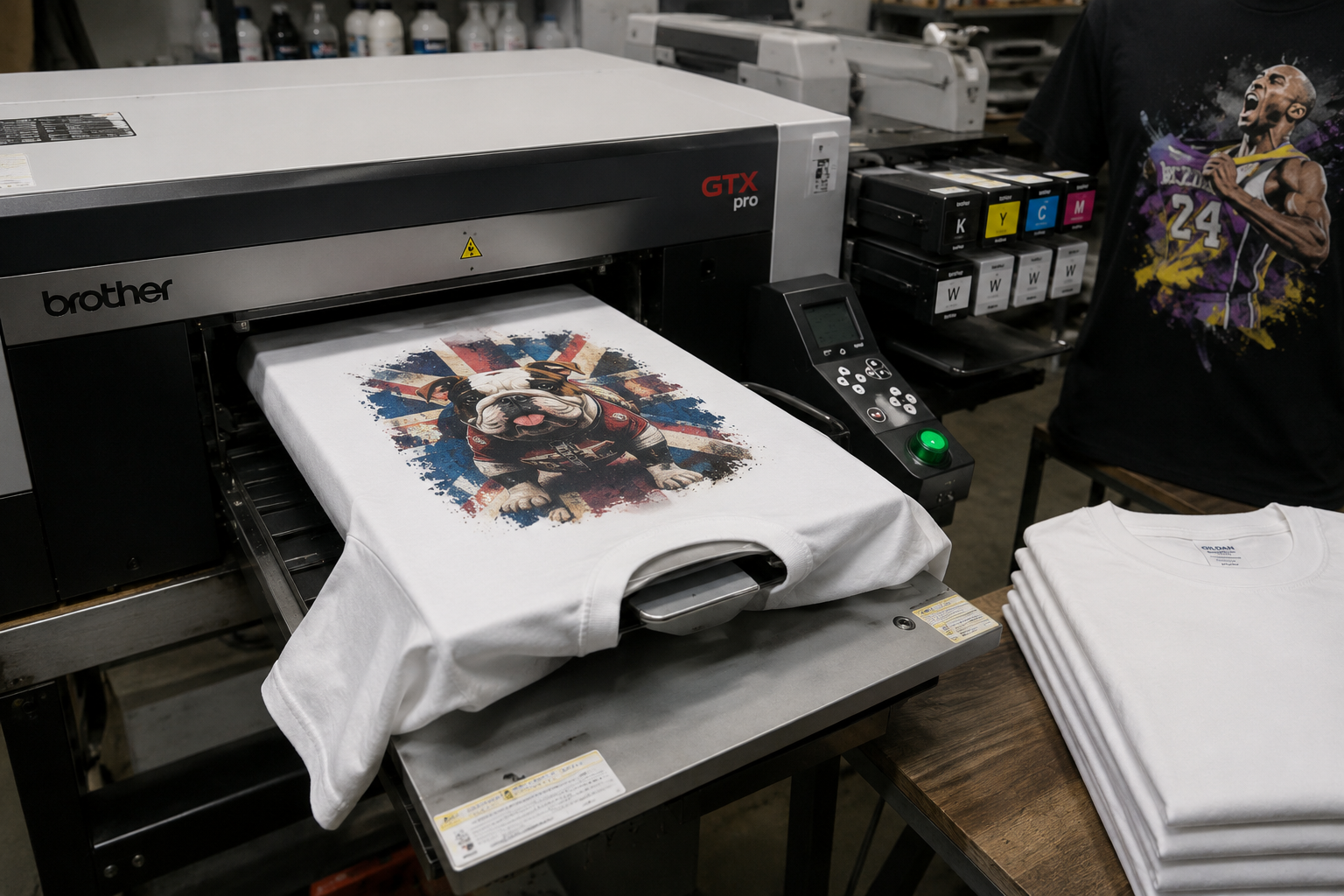
Direct-to-garment printing, prints artwork directly onto the fabric. It is a strong option when your artwork looks more like a full-color image than a simple logo.
DTG is often used for full-color artwork, gradients, illustrations, and photo-style designs. It usually works best on cotton or cotton-heavy T-shirts.
DTG can be useful for small merch drops, sample runs, and design testing because it does not need separate screens for each color. This makes detailed color transitions easier to manage than screen printing.
For large low-cost event orders, DTG is usually not the first choice. If your design is simple and the quantity is high, compare screen printing first. Use DTG when design detail matters more than the lowest unit cost.
3. DTF Printing
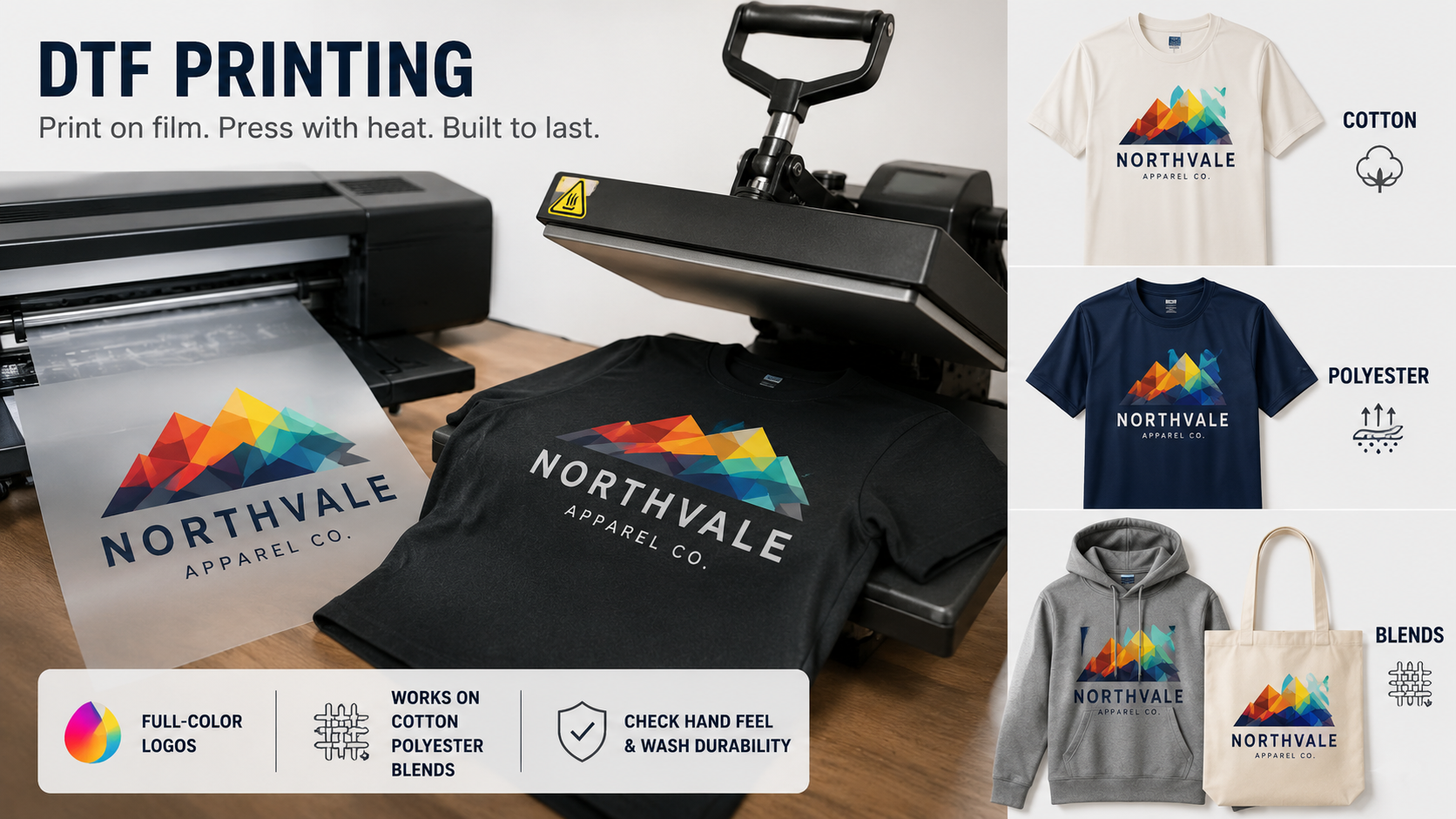
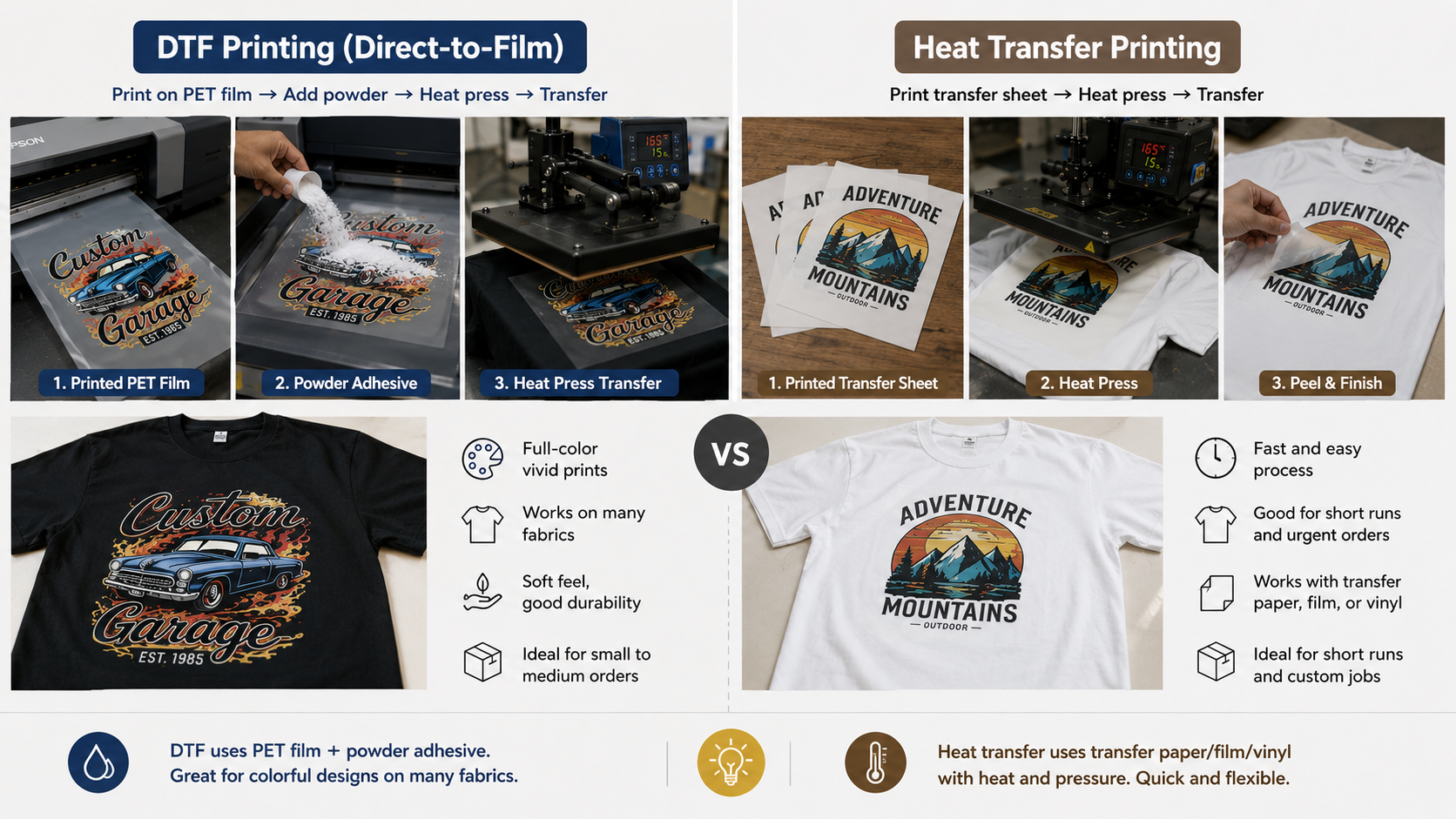
Direct-to-film printing, or DTF, prints the design onto a film and then transfers it to the T-shirt with heat. It is useful when you need full-color logos across different fabrics or product types.
DTF can work on cotton, polyester, and blended fabrics, so it is practical for mixed apparel projects such as T-shirts, hoodies, tote bags, or caps. It also handles vivid colors and detailed logos well, especially for small to medium custom orders.
The main point to check is print feel. DTF can feel slightly firmer than DTG, especially with large transfer areas. Before bulk production, confirm hand feel and wash durability, especially for uniforms, repeated wear, or sports activities.
4. Heat Transfer Printing
Heat transfer printing uses heat and pressure to apply a logo or design onto the T-shirt. The artwork may come from transfer paper, printed film, or vinyl material, depending on the order.
This method is useful for short runs, urgent campaigns, colorful graphics, and small custom projects. It can work on many T-shirt fabrics and is often easier to arrange when the order is too small for screen printing setup.
For example, if you need a short event campaign with several logo versions, heat transfer may be easier than making separate screens for each design. It can also work well for quick proofs or limited promotional T-shirts.
For large bulk orders, heat transfer may not always be the most cost-effective option. The final result depends on the transfer material, heat press settings, fabric type, and washing conditions.
Before approving bulk production, check hand feel, edge quality, and wash performance. This is especially important for staff shirts, sports shirts, or any T-shirt that will be worn many times.
5. Sublimation
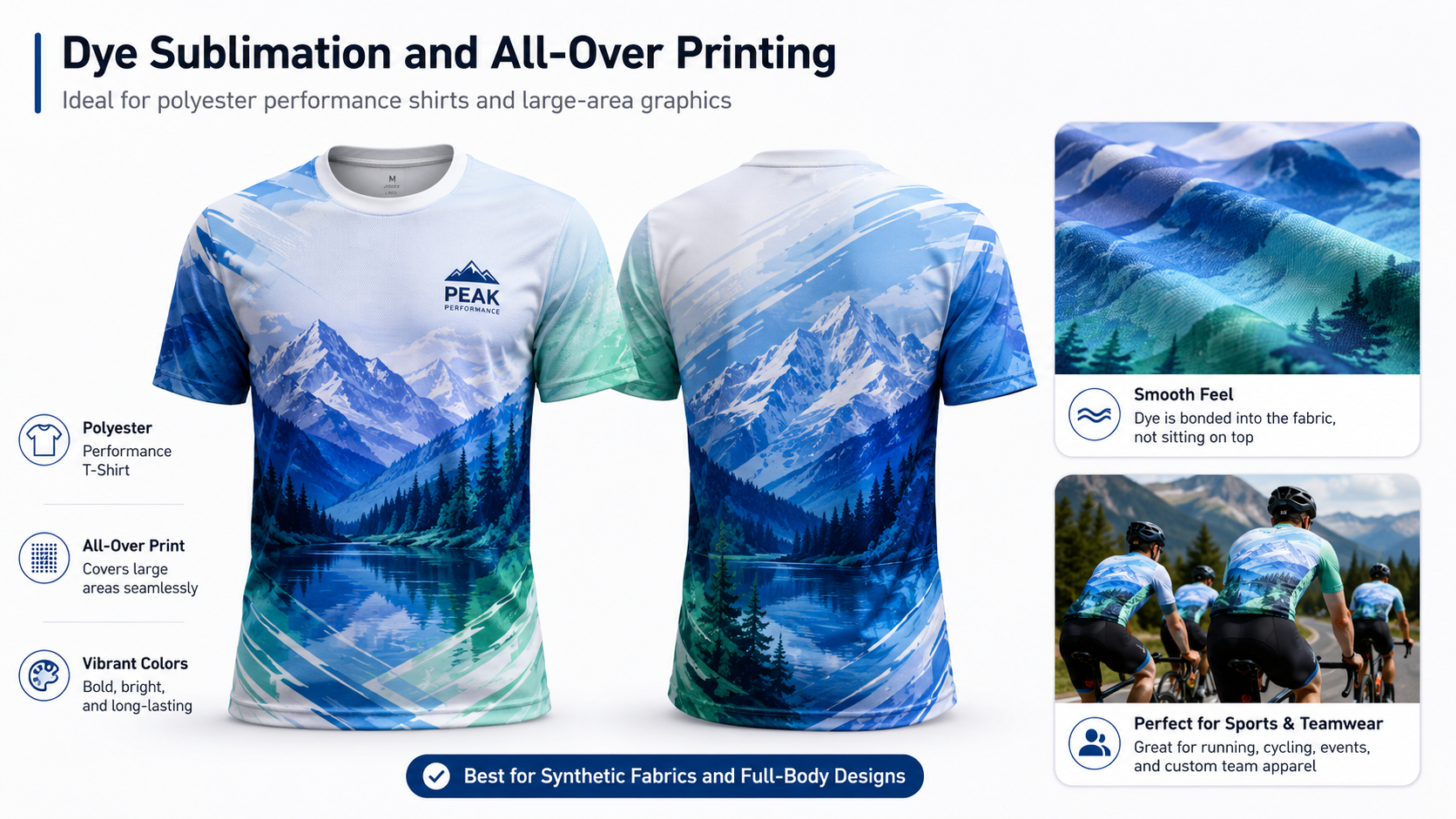
Sublimation printing is often a strong heat transfer printing method for polyester sports shirts and full-body designs. The dye bonds with the fabric instead of sitting on top, so the print can feel smooth and lightweight with vibrant colors.
This method works best on polyester or synthetic performance T-shirts and other synthetic fabrics. It is commonly used for sports shirts, running events, cycling apparel, teamwear, and all-over graphics, and it can also handle complex designs in short-run or custom projects. Sublimation printing is also useful when the artwork needs to cover a large area or the full shirt.
Sublimation is not a good match for cotton T-shirts. It also performs better on light-colored polyester fabrics than on dark shirts. If the design covers the full body, check seam areas, side panels, folds, and artwork alignment before bulk production, since the final result depends on the material, printer settings, and overall print quality.
6. Vinyl Printing / HTV
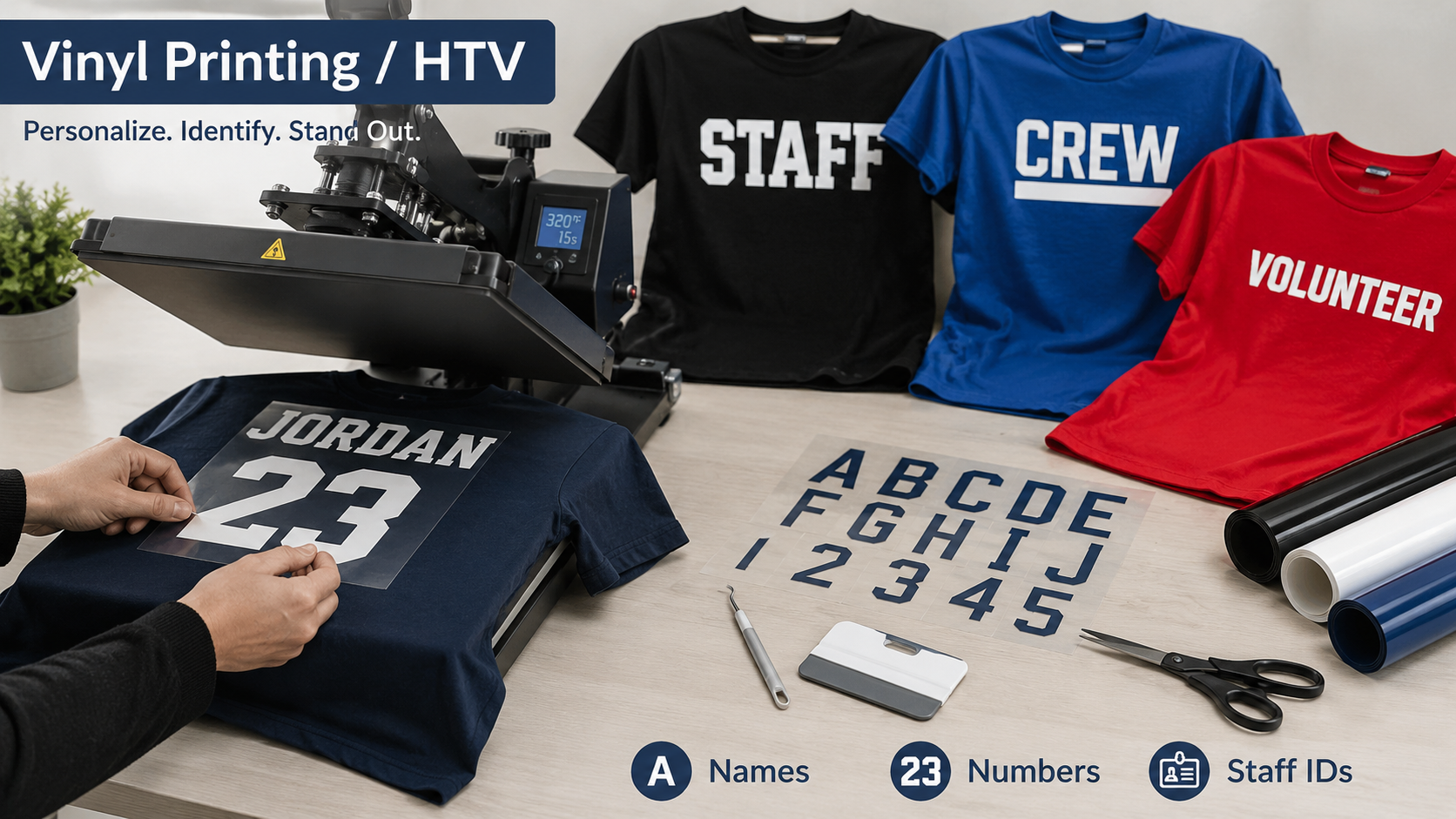
Vinyl printing, often called HTV or heat transfer vinyl, is useful when each shirt needs a different name, number, staff ID, or event label. Colored vinyl sheets are cut into letters, numbers, or simple shapes before being pressed onto the shirt.
This method is common for sports teams, event crew shirts, volunteer shirts, and staff uniforms. It works best for simple lettering and clear identification, especially when the same shirt style needs different personal details.
HTV is not ideal for detailed logos, gradients, or full-color images. If the artwork has many small details, DTF or DTG will usually be easier. Use HTV for identification and personalization, not for complex retail-style graphics.
7. Plastisol Transfer Printing
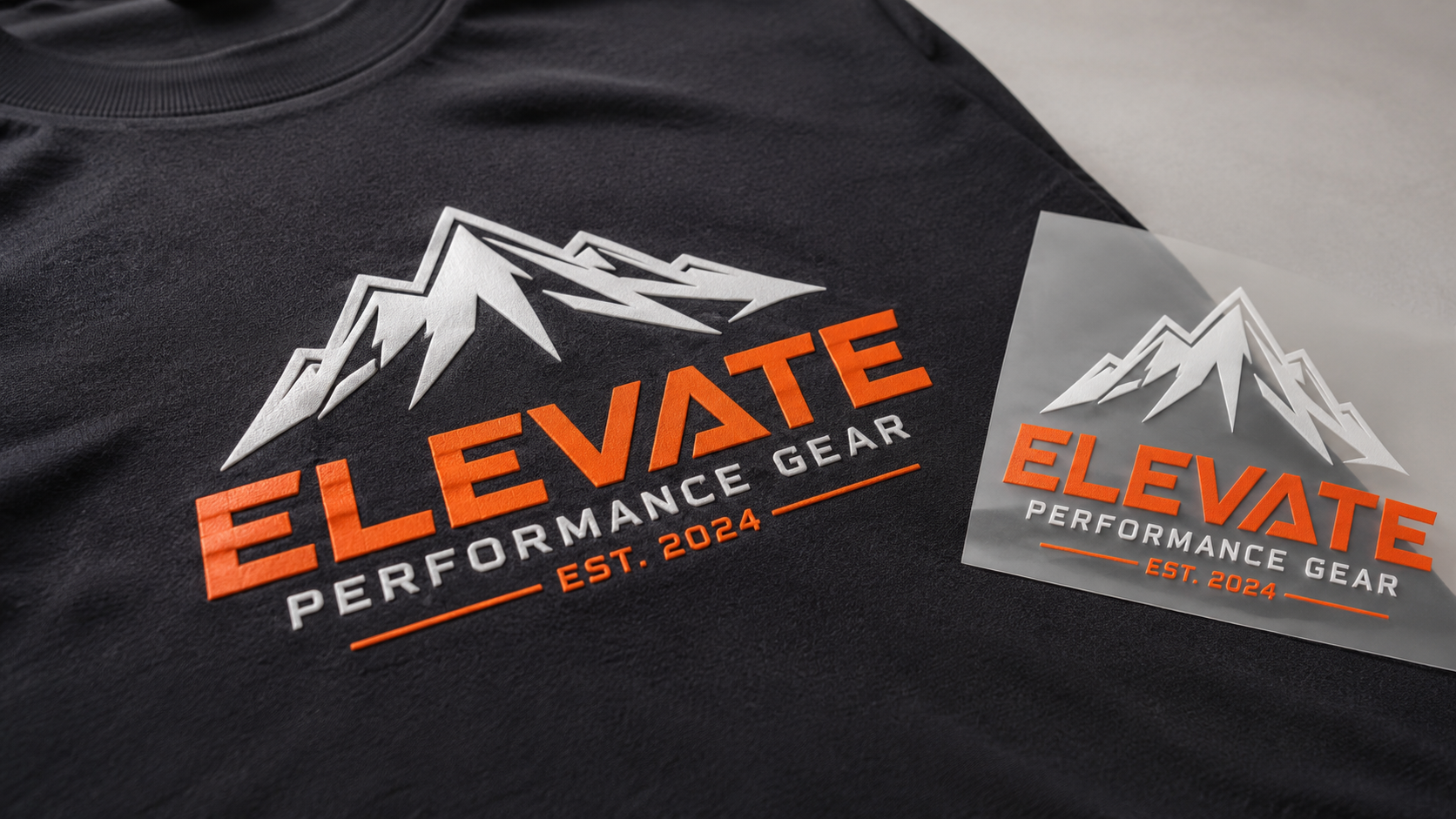
Plastisol transfer printing combines screen printing and transfer processes by screen printing a design with plastisol ink onto plastisol transfer paper first and then applying it to the garment later as plastisol transfers.
This method can create durable results, textured effects, and a screen-print-like surface, which makes it useful for merch drops, live events, limited promotional runs, or a print on demand business that needs portable production and vibrant output.
For large, simple bulk T-shirt orders, regular screen printing is often easier to compare first. Plastisol transfer makes more sense when the project needs special effects, transfer flexibility, or a stronger surface feel.
8. Embroidery for T-Shirt Logos
Embroidery is not technically printing, but many buyers compare it with T-shirt printing because it is another common way to add logos to apparel.
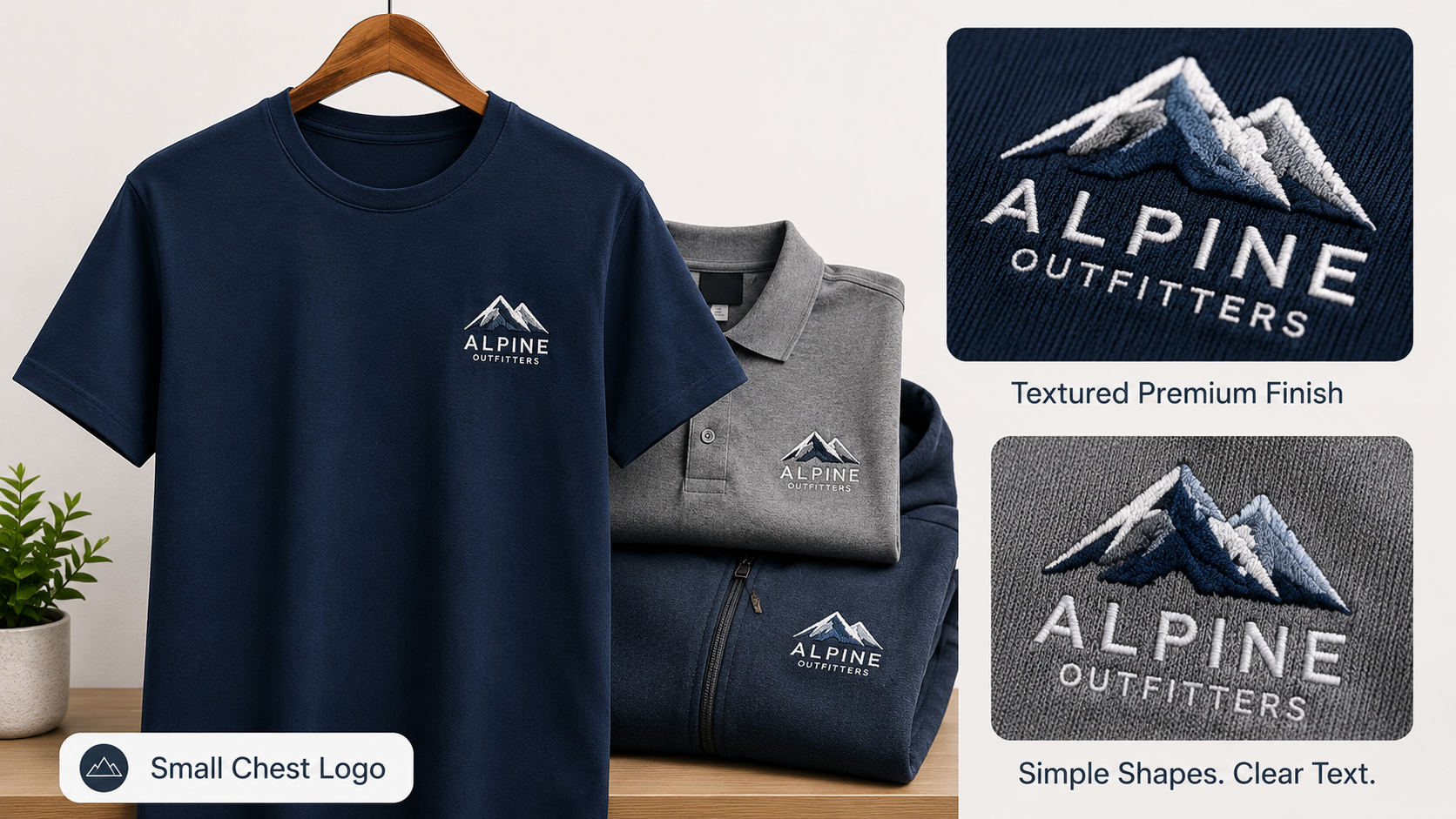
It works best for small chest logos and premium brand marks. Embroidery creates a textured, professional look that fits corporate apparel, polos, heavier T-shirts, hoodies, and uniforms. It can make a simple logo feel more polished, especially for employee apparel or corporate gifts.
Embroidery is not suitable for large photo-style artwork, gradients, or tiny text. Thin lines and small letters may lose detail when converted into stitches. Keep embroidered logos simple, with clean shapes, readable text, and enough spacing.
You may also hear about other printing techniques, such as discharge printing. These methods can be useful for specific effects, but most business buyers usually compare screen printing, DTG, DTF, heat transfer, sublimation, HTV, plastisol transfer, and embroidery first.
Which Printing Method Works Best for Your T-Shirt Fabric?
Logo printing cannot be separated from fabric. The same logo may need a different method on cotton, polyester, or a cotton-poly blend.
Do not confirm the printing method before checking the actual T-shirt fabric. A logo method that works well on cotton may not perform the same way on polyester quick-dry fabric.
Cotton T-Shirts
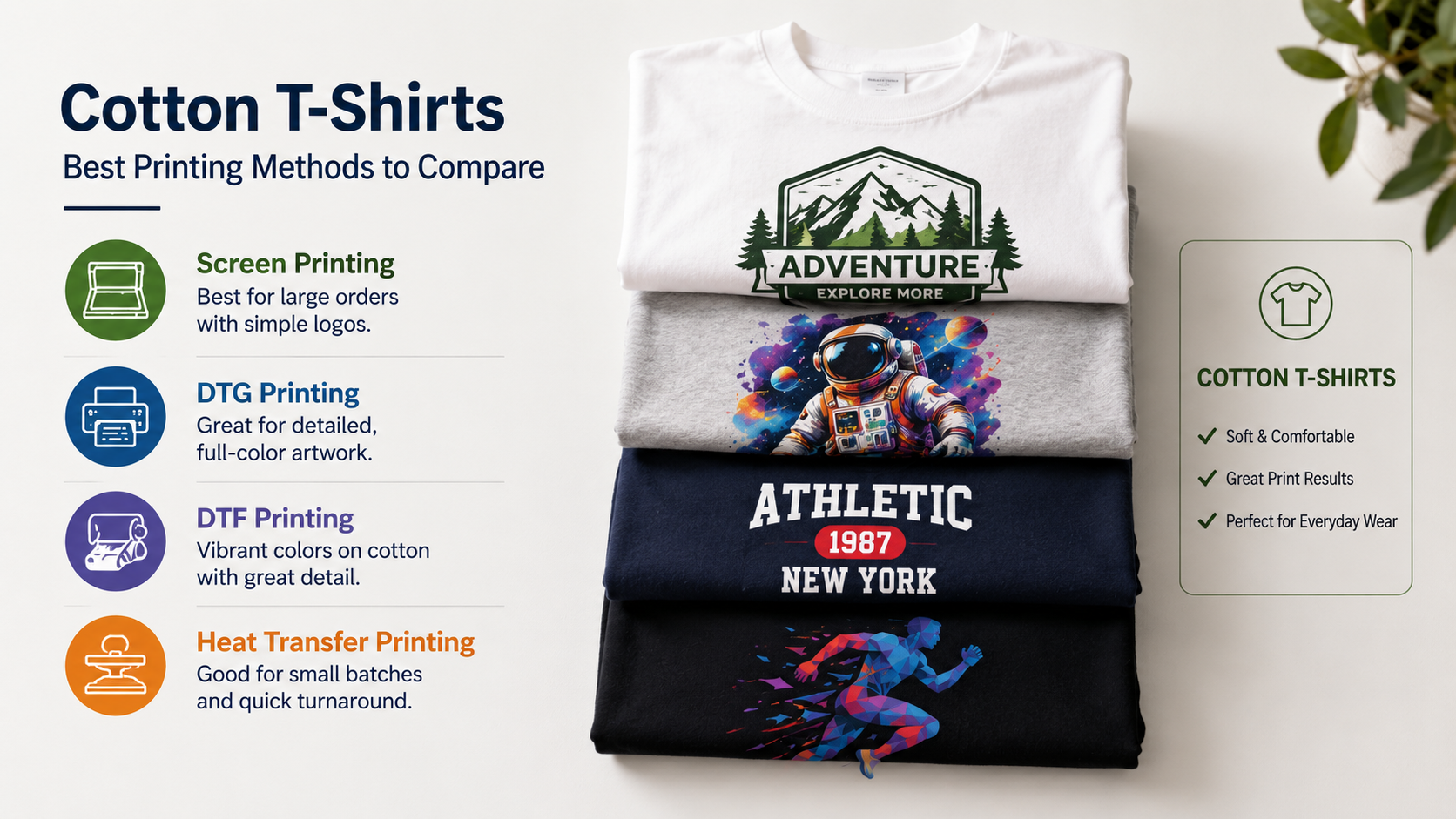
Cotton T-shirts are common for event shirts, employee shirts, casual merch, and promotional apparel. Cotton is a natural cellulosic fiber, and it often feels soft and comfortable for everyday wear. You can learn more about cotton fiber classification from this Cotton Incorporated textile fibers guide.
For cotton T-shirts, compare screen printing, DTG printing, DTF printing, and heat transfer printing.
For larger orders with simple logos, screen printing is often practical. For detailed full-color artwork, DTG or DTF may work better.
Polyester and Quick-Dry T-Shirts
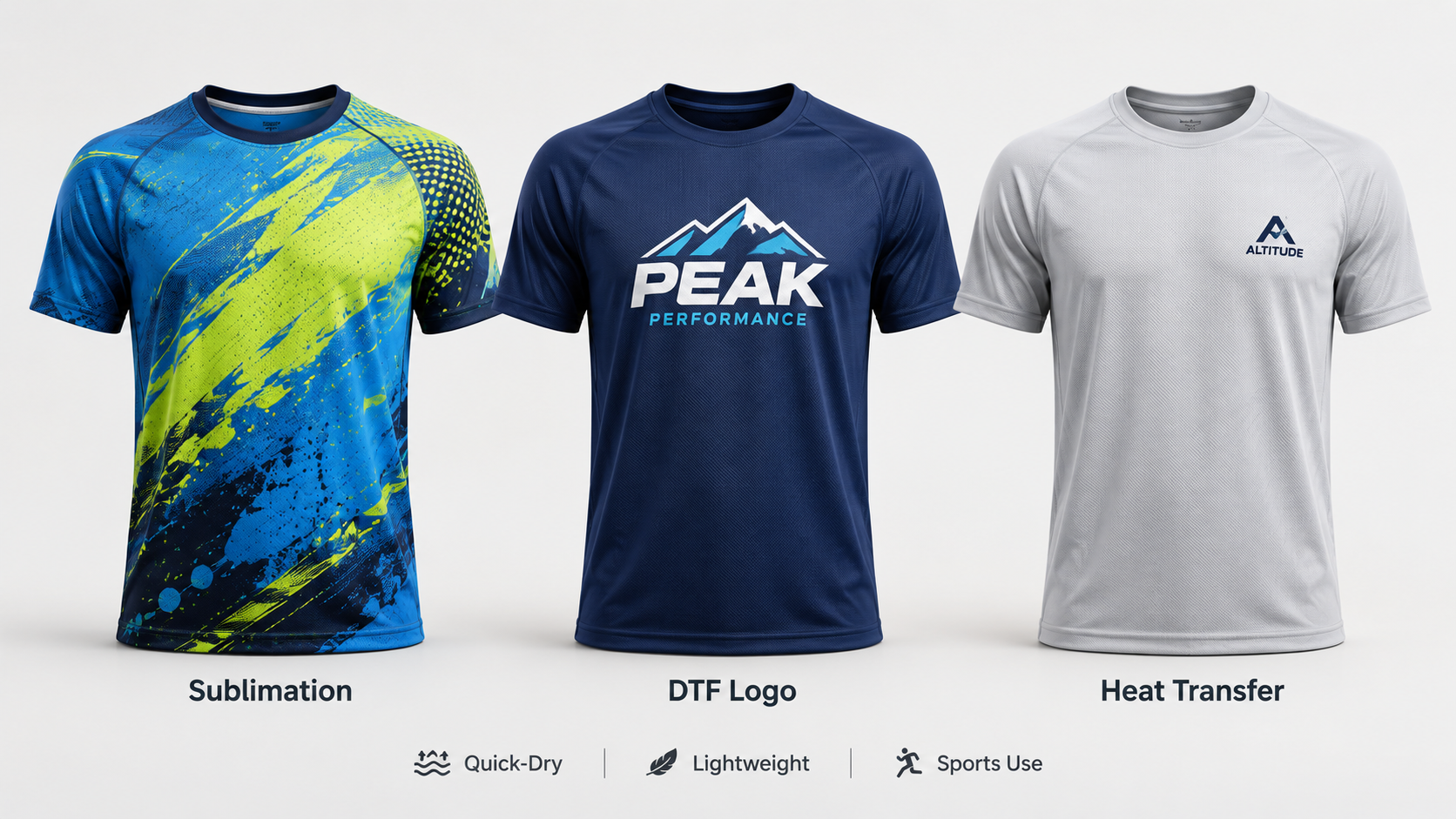
Polyester and quick-dry T-shirts are common for sports events, running activities, outdoor campaigns, and team apparel. Textile Exchange’s 2025 Materials Market Report states that polyester accounted for 59% of global fiber production in 2024.
This helps explain why polyester appears so often in modern performance apparel and promotional sportswear.
For polyester and quick-dry T-shirts, compare sublimation, DTF printing, and heat transfer printing.
Sublimation works well for polyester all-over designs. DTF or heat transfer can work for logo placement, depending on the fabric, stretch, and artwork.
For polyester performance shirts, confirm stretch, wash durability, and print adhesion before bulk production.
Cotton-Poly Blend T-Shirts
Cotton-poly blends can be practical for bulk custom apparel because they balance comfort, durability, and cost.
For cotton-poly blend T-shirts, compare screen printing, DTF printing, and heat transfer printing.
The final choice depends on the fabric ratio and logo design. If the order has strict color or washing requirements, check a sample before production.
Choose by Project: T-Shirt Style, Fabric, and Logo Method
The best printing method also depends on how the T-shirt will be used. A trade show giveaway does not need the same fabric or logo method as a sports event shirt.
| Project Use Case | Suggested T-Shirt Style / Fabric | Better Logo Printing Method |
|---|---|---|
| Trade show or event giveaway | Basic cotton or cotton-blend crew neck T-shirt | Screen printing or heat transfer |
| Employee uniform | Cotton-poly T-shirt or polo shirt | Screen printing or embroidery |
| Sports or running event | Polyester quick-dry T-shirt | Sublimation, DTF, or heat transfer |
| School or team activity | Basic cotton T-shirt | Screen printing or HTV |
| Festival merch or brand drop | Heavy cotton or oversized T-shirt | DTF, DTG, or screen printing |
| Corporate gift | Premium cotton T-shirt or polo | Embroidery or screen printing |
Use this table as a starting point, not a fixed rule. The final method still depends on your logo file, color count, fabric, quantity, and delivery date.
For a wider apparel program, T-shirts can also be part of a broader custom apparel solution with polos, hoodies, caps, jackets, and other branded items.
Before You Order Custom Logo T-Shirts
Before bulk production, confirm the details that affect the final result. This short checklist can help reduce rework, delays, and mismatched expectations.
Check these details before you approve production:
- T-shirt details: style, fabric, size range, quantity
- Logo details: file format, Pantone / brand colors, print size, print position
- Printing details: method, physical sample, hand feel, wash test
- Packaging details: polybag, size label, gift box, carton marks
- Delivery details: production time and shipping deadline
For best results, prepare a vector logo file when possible. It helps keep logo edges clean for screen printing, embroidery, and large front prints.
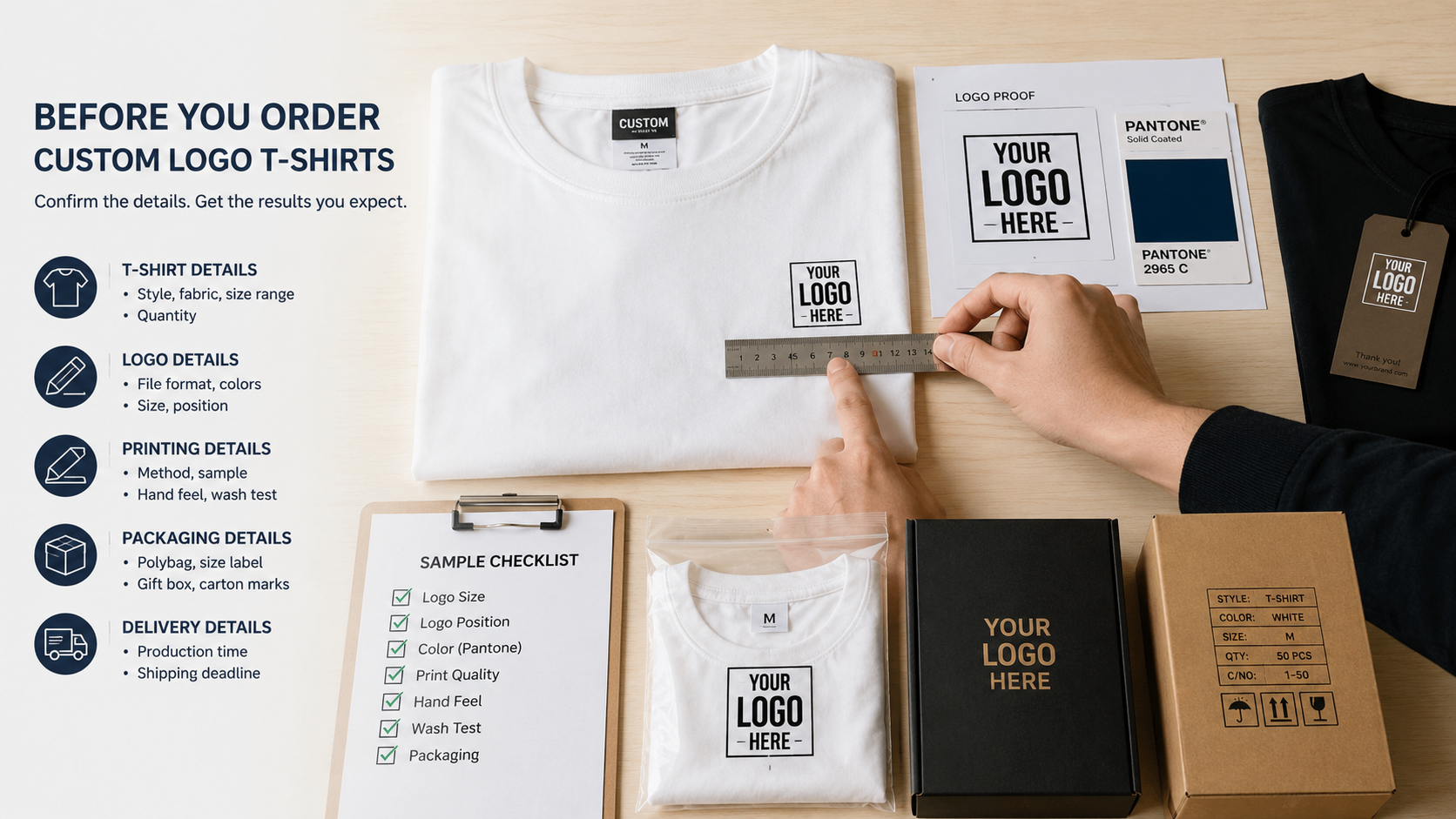
Before production starts, approve logo size, color, position, hand feel, and washing result.
A digital mockup can show logo placement, but it cannot fully show print thickness, fabric hand feel, or wash performance. For bulk orders, a physical sample is safer when the logo has small text, gradients, large transfer areas, or strict brand colors.
For urgent event T-shirts, start with a standard T-shirt, one main logo position, and a simple logo method before adding sleeve prints, special finishes, custom labels, or gift packaging.
If the shirts are sold or distributed in the U.S., textile products may also need proper fiber content, country of origin, and business identity labeling. The FTC textile labeling guidance explains these requirements in more detail.
For large event programs, custom T-shirts can also be combined with bags, bottles, caps, lanyards, and other promotional gifts for events.
Choose the Right T-Shirt Printing Method for Your Project
There is no single best T-shirt printing method for every order. The right choice depends on logo design, fabric, quantity, budget, use case, and deadline.
For simple bulk logos, screen printing is often practical. For detailed full-color logos, DTF or DTG may work better. For polyester sports shirts and all-over designs, sublimation is usually a stronger option. For names and numbers, HTV is useful. For small premium logos, embroidery can create a cleaner corporate look.
The safest approach is to confirm the T-shirt fabric, logo file, print size, print position, and sample result before bulk production.
Need Help Choosing a T-Shirt Printing Method?
Not sure which method fits your logo, fabric, or event timeline? Send us your T-shirt style, quantity, logo file, fabric preference, packaging needs, and delivery date.
TOMAS Crafts helps businesses source custom T-shirts, apparel, and promotional gifts for events, employee programs, school teams, sports campaigns, and branded merchandise. Our team can help compare practical printing options before production, so your project is easier to quote, sample, and deliver. Contact US for a custom logo T-shirt quote.
FAQs
What are the main types of T-shirt printing?
The main t shirt printing techniques include screen printing, DTG printing, DTF printing, heat transfer printing, dye sublimation, vinyl / HTV, plastisol transfer, and embroidery for logos.
Which T-shirt printing method is best for bulk orders?
Screen printing is often a strong choice for bulk orders with simple logos and fewer colors. It becomes more practical when the same design is printed in larger quantities.
Which method is best for full-color T-shirt logos?
DTF and DTG are often better for detailed prints and colorful designs when you need a full-color logo. DTF can work across more fabric types, while DTG is often used on cotton or cotton-heavy shirts. Sublimation works well for polyester all-over designs.
Which printing method works best on cotton T-shirts?
Screen printing, DTG, and DTF are common options for cotton or cotton-heavy T-shirts. Screen printing is practical for bulk simple logos, while DTG and DTF can work better for detailed artwork.
Which method works best for polyester sports T-shirts?
Sublimation, DTF, or heat transfer may work depending on the design, fabric, and durability needs. Sublimation is often strong for polyester all-over sports shirts, while DTF or heat transfer may work for logo placement.
Is embroidery good for T-shirt logos?
Embroidery works well for small premium logos, especially on heavier T-shirts, polos, hoodies, and uniforms. It is not suitable for large detailed artwork, gradients, or very small text.