Choosing the right standard banner sizes affects visibility, readability, installation, shipping, and event impact. A banner that fits the space but carries too much text can still fail. This guide explains common banner sizes, where each size works best, and how to choose the right fit for trade shows, storefronts, outdoor promotions, and event displays.
Standard Banner Sizes Chart
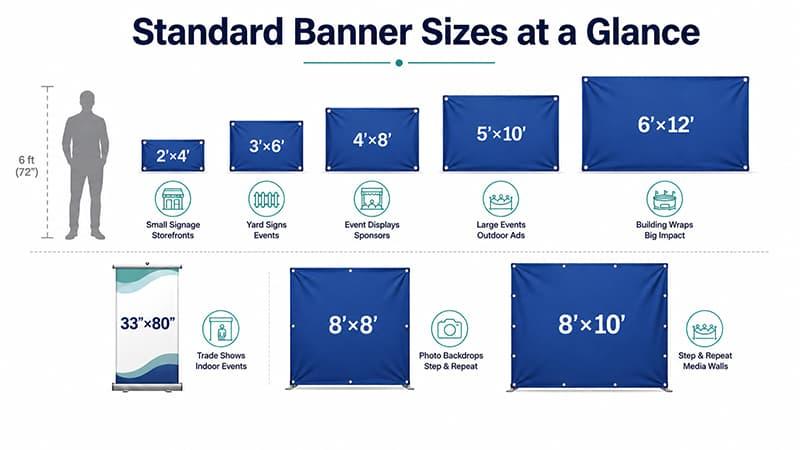
| Banner type | Common size | Approx. metric size | Best for |
|---|---|---|---|
| Small banner | 2′ x 4′ | 60 x 120 cm | Tables, counters, indoor signs |
| Medium banner | 3′ x 6′ | 90 x 180 cm | Booths, storefronts, local events |
| Large banner | 4′ x 8′ | 120 x 240 cm | Outdoor promotions, stage areas |
| Extra large banner | 5′ x 10′ | 150 x 300 cm | Roadside visibility, sports events, large venues |
| Extra large banner | 6′ x 12′ | 180 x 360 cm | Large outdoor venues, sports fields, roadside promotions |
| Retractable banner | 33″ x 80″ | 85 x 200 cm | Trade shows, conferences, pop-up booths |
| Event backdrop | 8′ x 8′ | 240 x 240 cm | Photo walls, product launches, press areas |
| Event backdrop | 8′ x 10′ | 240 x 300 cm | Stage areas, larger photo walls, press events |
Metric sizes are approximate. Final production size may vary slightly depending on the supplier’s template, material, finishing method and local measurement standard.
Bigger is not always better. A banner can be large and still fail if the text is too small, the message is crowded, or the size does not fit the venue.
When buyers compare banners and their sizes, the best starting point is not only the size of banners on a price list. A good standard banner should fit your space, give enough space for key messages, and leave room for layout and image clarity.
Common Standard Banner Sizes Explained
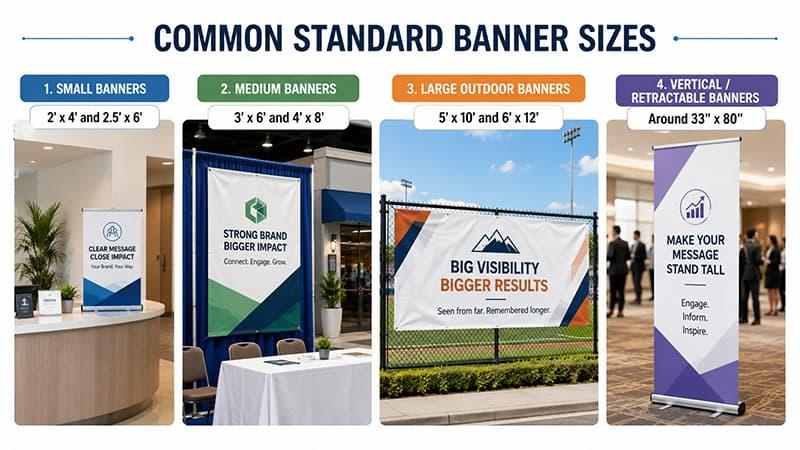
Small Banners: 2′ x 4′ and 2.5′ x 6′
Small banners work best when people stand close to the display. You can use them on tables, counters, reception desks, booth walls or indoor promotional areas.
For B2B events, a small banner is useful at a registration desk or product sample area. Keep the layout simple. A logo, one short message and a website or QR code are usually enough.
Medium Banners: 3′ x 6′ and 4′ x 8′
Medium banners are popular because they are visible without being difficult to handle. They are large enough for a clear brand message, but still practical for shipping, storage and repeated event use.
A 3′ x 6′ banner works well for small trade show booths, school events, local promotions and indoor campaigns. A 4′ x 8′ banner gives more space and is often used for storefronts, event entrances and booth back walls.
Large Outdoor Banners: 5′ x 10′ and 6′ x 12′
Large banners are made for distance. They are often used at outdoor events, sports fields, shopping areas, building entrances and roadside promotions.
If people will see the banner from a car or across a large venue, choose a larger size and keep the design simple. Use large text, strong contrast and fewer words. Vinyl banner sizes like 5′ x 10′ and 6′ x 12′ usually work better outdoors because the message has enough room to be seen from far away.
Vertical Banners and Retractable Banners: Around 33″ x 80″
Vertical banners and retractable banners are common at trade shows, conferences and pop-up events. They are easy to carry, quick to set up and suitable for repeated use.
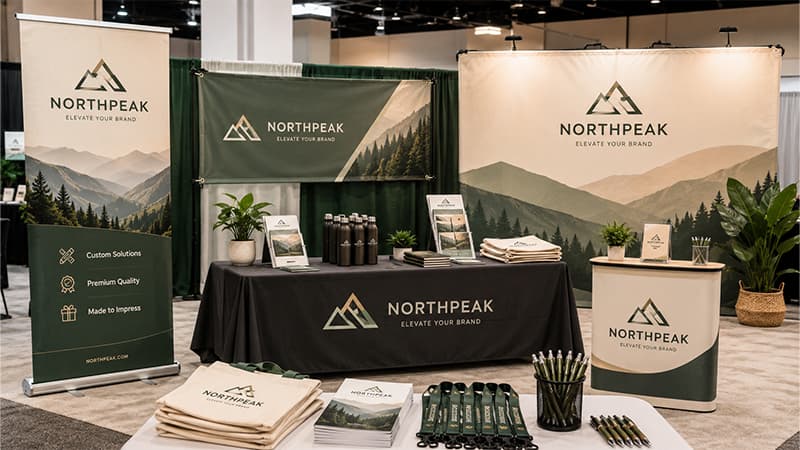
For a 10×10 trade show booth, one or two retractable banners can help visitors understand who you are, what you offer and why they should stop. They also work well with branded table covers, lanyards, tote bags, brochures and giveaway items.
Event Backdrops: 8′ x 8′ and 8′ x 10′
Backdrops are used for photo walls, product launches, stage areas, press events and brand activations. They make the event area look finished and help your logo appear in photos and videos.
If your event includes media coverage, customer photos or social content, a backdrop is usually more useful than a standard hanging banner.
Physical Banner Sizes vs Banner Ad Sizes
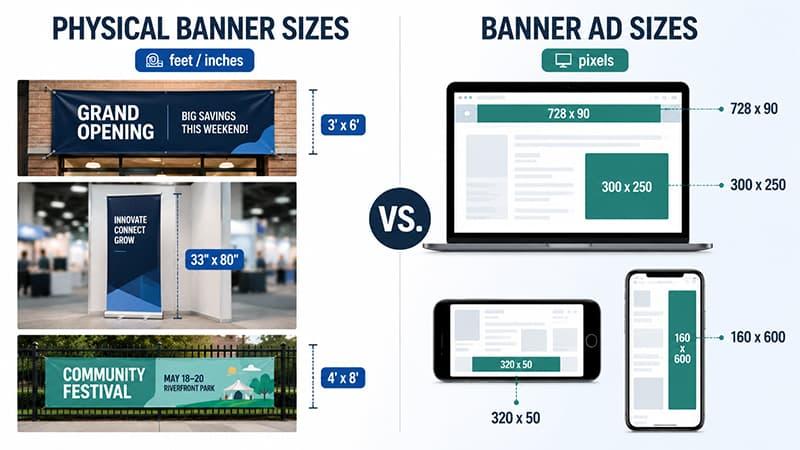
The phrase banner sizes can mean two different things. In print and signage, it usually refers to physical banners such as vinyl banners, horizontal banners, vertical banners and retractable displays. These are measured in feet, inches, centimeters or meters.
In digital marketing, banner ad sizes refer to display advertising units shown to internet users on websites, apps and advertising networks. Common ad sizes are used for Google Display Network campaigns and mobile ads. Those banner ad sizes are useful for online ads, but they do not help you choose a printed banner for a trade show booth, storefront or outdoor promotion.
For TOMAS customers, the more useful question is usually practical: which physical banner size will fit for your space, draw attention from the right distance, and work with the rest of your print marketing materials?
Banner Size Guide by Viewing Distance
Viewing distance is one of the first things to check when comparing standard banner sizes.
| Viewing distance | Approx. metric distance | Recommended banner type | Notes |
|---|---|---|---|
| Close view, 3-10 feet | 1-3 m | 2′ x 4′ or tabletop banner | Good for counters, registration desks and product sample tables |
| Medium view, 10-30 feet | 3-9 m | 3′ x 6′ or 4′ x 8′ | Good for booths, storefronts and indoor events |
| Long view, 30-60 feet | 9-18 m | 4′ x 8′ or 5′ x 10′ | Good for larger halls, entrances and outdoor promotions |
| Far view, 60+ feet | 18 m+ | 6′ x 12′ or custom large banner | Good for roadsides, sports fields and large outdoor venues |
A simple rule: the farther away your audience is, the fewer words your banner should use. For long-distance viewing, focus on a clear logo, one short message and strong color contrast. For general sign readability and visual clarity, contrast, non-glare finishes and simple layouts are also important.
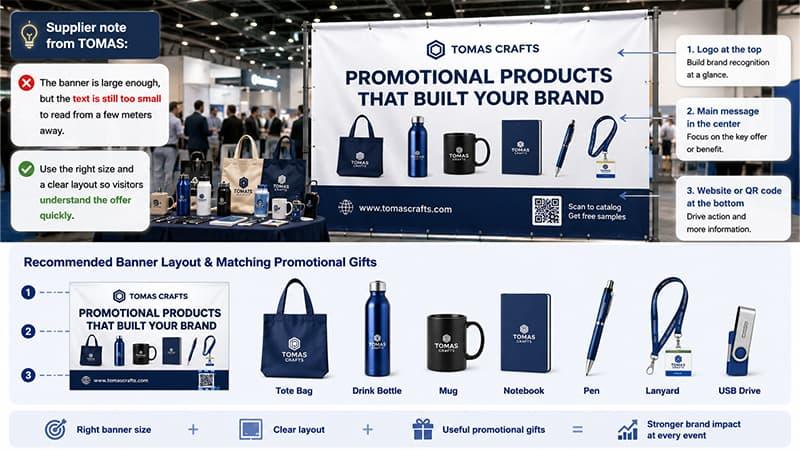
Supplier note from TOMAS:
In some event projects, buyers choose a standard banner size correctly but use artwork made for a flyer or brochure. The banner is large enough, but the text is still too small to read from a few meters away.
For trade show banners, TOMAS usually suggests keeping the layout in three parts: logo at the top, one main message in the center, and a website or QR code at the bottom. Detailed product specifications are better placed in brochures, table cards or catalogs. The banner should help visitors understand the offer quickly, not force them to read a full product introduction.
How to Choose the Appropriate Banner Size for Your Space
Start with the physical space and location. Measure the booth, wall, entrance, table or outdoor area where the banner will be placed. If the venue has display rules, check them before production.
Next, think about viewing distance. A banner seen from 5 to 10 feet away can use smaller text and more detail. A banner seen from 30 to 60 feet away needs larger text, fewer words and a cleaner layout.
Then decide what the banner needs to do. Is it for brand awareness, wayfinding, product promotion, lead generation or photo branding? A banner with one clear job usually works better than a banner trying to say too much.
To choose the appropriate banner, match the banner size to the space, the viewing distance, the installation method and the message. A banner that does not fit for your space can create extra work even if the artwork looks good on screen.
For international buyers and wholesalers, packing and shipping also matter. A banner that looks good but is difficult to ship, install or reuse may not be the best choice for a campaign with several events.
Sizes: How to Choose for Different Banner Placements
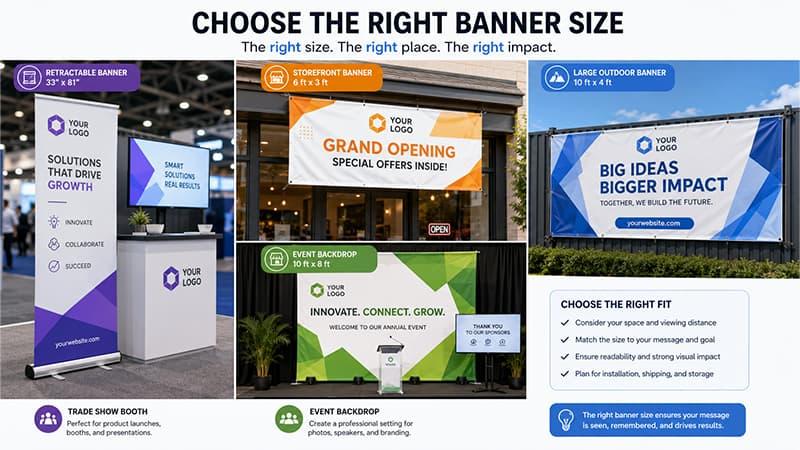
Different banner sizes work better in different places. A horizontal banner is useful on a booth wall, storefront, fence or stage front. A vertical hanging banner or retractable banner is usually better when floor space is limited or when buyers need a display that can be moved between events.
If you are not sure which size to choose, make a simple placement plan first: where the banner will sit, how far away people will stand, what message they need to read, and whether the banner needs to travel to another event later.
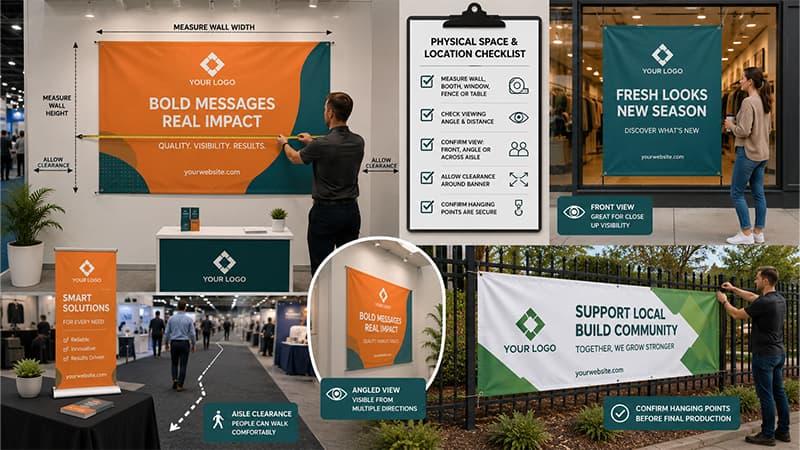
Physical Space and Location Checklist
Physical space and location affect banner sizes more than many buyers expect. Before confirming production, check the actual installation area instead of choosing from standard banner sizes alone.
- Measure the wall, booth, window, fence or table where the banner will be placed.
- Check whether the banner will be viewed from the front, from an angle or across a busy aisle.
- Confirm whether people will walk past slowly, stand nearby or see the banner from a moving car.
- Leave enough space around the banner so it does not look crowded next to shelves, counters or other types of signs.
- For shop windows stretched across market stalls or fences outside local businesses, check the hanging points before artwork is finalized.
This step helps you choose the appropriate banner size before you spend time on artwork. It also prevents a common mistake: designing to the dimensions of a template before checking the real display location.
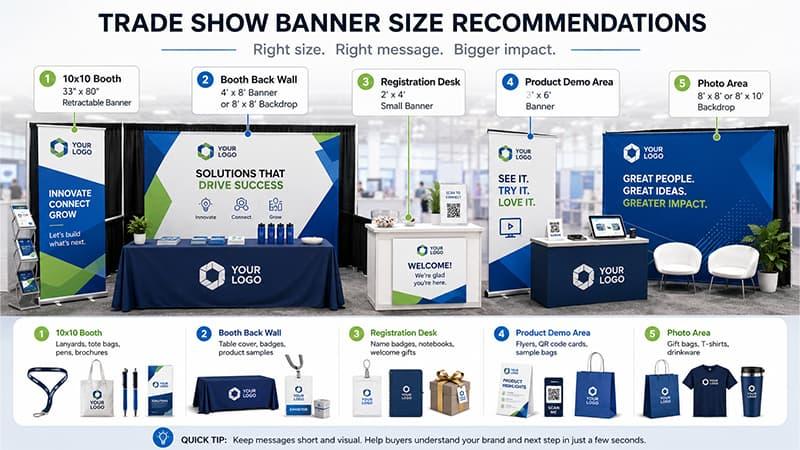
Banner Size Recommendations for Trade Shows
| Trade show area | Recommended banner size | Suggested matching items |
|---|---|---|
| 10×10 booth | 33″ x 80″ retractable banner | Lanyards, tote bags, pens, brochures |
| Booth back wall | 4′ x 8′ banner or 8′ x 8′ backdrop | Table cover, badges, product samples |
| Registration desk | 2′ x 4′ banner | Name badges, notebooks, welcome gifts |
| Product demo area | 3′ x 6′ banner | Flyers, QR code cards, sample bags |
| Photo area | 8′ x 8′ or 8′ x 10′ backdrop | Gift bags, T-shirts, drinkware |
For trade shows, banners should do more than fill empty space. They should help buyers understand your product category, brand message and next step within a few seconds.
If your booth has several display campaigns running at the same time, use one banner for the main offer and keep supporting messages on flyers, brochures or table cards. Punchy messages like promoting a seasonal deal usually work better on banners than long product descriptions.
Outdoor Banner Sizes for Promotions and Storefronts
Outdoor banners need to be readable from a distance and strong enough for the location. For storefronts and local promotions, 3′ x 6′ and 4′ x 8′ are common choices. For larger outdoor spaces, 5′ x 10′ or 6′ x 12′ may work better.
A good outdoor banner usually includes:
- Brand name or logo
- One main offer or event message
- Large, readable text
- High contrast colors
- A website, phone number or QR code
- Grommets or other installation hardware
If the banner will be used outside for several days or weeks, ask your supplier about material thickness, edge finishing, wind resistance, grommet spacing and packing method.
Installation and Hardware for Vinyl Banners
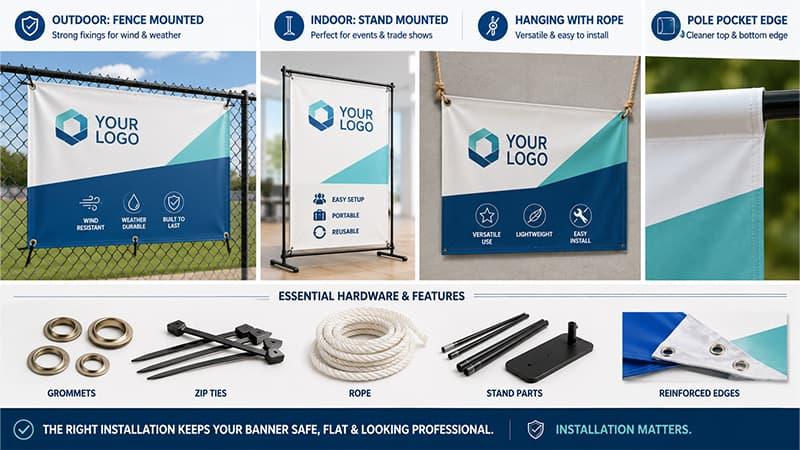
Material matters, especially outdoors. Vinyl banners are common because they are strong, flexible and easier to roll for shipping. But material alone is not enough. Installation and hardware often decide whether the banner stays flat, safe and readable.
For hanging banners, ask about grommets, zip ties, stands, rope, reinforced edges and pole pockets. Grommets and zip ties are common for fences and temporary outdoor setups. Stands work better for indoor events where you cannot attach the banner to a wall. Pole pockets are useful when the banner needs a cleaner top or bottom edge.
If the banner will be installed outdoors, tell your supplier where it will be used. A banner for a sheltered storefront is different from a banner on an open sports field. Wind exposure, fixing points and local safety rules can change the best types of signs and the best installation method.
Banner Buying Tips for Small Business Owners and Event Buyers
These banner buying tips apply to small business owners, wholesalers and event buyers who need banners for trade shows, storefronts, launches or promotional campaigns.
- Choose the right banner size based on the venue, not only the lowest price.
- Use a horizontal banner when you need to stretch across a wall, window, booth back panel or fence.
- Use vertical banners and retractable displays when floor space is limited or when the display must travel.
- Keep key messages short enough to read at a glance.
- Design to the dimensions of the final banner, not to a flyer, catalog page or social media graphic.
- Confirm installation and hardware before approving artwork.
These checks are simple, but they reduce rework. They also help the banner align with your banner’s real purpose: grab attention, guide visitors, explain the offer and support the rest of the campaign materials.
How to Match Banners with Promotional Gifts
For many B2B campaigns, the banner is only one part of the event setup. It is often better to plan the banner together with promotional gifts and branded materials.
| Event type | Banner recommendation | Matching promotional items |
|---|---|---|
| Trade show booth | Retractable banner and booth backdrop | Tote bags, lanyards, pens, brochures |
| Product launch | 8′ x 8′ photo backdrop | Gift bags, custom T-shirts, drinkware |
| Corporate event | Medium banner and reception sign | Notebooks, badges, mugs |
| School or community event | 3′ x 6′ banner | Stickers, medals, eco bags |
| Sports event | 5′ x 10′ outdoor banner | Caps, wristbands, drawstring bags |
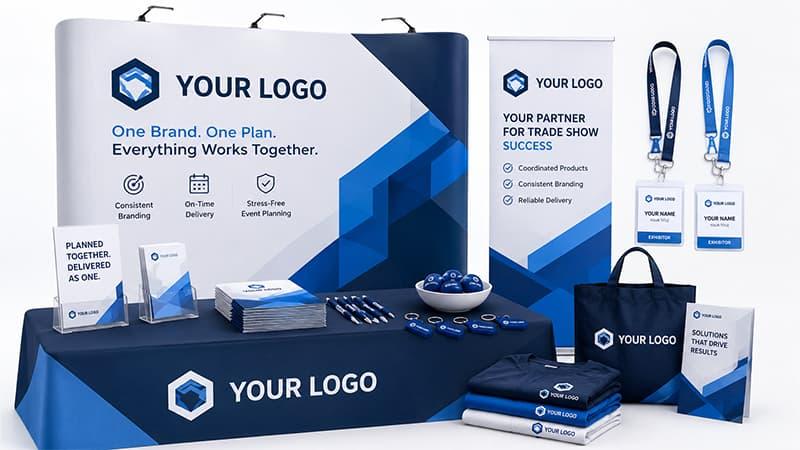
When the banner, bags, badges and gifts use the same logo colors and campaign message, the event setup feels more consistent. It also gives visitors more ways to remember your brand after they leave.
Supplier note from TOMAS:
Many trade show buyers start by asking for a banner or backdrop only. Once we check the booth plan, they often realize they also need lanyards, name badges, tote bags, brochures, T-shirts or small giveaway items.
When these items are sourced from different suppliers, logo colors and delivery times can become inconsistent. A banner may use one shade of blue, while the bags or lanyards use another. To avoid this, TOMAS suggests planning the event kit together: banner, backdrop, badges, bags and promotional gifts. This makes it easier to keep the logo file, brand color and delivery schedule under control.
Print File Setup: Bleed, Safe Zone and Resolution
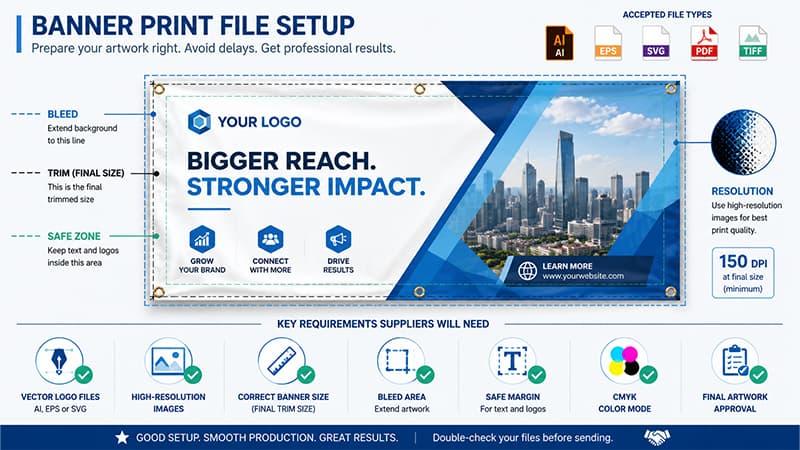
Before production, prepare your artwork file carefully. A clear file helps reduce delays, proofing problems and print quality issues. If you are also preparing small printed materials, TOMAS has a separate business card size guide that explains common print size and layout basics.
For most banner projects, suppliers will need:
- Vector logo files when possible
- High-resolution images
- Correct banner size
- Bleed area
- Safe margin for text and logos
- CMYK color mode if required
- Final artwork approval before production
For print files, bleed gives the printer extra artwork area outside the final trim size. Adobe’s guide to printer marks and bleed explains how bleed is used in professional print setup.
For close-view banners, image quality matters more because people can see small details. For large outdoor banners, readability from a distance matters more than small design details.
When Should You Choose a Custom Banner Size?
Standard banner sizes work for many events, but custom sizes are useful when the display space is unusual or when the event has a specific visual requirement.
Choose a custom banner size when:
- The booth or wall has exact measurements
- You need a large stage or photo backdrop
- The banner must fit a storefront window
- You want matching sizes across several event locations
- The campaign design needs a special layout
If you are comparing standard banner sizes for several events, TOMAS can help you choose sizes that fit your space, artwork and promotional gift plan.
Simple Diagram Plan Before Production
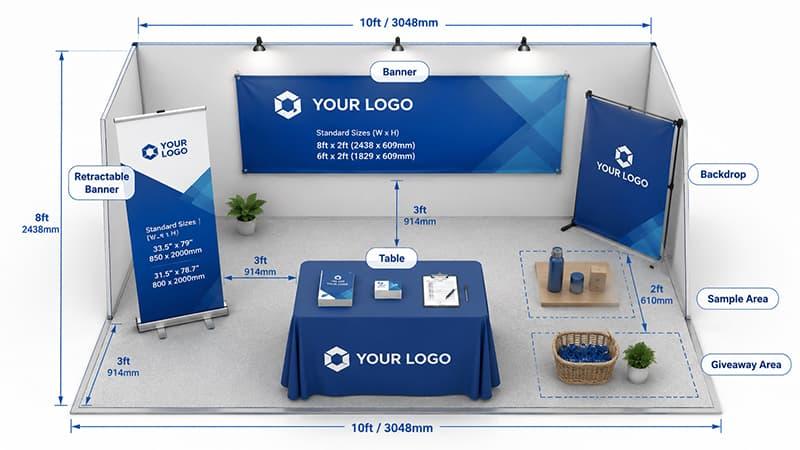
Before sending artwork, make a simple diagram of an array of your event materials. It does not need to be a professional drawing. A quick layout showing the booth wall, banner, table, backdrop, product samples and giveaway area is often enough.
This diagram helps the supplier see whether the standard banner size fits the physical space and location. It also helps you decide whether a horizontal banner, vertical hanging banner, retractable banner or backdrop will work better.
Conclusion
The right banner size depends on the display space, viewing distance, message length, material, and installation method. A small indoor banner, a retractable trade show banner, and a large outdoor vinyl banner all serve different purposes.
Before ordering, measure the space, check how far away people will view the banner, keep the message short, and confirm the artwork, material, and hardware. Choosing the right size from the start helps your banner look clearer, fit better, and support the rest of your event branding.
Need Help Choosing Banners and Event Giveaways?
Not sure which banner size, material, or matching promotional gifts will work best for your event? TOMAS Crafts can help you plan a complete event branding kit before production starts.
Share your event type, display space, quantity, logo file, deadline, and shipping destination with our team. We can help you compare banner sizes, backdrops, tote bags, lanyards, badges, drinkware, apparel, and other branded items for a complete event setup.
[Get a Custom Event Branding Quote]
FAQs
1. What size banner is best for a trade show booth?
For a 10×10 trade show booth, a 33″ x 80″ retractable banner is a practical choice because it is easy to set up, move and reuse. If you need stronger brand visibility, add a 4′ x 8′ back-wall banner or an 8′ x 8′ backdrop.
2. What size banner should I use for an event backdrop?
For product launches, photo walls and stage areas, 8′ x 8′ and 8′ x 10′ are common backdrop sizes. The right size depends on the venue space, how many people will stand in front of it and whether the backdrop needs to show clearly in photos or videos.
3. Are standard banner sizes different for indoor and outdoor use?
The sizes can be similar, but outdoor banners usually need larger text, stronger material and better installation hardware. Indoor banners can include more detail because people usually view them from a shorter distance.
4. What information should I send before ordering custom banners?
Send your event type, required quantity, banner size, logo file, artwork file if available, deadline, shipping destination and any venue requirements. If you are not sure about the size, send a photo or measurement of the display area so the supplier can recommend the right option.