
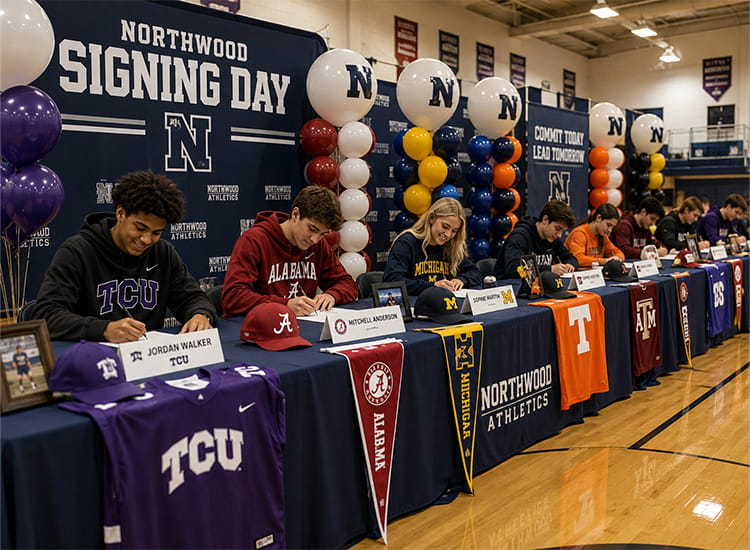
Planning a Signing Day often starts with a few familiar pieces: a table, school colors, a college hat or jersey, and perhaps a sign or backdrop. Once you begin putting everything together, however, the choices quickly add up. A setup for one athlete may look very different from a school ceremony with several signings, and the same decorations can feel balanced in one space but crowded in another.
The Signing Day table ideas below show how those pieces can come together in different settings, from individual athlete signings and school-wide ceremonies to multi-athlete events, media setups, and smaller venues. Along the way, we’ll look at where table covers, runners, backdrops, banners, signs, college gear, and sports details make the most sense.
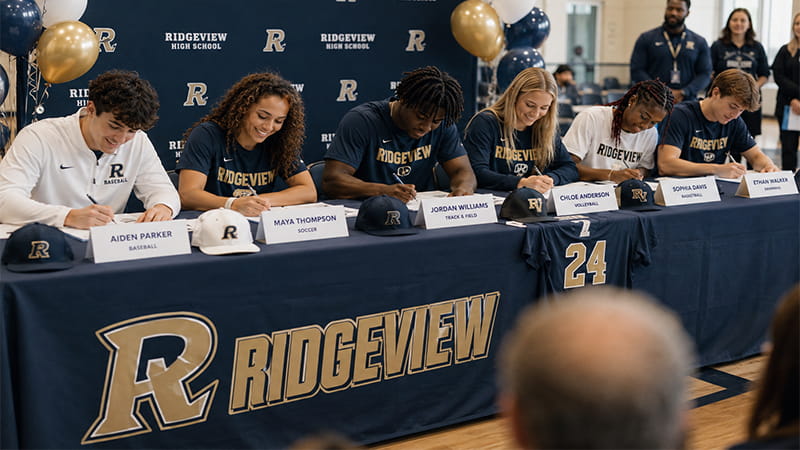
8 Signing Day Table Ideas for Different Setups
1. Classic School-Color Signing Table
For a traditional school-wide Signing Day, school colors give the whole setup a natural starting point. A full draped tablecloth creates a softer, more formal look on a stage or in a gym, while a fitted cover gives the table a cleaner outline when the school name or athletics logo needs to stay prominent across the front.
Behind the table, a full-width school banner or fabric backdrop can carry the larger visual identity. You do not need every school color on every surface; a secondary color or neutral tone can help the athlete, paperwork, and college gear stand apart.
An athlete name sign and one college hat or jersey are often enough to finish the table. If the athletic department holds several signings during the year, the main school-branded cover and backdrop can stay consistent while the athlete-specific details change.
2. Athlete Name and Jersey Number Setup
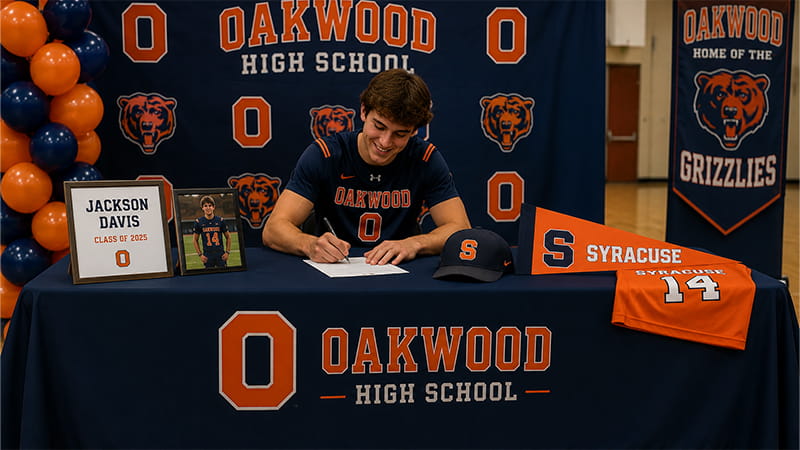
An individual signing gives you more room to make the athlete’s identity part of the design. Instead of printing the entire table in school graphics, you could use an existing neutral or solid-color tablecloth with a custom table runner carrying the athlete’s name, jersey number, or school mark.
A personalized athlete sign or banner behind the table can reinforce the name without covering every available surface with branding. The current jersey and one future-college item then give people the rest of the story.
This kind of setup works well for school announcements, athletics social posts, local press photos, and smaller individual ceremonies. When planning a table sign or other event signage, check it from the distance guests and photographers will actually see it. Text that feels large on a design screen can look surprisingly small from the other side of a gym or media center.
3. School-to-College Commitment Setup
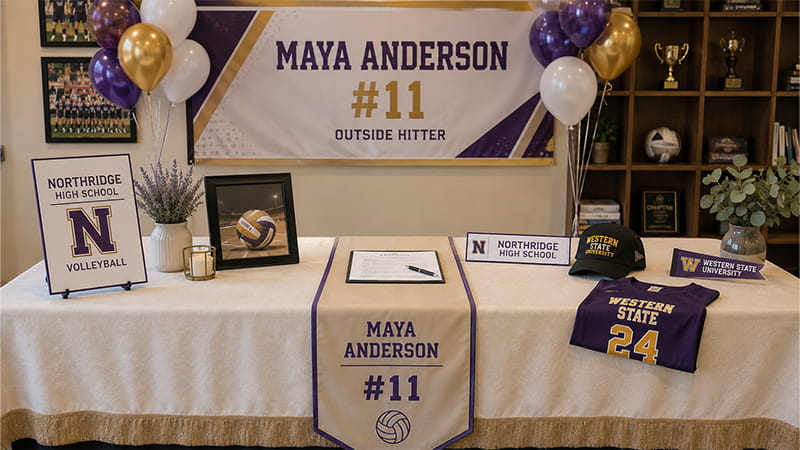
Signing Day naturally brings two identities into the same scene: the school the athlete represents now and the college they are joining next.
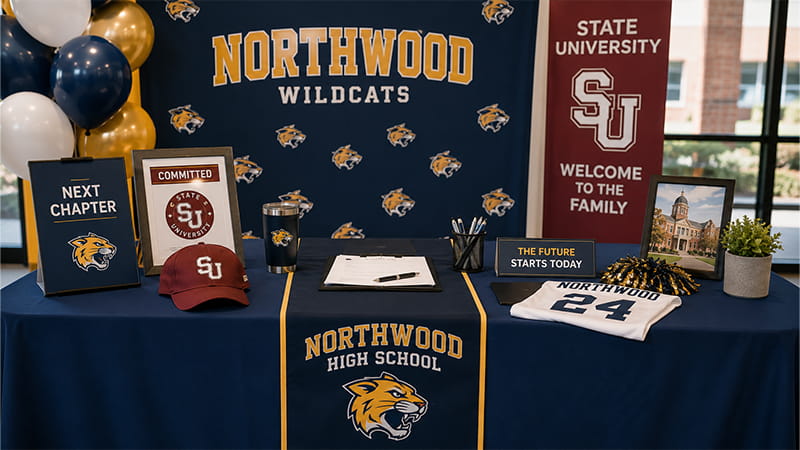
Keeping the high school’s colors or athletics identity as the visual base usually gives the setup more order. That could be a school-color table cover, a simple runner, or a school-branded background. The future college can then appear through an official hat, jersey, pennant, or another approved item rather than taking over the entire setup.
A narrow contrasting runner or athlete sign can also help separate the school colors from the college gear when the two palettes are very different. The idea is not to split the table into two equal branded halves, but to make the transition clear without making the display feel divided.
If college or NCAA marks will be reproduced on newly printed banners, table covers, signs, or backdrops, confirm the relevant permission requirements before production. Displaying an official hat or jersey is different from reproducing a protected mark on a new custom product. NCAA provides guidance through its brand licensing resources.
4. Sport-Specific Signing Table
Sports equipment already carries a lot of visual character, so this setup usually benefits from a simpler branded base.
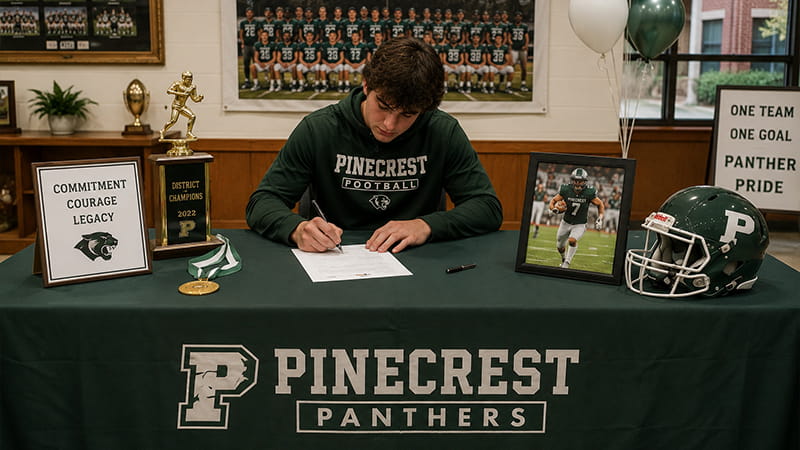
A clean fitted table cover can keep the front organized while a modest team banner, school graphic, or plain backdrop stays behind the athlete. From there, one or two sport-specific pieces—a football helmet, basketball, baseball glove, volleyball, pair of track spikes, or framed action photo—can make the table feel personal.
Large equipment is usually easier to manage at the end of the table or on a separate stand. That leaves enough room in front of the athlete for paperwork, hands, and the signing moment itself.
5. Achievement and Memory Setup
For an athlete who has been part of a championship team or collected meaningful awards, Signing Day can also become a brief look back at their time with the school.
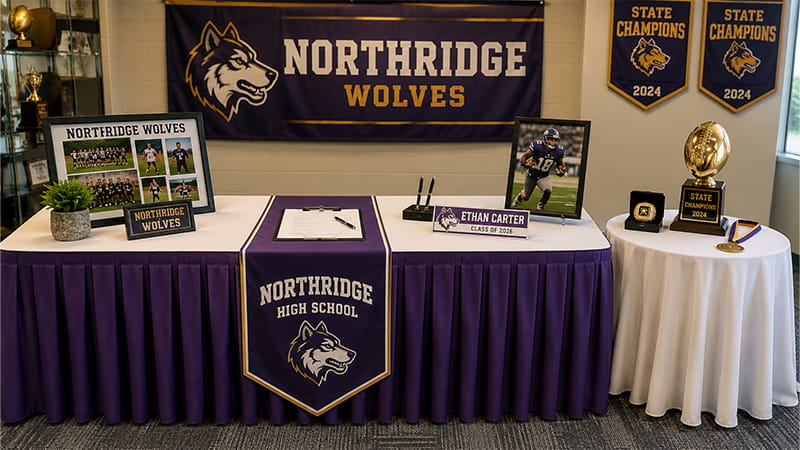
A softer draped tablecloth or simple school-color cover works well here because the memorabilia already provides much of the visual interest. Instead of another large graphic backdrop, a clean banner, framed team image, or photo board can give the display some context without competing with the awards.
One championship ring, an important trophy, a medal, or a strong action photograph can often say more than a long row of memorabilia. Keep taller pieces toward the ends of the table so the athlete does not have to sign around them.
6. Clean School Media Setup
Some Signing Days will appear on the school website, athletics page, newsletters, social channels, and local news all at once. For those events, the front view needs to remain consistent from one photo to the next.
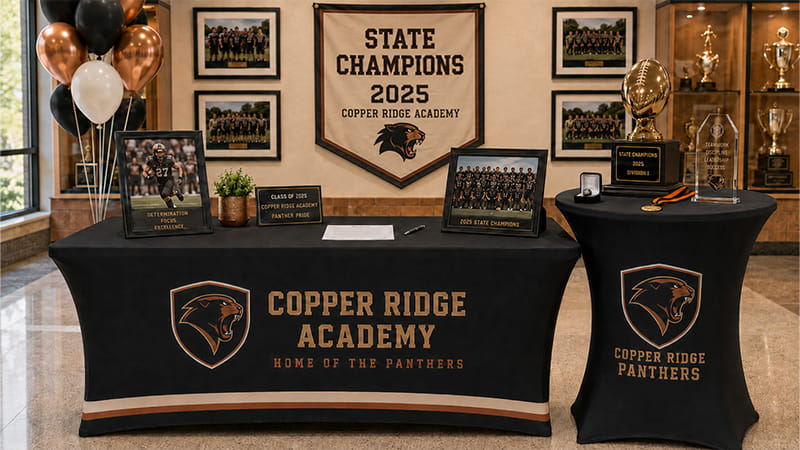
A stretch table cover gives the table a clean silhouette with less loose fabric, while a step-and-repeat or tension-fabric backdrop creates a controlled background behind the athlete. Add a simple tabletop nameplate and one college item, and the camera already has most of the information it needs.
This is one of the situations where fewer props can actually make the school branding more useful. The table front and backdrop carry the shared identity, while the athlete name and college gear provide the details that change.
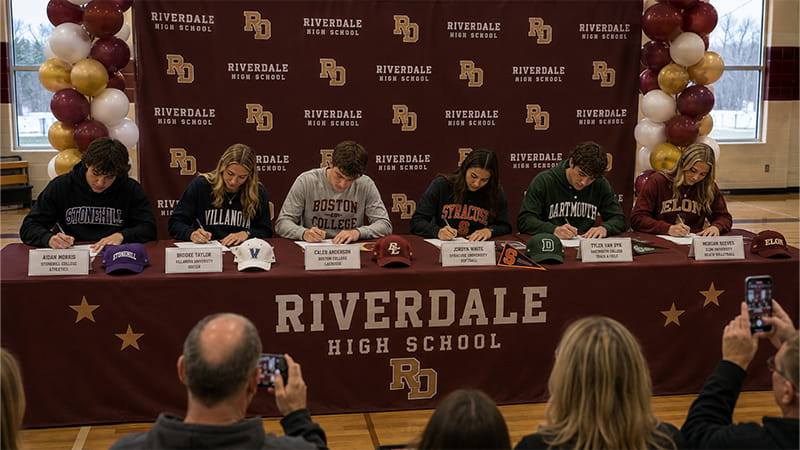
7. Multi-Athlete Signing Day Setup
A multi-athlete Signing Day needs a different scale. Several students may be signing at once, sometimes for different sports and colleges, so trying to give each person a completely different backdrop can make the stage feel disconnected.
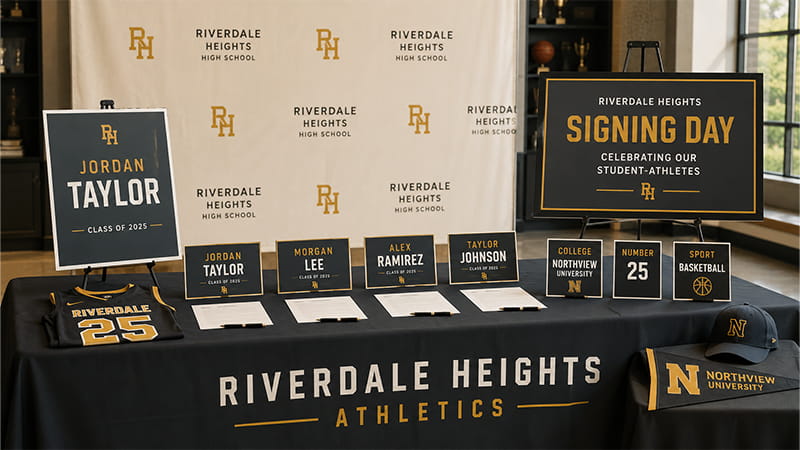
A long draped or fitted table cover can keep the front visually continuous, while a wide shared school backdrop holds the overall event together. Give each athlete an individual tabletop nameplate or small sign, along with their own documents and college item.
For schools that host several Signing Days or recognition events, it also makes sense to separate reusable pieces from athlete-specific pieces: shared school backdrop + coordinated table covers + interchangeable athlete signs
The school identity stays consistent, while names, jersey numbers, sports, and college destinations change from athlete to athlete.
If the group is large enough that documents are overlapping and students are sitting shoulder to shoulder, another table or a second signing group will usually work better than trying to force everyone into one long row.
8. Small-Space Signing Day Setup
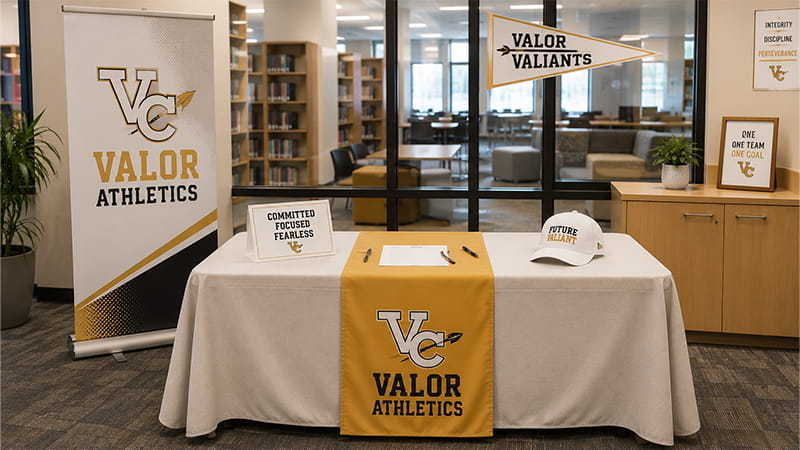
Libraries, classrooms, media centers, athletic offices, and school lobbies do not need to imitate a full gym-stage setup on a smaller scale.
If the school already has a suitable tablecloth, a branded table runner can add the school name or athletics identity without replacing the entire cover. Pair it with a retractable or vertical banner beside the table rather than installing a full-width backdrop across the room.
A compact athlete sign and one college item may be all that is needed on the table. This leaves walking space open and gives parents, coaches, or school staff somewhere to stand without pushing against large displays.
Large balloon arches, wide floral arrangements, and oversized props can close in a small room quickly. Here, keeping the setup compact is part of the design rather than a compromise.
How the Main Signing Day Display Pieces Work Together
Different products do not need to repeat the same logo in the same way. A stronger setup gives each piece a different job.
Table Covers and Runners Shape the Front View
The table is one of the largest surfaces in front of the athlete, but the best treatment depends on the setting.
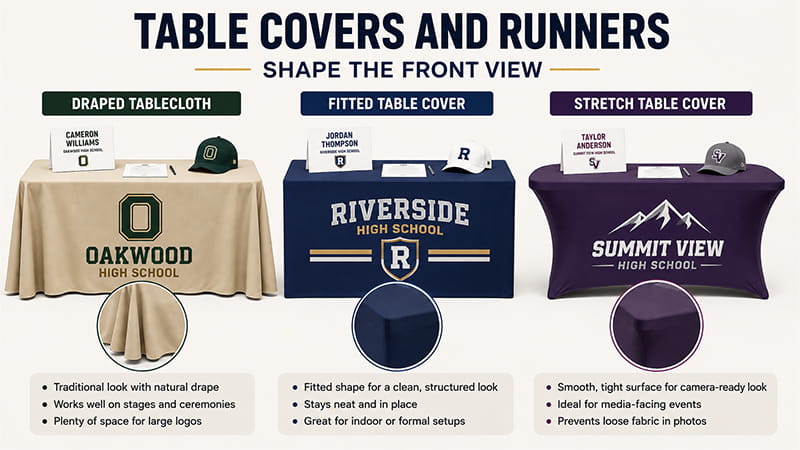
A standard draped tablecloth feels more traditional and works naturally on a stage or in a school ceremony. A fitted cover gives the table a more structured outline, while a stretch cover can be useful for media-facing setups where loose fabric would appear in every photo.
A table runner is another useful option when the school already owns neutral or school-color linens. Instead of replacing the entire cover, the runner can carry the athlete name, athletics logo, or event title.
For custom-printed fitted and stretch covers, artwork needs to be checked after the fabric is actually pulled over the table. Logos or text placed too close to corners, folds, or side panels may not appear the way they did on a flat artwork file.
Backdrops and Banners Should Match the Scale of the Event
A backdrop does not have to mean the same thing at every Signing Day.
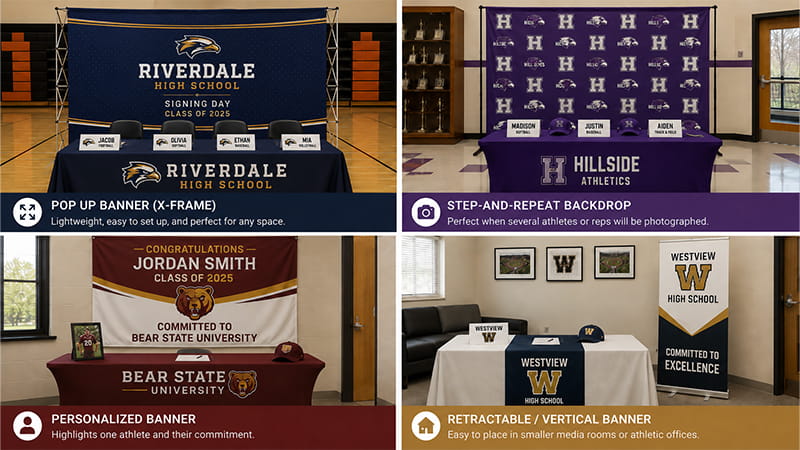
A full-width fabric backdrop works well for school-wide ceremonies. A step-and-repeat backdrop makes sense when several athletes or school representatives will be photographed in front of the same branding. A personalized banner can suit an individual athlete, while a retractable or vertical banner is often easier to place in a smaller media room or athletic office.
The useful background area should also be sized for the people who will stand in front of it—not just for the width of the table.
Signs Carry the Details That Change
Signs are especially useful for information that is different for every athlete.
A tabletop nameplate can identify each student in a multi-athlete ceremony. A larger athlete-name board may work better for an individual signing, while a welcome sign or event-title sign can help establish the ceremony before guests reach the table.
College destinations, jersey numbers, and sports can also be handled through interchangeable signs rather than permanently building all of that information into the main backdrop.
Signing Day table displaying athlete nameplates, college, jersey number, sport, and event signs
College Gear, Sports Items, and Awards Add the Personal Layer
A school-branded cover and backdrop can make the event recognizable, but the athlete’s own items are what stop every Signing Day from looking the same.
The hat, jersey, pennant, helmet, ball, trophy, ring, or photograph gives the setup its personal detail. These pieces rarely need to cover large areas because the larger branded displays are already doing that job.
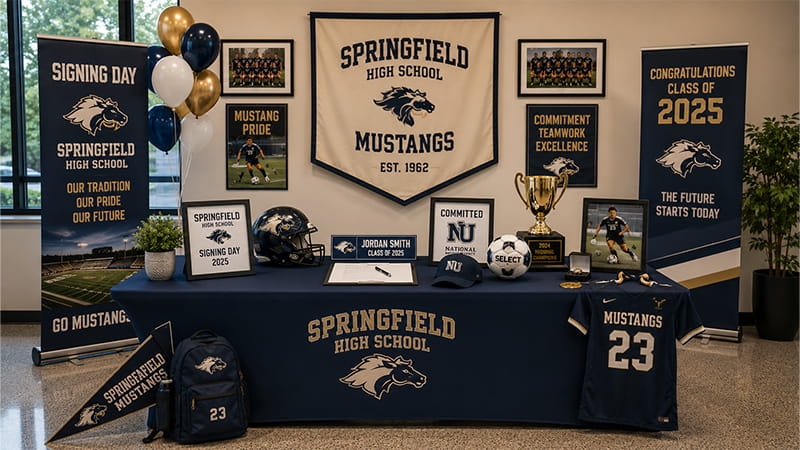
What Should You Put on a Signing Day Table?
Once the overall setup is decided, the table itself should stay fairly practical.
Keep the Signing Essentials on the Table
Start with what the athlete will actually use: the correct signing documents and working pens, with at least one backup nearby. Add a readable athlete name and a college hat, jersey, or another commitment item so guests immediately understand what the ceremony is about.
One meaningful sports or achievement piece can add personality if there is enough room. The center should still be comfortable enough for the athlete to pull the documents closer, turn pages, sign, shake hands, and pose with the people around them.
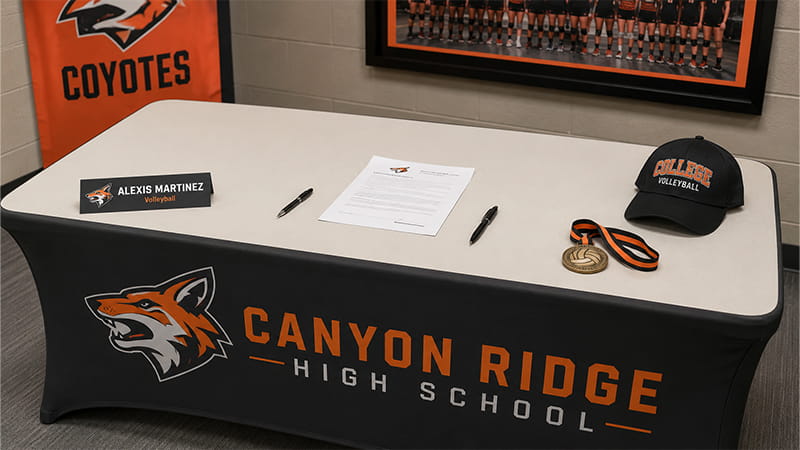
For NCAA-bound athletes, confirm current documents, timing, and applicable requirements with the recruiting institution rather than assuming every sport or division follows exactly the same process. NCAA maintains current recruiting information and resources for prospective student-athletes.
Move Larger Decorations Behind or Beside the Table
Full backdrops, large banners, balloon columns, wide floral arrangements, oversized jerseys, and taller displays usually work better when they frame the signing area.
Sit in the athlete’s chair before the event starts. If something blocks their face, covers their hands, hides the paperwork, or makes it difficult for a coach or parent to step in, move it.
The table needs to support the signing. The larger display pieces can shape the scene around it.
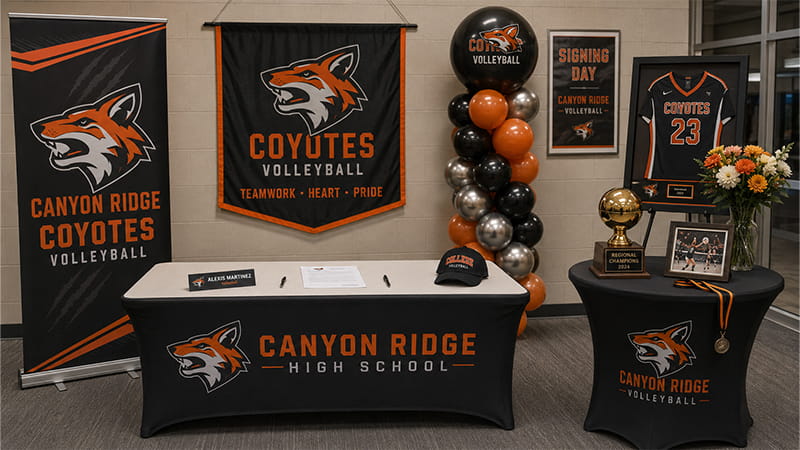
How to Set Up Signing Day for Multiple Athletes
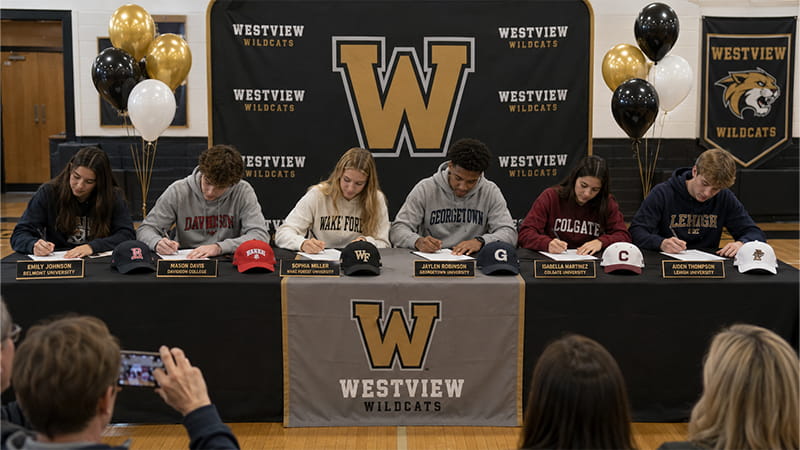
When several athletes are signing together, the important thing is not simply finding a longer table. Each student still needs enough room for their own documents, name, and college information.
Give Each Athlete a Clear Area
Keep each athlete’s nameplate, paperwork, and college item within their own part of the table. Physical dividers are rarely necessary, but the spacing should make it obvious which items belong together.
If shoulders are touching and paperwork is already overlapping before the event begins, additional tables or smaller signing groups will usually produce a more comfortable setup.
Let the School Identity Connect the Group
Different college colors can quickly compete with one another. The school or athletics department is the one identity every athlete shares, so the main table treatment, backdrop, and overall visual palette can come from there.
The individual college colors and gear then stay within each athlete’s area. This approach also works across recurring school and sports events where the main display remains consistent even though participants change.
Think About the Group Photo Before Everyone Arrives
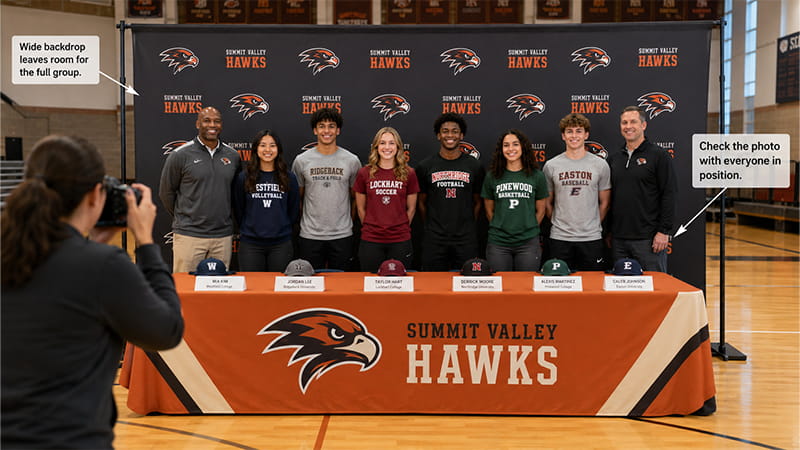
A table that fits six seated athletes does not necessarily fit six athletes, coaches, administrators, and family members standing behind them.
Stand where the main photographer will be and look at the entire setup before the room fills. If the backdrop cannot comfortably frame everyone, plan smaller group photos in advance rather than solving the problem while people are waiting.
How to Plan the Signing Table and Backdrop Together
The table and background make up most of what guests and cameras see from the front, so the two should be considered together.
Use School Colors Without Letting Everything Blend Together
A navy jersey in front of a navy tablecloth with a navy backdrop behind it may be perfectly on brand and still be difficult to read visually.
A secondary school color, lighter lettering, or neutral area can create enough separation. Material matters too: the same blue or red can look slightly different on fabric, vinyl, coated board, and other printed surfaces.
When close color matching matters, use the school’s approved brand guide or a recognized color reference such as Pantone where available. Reviewing the table cover, banner, and signs together is more useful than approving each item separately on a screen.
Size the Backdrop for People, Not Just the Table
A backdrop for one athlete has very different requirements from a background that needs to hold several athletes, coaches, and families.
Look beyond the table width and consider the full area that will appear in photos. A background can cover the athlete perfectly while still leaving gym equipment, storage carts, doorways, or shelves visible along the edges.
Our guide to standard banner sizes provides useful starting dimensions, but the venue, number of people, and intended viewing area should decide the final size.
For outdoor Signing Days, stability also becomes part of the choice. Loose fabric should be secured, while larger banners and backdrop structures need suitable support or weighting for the conditions.
Check Logo Placement With Someone in Position
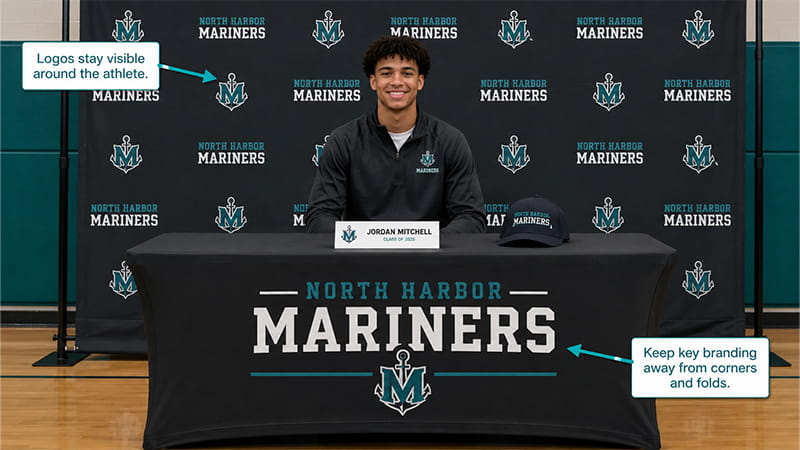
Artwork often looks balanced when the table and backdrop are empty. Once the athlete sits down, a large logo placed directly in the center may disappear behind their head and shoulders.
For step-and-repeat and school-branded backgrounds, distribute important marks through the visible area rather than relying on one oversized center logo. Different banner and backdrop formats also give you different amounts of usable branding space.
The same check applies to the table front. School names and key graphics should stay away from areas likely to fold, curve, or disappear around the corners.
Judge the artwork with a person in position, not as an empty graphic.
Make Sure the Setup Still Works Once the Ceremony Starts
An empty chair and quiet room can make almost any setup look tidy. Once the athlete sits down, parents arrive, and people begin moving through the space, practical details become much easier to notice.
Keep Enough Room to Sign
The athlete may need to turn pages, pull paperwork closer, shake hands, or pose with a coach immediately after signing. Flowers, helmets, balls, and large signs placed in the writing area can become inconvenient very quickly.
If an item does not need to be handled during the signing, move it toward the side.
Leave Space for Family and Coaches
Parents may stand behind the chair, coaches may step in from the side, and teammates or administrators may join for another photo.
Treat the area around the table as part of the setup rather than leftover floor space. A large backdrop is not very useful if nobody can stand in front of it comfortably.
Check the Table Cover After Installation
A clean artwork file does not guarantee that the printed front will look exactly the same once the cover is fitted to a real table.
Stretch covers can pull artwork toward corners, while draped covers may create folds through lettering or logos. Check the actual installed position before the rest of the signs and decorations are arranged.
Look at the Real Event Lighting
Gym lights, overhead LEDs, and camera flash can make glossy signs or metallic decorations far more reflective than expected.
A quick phone photo from the audience position can reveal glare, dark areas, or details that disappear into the background without turning the setup check into a photography project.
Take One Test Photo Before Guests Arrive
Have someone sit in the athlete’s chair and take a photo from the front.
Check whether the name is readable, the college item is visible, the school logo still shows, and the backdrop is centered. Make sure parents or coaches have enough room to step into the shot.
Then look at the edges. Spare chairs, storage boxes, cables, carts, and sports equipment often become much more noticeable in a photograph than they were while setting up the room.
Common Signing Day Table Mistakes
Filling Every Open Space
Flowers, hats, trophies, sports equipment, photographs, signs, and college gear can all make sense individually. Put too many together and the athlete can become the least noticeable part of the table.
Choose the pieces that add useful context and leave room around them.
Using One Strong Color Everywhere
School colors should make the event recognizable, but the same strong color across the jersey, tablecloth, backdrop, signs, and decorations can make the whole scene feel flat.
A secondary school color or neutral section usually gives the important elements more separation.
Decorating for the Empty Chair
Tall flowers, large letters, helmets, and signs may look perfectly positioned before anyone sits down. The athlete can change that composition completely.
Do the final check with someone in the actual signing position.
Treating Every Table Cover the Same
Draped, fitted, stretch, and runner-style treatments behave differently once they are installed. A design that looks natural on a flat draped cover may not work in the same position on a stretched corner panel.
Choose the cover style first, then place the artwork for that specific format.
Giving Every Logo Equal Attention
A Signing Day may involve the high school, future college, athletics department, sponsors, and several sports teams. Making every mark equally large usually makes the hierarchy harder to understand.
Keep the athlete easy to identify, the college commitment clear, and the school identity strong enough to hold the event together.
Signing Day Setup Checklist
Before guests arrive, look at the setup once from the athlete’s chair and once from the main audience or camera position.
- ☐ Table size and layout fit the number of athletes
- ☐ Tablecloth, fitted cover, stretch cover, or runner sits correctly
- ☐ Printed artwork is aligned after installation
- ☐ Correct signing documents are ready
- ☐ Working pens and backups are available
- ☐ Athlete name is easy to read
- ☐ College hat, jersey, pennant, or commitment item is ready
- ☐ Backdrop or banner suits the size of the venue
- ☐ School branding remains visible with someone seated
- ☐ Props stay clear of the signing area
- ☐ Coaches and family have space to stand
- ☐ Lighting and reflective surfaces have been checked
- ☐ One test photo has been taken
- ☐ Multi-athlete spacing has been confirmed where needed
- ☐ Spare pens, clips, removable tape, and a lint roller are nearby
FAQs
What Should Be on a Signing Day Table?
Keep the table centered on the signing itself: the correct documents, working pens, the athlete’s name, and a college hat, jersey, or another item that makes the commitment clear.
If space allows, add one or two sports or achievement pieces that matter to the athlete. Larger banners, flowers, jerseys, or branded displays usually work better behind or beside the table.
How Do You Decorate a Signing Day Table?
Start with the school setting and the athlete’s identity, then choose a table treatment that fits the event. A traditional ceremony might use a draped school-color tablecloth, while a media setup could use a stretch cover and step-and-repeat backdrop. A runner can work well when the school already has suitable linens.
From there, add the athlete name, college item, and a few meaningful sports or achievement details without crowding the signing area.
What Size Table Works Best for Signing Day?
There is no single table size that fits every Signing Day.
One athlete needs enough room for paperwork, a name sign, college gear, and comfortable arm movement. Several athletes may need a longer table, multiple tables, or separate signing groups.
Test the actual seating arrangement rather than choosing the table only from the size of the room.
How Do You Set Up Signing Day for Multiple Athletes?
Give each athlete a clear area for their name, documents, and college item, then use shared school branding to connect the overall display.
A wide school backdrop and coordinated long-table covers can form the reusable base, while individual nameplates and college-specific details change for each student. If the table begins to feel crowded, several tables or smaller signing groups will usually work better.
Conclusion
A good Signing Day setup does not have to follow one formula. A school-wide ceremony, an individual athlete announcement, a multi-athlete event, and a small media-room signing may all call for different combinations of table covers, runners, banners, backdrops, signs, and personal items.
What matters is that those pieces suit the room and the way the ceremony will actually happen. When the shared school branding, athlete information, college details, and physical layout support one another, the event feels coordinated without every setup looking the same.
Planning a Signing Day for Your School or Team?
If you are organizing a Signing Day for a school, athletic department, or sports organization, TOMAS Crafts can help coordinate table covers, runners, backdrops, banners, signs, and supporting event materials as one visual setup, with product styles and artwork matched to your venue, number of athletes, and school branding.
Contact TOMAS Crafts to discuss the setup you have in mind.