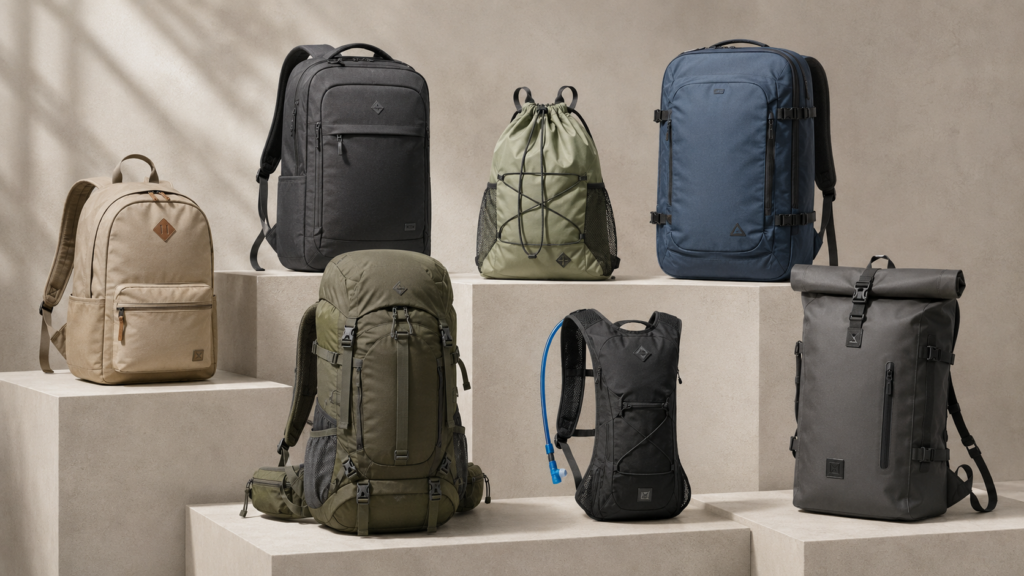
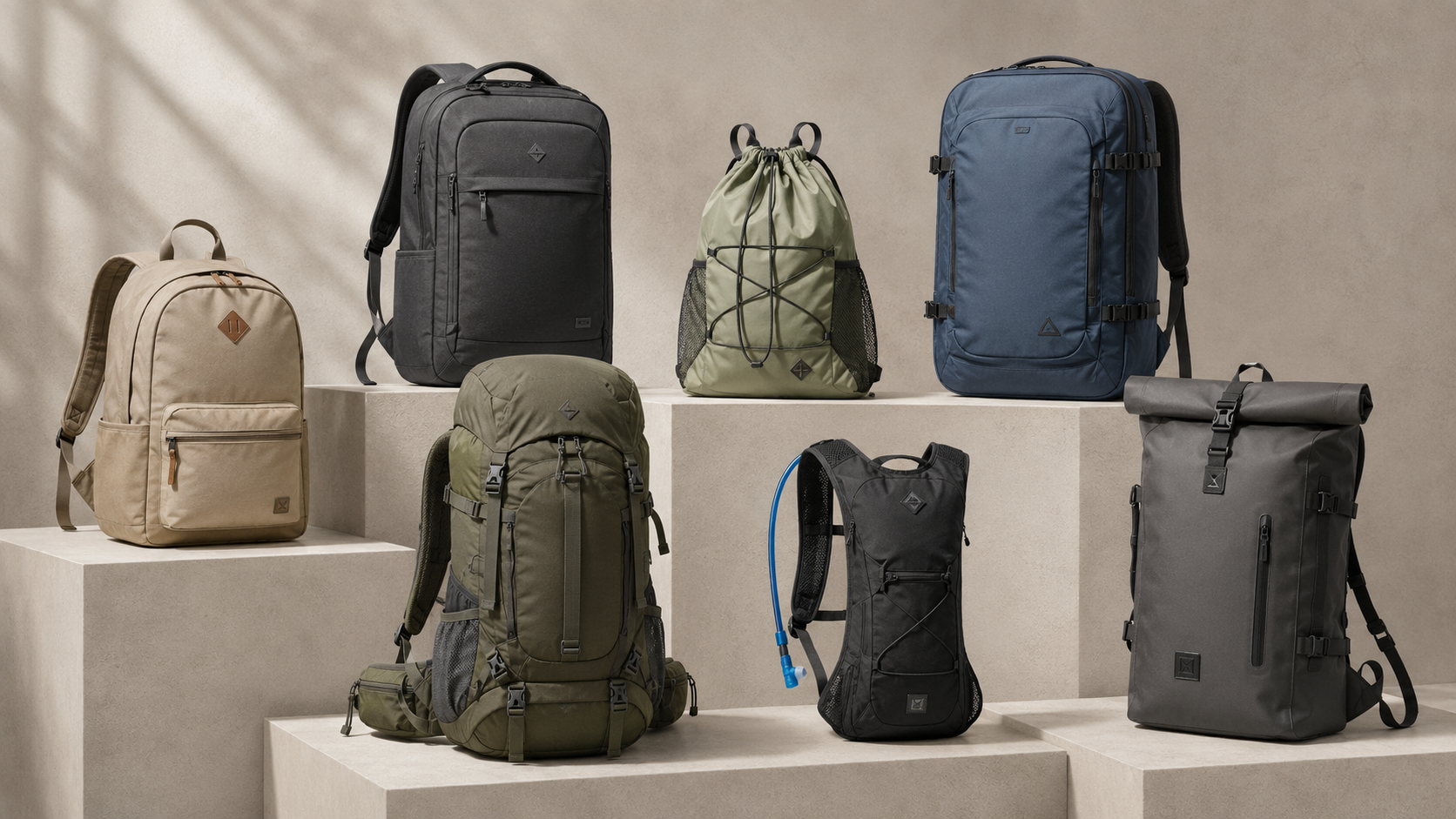
If you’re comparing different types of backpacks, the name alone doesn’t tell you how each one will perform in actual use. Laptop backpacks, drawstring bags, travel backpacks, and hydration packs may all be worn on the back, but they differ in what they carry, how you access the contents, how they manage weight, and the situations they suit.
This guide compares 16 common backpack types by the differences that matter in use. You’ll see what each style is built for, where its strengths and limitations show up, and which options are better suited to employee gifts, events, schools, travel, sports, and outdoor activities.
Everyday and Work Backpack Types
1. Standard Daypack
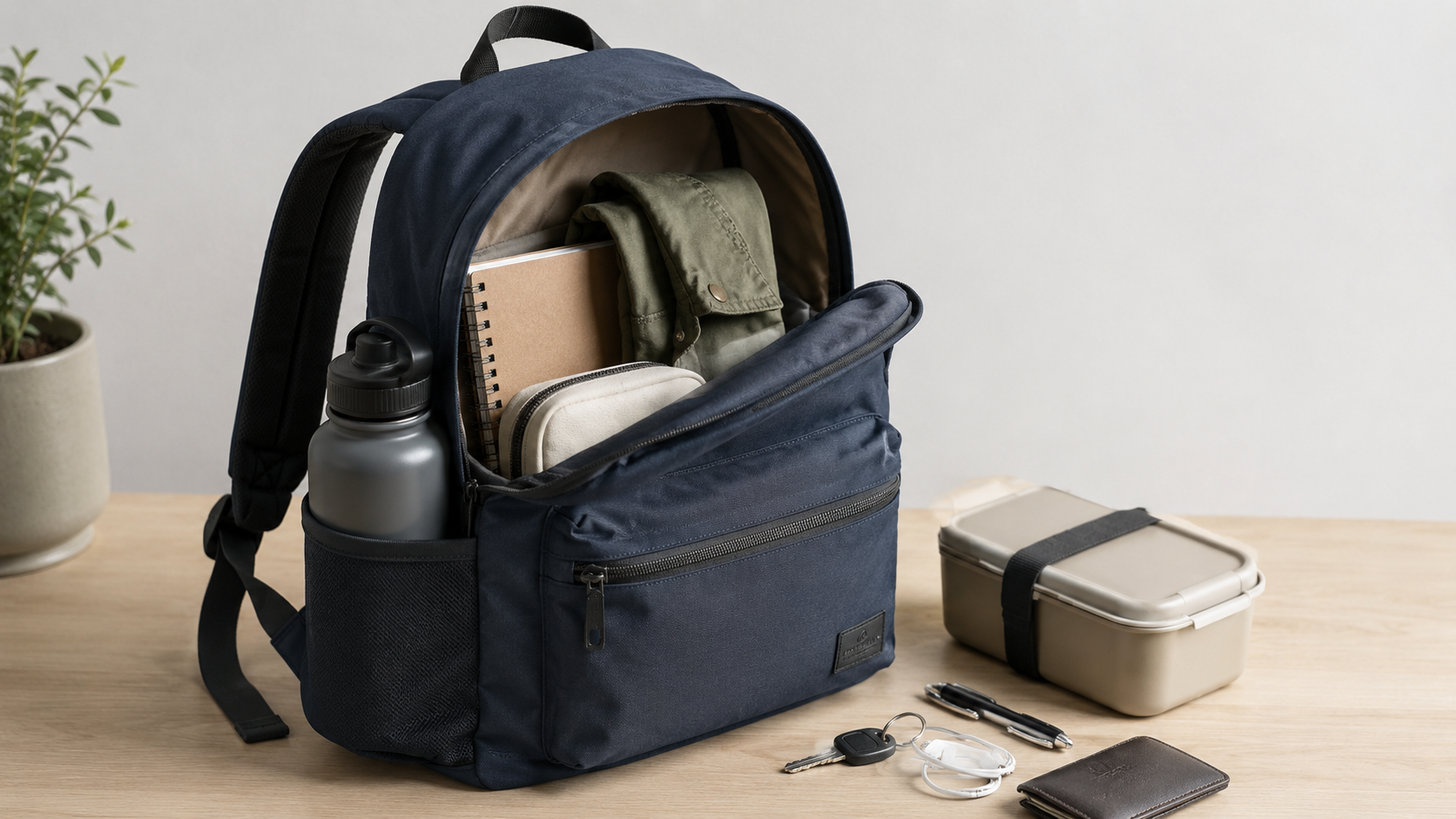
Standard daypacks are simple everyday backpacks with a main zippered compartment, shoulder straps, and usually a front pocket or side bottle pockets.
They work well for notebooks, bottles, lunch, light clothing, and other daily items without adding much weight or structure. If someone mainly needs a bag for personal belongings, event materials, or a few everyday essentials, extra laptop padding may only add unnecessary bulk.
Daypacks can also handle light commuting. Once a laptop, charger, documents, and other work equipment become part of the routine, a dedicated laptop compartment becomes much more useful.
2. Laptop Backpack
Laptop backpacks are designed to protect and organize devices, making them a strong choice for office teams, students, remote workers, employee welcome kits, and corporate gifts.
A useful laptop backpack should provide more than a loose fabric sleeve. Depending on how the bag will be used, features may include a padded laptop compartment, raised or false bottom, charger pocket, document storage, tablet space, and organized front pockets.
For employee or corporate gifts, this style works especially well when people already carry a laptop as part of their normal workday. The bag has a practical role beyond the event or onboarding program, which gives recipients a clear reason to keep using it.
3. School Backpack
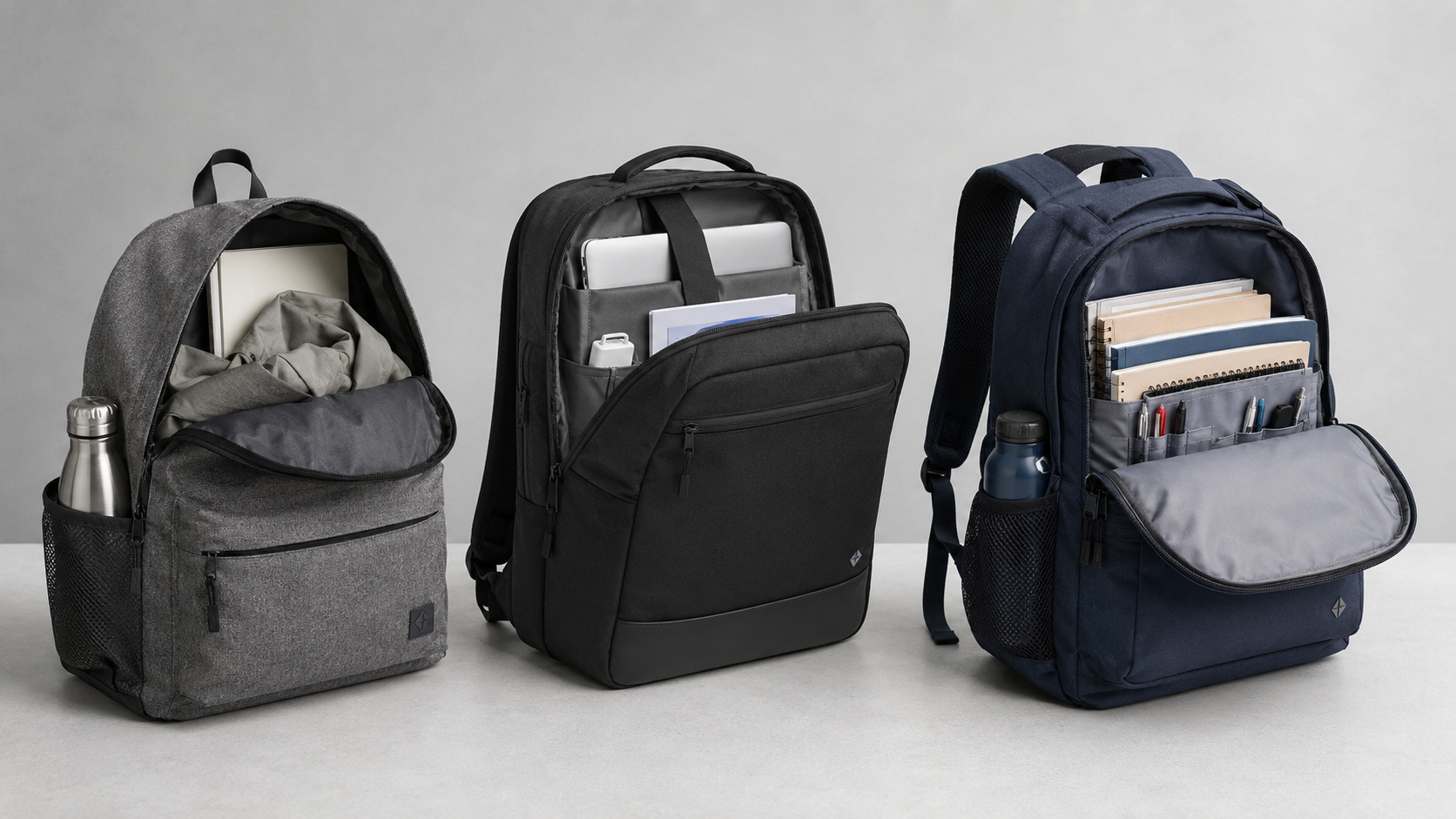
School backpacks have to deal with repeated daily loading: books, stationery, lunch, bottles, tablets, laptops, and personal items.
The largest backpack is not always the most useful. For younger students, a bag that is too long or becomes very heavy when filled can be awkward even when the shoulder straps are well padded. Simple openings, suitable dimensions, and easy strap adjustment often matter more than adding more compartments.
Older students may need better internal organization and a padded laptop or tablet section.
For school programs, look at the students’ age and what they actually carry during a normal day rather than choosing by capacity alone.
4. Drawstring Backpack
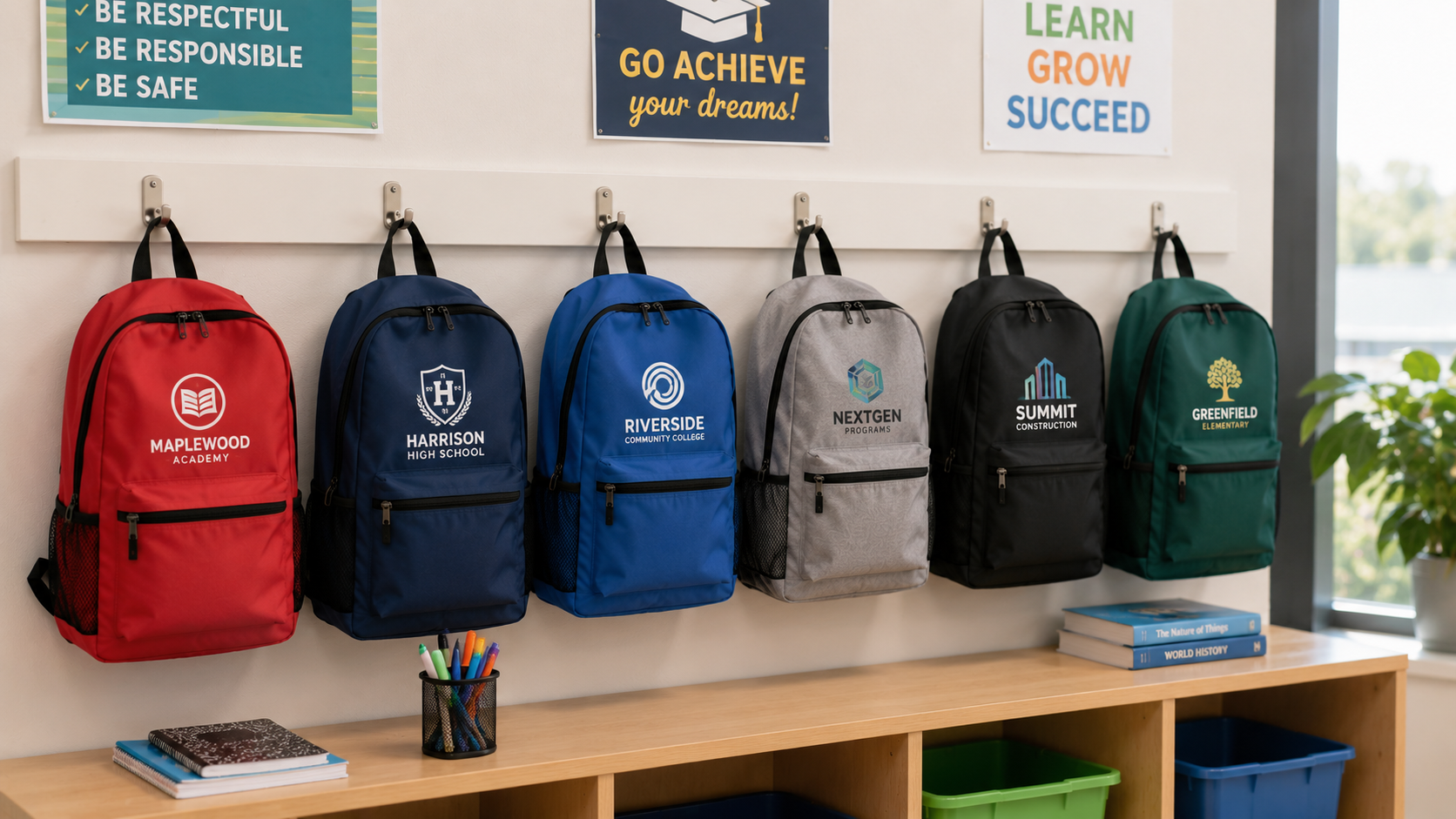
Drawstring backpacks are a practical choice for school events, charity runs, sports days, trade shows, and other programs where people only need to carry a few lightweight items. The simple construction keeps the bag light and easy to handle, while the broad front panel gives you plenty of room for an event logo, sponsor mark, or school name.
The main limitation is the lack of support and protection. Thin cords and an unstructured body are fine for T-shirts, bottles, brochures, or small giveaways, but not for laptops, heavy books, or longer daily use.
It works best for cost-friendly giveaways with strong logo visibility, rather than long-term daily use or higher-value employee gifts.
5. Clear Backpack
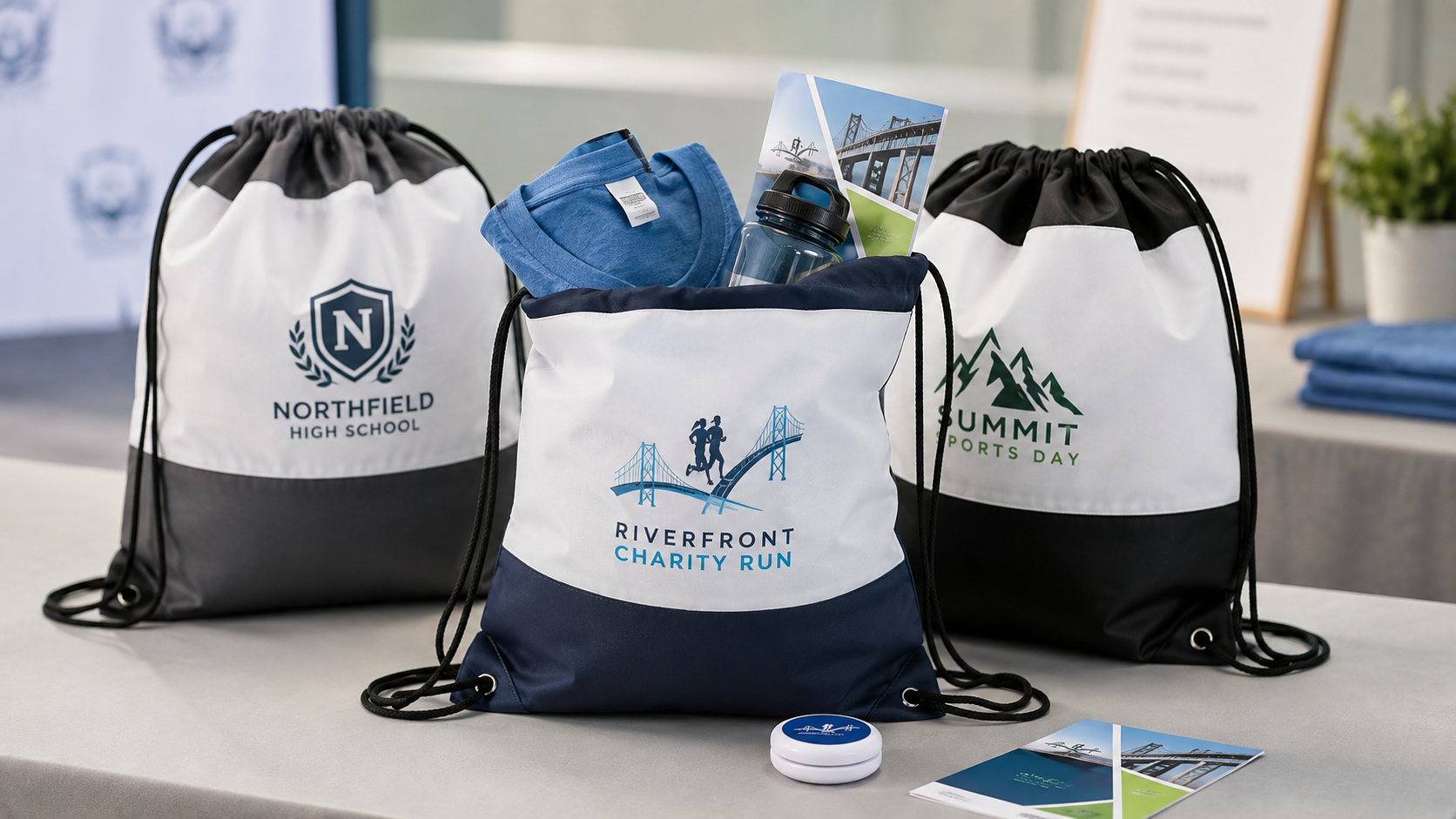
Clear backpacks use transparent material so the contents can be seen without opening the bag.
That makes this style relevant to schools, stadiums, concerts, sporting events, and other venues where bags may be checked before entry.
A transparent backpack, however, is not automatically suitable for every venue. The NFL’s clear-bag policy, for example, specifies permitted materials, maximum dimensions, and other construction requirements, while also advising visitors to check guidance for the individual stadium.
The actual venue policy should come before the backpack style.
If you are preparing bags for a specific school, stadium, or event, confirm its requirements first. TOMAS Crafts’ Clear Bags Guide covers clear bag types, materials, sizes, and common use cases in more detail.
6. Sling Backpack
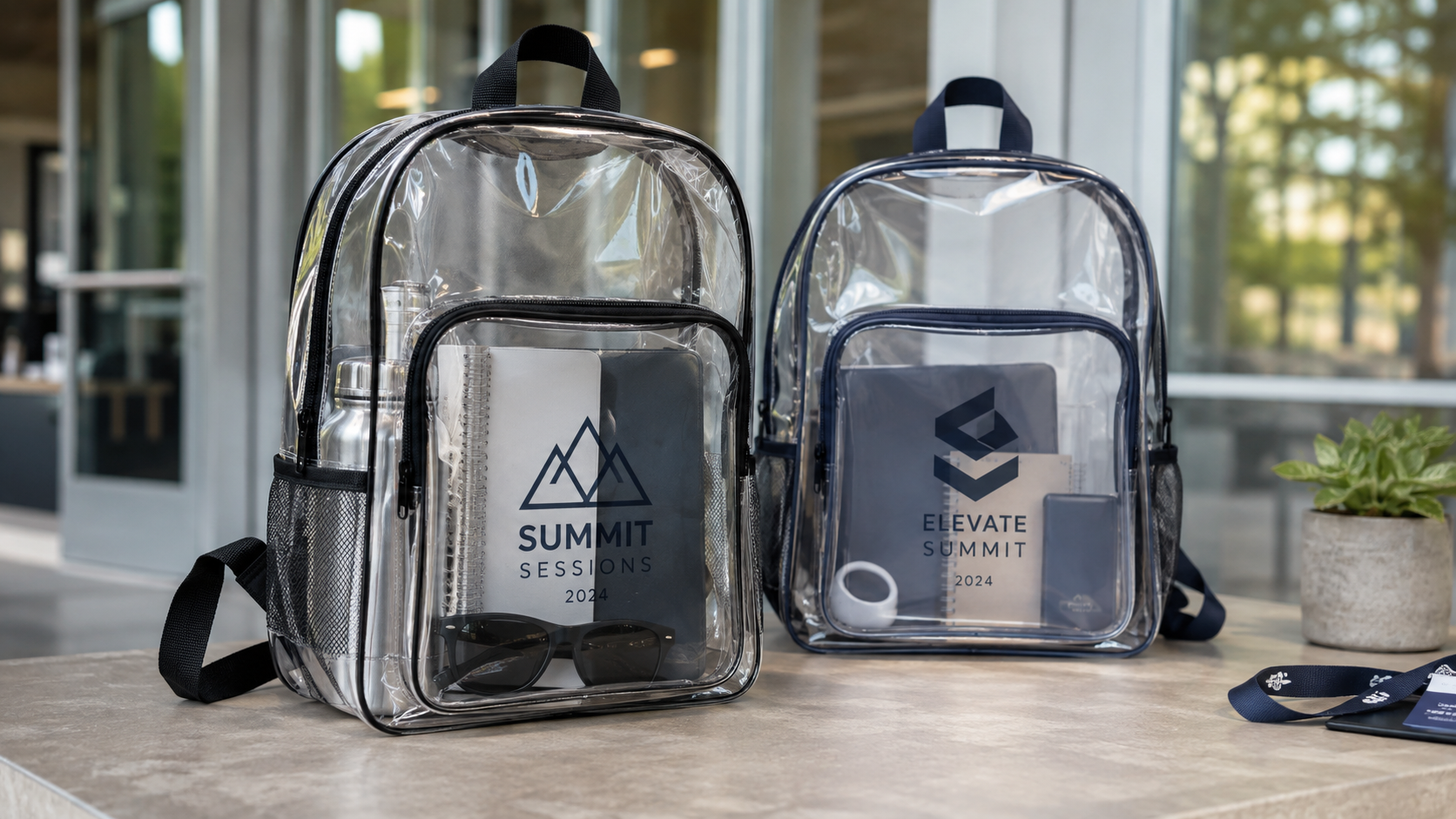
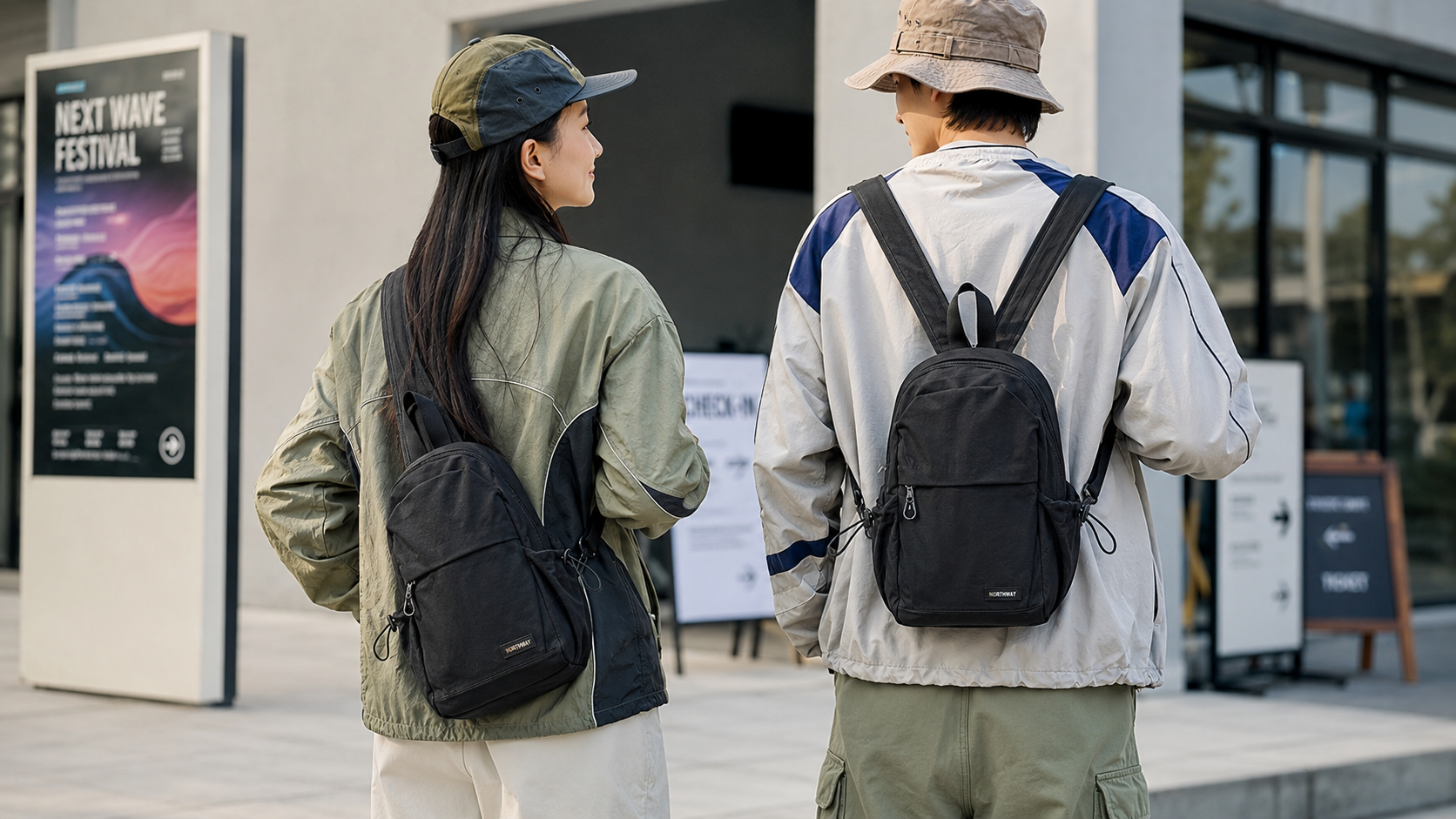
Sling backpacks are compact single-strap bags designed for smaller personal items.
The bag can move from the back to the front without being completely removed, making a phone, wallet, badge, ticket, map, or small camera easy to reach while walking around an exhibition, festival, tourist attraction, or event venue.
Fit matters more than it may appear in a product photo. A compact sling that stays close to the body moves less while the wearer is walking than a loose bag hanging away from the back.
The single strap also limits comfortable weight, so sling backpacks are better for essentials than for laptops, books, or heavier equipment.
Travel Backpack Types
7. Travel Backpack
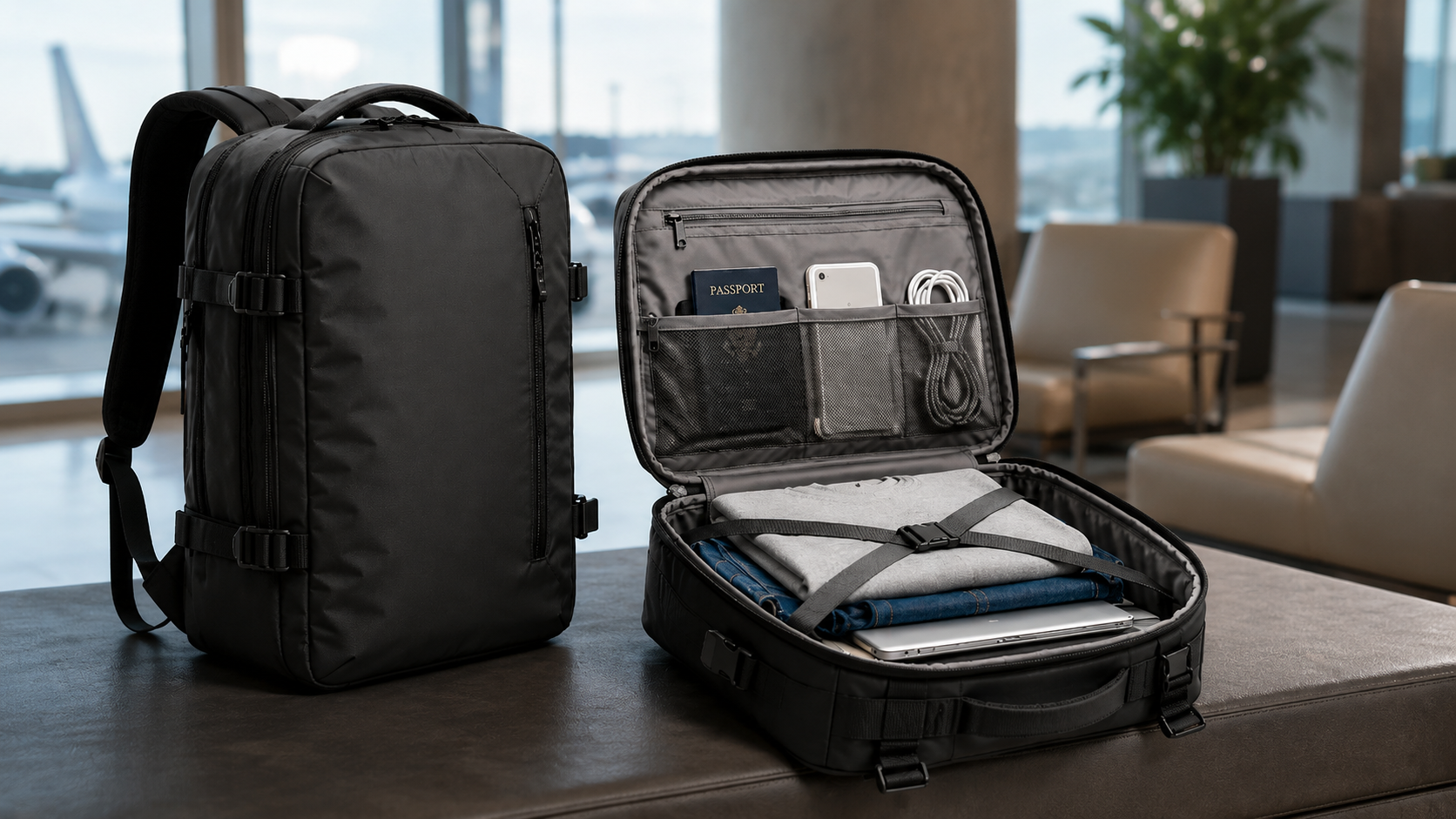
Travel backpacks are designed for people who need to carry clothing, devices, documents, chargers, and personal items in one organized bag.
Compared with a standard daypack, many travel styles use a wider or clamshell opening, making clothing easier to pack and reach. Laptop sections, document pockets, compression straps, trolley sleeves, and smaller organizers may also be included depending on the design.
Carry-on backpacks usually fall within this broader travel category rather than needing to be treated as a completely separate backpack type.
There is no single carry-on allowance that works across every airline. IATA guidance states that maximum carry-on size and weight are established by the operating airline and that allowances can vary between carriers and classes of service.
If cabin use matters to your project, check the relevant airline requirements before finalizing the backpack dimensions.
8. Wheeled Backpack
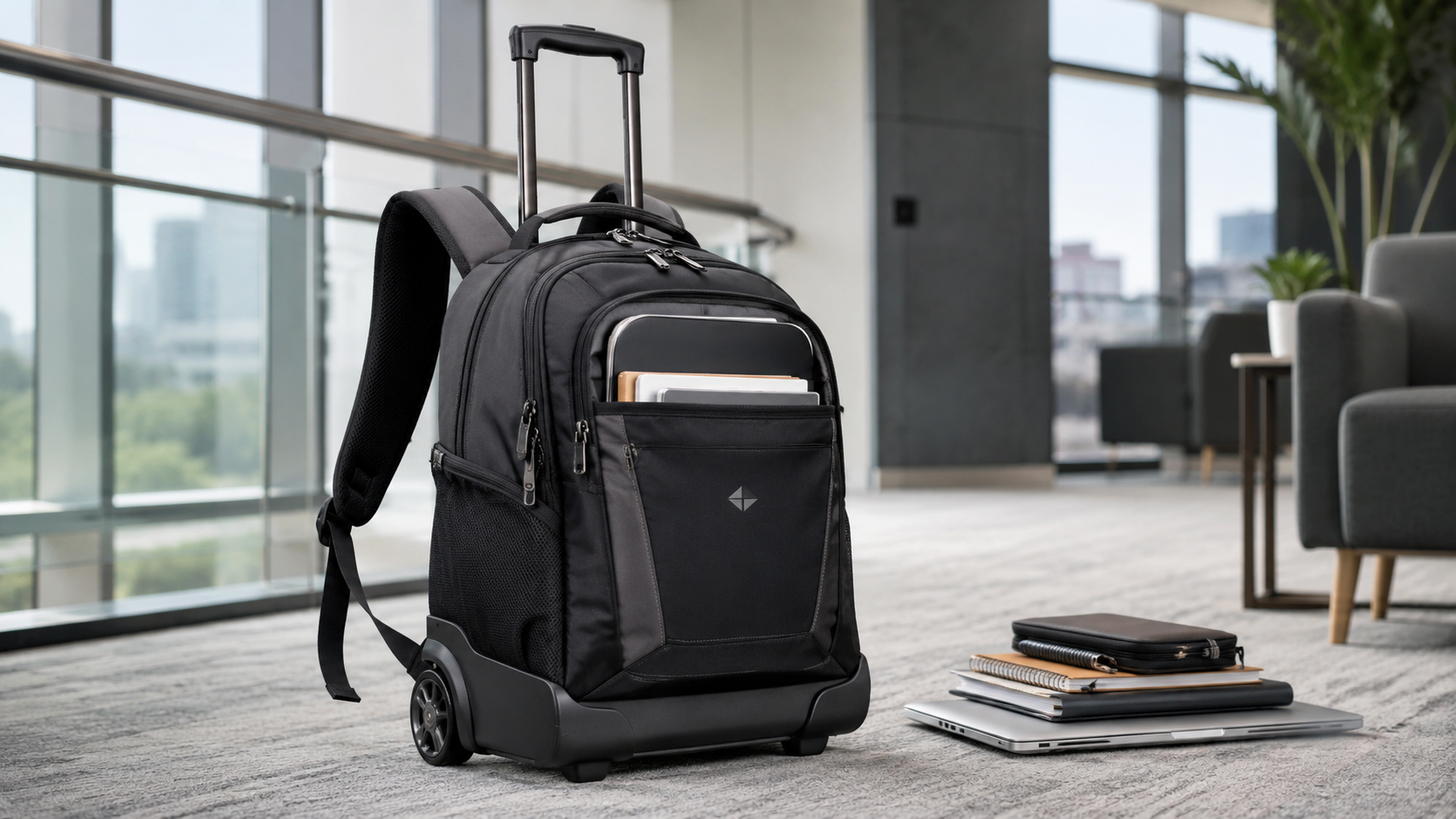
Wheeled backpacks combine shoulder straps with wheels and a telescopic handle, so you can carry the bag on your back or pull it like rolling luggage.
This type is useful for airport travel, school or campus programs, training groups, and other situations where people need to move heavier loads over longer distances. The wheels reduce the need to carry the full weight on your shoulders, although the frame, handle, and wheel system make the bag heavier and bulkier than a standard backpack.
Wheeled backpacks work best when easier load movement matters more than compact size or lightweight carrying.
9. Anti-Theft Backpack
Anti-theft backpacks are designed to make valuables harder to access from the outside. Common features may include hidden zippers, back-side pockets, lockable zipper pulls, RFID-blocking pockets, or cut-resistant panels.
These designs are especially useful for commuting, business travel, airports, public transport, and crowded city environments where bags stay close to other people.
“Anti-theft” does not mean theft-proof. The main advantage is making casual access more difficult than with a backpack that h
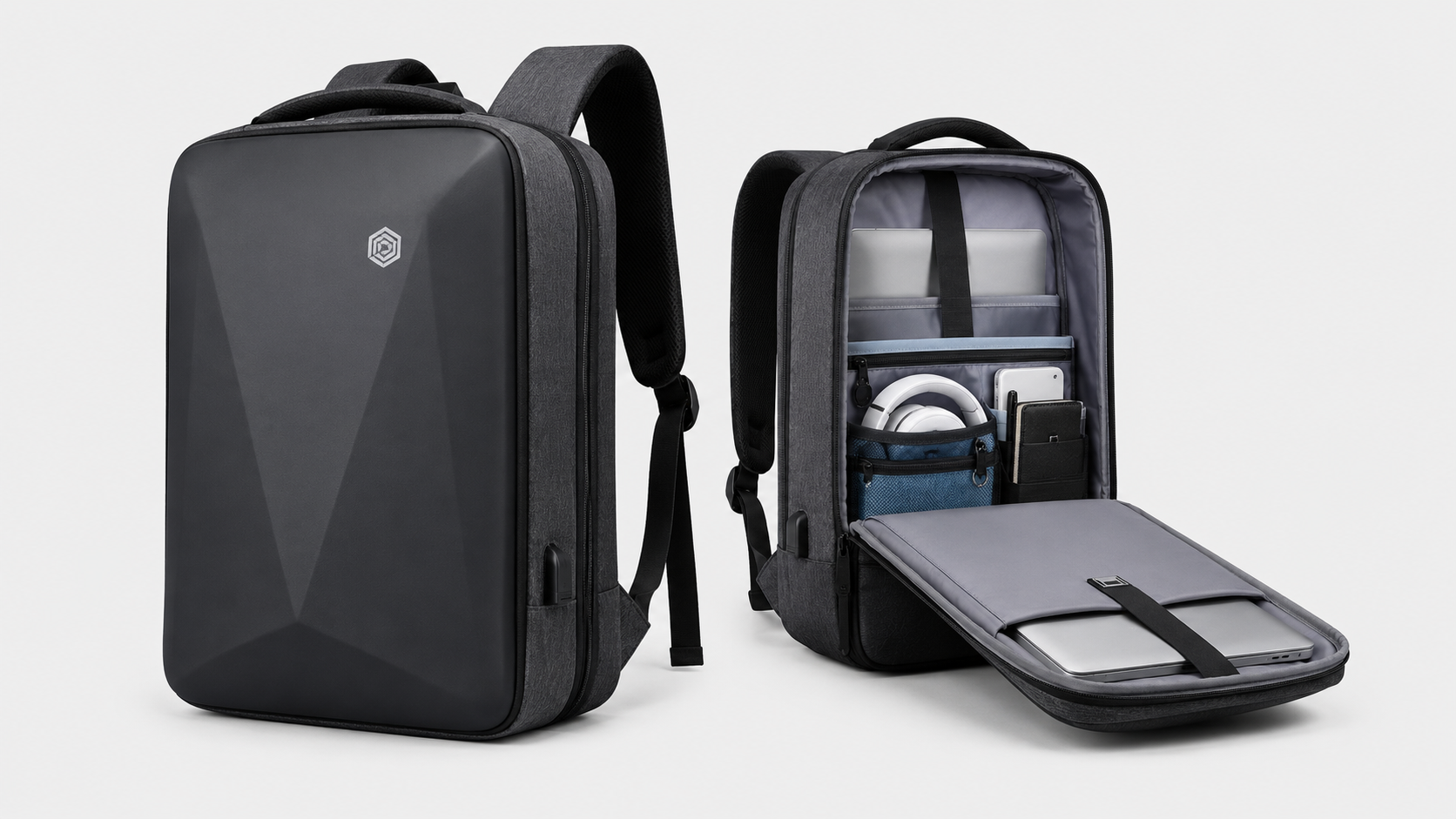
as exposed outer zippers and pockets.
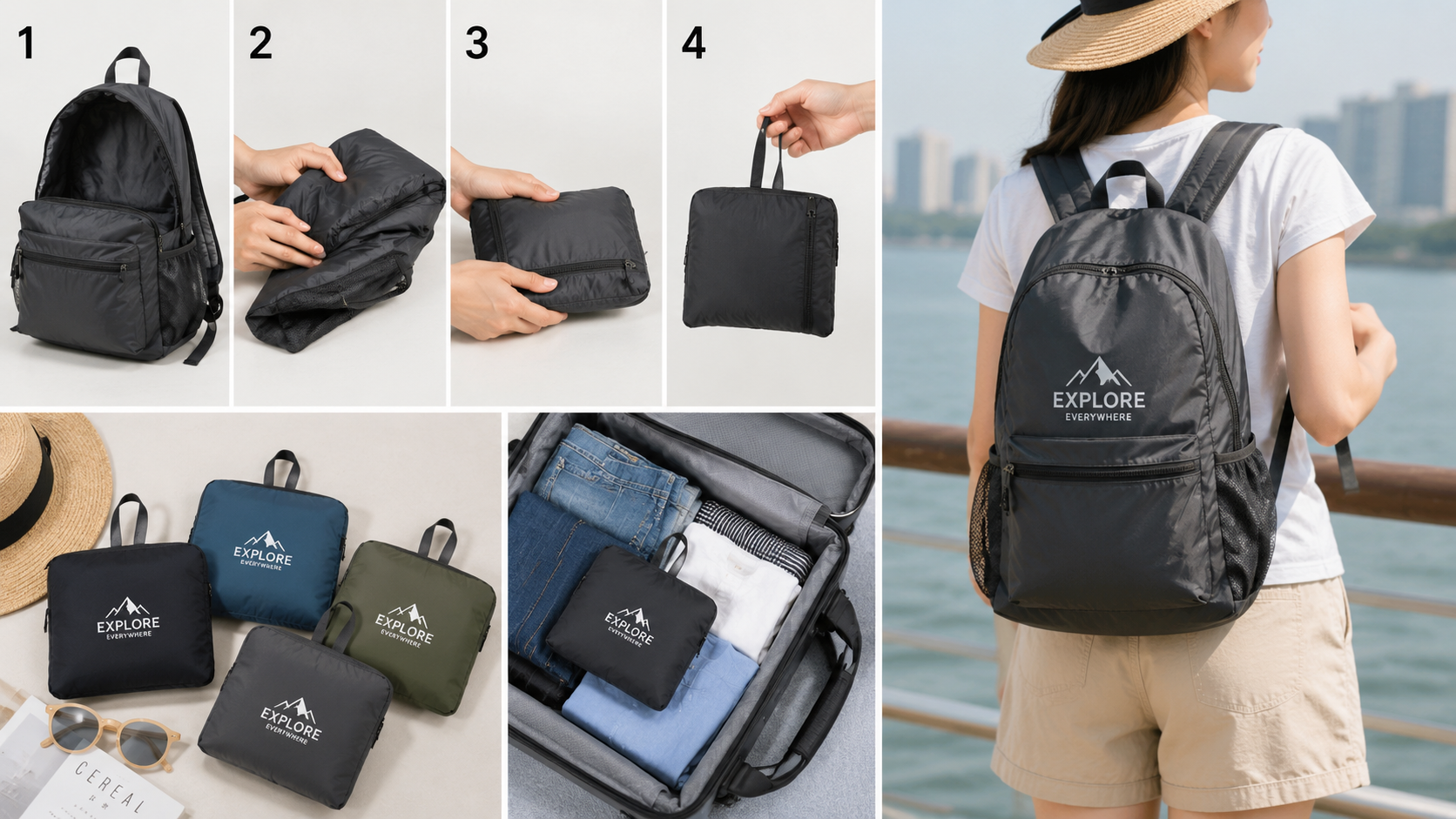
10. Packable Backpack
Packable backpacks fold into their own pocket or a small pouch, taking up very little room inside luggage.
They can remain packed away until someone needs an extra bag for sightseeing, shopping, an excursion, or items picked up during a trip.
The small folded size comes from thin, lightweight fabric and minimal padding. That makes these backpacks better for clothing, snacks, and personal items than laptops or heavy loads.
For travel gifts or tourism programs, the appeal is simple: the bag stays out of the way until your guests actually need it.
11. Duffel Backpack
Duffel backpacks combine the open packing space of a duffel bag with the carrying option of a backpack.
The wider opening and large main compartment make it easier to load shoes, clothing, towels, sportswear, and other bulky items. This works well for weekend travel, sports trips, training camps, gym programs, and outdoor team activities.
Because the main compartment is usually fairly open, smaller items can quickly get mixed together. Separate pockets for keys, phones, wallets, or small accessories make the bag easier to use without taking away the flexible main storage.
Sports and Outdoor Backpack Types
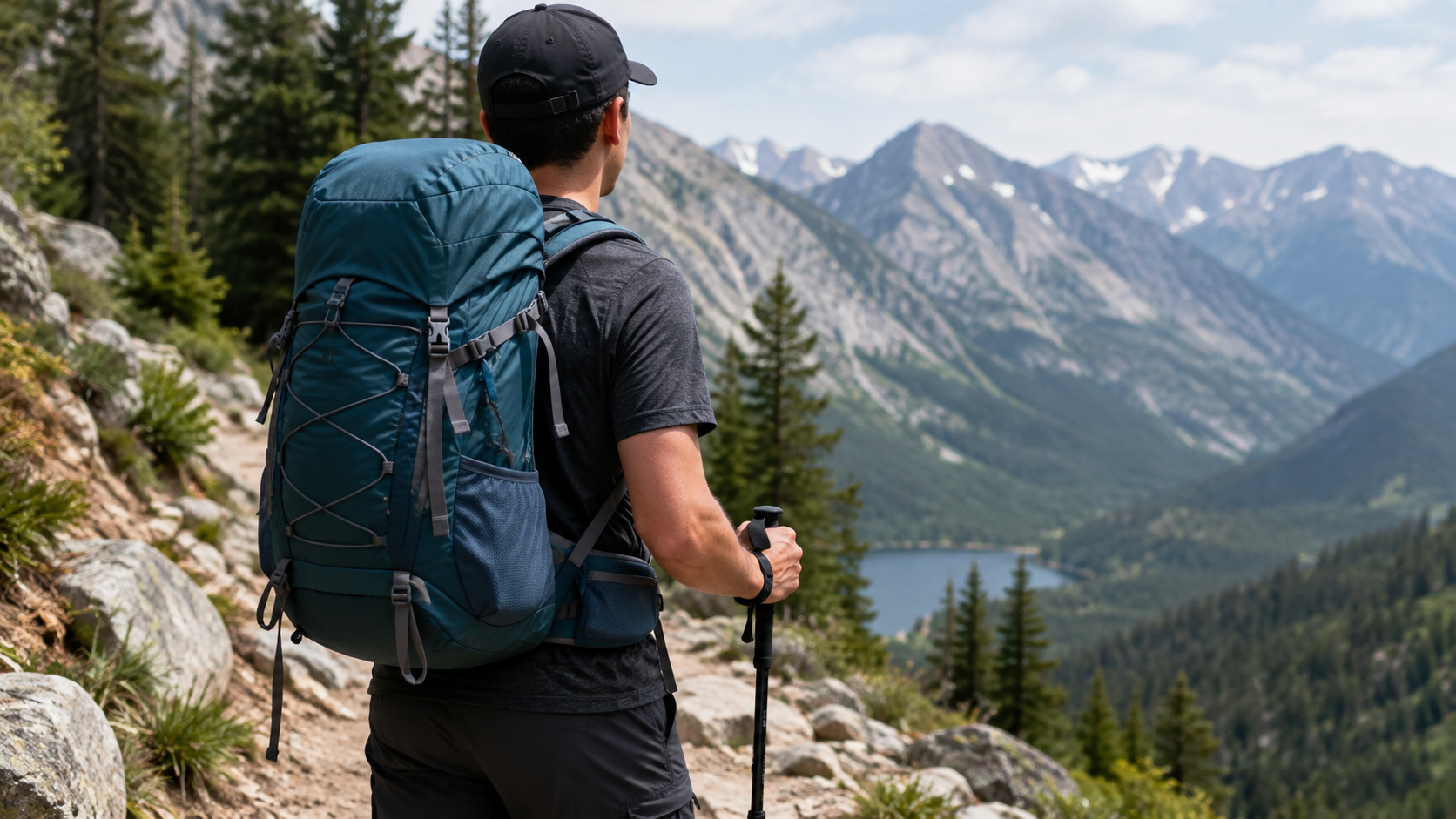
12. Hiking Backpack
Hiking backpacks are designed for longer outdoor use, where comfort depends on more than padded shoulder straps.
A hip belt can move part of the load away from the shoulders. A sternum strap helps stabilize the pack, while a shaped back panel can provide support and improve airflow. These features may make little difference during a short walk, but after several hours on a trail, they matter much more.
Capacity depends on the activity. A short hike may only require water, food, a light layer, and a few essentials, while longer trips need more room and stronger load support.
The key difference is how the backpack supports weight over time, not simply how many liters it can hold.
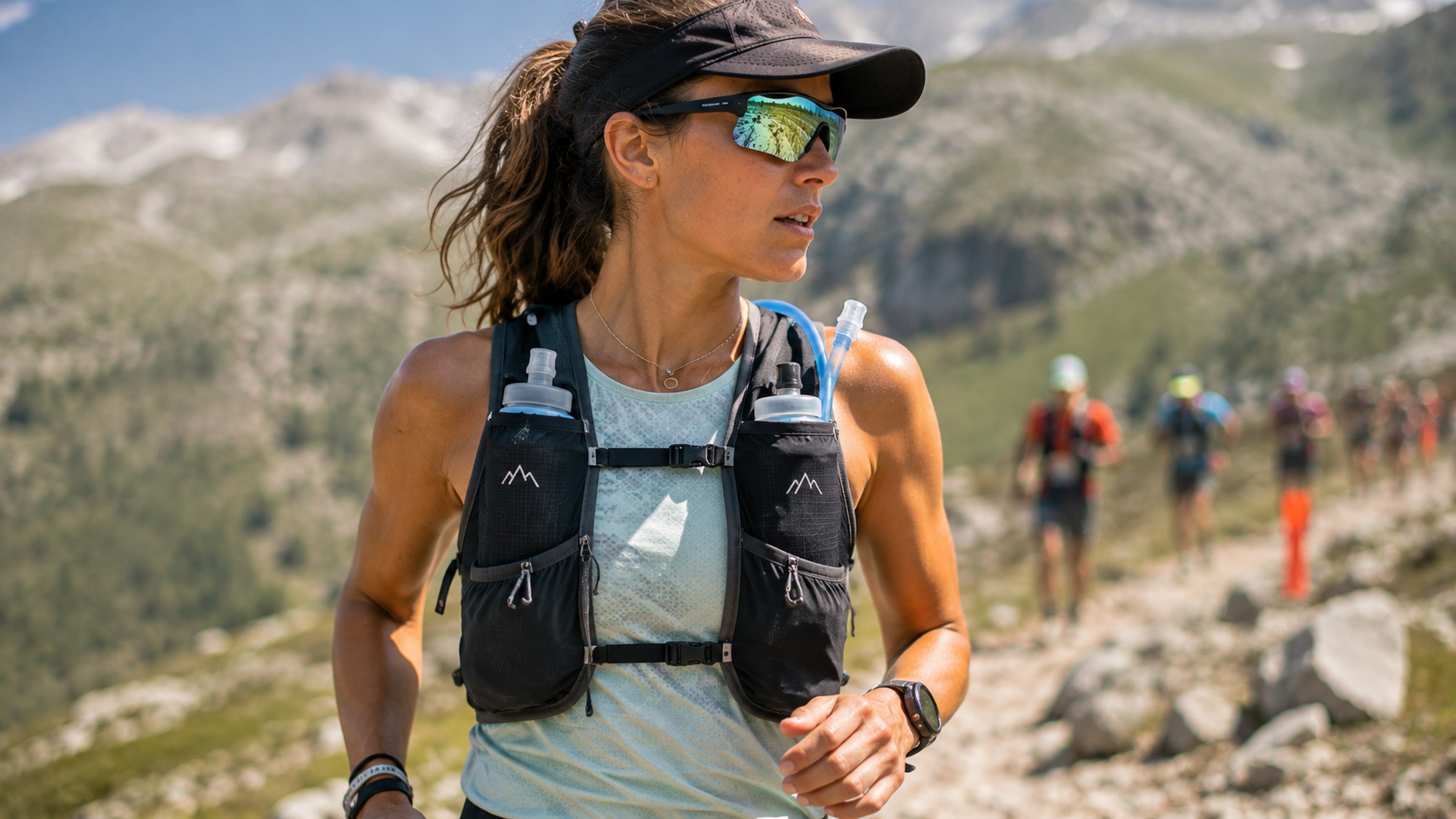
13. Hydration Backpack
Hydration backpacks are built for drinking on the move. A flexible reservoir sits inside the bag and connects to a hose near the shoulder strap, allowing runners, cyclists, hikers, and endurance-event participants to drink without stopping for a bottle.
Storage space is usually limited because hydration is the main function. Running-vest-style versions sit closer to the body to reduce movement during a race.
This type is a practical choice for marathons, trail races, cycling programs, hiking, other endurance events, and sports sponsorship projects.
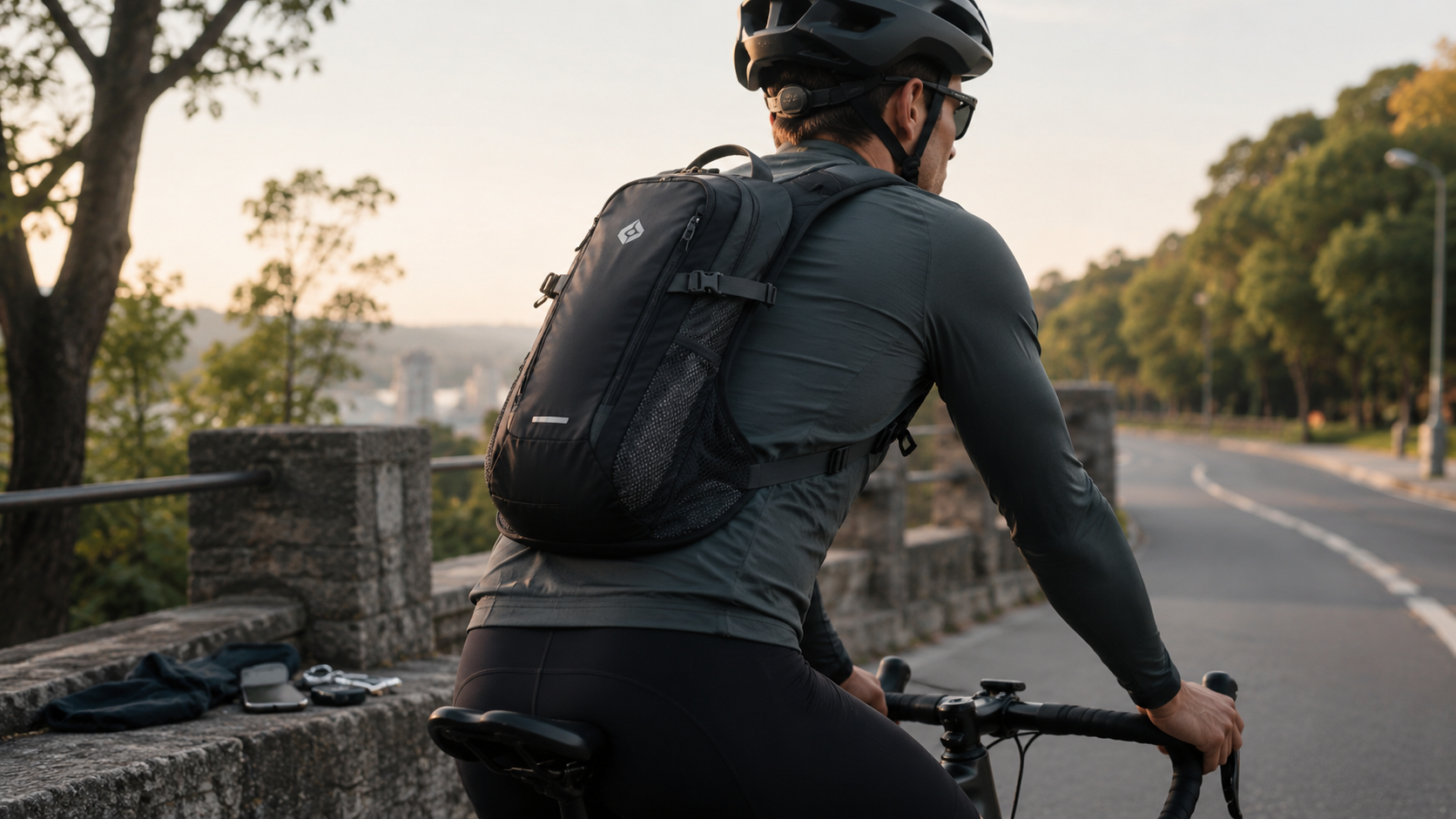
14. Cycling Backpack
Cycling backpacks usually have a narrower profile and stay close to the rider’s back.
A bulky or loose bag becomes much more noticeable when someone leans forward, turns, or gets out of the saddle. Secure straps help keep the load from shifting, while a ventilated back panel can improve comfort on longer rides.
For someone carrying a phone, repair kit, lightweight jacket, small tools, and a few personal items, that compact shape can be more useful than extra space that makes the backpack wider or less stable.
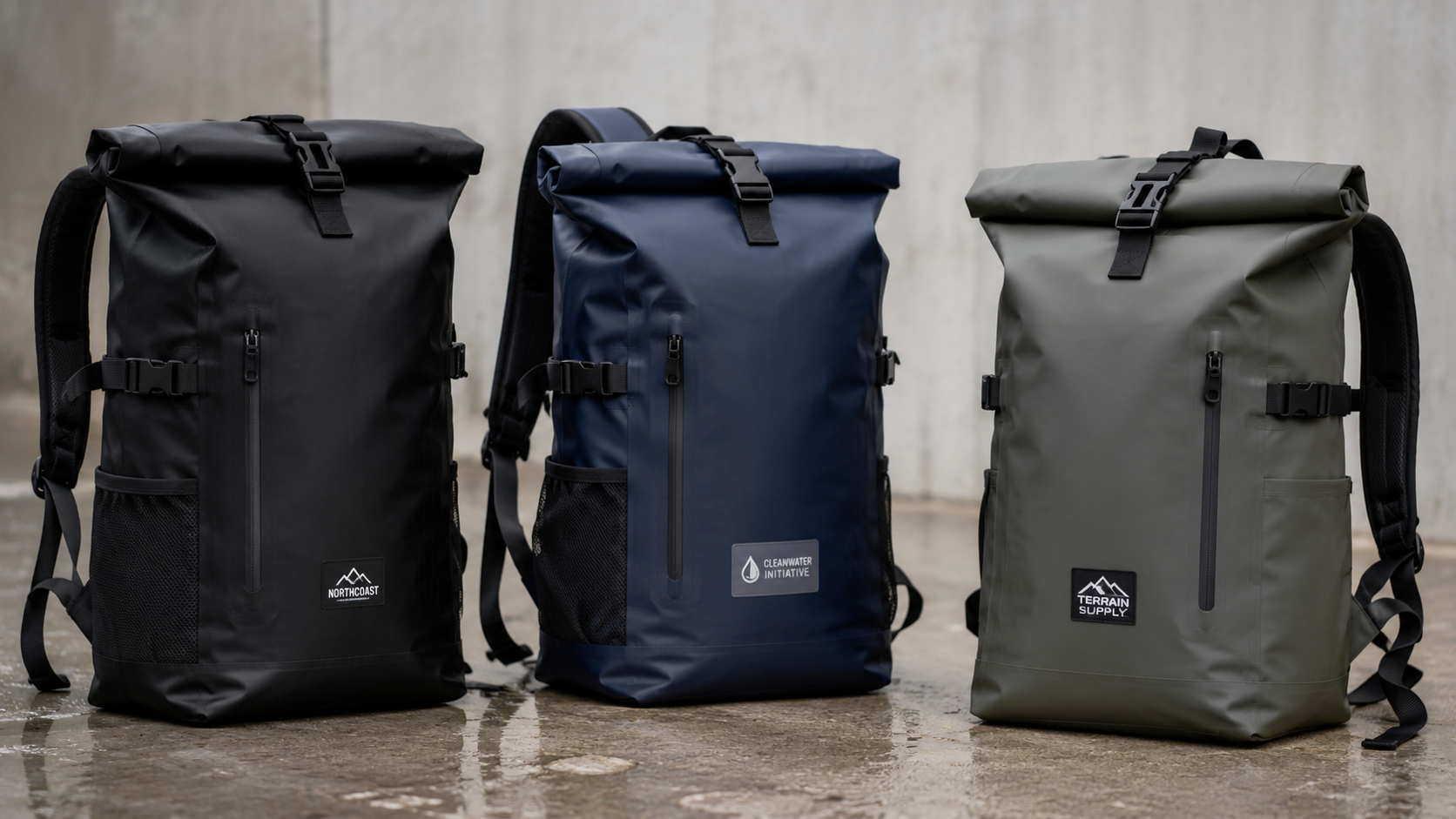
15. Waterproof and Dry Bag Backpacks
Waterproof and dry bag backpacks are designed for situations where normal rain resistance may not be enough.
Dry-bag styles often use coated materials, sealed or welded construction, and roll-down closures to reduce the places where water can enter.
Water-resistant and waterproof are not interchangeable. A backpack intended for occasional rain is not necessarily suitable for boating, kayaking, or repeated exposure to water.
If your project involves water, decide how much protection the contents actually need before choosing the backpack.
16. Cooler Backpack
Cooler backpacks use insulated lining to carry drinks, picnic items, food containers, or outdoor meals while keeping both hands free.
They are a strong fit for summer campaigns, beach promotions, company picnics, camping events, hospitality programs, outdoor activities, and seasonal promotions. A cooler backpack can feel more relevant than a standard backpack when food, drinks, or outdoor leisure are already part of the occasion.
The insulation itself takes up space, so the usable interior may be smaller than the outside dimensions suggest. The lining also matters if the bag will hold chilled bottles, condensation, or ice.
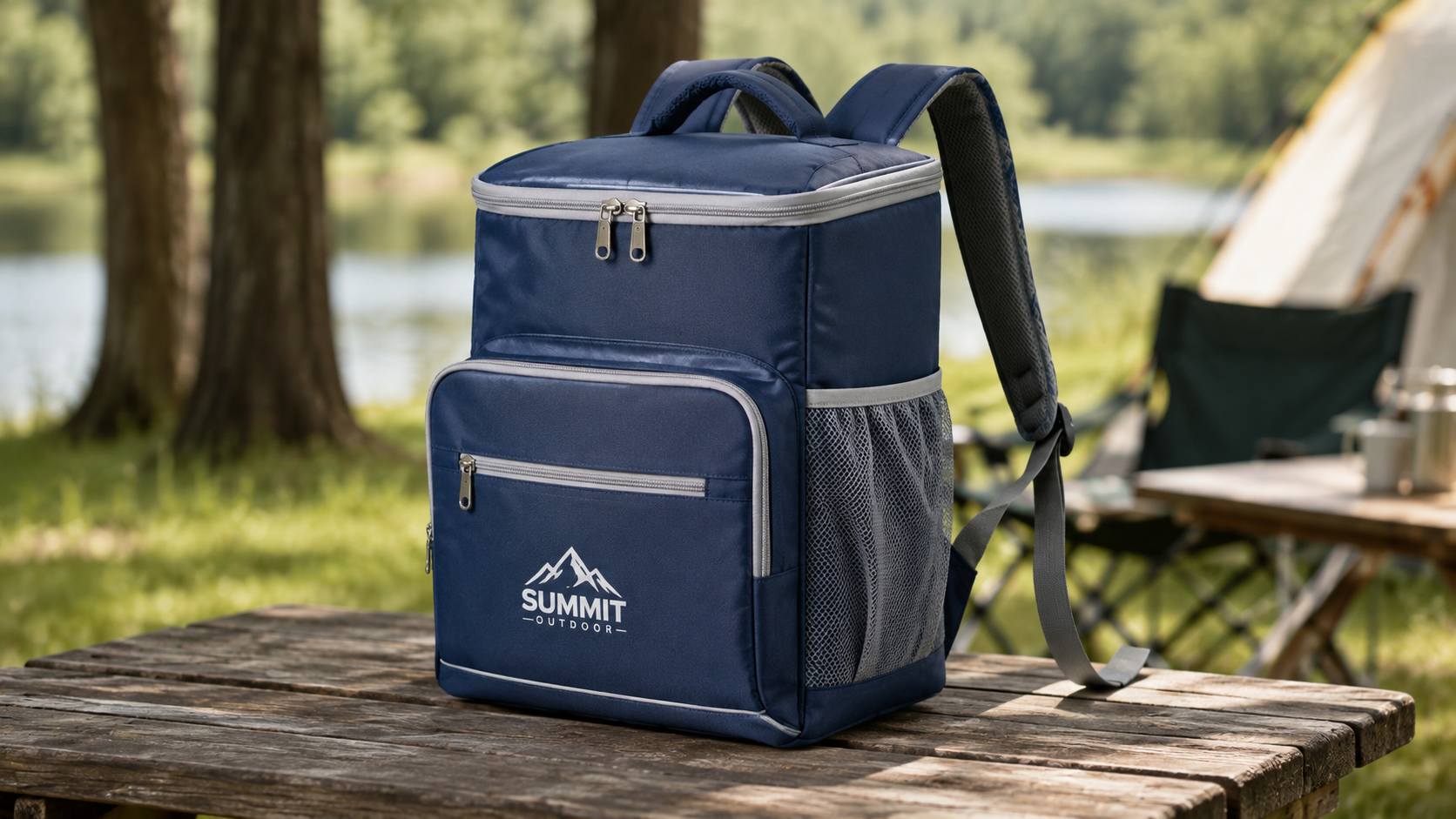
For cooler backpacks, the inside construction can matter just as much as the outer fabric.
How to Match Backpack Types to Your Gift or Event Needs
Once you know the main backpack types, the next step is narrowing them down based on how the bag will actually be used in your project.
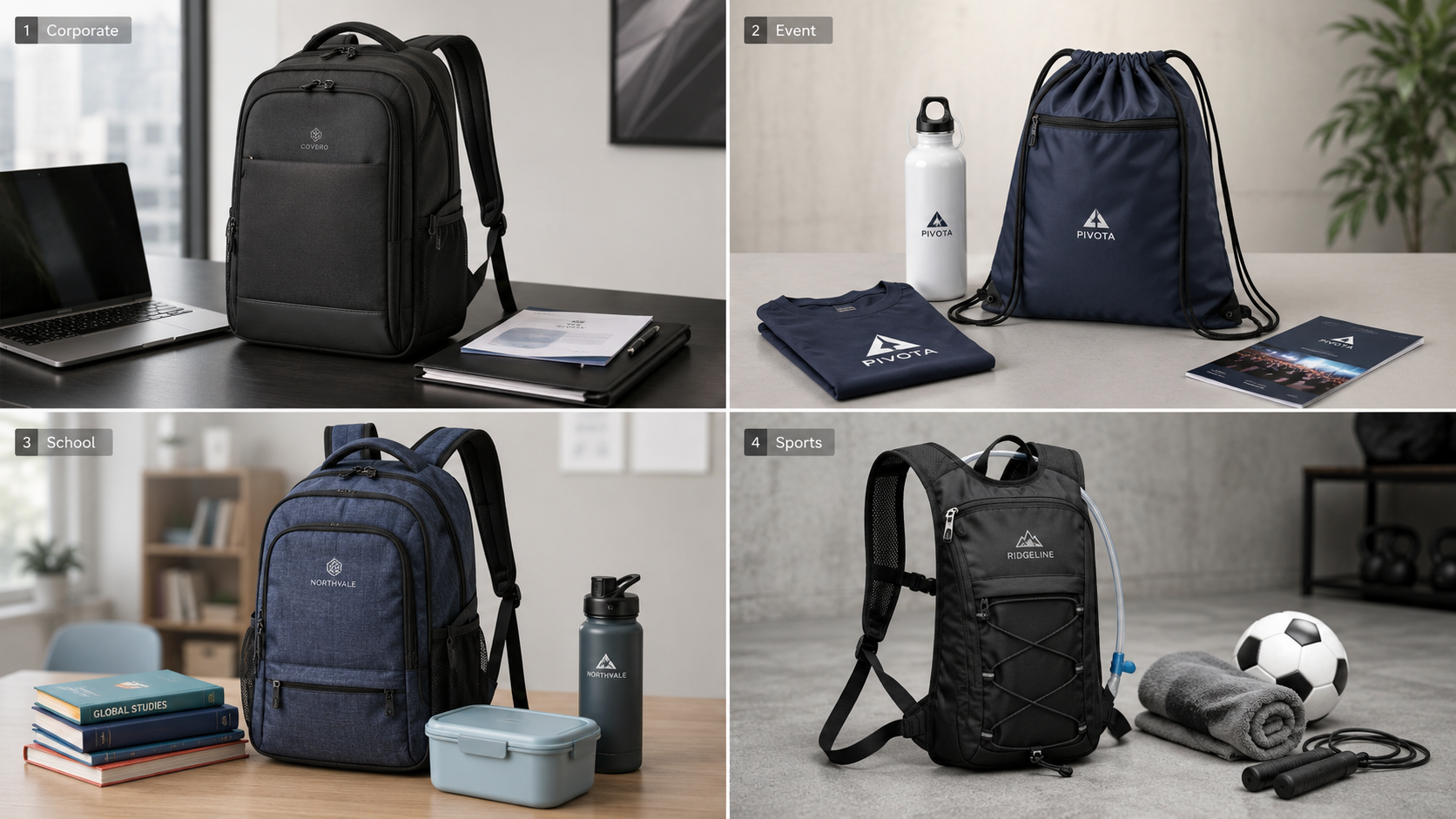
Employee and Corporate Gifts
If you are choosing backpacks for employees, start with their normal work routine.
Laptop backpacks are the strongest fit when your team regularly carries computers, chargers, documents, and other work essentials. A structured daypack works better for lighter daily use, while a travel backpack makes more sense for employees who frequently attend conferences, visit clients, or travel for work.
Events and Giveaways
For events, the contents of the bag usually point you toward the right style.
Drawstring backpack works well for light event kits with items such as a T-shirt, bottle, towel, brochure, or small giveaways. For trade shows and longer events, a daypack gives attendees more structure and space for notebooks, chargers, documents, and personal belongings.
If the event is connected with travel or tourism, a packable backpack can be useful because guests can keep it folded away until they need an extra bag later in the trip.
School and Student Programs
School projects usually fall into a few clear use cases. For daily school use, a school backpack is the most practical option for books, stationery, bottles, lunch, and devices. For short activities such as orientation days, sports days, or campus events, a daypack or drawstring backpack may be enough.
If your school or event has visible-content or security requirements, a clear backpack may be the better fit.
Sports and Outdoor Events
With sports and outdoor projects, the activity itself often gives you the clearest direction.
Hydration backpacks work well for marathons, trail races, and endurance events. Cycling backpacks suit riding programs where a close, stable fit matters. Duffel backpacks are useful for teams carrying shoes, uniforms, towels, and training gear.
For water-based activities, dry bag backpacks are more relevant, while cooler backpacks fit company picnics, beach events, outdoor hospitality, festivals, and other occasions where food and drinks are part of the day.
Sports and Outdoor Events
With sports and outdoor projects, the activity itself often gives you the clearest direction.
Marathons, trail races, and endurance events naturally suit hydration backpacks because participants need access to water while moving. Cycling programs call for a closer, more stable fit, making cycling backpacks a better match.
Teams carrying shoes, uniforms, towels, and training gear may get more use from a duffel backpack. Water-based activities such as boating, kayaking, or beach events make dry bag backpacks more relevant. For company picnics, outdoor hospitality, festivals, or summer activities, cooler backpacks fit naturally because food and drinks are already part of the day.
When the backpack already belongs in the activity, your branding feels more connected to the experience and less like something added to a generic giveaway.
For broader event merchandise, TOMAS Crafts’ Sports Events Solutions includes other products for teams, participants, and fan programs.
How Does Backpack Material Affect the Finished Bag?
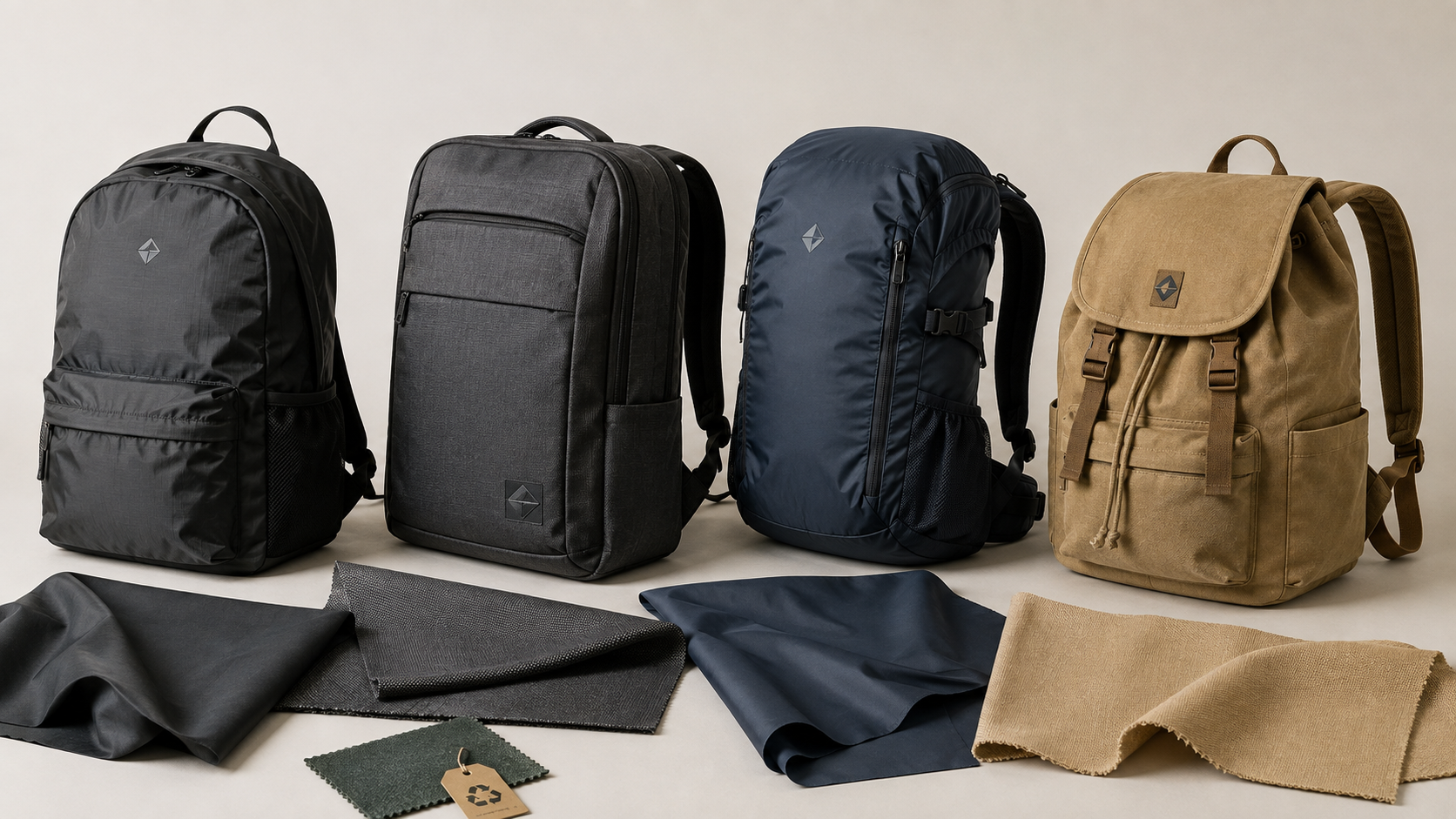
Backpack material affects more than the look of the finished bag. It can change the weight, structure, durability, water resistance, branding result, and how the backpack feels in everyday use.
Polyester is widely used for everyday, school, and event backpacks because it can keep the bag relatively light and flexible. Fabric weight and construction still make a noticeable difference in how substantial the finished backpack feels.
Oxford fabric is often used for laptop, work, travel, and general-purpose backpacks where you want a more structured appearance and a bag that holds its shape better.
Nylon is common in travel and outdoor backpacks where lower weight and durability matter. Coated versions can also add water resistance when the backpack may be used outdoors.
Canvas gives the backpack a heavier, more casual appearance. It can work well when you want the finished gift or merchandise to feel less technical and more lifestyle-oriented.
RPET and other recycled-content fabrics can be relevant when recycled material is part of your project requirements. If you plan to make recycled-content or environmental claims, make sure those claims are supported and appropriately qualified. In the U.S., the FTC Green Guides provide guidance on recycled-content and broader environmental marketing claims.
For cooler backpacks, the inner insulation and lining can matter just as much as the outer material because they affect how the bag handles chilled food, drinks, condensation, and ice.
The material name alone does not determine backpack quality. Fabric weight, stitching, zippers, lining, straps, padding, and overall construction all affect how the finished backpack looks, feels, and performs.
How Should a Logo Look on a Custom Backpack?
There is no single logo size or branding style that works for every backpack.
At a school event, sports tournament, charity run, or festival, a larger team name, sponsor mark, or event graphic may feel completely natural because the backpack is part of a shared occasion.
Laptop and travel backpacks intended for regular work or travel are different. Large promotional artwork can make an otherwise useful bag feel like event merchandise long after the event is over.
Smaller embroidery, woven labels, patches, or restrained front-panel branding often fit more easily into everyday use. The available space also depends on the actual backpack construction. Zippers, seams, pockets, curved panels, padding, and straps can all reduce the usable decoration area.
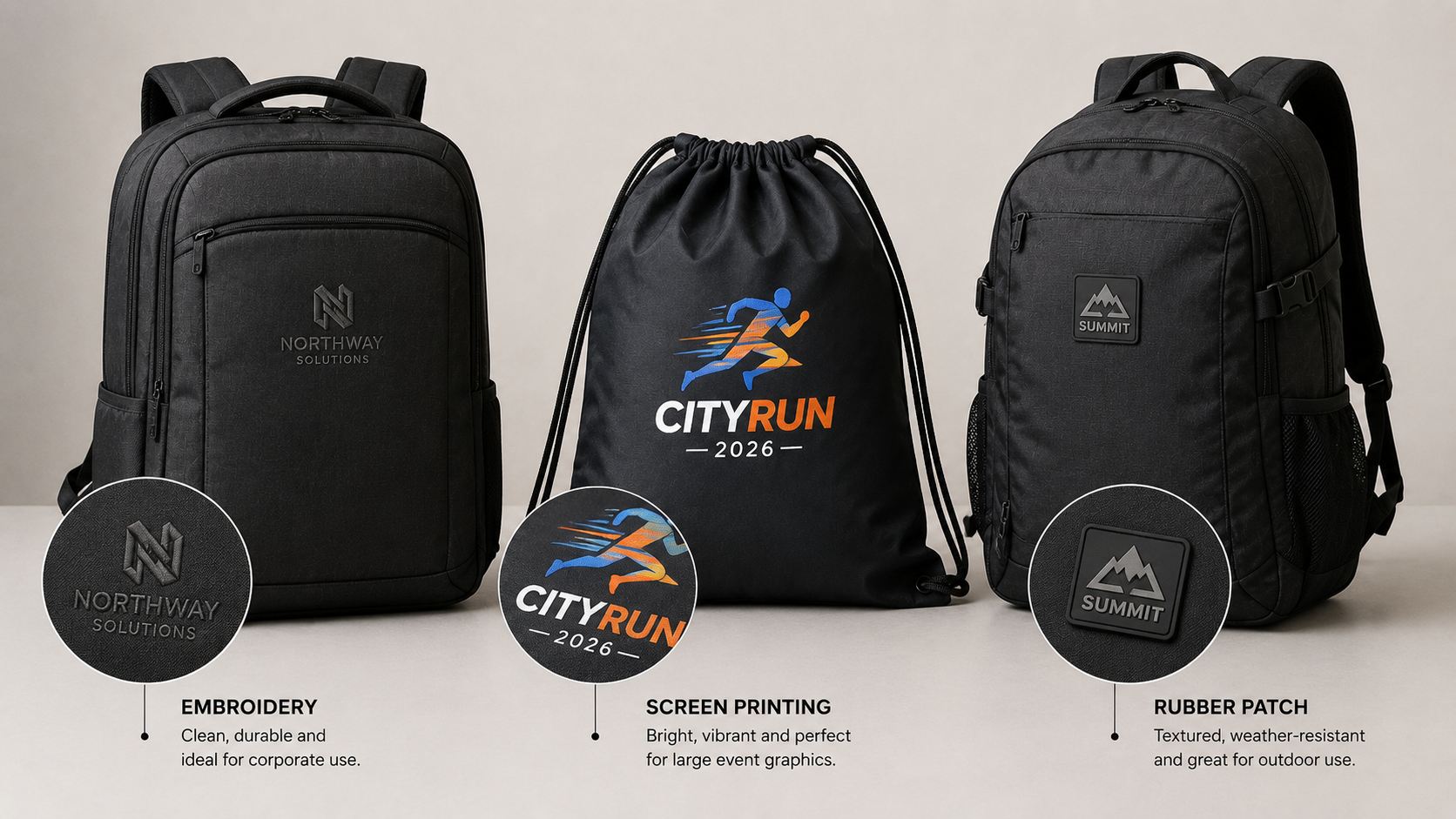
Judge the branding on the actual backpack rather than treating the front panel as one flat rectangle.
You can also browse Custom Backpacks & Bags collection to compare different bag formats and customization options.
What Should You Check Before Finalizing a Custom Backpack?
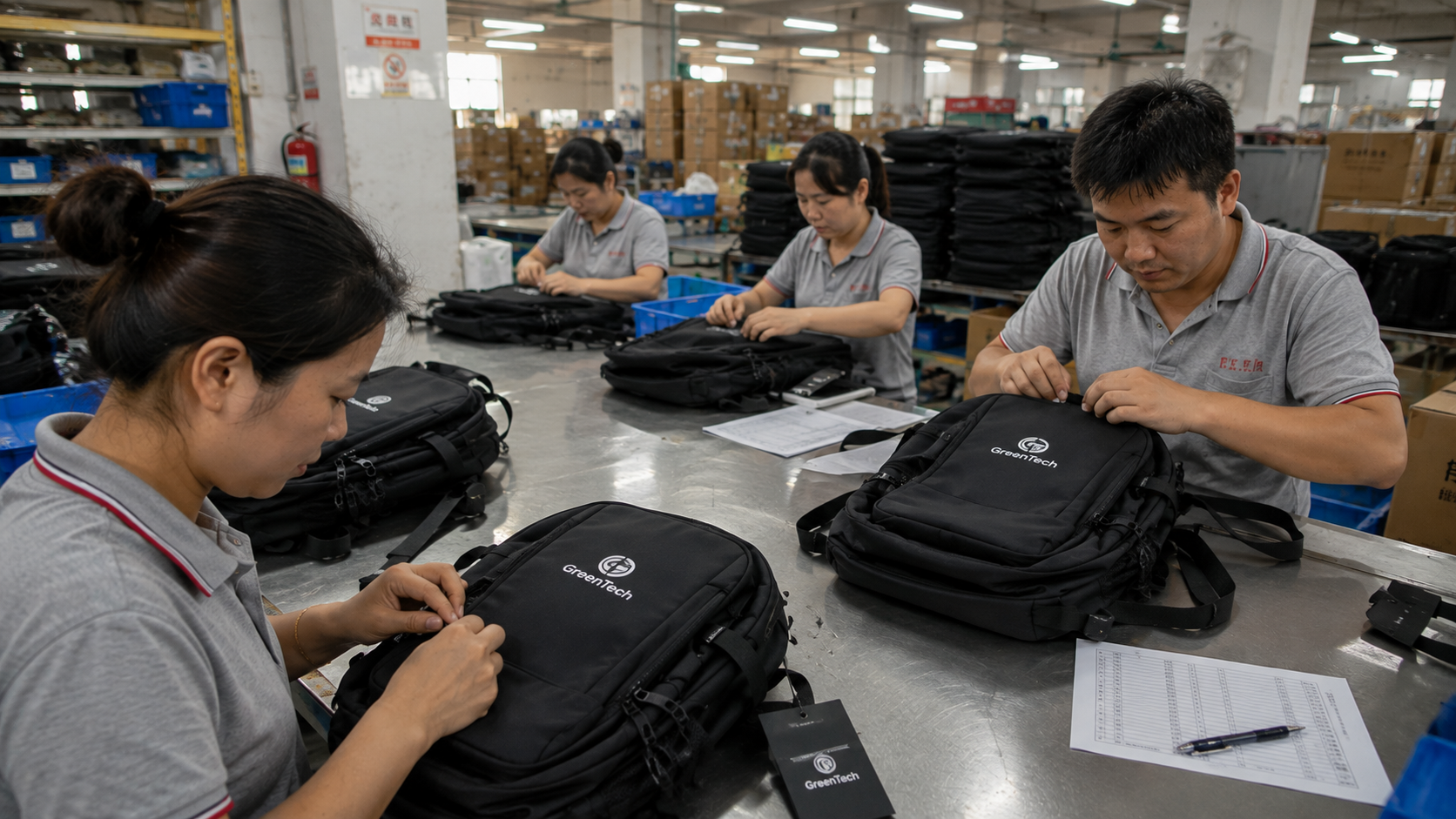
A finished sample can show things that product photos and digital mockups cannot.
Fill the backpack with the kinds of items people are likely to carry. Check whether the zippers move smoothly, how the shoulder straps feel, whether pockets are easy to reach, and how the bag holds its shape once it is full.
Look closely at stitching around handles, straps, and other load-bearing areas.
Then check the branding on the finished product. Does the logo still look balanced? Is it too close to a zipper or seam? Does its size still work when the backpack is filled rather than lying flat?
A logo that looks perfectly proportioned on a digital mockup can feel very different once it is applied to the actual bag.
FAQs
What Are the Most Common Types of Backpacks?
Common backpack types include daypacks, laptop backpacks, school backpacks, drawstring backpacks, sling backpacks, clear backpacks, travel backpacks, wheeled backpacks, anti-theft backpacks, packable backpacks, duffel backpacks, hiking backpacks, hydration backpacks, cycling backpacks, waterproof backpacks, and cooler backpacks.
The main differences come from what they are designed to carry, how they open, and how they sit on the body.
What Is the Difference Between a Daypack and a Backpack?
“Backpack” is the broad category. A daypack usually refers to a smaller, lighter backpack intended for everyday use or shorter trips.
Daypacks typically carry essentials such as a bottle, notebook, light clothing, lunch, or personal belongings. More specialized backpacks may add laptop protection, hiking support, insulation, hydration systems, or travel-oriented organization.
Which Backpack Type Is Best for Work or Commuting?
Laptop backpacks are usually the most practical choice when you regularly carry a computer, charger, documents, and work accessories.
If your daily load is lighter, a structured daypack may be enough. For frequent business travel, a travel backpack with wider access and better organization can be more useful.
Can You Add a Company Logo to Different Backpack Types?
Yes. Most backpack styles can be customized, but the best branding method and placement depend on the fabric, panel construction, seams, pockets, zippers, and how the bag will be used.
For backpacks intended for regular work or travel, smaller and more restrained branding often fits everyday use better than oversized promotional artwork.
Conclusion
The right backpack should make sense for the people receiving it before the logo is added.
Match the style to what they will carry, where they will use it, and the role you expect the bag to play in your event, employee gift, school program, travel project, or sports activity. Once those points are clear, the material, construction, and branding choices become much easier to narrow down.
Planning a Custom Backpack Project?
If you are preparing employee gifts, event backpacks, school programs, sports merchandise, or branded giveaways, TOMAS Crafts can help you compare backpack styles, materials, customization options, samples, packaging, and production.
Contact TOMAS Crafts and share your audience, use case, quantity, budget range, and branding requirements to discuss suitable backpack options for your project.