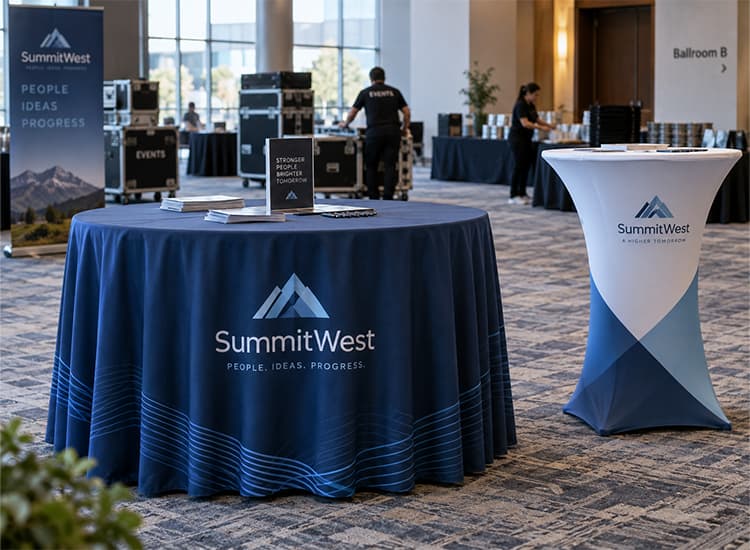
For event projects, choosing the right round tablecloth size starts with the table diameter and how far the cloth needs to hang. A 60-inch round table, for example, may use a 90-inch cloth for about a 15-inch drop, or a 120-inch cloth when full floor coverage is needed.
That difference becomes more important when one event includes seated tables, high-tops, registration areas, or branded displays. Table height and cover style can change the final size, while printed covers also need enough visible space for the logo once the table is set up.
Round Tablecloth Size Chart
For most round event tables, the main choice is between a mid-length drop and full floor coverage.
| Round Table Diameter | Mid-Length Cloth (Approx. 15″ Drop) | Floor-Length Cloth* |
|---|---|---|
| 36″ | 66″ | 96″ |
| 48″ | 78″ | 108″ |
| 60″ | 90″ | 120″ |
| 72″ | 102″ | 132″ |
*Floor-length sizes assume the table is approximately 30 inches high.
Mid-length coverage leaves more clearance around chairs and people moving around the table. Floor-length coverage is more useful when the base, cables, cartons, or materials stored underneath need to stay out of view.
The numbers above are calculated sizes, so the exact diameter may not always be available as a standard stock option. When that happens, compare the finished drop created by the nearest available sizes rather than choosing only by the closest number.
Cocktail and high-top tables need extra attention because their height can be very different from a standard event table.
How to Calculate a Round Tablecloth Size
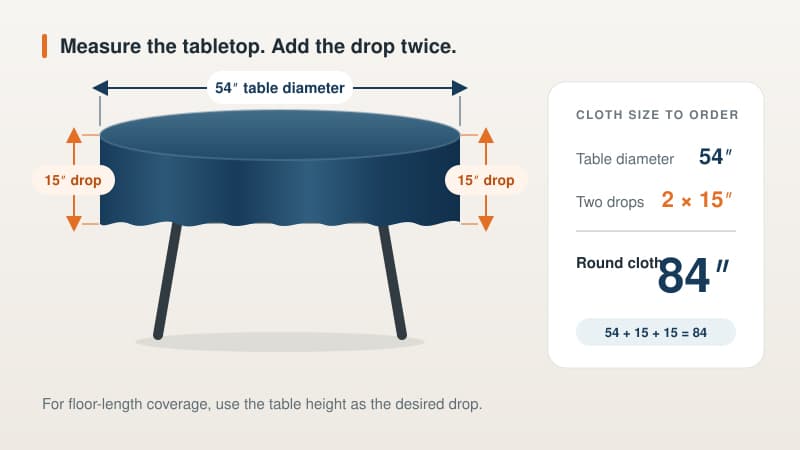
When the table diameter or required drop is not shown in the chart, use:
Tablecloth Diameter = Table Diameter + (2 × Desired Drop)
For a 54-inch round table with a 15-inch drop:
54 + (2 × 15) = 84 inches
For floor-length coverage, replace the desired drop with the actual table height.
The same formula explains why several tablecloth sizes may be recommended for one table. The tabletop has not changed; the intended drop has.
Why Table Height Matters for Floor-Length Coverage
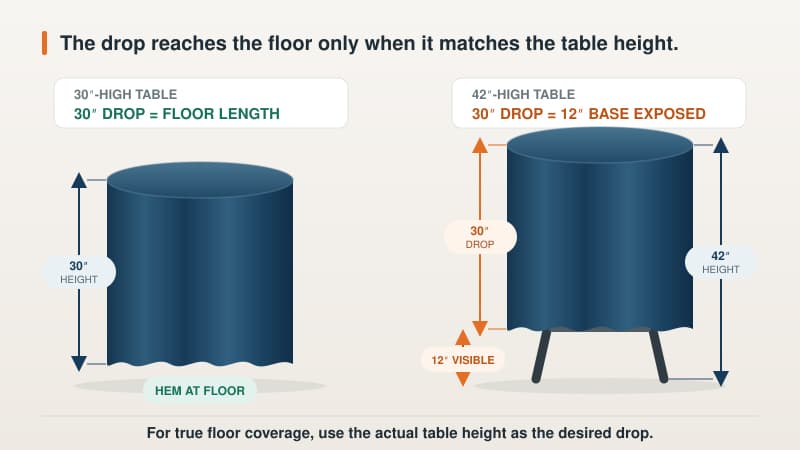
“30-inch drop” and “floor length” are sometimes used as though they mean the same thing. They only match when the table itself is close to 30 inches high.
For reference, MityLite lists heights of approximately 29–30 inches for its commercial ABS Round Folding Tables.
Move a cloth with a 30-inch drop to a 42-inch-high table and roughly 12 inches of the lower structure will still remain visible.
For true floor coverage, use the actual table height instead of assuming that a 30-inch drop will always reach the floor.
For custom event orders, checking the tabletop diameter and height together before production helps avoid a cloth that looks correct in a calculation but finishes higher than expected on site.
Round Tablecloth Sizes for Different Event Setups
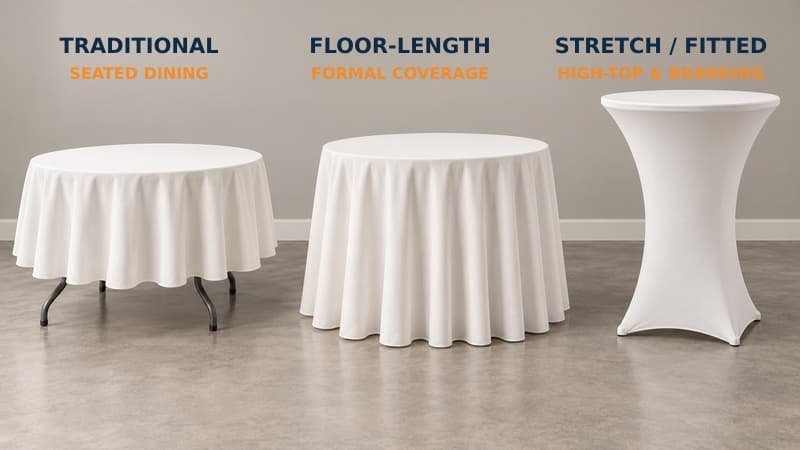
The size chart answers the measurement question. The table’s role determines what finished coverage will actually work.
Seated corporate functions, exhibition high-tops, registration areas, and promotional displays all use table covers differently. Those differences affect the drop, cover style, and, for printed covers, the usable branding area.
Seated Event Tables
Corporate dinners, award events, conference dining, receptions, and banquet-style functions may use either mid-length or floor-length cloths depending on the required presentation.
Mixed table sizes need particular attention. Using one cloth diameter throughout the room does not create a consistent drop.
For example:
- 48-inch table + 15-inch drop = 78-inch cloth
- 60-inch table + 15-inch drop = 90-inch cloth
The cloth diameters are different, but both finish at approximately the same height below the tabletop. When different table sizes need a consistent look, match the finished drop rather than the cloth diameter.
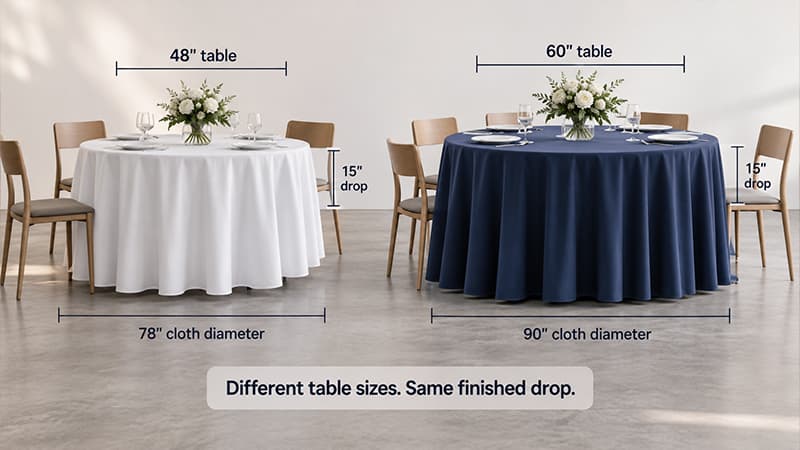
This is particularly useful for event planners, venues, rental companies, and corporate event teams working with several table sizes in one space.
Cocktail and High-Top Tables
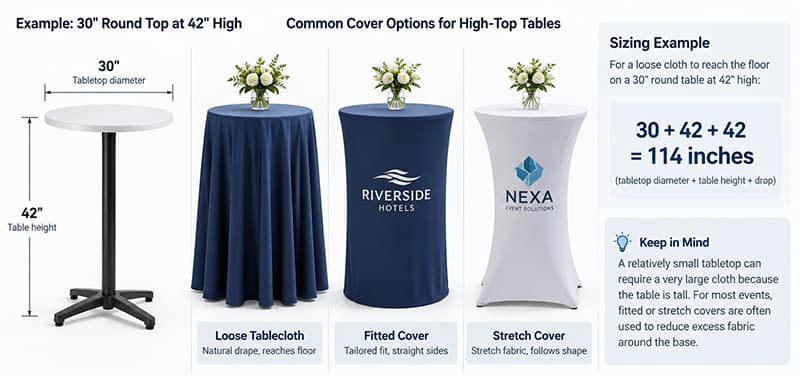
High-top tables need a different sizing approach from standard round event tables because the extra height adds much more fabric to a floor-length loose cloth.
For example, a 30-inch round cocktail table that is 42 inches high would need approximately:
30 + 42 + 42 = 114 inches
for a loose cloth to reach the floor.
That is a much larger cloth than the tabletop size might suggest. For one or two decorative tables, a loose cover can still work. For exhibitions, networking events, product launches, or other setups using several high-tops, fitted or stretch covers are often more practical because they follow the shape of the table and leave less fabric around the base.
Unlike a loose tablecloth, fitted and stretch covers are selected from the tabletop diameter, table height, and base shape, rather than from the desired drop alone.
Registration and Welcome Tables
Registration areas need the cover to support the way staff actually use the table.
Name badges, lanyards, brochures, giveaway items, cartons, cables, and other supplies are often stored underneath. Fuller coverage on the visitor-facing side can keep those materials out of sight.
Access from the working side matters just as much. Where staff need to reach under the table repeatedly, excessive fabric at the back can make the setup less practical.
The goal is therefore not simply to choose the longest cloth available. The cover should provide enough public-facing coverage while keeping the staff side functional.
Registration areas are also frequently planned together with banners, backdrops, and directional signs. Our Standard Banner Sizes Guide covers common display dimensions and how viewing distance affects banner selection.

Product and Promotional Display Tables
Trade shows, product launches, roadshows, sponsor activations, sampling campaigns, and promotional events often use tables as part of a larger branded display.
Here, the cloth has several jobs at once:
- hide the table base and stored materials where necessary,
- keep products on the tabletop visible,
- provide a clean area for branding,
- and work with nearby banners, backdrops, or display structures.
Floor-length coverage can be useful when storage underneath needs to stay hidden. Fitted or stretch covers are often better where a cleaner table shape and more controlled printed surface are priorities.

The surrounding setup also influences the choice. An island-style promotional table may be visible from several directions, while a table placed against a backdrop is usually viewed mainly from the front.
That difference becomes especially important once a logo is added.
Loose, Fitted, and Stretch Table Covers
Cover style changes both the finished appearance and the way sizing works.
| Cover Style | Often Suits | Sizing Basis |
|---|---|---|
| Loose round tablecloth | Seated events and natural drape | Table diameter + desired drop |
| Floor-length loose cloth | Full-coverage formal or display setups | Table diameter + actual table height |
| Fitted cover | Registration, display, or high-top tables | Table diameter, height, and shape |
| Stretch cover | High-tops, exhibitions, branded displays | Table dimensions and base structure |
Loose cloths are the simplest to size because the required diameter comes directly from the tabletop and drop.
Fitted and stretch covers need to follow the table more precisely. Height and base shape can matter just as much as the tabletop diameter.
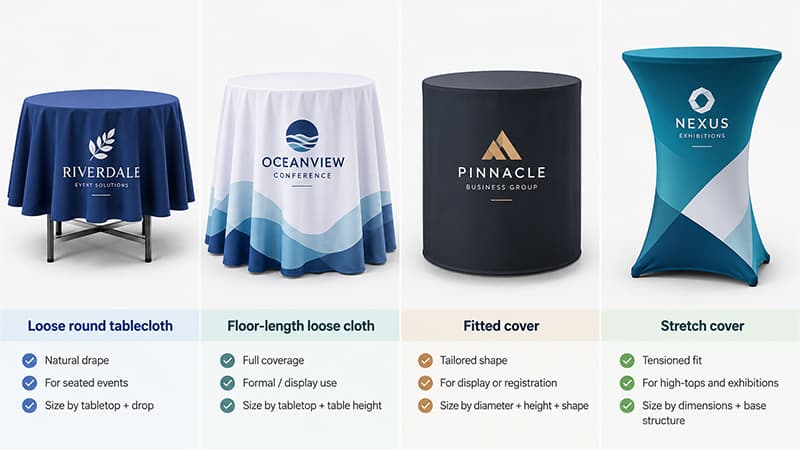
Choose a loose cloth when natural drape is part of the desired appearance. Fitted or stretch covers make more sense when the shape and printed surface need to remain controlled throughout the event.
How Tablecloth Size Affects Logo Placement
Choosing the correct cloth size does not automatically put the logo in the correct visible position.
Flat artwork only shows the print layout before installation. Once the cover is on the table, part of the material lies across the tabletop, another section curves over the edge, and the remaining area hangs vertically. That changes where the artwork appears to the viewer.
For custom branded table covers, three details should be checked together before artwork approval:
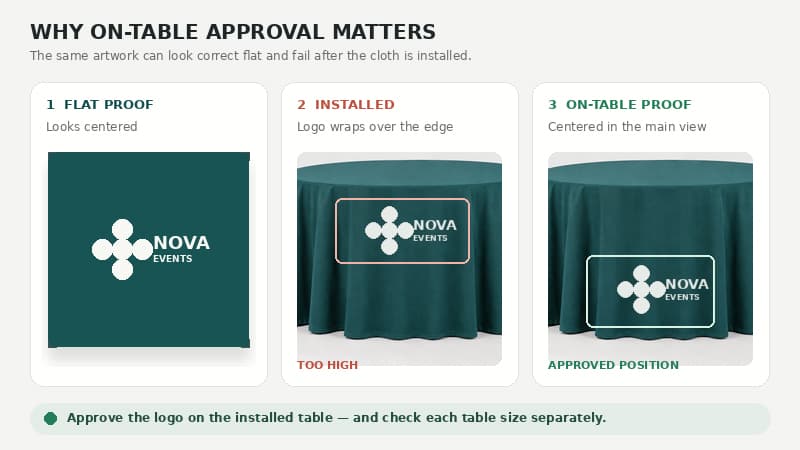
table diameter, finished drop, and main viewing direction.
The diameter and drop determine where the main vertical print area will sit. Viewing direction determines which part of the cover needs to carry the most important branding.
Artwork placed too high may wrap onto the curved edge or tabletop. Positioning it too low can leave the logo much closer to the floor than expected.
Approve the logo on the table, not only on the flat artwork.
When several table sizes are included in one project, check each layout separately. Identical logo coordinates on a design file do not always produce the same visible position once different covers are installed.
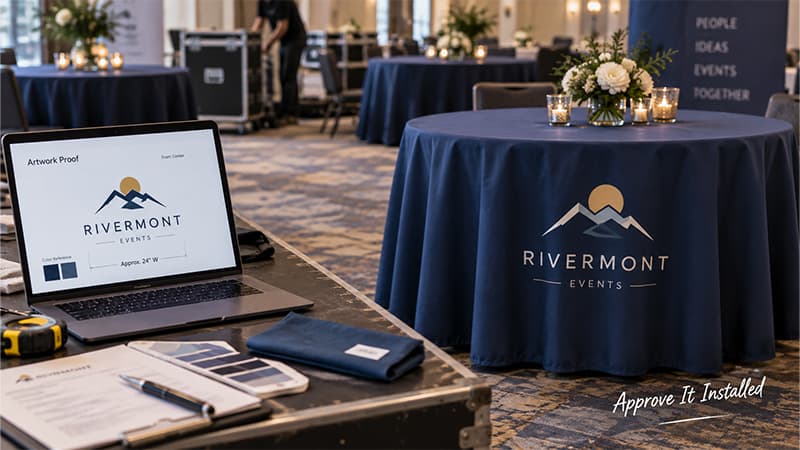
What to Confirm Before Ordering
Before finalizing a round tablecloth, confirm:
- table diameter,
- desired finished drop,
- table height when floor coverage is required,
- and, for printed covers, the main logo viewing side.
From there, the event setup determines whether a loose tablecloth, fitted cover, or stretch cover is more practical.
For projects involving several table types, list each setup separately. A 30-inch high-top, 60-inch seated table, and branded registration table should not automatically be treated as one sizing problem.
Need Custom Table Covers for an Event?
For a custom table-cover project, prepare the table dimensions, quantity, preferred cover style, and artwork if printing is required. When several table types are involved, listing them separately makes it easier to confirm the correct sizing and branding for each setup.
TOMAS Crafts can also coordinate table covers with related event materials, including banners, flags, staff apparel, lanyards, bags, drinkware, and giveaways. Keeping these items within the same event project can make artwork, brand colors, packing, and delivery requirements easier to coordinate.
Contact Us with the table dimensions, quantity, artwork, and event requirements to discuss the most suitable table-cover setup and request a quotation.