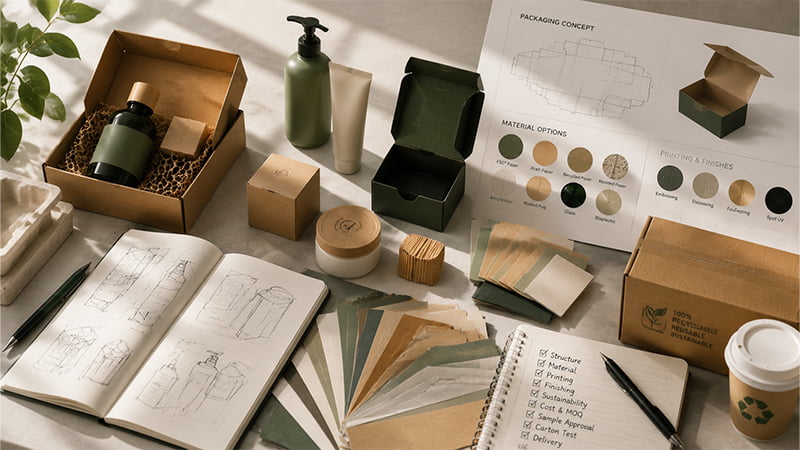
Packaging design in 2026 goes beyond colors and graphics. Recent packaging design news shows that brands must also consider materials, digital retail, accessibility, product protection and cost. This guide reviews ten practical trends, where they work best and what buyers should check before production. It also explains how MOQ, tooling, samples and shipping can affect the final choice.
Quick Answer: What Are the Biggest Packaging Trends in 2026?
The strongest packaging trends for 2026 combine clearer communication, thoughtful materials, useful digital features and easier product use.
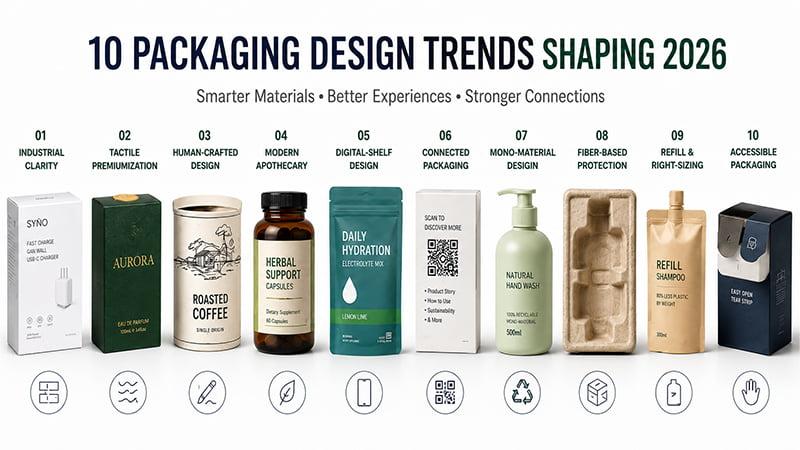
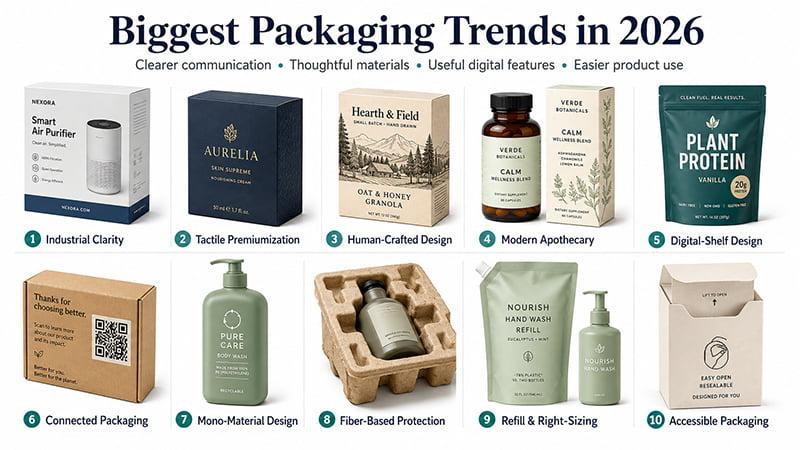
Key directions include clean layouts, tactile finishes, hand-drawn graphics, transparent wellness labels, smart packaging, mono-material formats, molded-fiber protection, refill systems and easy-open structures.
The right choice depends on the product, target market, sales channel, budget and order quantity.
| Trend | What It Means | Best For |
|---|---|---|
| Industrial clarity | Clean layouts and stronger information hierarchy | Tech, wellness and household products |
| Tactile premiumization | Purposeful finishes and material contrast | Beauty, gifts and beverages |
| Human-crafted design | Illustration, texture and heritage references | Food, lifestyle and artisan products |
| Modern apothecary | Clear ingredient and wellness communication | Herbal, beauty and wellness products |
| Digital-shelf design | Packaging that stays clear on mobile screens | DTC and e-commerce |
| Connected packaging | QR codes, 2D codes and digital information | Food, cosmetics and electronics |
| Mono-material design | Simpler material combinations | Consumer products |
| Fiber-based protection | Paper and molded-fiber structures | Gifts, electronics and fragile products |
| Refill and right-sizing | Less repeated material and unused shipping space | Beauty, household and e-commerce |
| Accessible packaging | Easier opening, reading and resealing | Broad consumer markets |
How these trends were selected: We reviewed current design reports, material developments, digital retail changes, packaging rules and practical sourcing challenges. We selected ideas that affect product presentation, protection, usability and commercial production.
What Is Driving Packaging Change in 2026?
Regulation and Credible Sustainability Claims
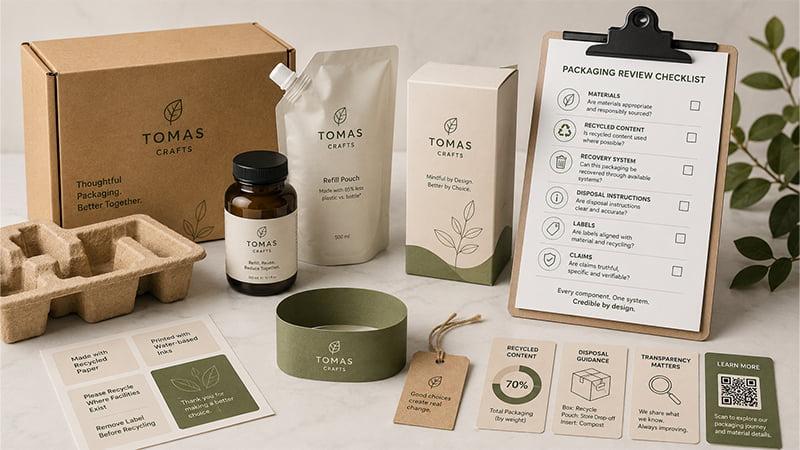
Sustainability is moving away from vague promises. Buyers now ask more specific questions about materials, recycled content, recovery systems and disposal instructions.
According to the EU summary of the Packaging and Packaging Waste Regulation, the regulation entered into force on February 11, 2025, and applies from August 12, 2026. Many detailed obligations follow separate timelines, so brands should review the requirements for each target market before approving materials, labels or environmental claims.
In the United States, the FTC Green Guides help marketers avoid environmental claims that could mislead customers. They address terms such as recyclable, recycled content and compostable.
The Green Guides are marketing guidance rather than a packaging certification. Brands still need to check the laws and labeling rules that apply in each sales market.
The entire package matters. A paper box may still contain a plastic window, laminated coating, mixed-material label or incompatible adhesive. Buyers should review the main container, closure, sleeve, insert and decoration as one system.
Digital Commerce, AI and Connected Products
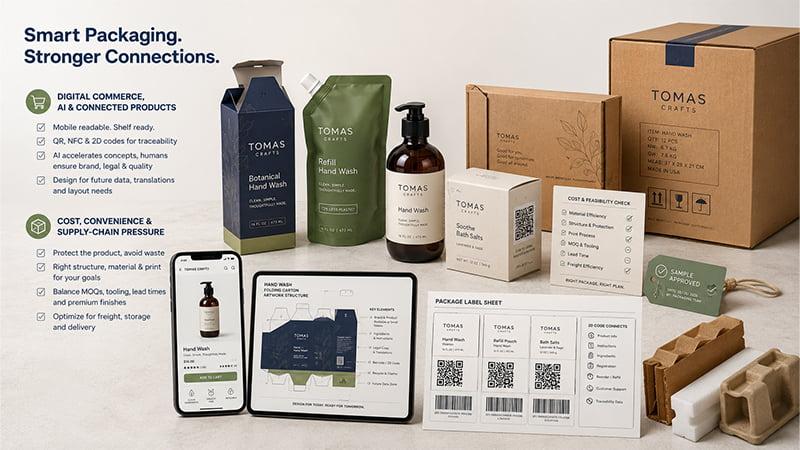
Packaging now has to work in several environments. It must communicate clearly on a retail shelf, in a mobile marketplace thumbnail, on social media and after the sale.
Product names and key benefits should remain readable when images are small. Designers also need enough room for ingredients, instructions, legal copy, barcodes and translations.
QR codes, NFC and 2D barcodes can connect physical products with digital manuals, traceability data, registration pages or customer support. GS1’s retail 2D barcode readiness program supports an industry goal for retail point-of-sale systems to process defined GS1-compliant 2D barcodes, alongside existing linear barcodes, by the end of 2027.
Brands developing new packs in 2026 should therefore consider future data and layout needs before approving the final artwork.
AI tools can speed up visual research and early concept development. They can also help teams compare layouts or explore color directions. However, the final design still needs human review for brand fit, legal content, print quality and production feasibility.
Cost, Convenience and Supply-Chain Pressure
Packaging must protect the product without adding avoidable material, assembly or freight costs.
Oversized boxes increase shipping volume. Complex inserts add labor. Too many custom structures can create high MOQs across several product ranges. Premium finishes may improve presentation, but they can also require tooling, longer lead times and tighter quality control.
The goal is not simply to use more or less packaging. The goal is to choose a structure, material and printing process that suit the product, sales channel, quantity and delivery plan.
10 Packaging Design Trends Shaping 2026
1. Ultra-Clean Industrial Design and Information Clarity
What it looks like: Structured grids, restrained colors, generous white space and functional typography. The product name, main benefit and supporting details are easy to separate.
Why it matters: Customers should be able to understand a package quickly. This is especially important on crowded shelves and small screens. A clean layout can also strengthen brand identity without adding extra colors or decorative elements.
Best for: Technology, professional tools, wellness products, household goods, healthcare-related items and modern corporate gifts.
Budget-friendly option: Improve the label, printed sleeve or outer-box artwork instead of developing a new structure.
Production watch-outs: Minimal graphics make flaws more visible. Weak cardboard, inaccurate color, poor alignment or uneven foil can quickly reduce the premium effect. This style works best when typography, spacing and print registration are carefully controlled.
2. Material-Led Metallic and Tactile Premiumization
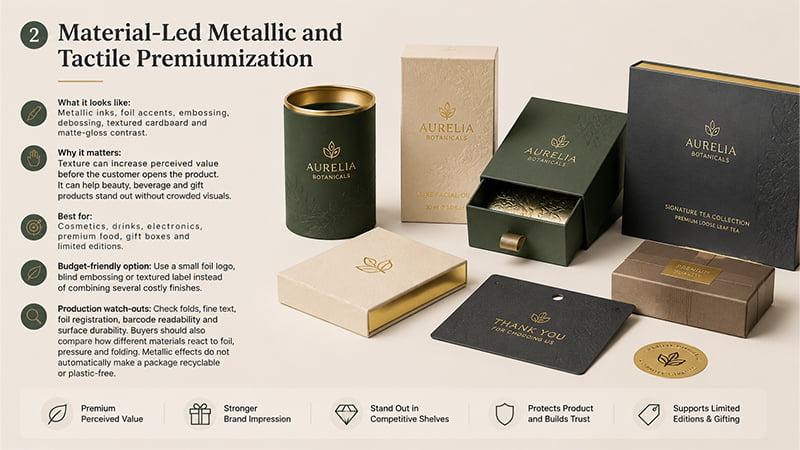
What it looks like: Metallic inks, foil accents, embossing, debossing, textured cardboard and matte-gloss contrast.
Rather than covering the entire package with decoration, brands are using one or two tactile details to create a stronger impression.
Why it matters: Texture can increase perceived value before the customer opens the product. It can help beauty, beverage and gift products stand out without crowded visuals.
Best for: Cosmetics, drinks, electronics, premium food, gift boxes and limited editions.
Budget-friendly option: Use a small foil logo, blind embossing or textured label instead of combining several costly finishes.
Production watch-outs: Check folds, fine text, foil registration, barcode readability and surface durability. Buyers should also compare how different materials react to foil, pressure and folding. Metallic effects do not automatically make a package recyclable or plastic-free.
3. Human-Crafted and Heritage-Inspired Design
What it looks like: Hand-drawn illustration, engraving-style artwork, ink texture, visible grain, collage, imperfect typography and archive-inspired graphics.
Why it matters: The DIELINE 2026 Trend Report highlights renewed interest in analogue details and visible human touch as brands respond to repetitive algorithmic imagery. These elements can make packaging feel more personal and distinctive.
Best for: Coffee, tea, bakery products, specialty food, tourism gifts, cultural products and lifestyle products.
Budget-friendly option: Apply original artwork to an existing label, sleeve or folding box rather than creating a new package shape.
Production watch-outs: Confirm illustration ownership, font licenses and artist usage rights. Designers should test the artwork at its final size because thin lines and subtle textures may disappear during printing. The handmade effect should still leave product information easy to read.
4. Modern Apothecary and Transparent Wellness Packaging
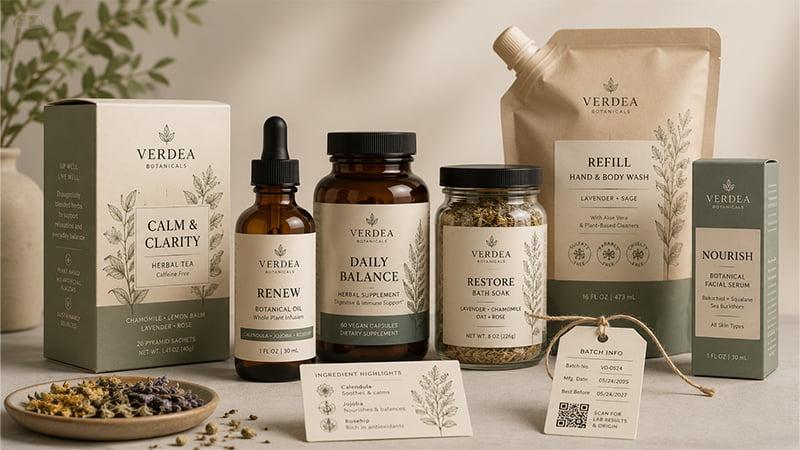
What it looks like: Botanical illustration, serif typography, restrained natural colors, clear ingredient order and concise usage instructions. Some products may also need amber glass, opaque containers or another light-protective format.
Searches around 2025 herbal product packaging trends often focused on botanical visuals. In 2026, clear information, suitable materials and credible product claims matter more.
Why it matters: Herbal, beauty and wellness products often rely on similar green, kraft and plant-based visuals. Better information hierarchy can help buyers compare formulas, understand product use and distinguish one brand from another.
Best for: Herbal products, tea, skincare, spa products, botanical oils and wellness items.
Food packaging for herbal teas, edible oils and botanical ingredients may also require barrier and shelf-life checks.
Budget-friendly option: Use stock glass bottles, jars, pouches or cardboard boxes with a consistent label and illustration system.
Production watch-outs: Match the package to the product formula, filling process, storage needs and target-market rules. Avoid unsupported health, natural or environmental claims.
For example, a botanical oil brand could combine an amber bottle for light protection, a printed carton for product details and a QR code for batch information.
5. Narrative Typography and Digital-Shelf Design
What it looks like: Larger product names, readable typography, strong color blocking and fewer front-panel claims. The pack remains clear when shown as a small online image.
Why it matters: Packaging is now part of the digital product page. A design that looks balanced at full size may become unreadable in a marketplace listing.
Strong graphic design helps customers recognize related products across retail and online channels. Consistent typography and color can also build a stronger visual identity across multiple SKUs.
Best for: Food packaging, beverages, personal care, DTC brands, subscription products and e-commerce.
Budget-friendly option: Improve the typography, front-panel hierarchy and product photography without changing the structure.
Production watch-outs: Leave enough room for ingredients, legal copy, barcodes and translations. Printed colors can look different online because paper, films, coatings, lighting and photography affect the final appearance.
6. Smart and Connected Packaging
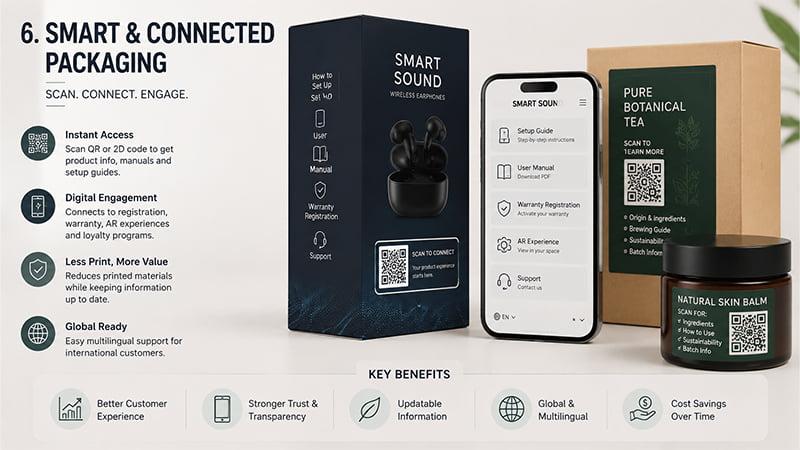
What it looks like: QR codes, GS1-compliant 2D codes, NFC, batch information, digital manuals, registration pages, loyalty content and selected AR features.
Why it matters: Smart packaging can connect customers with setup guides, sourcing details, warranty registration or support. It can reduce printed content when the digital destination is useful and maintained over time.
Best for: Food and beverages, cosmetics, electronics, premium drinks and products that require instructions or traceability.
Budget-friendly option: Start with one clear QR code linked to a fast, mobile-friendly page.
Production watch-outs: Plan connected features during the design stage rather than adding them after the artwork is complete. Test code size, contrast, curved surfaces and scan distance. Decide who owns the destination page and who will update it.
A code does not prove authenticity by itself. The data and verification system behind it must also be reliable.
For example, an electronics brand can link customers to setup instructions, warranty registration and multilingual troubleshooting instead of printing a thick manual.
7. Mono-Material and Circular Design
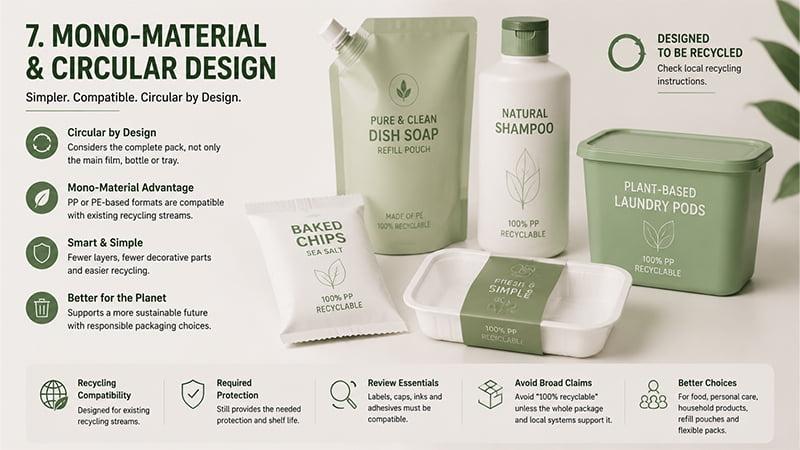
What it looks like: Simpler structures, compatible labels and closures, fewer decorative layers and PP- or PE-based formats where they suit the product and intended recovery stream.
Why it matters: Circular design considers the complete pack, not only the main film, bottle or tray. The RecyClass Design for Recycling Guidelines help buyers assess whether components such as caps, labels and adhesives are compatible with a specific recycling stream.
Best for: Food packaging, personal care, household products, refill pouches and selected flexible packs.
Budget-friendly option: Remove unnecessary sleeves, windows or decorative parts before redesigning the entire structure.
Production watch-outs: Mono-material food packaging may simplify the construction, but it must still provide the required protection and shelf life. Labels, caps, inks and adhesives also need review.
Mono-material design may improve recycling compatibility, but local collection and sorting systems still matter. Avoid broad claims such as “100% recyclable” unless the complete package and intended market support them.
8. Fiber-Based Packaging and Molded Protective Inserts
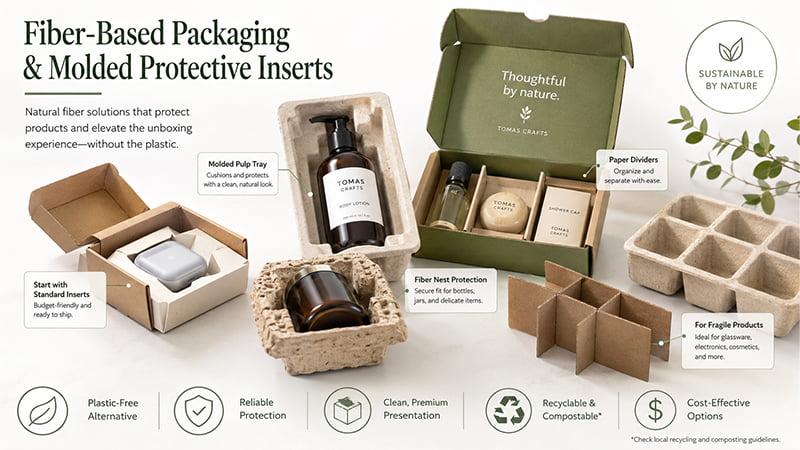
What it looks like: Paperboard boxes, molded-pulp trays, bagasse inserts, paper dividers and formed-fiber nests. In selected uses, verified water-based coatings may reduce the need for conventional plastic lamination.
Why it matters: Natural fibers can create a clean, tactile presentation while protecting products. They may replace selected foam or plastic inserts in gifts, electronics and e-commerce packs.
Best for: Gift sets, cosmetics, electronics, glassware, hotel amenities and fragile products.
Budget-friendly option: Start with folded cardboard dividers, a standard molded tray or an existing insert size before paying for custom tooling.
Production watch-outs: Check product fit, moisture resistance, dimensional consistency, fiber shedding and drop performance.
Natural fibers are not automatically compostable. Some compostable films may suit specific recovery systems, but the material, certification scope and local disposal route still require verification. Recyclable, repulpable and compostable are separate claims.
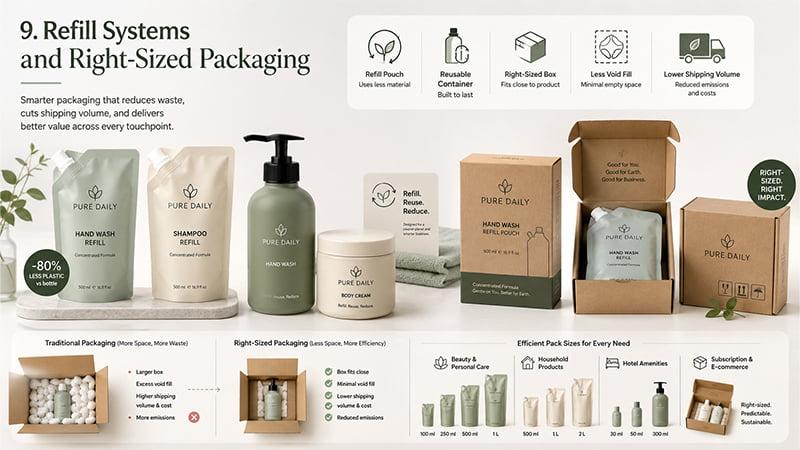
9. Refill Systems and Right-Sized Packaging
What it looks like: Refill pouches, reusable outer containers, replaceable cartridges, concentrated products, smaller shipping boxes and less void fill.
Why it matters: Refill systems can reduce repeated material use. Right-sized boxes can reduce unused shipping volume. The Sustainable Packaging Coalition’s 2026 trends report presents reduction, reuse, material substitution and improved recycling as parts of a broader packaging strategy.
Best for: Beauty, personal care, household products, hotel amenities, subscription services and e-commerce.
Budget-friendly option: Pair a reusable primary pack with a straightforward refill pouch before developing a complex dispenser or cartridge.
Production watch-outs: Test leakage, hygiene, resealing, filling and transport performance. The system must be easy for customers to use and must offer a clear material or logistics benefit.
For example, a hotel group could use wall-mounted refill dispensers for regular guestroom use and smaller branded containers for premium welcome kits.
10. Accessible, Easy-Open and Tamper-Evident Packaging
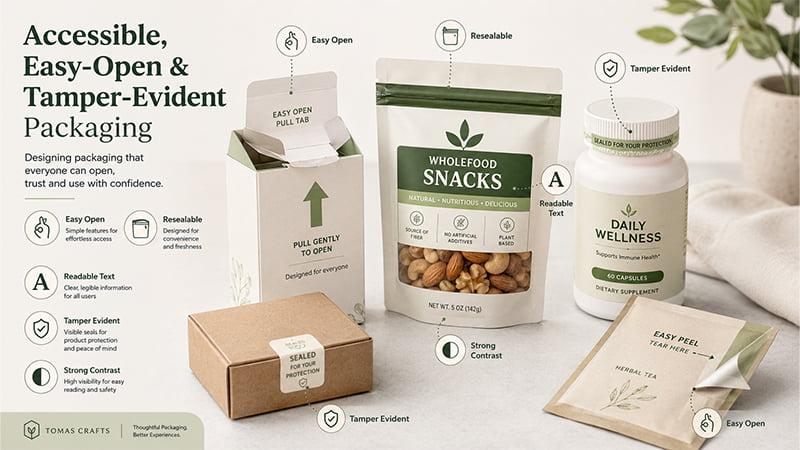
What it looks like: Larger pull tabs, easy-peel openings, resealable closures, readable text, strong contrast, simple instructions and visible tamper evidence.
Why it matters: Good packaging should be easy to understand and use. ISO 17480:2015 provides requirements and recommendations for accessible packaging design, with a focus on ease of opening and user-based evaluation.
Best for: Food packaging, household goods, personal care, healthcare-related products, hotel amenities and e-commerce shipments.
Budget-friendly option: Improve font size, contrast, instructions and pull-tab design before creating a new structure.
Production watch-outs: Test opening force, grip, resealing, leakage and tamper visibility with real users. A digital render can show the proposed appearance, but it cannot confirm usability.
Packaging Trend Selection Matrix
| Packaging Trend | Visual Impact | Cost Impact | MOQ Risk | Best Product Categories | What to Validate |
|---|---|---|---|---|---|
| Industrial clarity | Medium | Low | Low | Tech, wellness and household | Print and die-cut accuracy |
| Metallic and tactile finishes | High | Medium–High | Medium | Beauty, gifts and beverages | Finish registration and tooling |
| Human-crafted design | High | Low–Medium | Low | Food, lifestyle and cultural products | Artwork reproduction and licensing |
| Modern apothecary | Medium | Low–Medium | Low | Herbal, beauty and wellness | Information clarity and material fit |
| Digital-shelf design | High | Low | Low | DTC, food and personal care | Mobile readability |
| Connected packaging | Medium | Low–Medium | Low | Food, electronics and cosmetics | Scan quality and data maintenance |
| Mono-material design | Medium | Medium | Medium | Food, personal care and household | Full component compatibility |
| Fiber-based packaging | Medium | Medium–High | Medium–High | Gifts, electronics and glassware | Tooling and protection performance |
| Refill and right-sizing | High | Medium–High | Medium–High | Beauty, household and e-commerce | Leakage and user convenience |
| Accessible and secure design | Medium | Medium | Medium | Food, household and healthcare | Opening and tamper testing |
How to Choose the Right Packaging Trend for Your Product
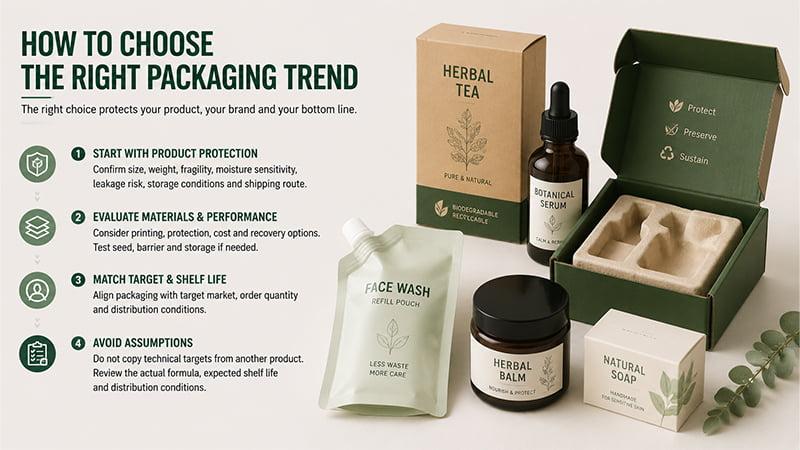
Not every trend fits every product. Product protection, filling method, shelf life, target market, order quantity and shipping conditions should come before visual novelty.
A standard box with strong artwork may work better than a complex custom pack that creates high tooling costs, difficult assembly or unnecessary freight.
Start With Product Protection
Confirm the product’s size, weight, fragility, light sensitivity, moisture sensitivity, leakage risk, storage conditions and shipping route.
The choice of materials affects printing, product protection, cost and recovery options. Food packaging often needs seal, barrier and storage tests before final approval. Glass products may need protective inserts and stronger outer cartons.
Do not copy technical targets from another product without reviewing the actual formula, expected shelf life and distribution conditions.
Match the Design to the Sales Channel
Retail packaging needs shelf recognition and clear labels. E-commerce packaging also needs strong protection, compact shipping dimensions and clear marketplace images.
Gift packaging may focus more on presentation. Trade show samples need to be portable and quick to distribute. Hotel packs may need easy storage and fast staff handling.
The correct structure depends on where customers first see the product and what happens to it before use.
Review Cost, MOQ and Production Feasibility
Compare stock packaging with fully custom boxes, bottles, jars or pouches.
Review:
- material availability;
- printing method;
- mold or tooling costs;
- specialty finishes;
- manual assembly;
- quantities per SKU;
- sample requirements;
- production lead time.
The best package is not always the most complex. It is the option that can be produced consistently at the required quality, quantity and deadline.
Test Before Mass Production
Approve the structure, artwork and shipping performance before authorizing the full run.
Check:
- product fit and assembly;
- printed color;
- logo and label position;
- surface finish;
- barcodes and QR codes;
- opening and resealing;
- leakage where relevant;
- protective insert performance;
- master-carton packing.
Test the selected materials with the actual product, filling method and shipping conditions. For fragile or exported products, evaluate the retail pack, insert and outer carton as one system.
TOMAS Practical Sourcing Insights
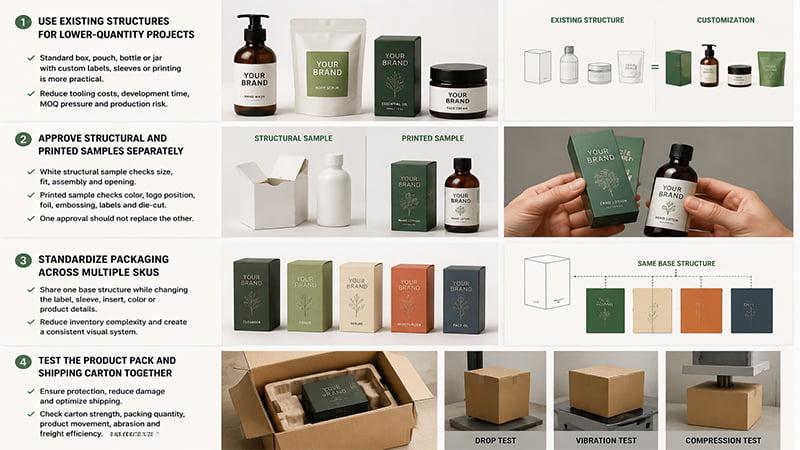
Use Existing Structures for Lower-Quantity Projects
For smaller orders, a standard box, pouch, bottle or jar with custom labels, sleeves or printing is often more practical than a completely new structure.
This approach can reduce tooling costs, development time, MOQ pressure and production risk while still creating a distinctive presentation.
Approve Structural and Printed Samples Separately
A white structural sample checks size, product fit, assembly and opening. A printed sample checks color, logo position, foil, embossing, labels and die-cut alignment.
One approval should not replace the other. A box can fit the product correctly and still have the wrong color, logo scale or surface finish.
Before selecting a decoration process, review the TOMAS Crafts guide to types of printing. The best method depends on the material, artwork, surface shape, quantity and expected durability.
Standardize Packaging Across Multiple SKUs
Brands with several product lines can often share one base structure while changing the label, sleeve, insert, color or product details.
This can reduce inventory complexity and make lower quantities per SKU easier to manage. It can also create a more consistent visual system across a larger product range.
Test the Product Pack and Shipping Carton Together
A premium retail box may scratch inside its outer carton. A molded insert may fit the product but leave too much empty shipping space. A bottle may remain undamaged while the printed carton becomes crushed.
Check carton strength, packing quantity, product movement, abrasion and freight efficiency before mass production.
2026 Packaging Design and Production Checklist
Before placing an order, confirm:
- Product type, size and weight
- Target customer and sales market
- Retail, e-commerce, hospitality or event channel
- Packaging structure and materials
- Protection and shelf-life needs
- Filling, sealing and storage conditions
- Sustainability claims and supporting documents
- Printing, labels and surface finishes
- Barcode, QR code or NFC requirements
- MOQ, tooling budget and quantity per SKU
- Structural and printed sample approval
- Master-carton packing and delivery deadline
Conclusion
The most useful packaging trends in 2026 are not simply new colors, materials or finishes. Strong packaging balances product presentation, protection, ease of use, cost and target-market needs.
Brands do not need to follow every trend. They should choose ideas that solve a real product or customer problem, then test the structure, materials, artwork and shipping performance before mass production.
Share your product type, dimensions, target quantity, preferred materials, artwork, sales market and delivery deadline with TOMAS Crafts. Contact TOMAS Crafts to compare practical structures, printing methods, finishes, samples, packing and bulk production options.
FAQs
What Are the Biggest Packaging Design Trends in 2026?
The main developments fall into four groups: clearer visual communication, tactile and human-centered branding, connected digital functions, and more efficient material systems. The right option depends on the product, target market, sales channel and production budget.
How Do I Choose the Right Packaging Trend for My Product?
Start with product protection, shelf life, storage, shipping and target-market needs. Then compare the visual style, materials, opening method, printing process, MOQ and tooling costs. A simple package that performs reliably is often better than a complex structure that creates quality or delivery risks.
Which Packaging Trends Are Realistic for Small Businesses or Lower-Quantity Orders?
Smaller brands can use standard boxes, bottles, jars or pouches with custom labels, sleeves, illustration, QR codes or one premium finish. Custom molded inserts, refill units and unusual structural shapes often require higher quantities, tooling and longer development.
How Can Brands Avoid Misleading Sustainability Claims?
Use specific claims supported by supplier documentation, appropriate testing or relevant guidance. State which component the claim covers and provide accurate disposal instructions for the intended market. Avoid phrases such as “100% recyclable,” “zero waste” or “completely eco-friendly” unless the full package and local recovery system support them.