Choosing among the best corporate gifting companies involves more than comparing catalogs or unit prices. This guide combines practical sourcing criteria with TOMAS experience in branded gift kits, artwork approval, packaging, and event delivery. You will learn how to evaluate suppliers, avoid costly production mistakes, and prepare a clearer request for quotation for your next business gifting program.
Quick Answer: What Makes a Reliable Corporate Gifting Company?
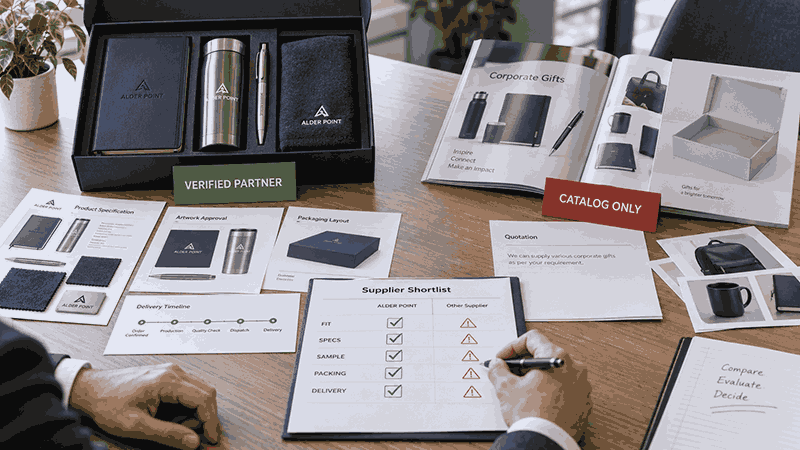
A reliable corporate gifting company connects corporate gift selection, customization, sample approval, packaging, quality control, and delivery. The right partner should fit the recipient and project, document what will be produced, and explain who is responsible at each stage. A large catalog alone does not prove those capabilities.
Use this table to build an initial shortlist:
| Criterion | What to confirm | Warning sign |
|---|---|---|
| Recipient fit | The supplier asks who will receive the gifts and why | Products are suggested before the audience is discussed |
| Sourcing | Several products can be coordinated as one set | The catalog is broad, but specifications are vague |
| Materials | Material, size, weight, and finish appear in writing | Decisions rely on product photos alone |
| Logo method | The process matches the surface and artwork | One decoration method is recommended for everything |
| Approval | Artwork and samples follow a written approval path | Bulk production starts from a digital mockup only |
| Packaging | A packed, closed box can be reviewed | Only an empty box rendering is available |
| Quality control | The approved sample remains the reference | Inspection steps cannot be explained |
| Cost | The quote shows major cost components and exclusions | Only a headline unit price is supplied |
| Project control | Dates begin after artwork approval and payment | The lead time has no stated starting point |
| Delivery | Freight, customs, and final delivery roles are clear | The quote ends at the factory or port without explanation |
Corporate gifting companies do not all solve the same problem. A gifting platform may be strong at sending corporate gifts to individual recipients. A custom supplier may offer deeper logo customization, branded gift boxes, and bulk delivery. A fulfillment partner may focus on distributing corporate gifts to multiple addresses. Start with the job that must be done, then choose the service model.
10 Criteria for Choosing a Corporate Gifting Company
1. Fit With the Recipient and Gifting Program
Start with the recipient, not with a list of corporate gifts. Employee onboarding, executive recognition, client appreciation, holiday gifts, and trade shows call for different decisions. Practical business gifts such as a notebook and tumbler may suit new employees. A smaller, better-finished gift set may be more appropriate for key clients.
A good corporate gifting company should ask four questions early: Who will receive the gift? What should it communicate? What is the budget per recipient? When and where must it arrive? Those answers narrow the product list faster than another page of gift ideas.
The best corporate gifts fit the recipient’s routine. A useful item can remain in circulation for months. An expensive but awkward item may stay in its box. Personalized business gifts can work when the name or message helps the recipient. But personalization should not make repeat orders or delivery hard to manage. For more product options by audience and occasion, see the TOMAS guide to 35 corporate gift ideas.
For a mixed audience, do not assume that one gift must work for everyone. A corporate gifting program can use one visual theme while adjusting the contents for different recipient groups. This keeps the branding consistent without forcing every person into the same product choice. It also helps the buyer support company culture, employee morale, or client relationships with products suited to each group.
2. Product Range and Sourcing Capability
Product range matters when a project combines common corporate gifts such as notebooks, pens, drinkware, bags, apparel, awards, or other branded merchandise. But quantity of listings is not the same as sourcing ability. A corporate gifting company with strong sourcing knowledge should explain materials, decoration limits, packaging, and repeat-order risks for each item.
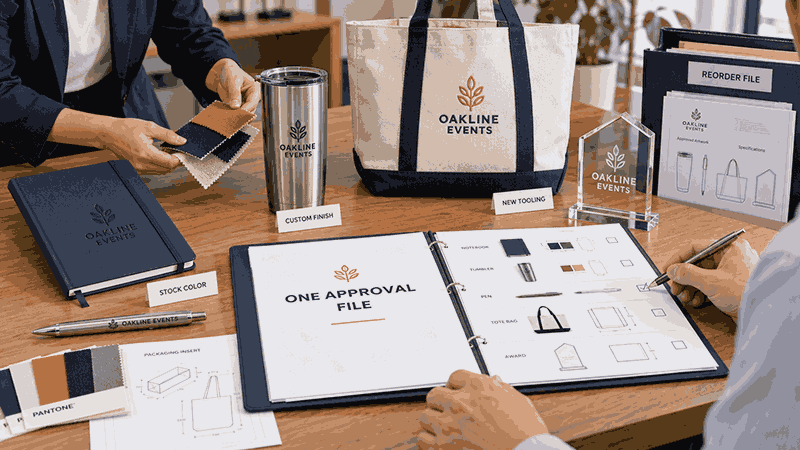
Ask whether the company can coordinate several corporate gifts under one approval process. Splitting a business gift kit across four vendors may create four artwork checks, four production schedules, and four deliveries. One capable partner can reduce those handoffs, provided it has clear responsibility for each category.
Also ask what can be changed. Some corporate gifts allow only a company logo and stock color. Other custom items may support a new color, component, surface finish, insert, or package. The quotation should separate standard logo customization from product changes that require tooling or a new production setup.
Repeatability deserves its own question. If the same corporate gifting program will run next quarter, confirm which corporate gifts are stock items and which may change. A physical sample, approved specification sheet, and retained artwork file make reordering more predictable.
3. Clear Material and Product Specifications
Catalog photos hide the details that drive the cost and performance of corporate gifts. Corporate gifts that look identical on screen may use different materials underneath. Two tumblers can share the same shape while using different steel grades, lids, coatings, or wall construction. Two tote bags can look alike while carrying very different loads.
For drinkware, TOMAS usually asks whether the food-contact inner liner is 304 or 201 stainless steel. 304 contains more nickel and generally resists corrosion better. Grade 201 costs less but carries a greater risk of rust spots in damp or salty conditions. The required steel grade should appear in the quote rather than being inferred from a photo.
Bag specifications need the same discipline. Canvas is commonly described by ounce weight, while nonwoven polypropylene is often quoted by grams per square meter. A 10- to 16-ounce canvas bag and a light nonwoven bag are not interchangeable, even when both carry the same corporate logo.
For notebooks, confirm the cover material, paper weight, sheet count, ruling, binding, and accessories. For pens, check the barrel material, ink type, refill, mechanism, and grip. Written specifications make quotations comparable and give quality-control staff something objective to inspect.
4. Appropriate Logo and Decoration Methods
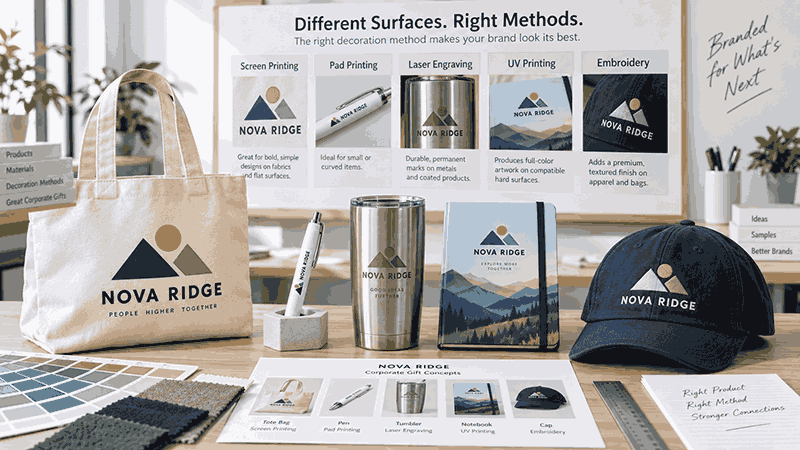
Logo decoration should follow the product, not the other way around. For custom corporate gifts, start with the material and surface shape. Then check the artwork, colors, quantity, budget, and intended use. A corporate gifting company should explain why the proposed process suits that combination.
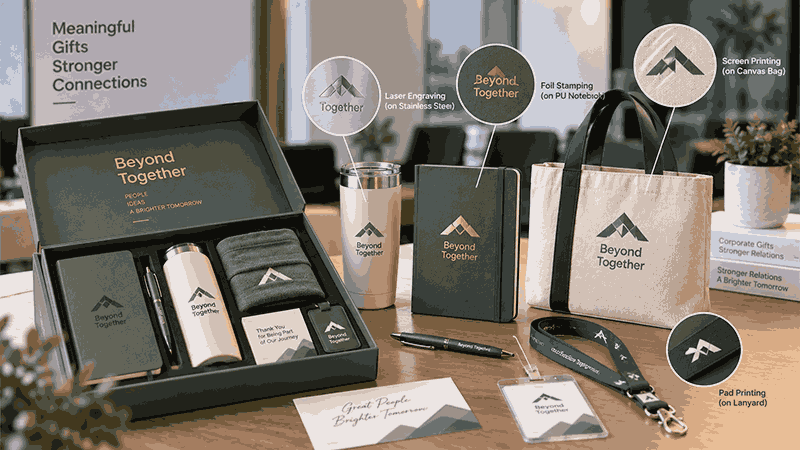
Screen printing works well for simple spot colors on many fabrics and flat surfaces. Pad printing suits small or curved items such as pens and lids. UV printing can reproduce full-color artwork on compatible hard surfaces. Laser engraving produces a permanent, single-color mark on many metals and coated products. Embroidery gives apparel and bags a textured finish, but fine text can disappear into the stitches.
TOMAS often advises against three combinations:
- A photographic gradient on dark fabric using standard screen printing. DTF or another compatible transfer process usually handles the detail better.
- A full-color gradient on a stainless-steel cup using ordinary screen or pad printing. Compatible UV printing may work on a suitable area; laser engraving is a cleaner option when one color is acceptable.
- Embroidery on a PU notebook cover. Needle holes can crease or weaken the surface, so foil stamping or debossing is usually a better fit.
The selection order is simple: check the surface, inspect the artwork, consider quantity and cost, then check the use conditions. The TOMAS guide to 12 printing methods explains these options in more detail.
5. Artwork, Sampling, and Approval Process
A digital mockup proves where the artwork is meant to go. It does not prove the physical result on corporate gifts. A square logo placed on a photograph may look balanced, yet stretch when wrapped around a tapered bottle. Ask the corporate gifting company for a photo of the logo on the actual product before approving a large order.
Color needs similar care. RGB colors on a screen do not reproduce automatically in ink, thread, foil, or laser marks. The substrate matters too. The same ink can look different on matte metal, glossy plastic, woven fabric, and kraft paper. For color-sensitive work, record the agreed Pantone reference in the purchase order and approve a physical output or a neutral-light photograph.
Small text is another common failure point. Fine serif fonts may fill in during printing, and embroidery can turn short slogans into an unreadable block. As a TOMAS production rule of thumb, embroidery text below roughly 4 to 5 mm in height should trigger a review. The workable limit still depends on the font, fabric, thread, and machine.
Poor artwork files cause delays before sampling even starts. Screenshots, web images, and compressed PNG files may be too soft for clean production. AI, EPS, SVG, or a production-ready PDF is preferable. The corporate gifting company should identify an unsuitable file before sampling. If the original vector file is unavailable, TOMAS can redraw the logo. The original and redrawn versions are then shown side by side. Production starts only after the font, color reference, and new artwork receive written approval.
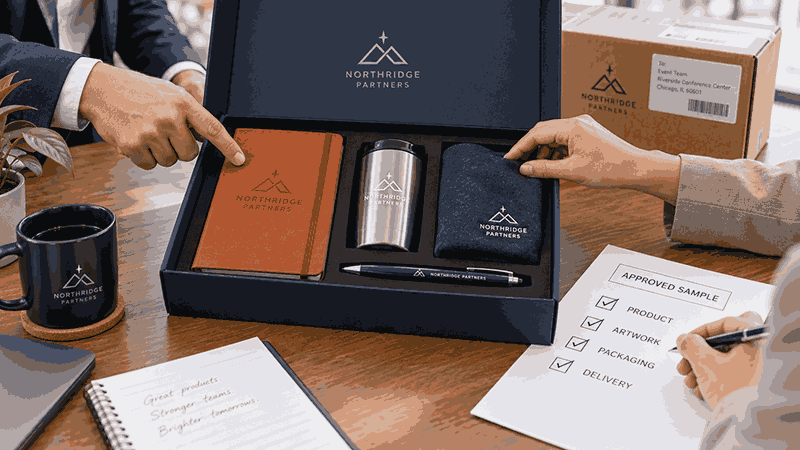
For a large, premium, or deadline-sensitive order, approve the real material and decoration, not just the rendering. Keep the signed or emailed approval with the purchase record.
6. Packaging and Gift-Set Assembly
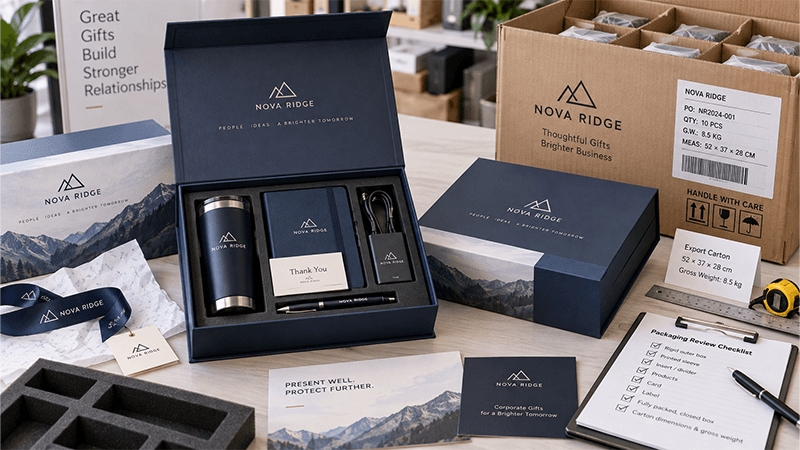
Corporate gift packaging has two jobs: present the gift and protect it. When several corporate gifts share one branded gift box, the supplier must also control how they sit together. A corporate gifting company handling kitting should check the rigid outer box, printed sleeve, insert, card, label, and products as one packed unit.
Ask for a top view and side view of the fully packed, closed box. The side view can expose a raised lid that the top view hides. A notebook, bottle, or insert may lift it by a few millimeters. Request the internal dimensions as well, especially when the box will be reused for future gift sets.
Shipping introduces movement. Bottles rotate, cards slide, ribbons crease, and loose lids can mark nearby products. Inserts, sleeves, individual bags, and carton dividers should be chosen around the contents. For fragile physical gifts, discuss a drop test or other packaging check appropriate to the product.
Finally, ask for a photo of the filled export carton plus its dimensions and gross weight. Those details affect shipping options and help the buyer check freight quotations before the goods leave the factory.
7. Quality Control and Production Evidence
The approved sample should remain the reference for bulk production. Corporate gifts carry the buyer’s name. A quality check should therefore compare the order with written requirements, not a vague request for “high quality products.” Ask the corporate gifting company to state what it will inspect before shipping.
Inspection points may include material, dimensions, color, logo position, print clarity, product function, surface condition, packaging fit, carton quantity, and shipping marks. Mixed gift sets also need a component count. A perfect tumbler does not fix a box that is missing its card or pen.
Ask what evidence can be reviewed before shipment. Depending on the order, that may be production photos, a packing video, measurement records, an inspection report, or a retained sample. It should also be clear how missing or defective units will be handled.
Product safety and compliance depend on the item and destination market. Electronics, children’s products, food-contact items, and products carrying environmental claims may require different documents. The U.S. Consumer Product Safety Commission’s manufacturing guidance recommends addressing safety from the design stage and assessing foreseeable risks. Buyers should confirm the rules that apply to their own market rather than assuming one test covers every country.
Environmental language needs proof as well. The FTC Green Guides summary warns against broad claims such as “green” or “eco-friendly.” If a gift uses recycled content, name the material and provide the available evidence. Do not rely on a vague label.
8. Pricing, Minimums, and Landed Cost
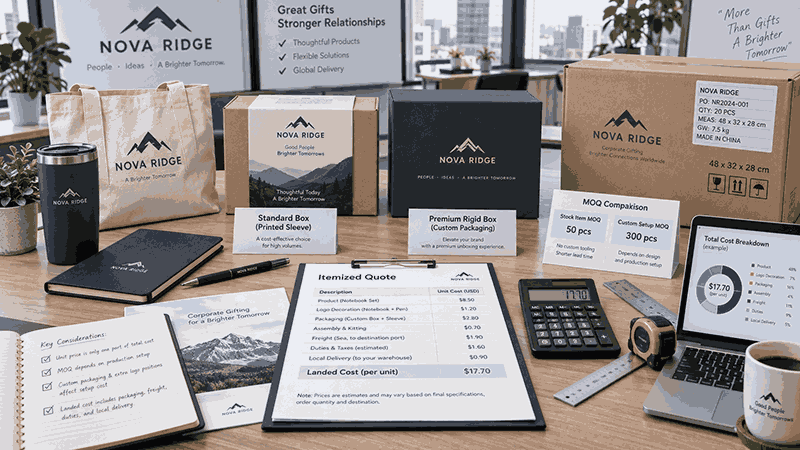
The unit price is only one part of a business gifts order. Corporate gifts pricing can change with product material, quantity, logo locations, decoration process, tooling, packaging, assembly, testing, freight, duties, and taxes.
Minimum order quantity, or MOQ, comes from the production setup. Printing an existing stock item and developing a new molded part do not belong in the same MOQ range. Multi-color decoration, several logo positions, or a custom box may also introduce separate setup minimums. Bulk discounts should be checked against the specification, because a lower price may also reflect a different material or package.
When a quote runs above budget, review the specification before bargaining over a few cents. Reducing five logo positions to one hero position may save more than changing the base product. A printed sleeve around a standard box may preserve the presentation at a lower setup cost than a fully custom rigid box.
Ask for an itemized quotation that states what is included and excluded. Landed cost is the useful comparison, especially for international orders. A low factory price can become expensive after packaging, freight, import charges, and local delivery are added.
9. Project Management, Communication, and Lead Time
Lead time needs a starting point. Production for corporate gifts normally begins after the final artwork is approved and the required payment or deposit is received. If artwork reaches the supplier ten days late, those ten days have not been part of production.
Build the corporate gifts schedule backward from the required arrival date. Allow time for requirements, artwork, sampling, approval, production, inspection, packaging, freight, customs, and final delivery. Custom molds, several SKUs, or hand-finished packaging need more room than a one-color logo on a stock pen.
One decision-maker on the buyer’s side can prevent days of conflicting feedback. The corporate gifting company should also name a project contact, sometimes called a dedicated account manager. Changes to color, logo size, product choice, or delivery terms should stay in writing.
Short updates work better than vague reassurance. A useful update names the completed stage, the next approval, and its due date. This matters for holiday gifts and other time-sensitive business gifts. A missed date can remove the value of the entire project.
10. Delivery and Fulfillment Capability
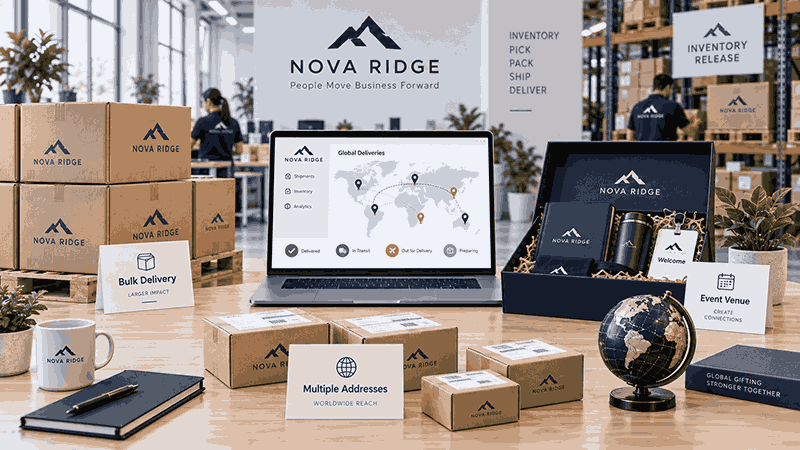
One bulk delivery to a warehouse is different from sending corporate gifts directly to hundreds of homes. Programs with many recipients introduce address validation, individual packing, postage, failed deliveries, replacement shipments, and sometimes separate customs entries.
Define the delivery model before requesting prices:
- One shipment to an office, warehouse, or distributor
- Delivery to an event venue
- Individual delivery to multiple addresses
- International distribution across several markets
- Inventory held and released during the year
For international corporate gifts, the chosen Incoterms rule should make the cost and risk split clear. The International Chamber of Commerce explains that Incoterms rules define the tasks, costs, and risks of delivery. DAP and DDP, for example, assign import clearance and duty responsibilities differently. Confirm the named destination and responsibility for customs before accepting the quote.
Event delivery needs one more check: the venue. Ask about receiving hours, loading access, appointment rules, pallet limits, labeling, and storage. A narrow receiving window leaves little room for delay. A local staging point can create a safer final handoff.
Field Experience: A Partner Conference Welcome Kit
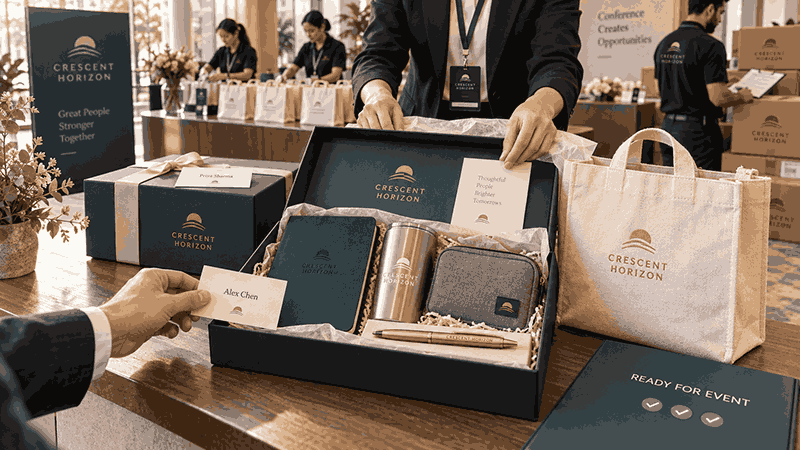
TOMAS handled a corporate gifts project for several hundred distributors and integration partners attending a North American partner conference. A smaller group of kits was also prepared for the employees running the event.
The first request sounded simple: make the welcome bag look premium, place a large centered logo on it, and brand every item. The operational picture was less simple. About four weeks remained, the final logo file was not ready, and the venue accepted freight during one narrow window. Missing that appointment could leave the kits on a truck while registration opened.
One Hero Position Instead of Five Loud Logos
The branding plan was reduced to one hero position. Among the corporate gifts in the kit, the notebook and tumbler carried the full-color corporate logo. The tote, lanyard, and badge holder used a smaller one-color mark.
This did more than clean up the design. The notebook and tumbler were the items most likely to remain in use after the conference. A prominent logo made sense there. On the supporting pieces, smaller branding kept the kit coordinated without making every product feel like an advertisement.
The lesson is useful beyond events: put the strongest branding on the product with the longest useful life. Great corporate gifts do not need the largest possible logo on every surface. Let the rest of the set support the item that recipients are most likely to keep.
One Kit, One Schedule, One Delivery
The printed box, card, notebook, pen, tumbler, tote, lanyard, and badge holder could have been split among several suppliers. Instead, the items were managed as one kit. That created one artwork approval path, one production schedule, one packing workflow, and one coordinated delivery.
The finished kits went first to a local staging point. They were then delivered to the venue on the confirmed date, before the doors opened. The client later reused the same gift box structure for another event, which reduced the amount of packaging work needed for the next program.
This project did not depend on a rare product. It depended on decisions that connected branding, packing, and delivery. TOMAS can support similar corporate gift solutions when a buyer needs multiple business gifts to arrive as one event-ready set.
Corporate Gifting Request for Quote Checklist
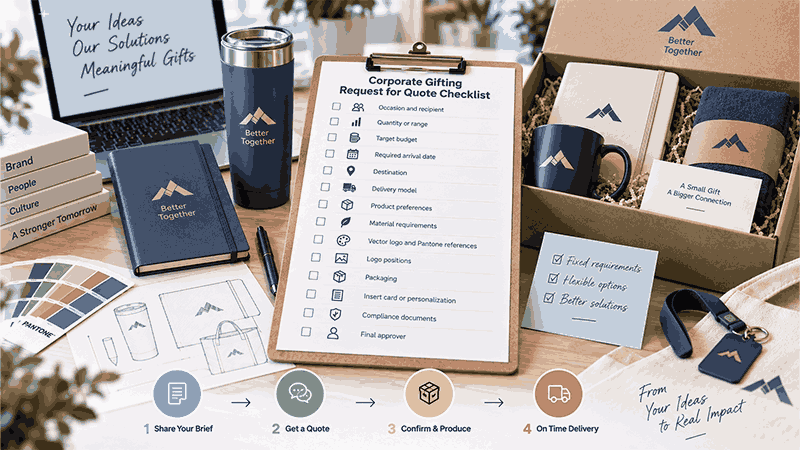
A clear brief helps a corporate gifting company quote the same corporate gifts project that the buyer has in mind. It also exposes gaps before they become change orders.
| Information to provide | Why it matters |
|---|---|
| Occasion and recipient | Guides product tone, usefulness, and presentation |
| Quantity or range | Affects sourcing, setup, MOQ, and pricing |
| Target budget | Helps separate fixed needs from flexible choices |
| Required arrival date | Sets the schedule for samples, production, and freight |
| Destination | Affects compliance, freight, customs, and taxes |
| Delivery model | Separates bulk delivery from multiple-address fulfillment |
| Product preferences | Gives the supplier a starting point without locking every detail |
| Material requirements | Prevents quotes based on different grades or weights |
| Vector logo and Pantone references | Supports clean artwork and consistent brand colors |
| Logo positions | Affects setup, cost, and visual balance |
| Packaging | Defines protection, presentation, size, and weight |
| Insert card or personalization | Adds artwork, data, and assembly requirements |
| Compliance documents | Identifies testing or evidence needed for the market |
| Final approver | Prevents conflicting decisions and approval delays |
Separate fixed requirements from preferences. A delivery deadline and approved company logo may be fixed. Box color, secondary decoration, or ribbon style may remain flexible. That gives the supplier room to solve cost or production problems without changing what the program must achieve.
FAQs
Q1: How Far in Advance Should Businesses Order Custom Corporate Gifts?
There is no single safe lead time for every order. The four-week window in the partner-conference example was tight for a multi-item custom kit, not a standard planning target. Start earlier when the project includes several products, custom packaging, or international freight. Ask the supplier to build a written schedule backward from the required arrival date.
Q2: What Is a Typical Minimum Order for Corporate Gifts?
There is no useful universal MOQ. The minimum depends on the product, material, decoration process, packaging, and whether the item is in stock or made for the order. Share a quantity range during the first inquiry. The supplier can then distinguish standard branding from changes that require tooling or a new setup.
Q3: Should Buyers Approve a Physical Sample Before Bulk Production?
Physical approval is strongly recommended for large, premium, color-sensitive, or event-critical orders. It allows the buyer to check material, dimensions, logo quality, color, function, and packaging fit. A real-product photo may support a lower-risk approval, but a digital rendering alone cannot confirm those details.
Q4: What Information Does TOMAS Need to Prepare a Quotation?
At minimum, provide the recipient type, occasion, quantity range, target budget, required arrival date, destination, delivery model, and available logo files. Use the RFQ checklist above for product, branding, packaging, and compliance details. TOMAS can then prepare a relevant shortlist and itemized quotation.
Conclusion
The best corporate gifting companies do more than supply products. They turn the recipient, occasion, budget, brand requirements, and delivery date into a process that buyers can verify before production begins.
Before choosing a business gift partner, compare written specifications, sample procedures, packaging evidence, quality checks, landed costs, and delivery responsibilities. A thoughtful gift creates value only when the product and execution are both right.
Request a Corporate Gifting Proposal
TOMAS Crafts helps businesses coordinate custom corporate gifts, branded merchandise, gift sets, packaging, and bulk international delivery. TOMAS can review your requirements, identify specification or timing risks, and recommend options suited to the recipients, budget, quantity, and destination.
You do not need a finalized product list to begin. Send your project brief through the TOMAS contact page. TOMAS can prepare a project-specific shortlist, decoration recommendation, sample plan, packaging approach, and itemized quotation.