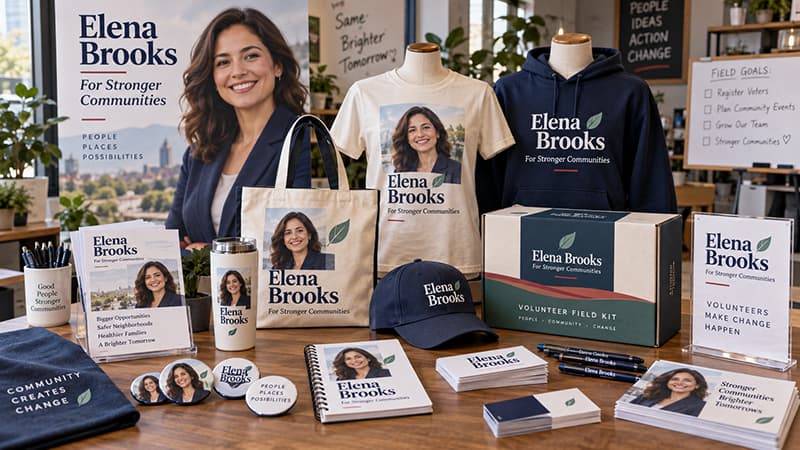
Political merchandise must be visible, useful, easy to distribute, and ready on time. This guide compares 15 campaign products using TOMAS experience with phased orders, outdoor sample checks, and multi-location delivery. You will learn how to choose materials, approve samples, plan inventory, and prepare reliable bulk orders for volunteers, events, and field teams.
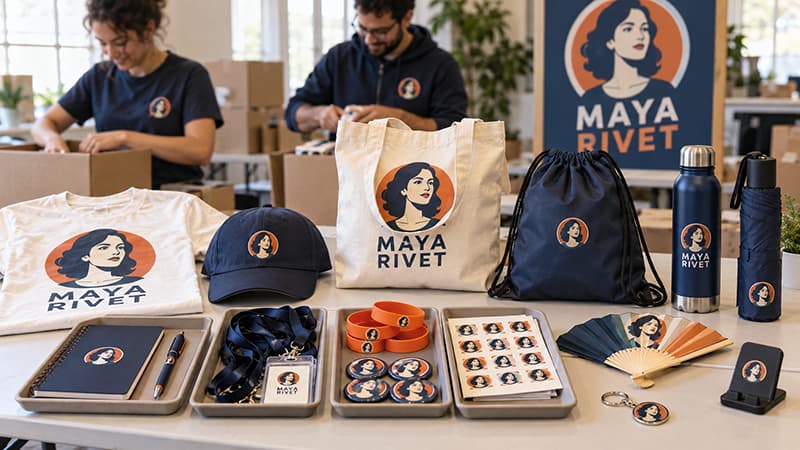
Quick Picks: Political Merchandise at a Glance
In this guide, political merchandise means physical campaign products prepared for volunteers, supporters, events, fundraising, and field distribution.
| Campaign need | Recommended items | Why they fit | Main point to check |
|---|---|---|---|
| Low-cost mass giveaways | Buttons, stickers, wristbands | Easy to distribute in large quantities | Text size and material durability |
| Volunteer apparel | T-shirts and caps | Creates a consistent, visible team | Size mix, fabric, and comfort |
| Cool-weather events | Hoodies and sweatshirts | Practical with higher perceived value | Storage volume and delivered cost |
| Outdoor visibility | Yard signs, banners, flags | Readable across longer distances | Local rules and weather resistance |
| Vehicle display | Bumper stickers and car magnets | Provides repeated mobile visibility | Adhesive or surface compatibility |
| Reusable supporter items | Tote bags and drinkware | More likely to remain in regular use | Material quality and construction |
| Meetings and canvassing | Notebooks and pens | Useful for training and field notes | Paper, refill, and branding area |
| Ready-to-distribute sets | Volunteer and canvassing kits | Keeps products organized by role and location | Packing list and destination labels |
For a broader overview of customizable apparel, badges, flags, bags, wristbands, and other categories, review TOMAS election campaign merchandise solutions.
For inexpensive campaign giveaways, begin with buttons, stickers, wristbands, pens, or small flags. For long-distance exposure, compare yard signs, campaign banners, flags, and umbrellas. The detailed sections below explain what to specify before placing a bulk order.
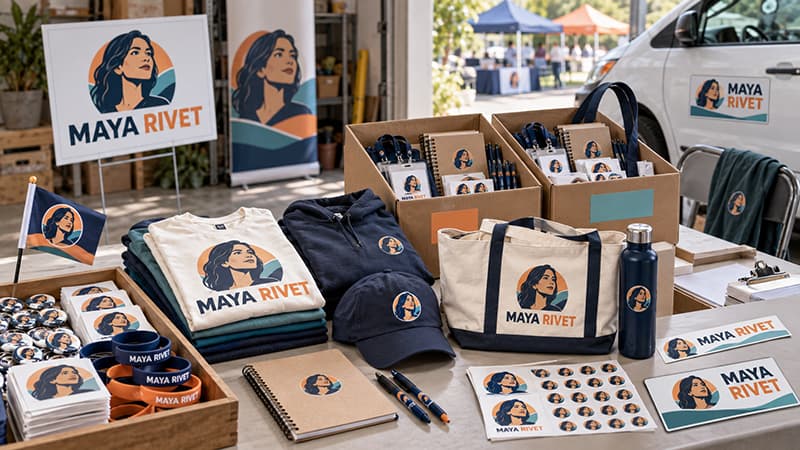
15 Campaign Merchandise Ideas for Political Campaigns
1. Campaign T-Shirts
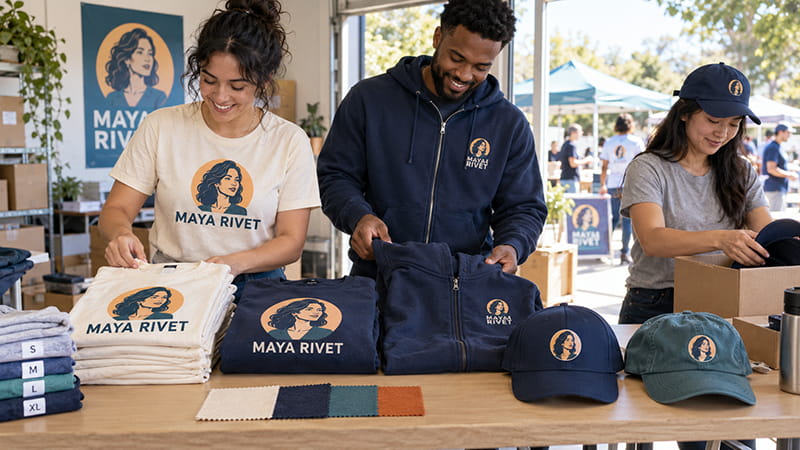
T-shirts work well for volunteer teams, rallies, canvassing, and supporter sales. The lowest-priced shirt is not always the most economical option. A thin fabric may lose its shape after washing, while a heavy shirt may be uncomfortable for volunteers walking outdoors.
A large campaign can use more than one apparel tier. Volunteers may need lightweight, breathable shirts. Supporters may prefer a better-fitting shirt they will wear after the event. Staff attending media or donor functions may need a heavier, more structured fabric.
For simple one- or two-color graphics, screen printing is usually practical at higher quantities. DTF or another digital transfer method may suit smaller batches, detailed artwork, or several colors. Confirm fabric composition, fabric weight, print size, size distribution, and wash requirements before approving the order.
2. Hoodies and Sweatshirts
Hoodies suit cool-weather canvassing, evening events, and staff uniforms. Their larger printable area accommodates campaign names, slogans, district information, or sleeve graphics.
They cost more and occupy much more carton space than T-shirts. Freight and storage can therefore change the delivered cost substantially. Before ordering, compare pullover and zip styles, fleece weight, shrinkage, pocket construction, and decoration placement.
Embroidery works well for smaller chest logos, while screen printing supports larger graphics. Avoid very small embroidered lettering because fine details can close up between stitches.
3. Campaign Caps
Caps provide repeated visibility without the sizing complexity of apparel. Adjustable closures can cover a wider range of recipients, making caps useful for volunteers, supporters, staff, and outdoor events.
The front panel shape affects logo quality. Structured caps hold embroidery more cleanly, while unstructured caps have a softer appearance. For embroidered designs, simplify thin lines and small text so the logo remains legible.
Caps can become evergreen campaign items when they carry a reusable identity instead of a dated event name. That makes them easier to reorder and use across several campaign phases.
4. Buttons and Enamel Pins
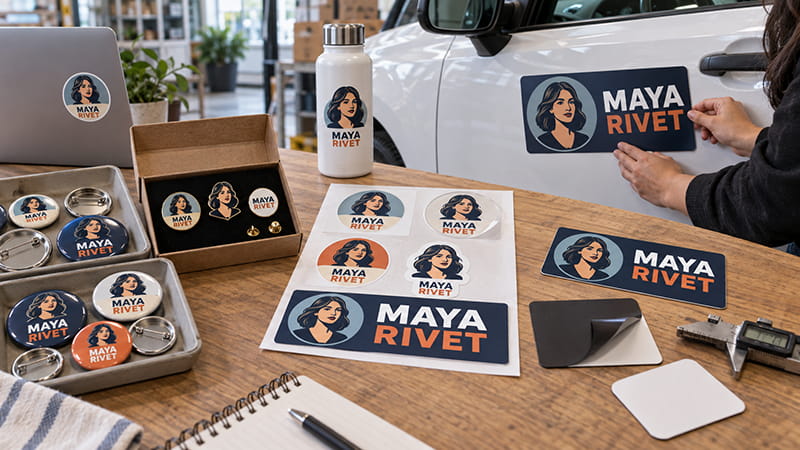
Buttons are economical handouts for community events, canvassing packs, and volunteer recruitment. Enamel pins cost more but have a higher perceived value and are better suited to donors, staff, or limited-edition merchandise.
Button artwork needs enough contrast to remain readable at a small diameter. Long slogans and multiple lines of text often look clear on a monitor but become difficult to read on the finished item.
Enamel pins require decisions about size, metal finish, color count, clasp type, and packaging. Because new shapes may require tooling, confirm the mold drawing and color layout before production.
5. Stickers and Bumper Stickers
Stickers can be added to mailers, handouts, supporter packs, event tables, and fundraising orders. They are inexpensive to distribute, but the correct material depends on where the sticker will be used.
Paper stickers are suitable for short indoor use. Vinyl and other weather-resistant materials are better for bottles, laptops, windows, vehicles, and outdoor campaign materials. Bumper stickers need suitable adhesive and UV resistance.
Ask whether the adhesive is permanent, removable, or repositionable. A campaign should also test the sticker on its intended surface before approving a large quantity.
6. Car Magnets
Car magnets turn volunteer and staff vehicles into removable displays. They are useful when drivers do not want permanent adhesive on the vehicle.
A magnet must sit on a clean, flat, magnetic metal surface. It will not attach properly to aluminum, fiberglass, plastic panels, or heavily curved bodywork. Thin material and poorly sealed edges may also lift at speed.
Before ordering, confirm magnet thickness, corner shape, print protection, and vehicle compatibility. Drivers should remove and clean behind the magnet regularly according to the supplier’s instructions.
7. Yard Signs
Yard signs are designed for quick recognition from a distance. The strongest designs use a short name, clear contrast, limited supporting text, and a layout that remains readable from a moving vehicle.
Common specifications include corrugated plastic boards with wire stakes, although size and construction should match local conditions. Wind exposure, ground type, print method, and display period all affect the specification.
Placement rules differ by jurisdiction. Before producing or installing signs, check the relevant state and local requirements through an official election authority. The USAGov directory of state and local election offices provides official contact information.
8. Hand Flags and Outdoor Flags
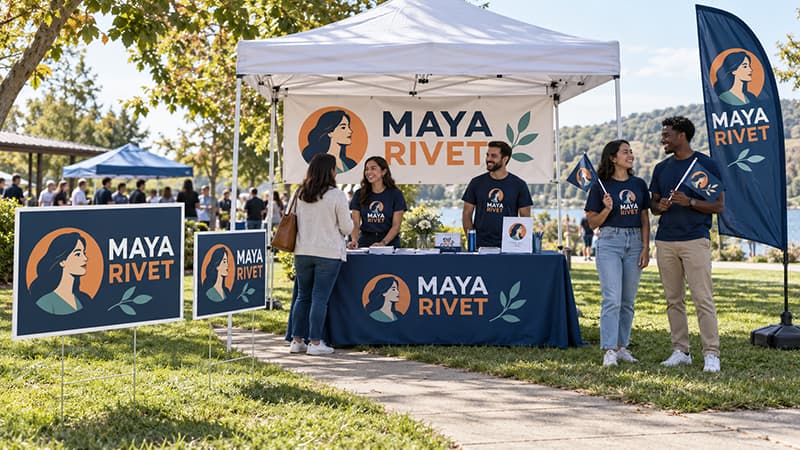
Small hand flags are easy to distribute at rallies and community events. Larger flags suit offices, stages, marches, booths, and outdoor campaign displays.
The viewing direction matters. A single-layer flag often shows a mirrored, lighter version of the artwork on the reverse. That may be acceptable for some uses but unsuitable when both sides need readable artwork.
Buyers should confirm fabric weight, single- or double-sided construction, block-out layers, stitching, reinforced corners, pole sleeves, and grommets. Flags should be assessed from the front, back, and under backlighting.
9. Campaign Banners and Branded Table Covers
Banners and table covers create consistent branding at rallies, registration desks, press areas, fundraising events, and community meetings. They also help people identify the correct booth or volunteer station.
For banners, confirm finished size, viewing distance, indoor or outdoor use, edge finishing, grommet spacing, and installation method. Outdoor banners may need reinforced hems or wind slits, depending on the location and mounting conditions.
Table covers should match the actual table dimensions. A fitted cover has a cleaner appearance, while a throw-style cover is easier to reuse across different tables. Request an artwork proof showing the visible front panel rather than approving a flat logo alone.
10. Campaign Tote Bags
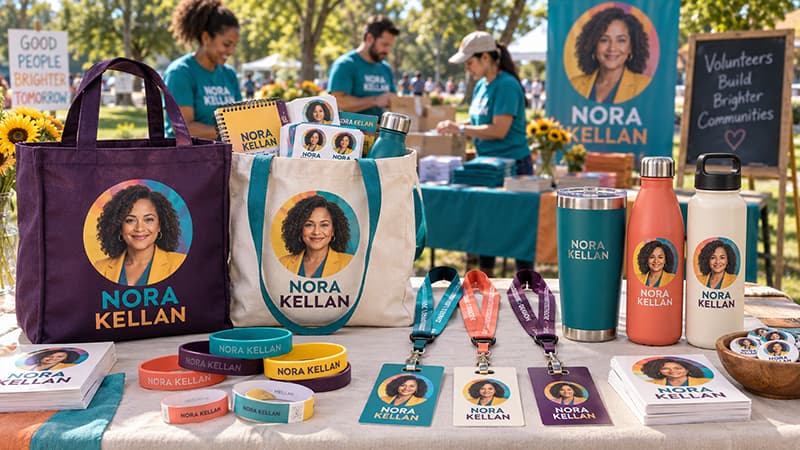
Tote bags can hold flyers, notebooks, stickers, buttons, water bottles, and event information. A useful bag may remain in circulation longer than a disposable campaign handout.
Material choices include non-woven polypropylene, cotton, canvas, RPET, and other fabrics. Two bags with the same dimensions can have very different costs and working lives. A light non-woven bag suits short events, while heavier canvas supports repeated use and higher loads.
Specify fabric type, weight, handle length, seam construction, and bag capacity. Test a packed bag rather than judging it only by its empty dimensions.
11. Wristbands and Lanyards
Wristbands are suitable for entry control, volunteer identification, fundraising levels, or event zones. Lanyards can hold badges, credentials, schedules, or small campaign tools.
Silicone wristbands last longer and can use debossed, printed, or color-filled designs. Disposable wristbands are better for short events where access control matters more than reuse.
For lanyards, compare screen printing, heat transfer, and woven designs. Confirm width, attachment type, safety breakaway, badge holder size, and whether names or roles need individual printing.
12. Custom Drinkware
Reusable bottles and tumblers are practical for volunteers working long outdoor shifts. They also suit staff gifts, donor packs, and campaign offices.
Drinkware specifications affect both cost and durability. For metal bottles and tumblers, confirm the inner steel grade, wall construction, coating, lid material, capacity, and care requirements. A product photo alone cannot show these differences.
Logo options may include screen printing, laser engraving, or UV printing. Curved bodies can distort wide artwork, so request a physical sample or actual production photo before approving a large order.
13. Notebooks and Pens
Notebooks and pens support volunteer training, canvassing notes, meeting records, sign-up desks, and office use. They are also easy to combine with other products in a campaign kit.
Notebook choices include PU, paper, fabric, or recycled-paper covers; 70-100 gsm pages; and glued, stitched, or spiral binding. Pens can use plastic, aluminum, brass, bamboo, or recycled-paper barrels with ballpoint, gel, or rollerball refills.
For a coordinated set, check whether the pen clip, notebook pen loop, page color, and logo finishes work together. A reliable refill and readable writing line matter more than a decorative pen that performs poorly.
14. Umbrellas and Hand Fans
Umbrellas provide useful visibility during rainy outdoor events, while hand fans suit rallies and volunteer activities in warm weather. Both products create a large branding area.
For umbrellas, confirm canopy size, shaft and rib materials, automatic or manual opening, wind resistance, and print placement. A compact umbrella is easier to distribute, but a larger model provides greater viewing distance.
Hand fans can be made from paper, plastic, fabric, or folding materials. Check edge finishing, handle strength, and whether the artwork remains readable in motion.
15. Volunteer and Canvassing Kits
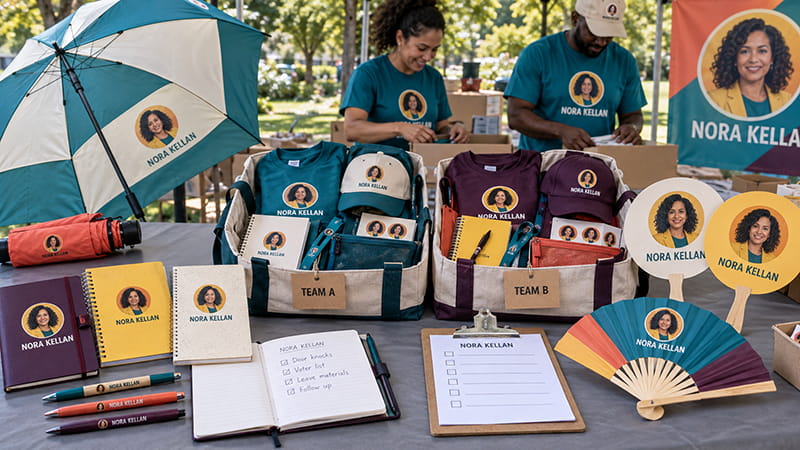
A kit combines selected campaign items into one package for a specific role or location. A volunteer kit might contain a T-shirt, cap, badge, lanyard, notebook, pen, stickers, and printed field instructions.
The value comes from organization, not from putting as many products as possible into a bag. Build the kit around the recipient’s actual job and remove anything that will not be used.
Create a packing list for every kit version. If different regions or teams receive different contents, assign each kit a code and match that code to the carton label and destination list.
How to Choose and Budget for Political Merchandise
Match Each Product to Its Distribution Role
Separate recipients into practical groups: volunteers, general supporters, staff, donors, media events, and field offices. Each group uses campaign items differently.
Volunteers need comfortable products that can survive repeated use. Mass-event attendees need simple items that can be handed out quickly. Donor or media settings may require better materials and restrained logo placement.
A useful starting point is the TOMAS guide to planning branded merchandise, which explains how product choice, customization, packaging, and distribution work together.
Separate Dated Products From Reusable Items
Products printed with an event date, year, or phase-specific message lose value when that period ends. T-shirts and printed event materials are common examples of time-sensitive inventory.
Caps, plain logo pins, tote bags, wristbands, and stickers can often be reused in the next phase. Order dated products more carefully and consider larger quantities only for evergreen campaign merchandise.
Compare Delivered Cost, Not Unit Price Alone
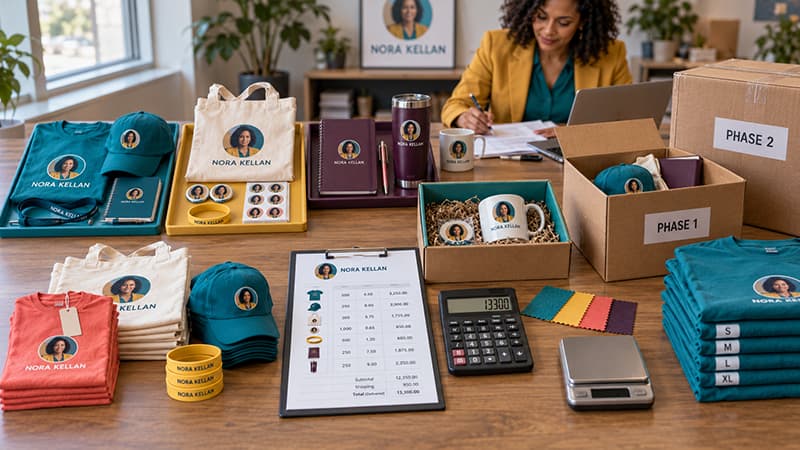
The lowest factory price may not be the lowest final cost. Buyers should include decoration setup, molds, sample charges, packaging, inspection, freight, duties, local delivery, and multi-location handling.
Large or bulky products may cost less to manufacture but more to store and transport. Compare quotations using the same materials, dimensions, logo positions, packaging, and delivery terms.
Use Phased Production When Demand Is Uncertain
Apparel size demand and event attendance may not be stable at the start of a campaign. Producing the full forecast at once can create shortages in popular sizes and excess stock in others.
A first batch can cover the launch while generating real distribution data. A second batch can then correct the size mix and replenish proven products.
What a TOMAS Outdoor Flag Sample Revealed
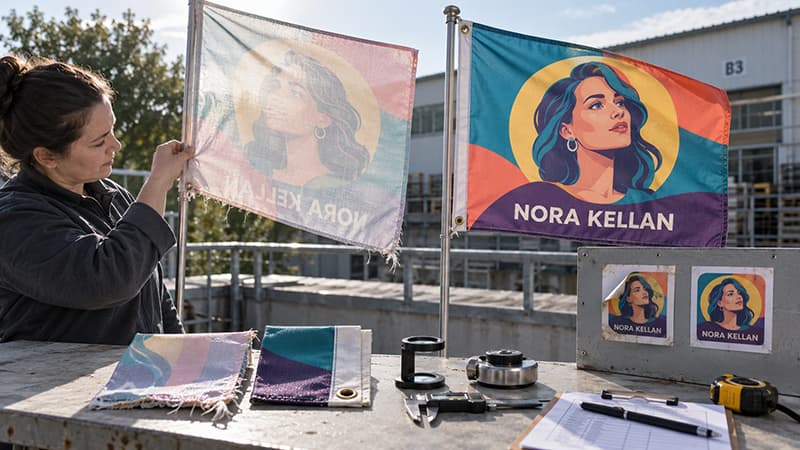
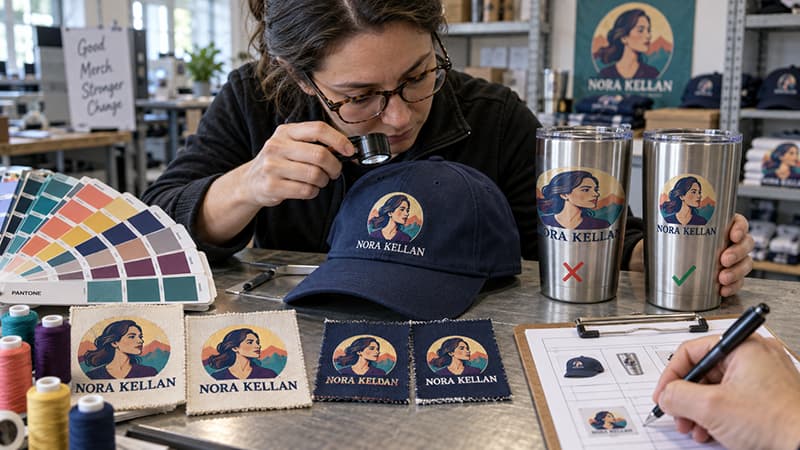
In one project, an outdoor flag sample looked acceptable under indoor lighting. TOMAS checked it outdoors for 48-72 hours, viewed it from the reverse under backlighting, and reviewed the fabric weight and edge construction.
Four problems appeared:
- The reverse showed pale, mirrored artwork.
- The original fabric remained too transparent under strong light.
- Single-line stitching could begin to tear at the edge in wind.
- A related sticker used indoor material and started lifting outdoors.
The revised flag used double-sided printing with a block-out layer, approximately 110 gsm warp-knitted polyester, double-line edge stitching, and reinforced corners. The sticker was changed to an outdoor-grade material.
The 48-72-hour check was not a long-term weather-resistance certification. It was a practical screening for transparency, reverse-side appearance, stitching, and material suitability before mass production.
Buyer takeaway: Review the front, back, and backlit appearance of an outdoor flag. Record the fabric weight, print construction, edge stitching, and reinforcement requirements before approving the bulk order.
Design and Customization Requirements
Start With Production-Ready Artwork
Suppliers should receive an AI, EPS, SVG, or suitable vector PDF whenever possible. A screenshot or a logo downloaded from a website may look acceptable on screen but lack enough detail for clean production output.
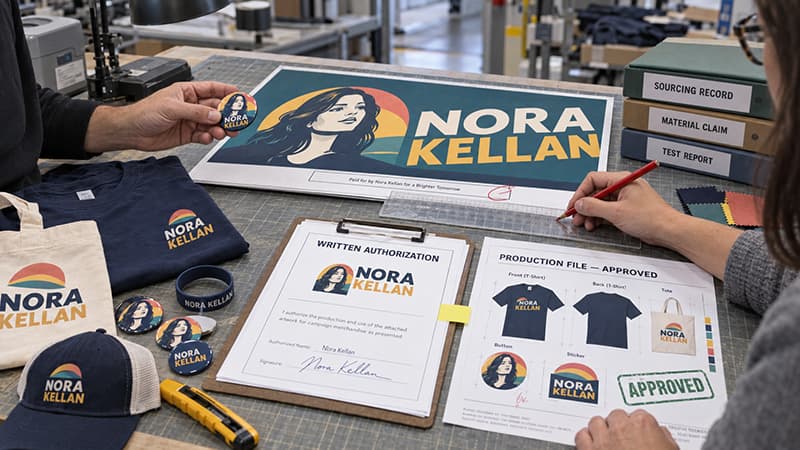
If only low-resolution artwork is available, TOMAS can redraw the logo as a vector file. The original and redrawn versions should be presented side by side, with Pantone colors and font names recorded. Production should begin only after written approval.
Match the Decoration Method to the Product
The material, surface shape, artwork, quantity, and expected use determine the decoration method. A technique that works on a cotton shirt may fail on a coated tumbler or curved pen barrel.
| Method | Suitable applications | Main limitation |
|---|---|---|
| Screen printing | T-shirts, totes, paper boxes, banners | Each color requires setup; gradients are limited |
| Pad printing | Pens, small curved parts, compact products | Small print area |
| DTF or heat transfer | Detailed or full-color apparel graphics | Surface feel and wash performance vary |
| Sublimation | Light polyester and coated products | Requires suitable material and cannot print opaque white |
| UV printing | Hard flat or slightly curved surfaces | Adhesion depends on the surface treatment |
| Laser engraving | Metal, wood, coated drinkware | Usually produces a single material-dependent color |
| Embroidery | Caps, jackets, bags, towels | Small text and fine details may close up |
| Foil or debossing | PU notebooks, paper, gift boxes | Requires a suitable flat surface |
For more detail, see TOMAS’s guide to custom printing methods.
Check Color, Small Text, and Curved Surfaces
RGB screen colors do not directly predict printed ink, embroidery thread, or laser results. Record Pantone references for color-sensitive artwork and review the result on the actual material.
Small slogans and thin serif fonts may disappear in embroidery or fill in during printing. As a practical embroidery check, lettering below roughly 4-5 mm in height often needs simplification, although the result depends on the font, fabric, and stitch construction.
Wide logos can distort on tapered tumblers and other curved products. Request a physical sample or production photograph of the design applied to the real product, not only a flat digital mockup.
TOMAS Project Experience: A Two-Stage Campaign Order
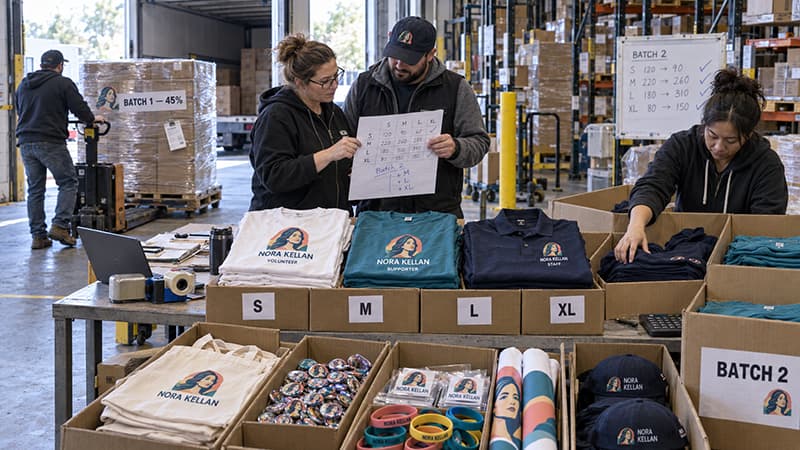
A two-month campaign needed merchandise for a launch, several field events, volunteer distribution, and meetings attended by media and donors. The project included apparel, pins, bags, flags, event displays, stickers, and wristbands.
Planned quantities included:
- 3,000-5,000 T-shirts
- About 2,000 caps
- 10,000-15,000 pins
- 1,500-2,000 tote bags
- 1,000-2,000 flags
- Banners and table covers by event
- Larger quantities of stickers and wristbands
The initial request was to produce everything at once, use one T-shirt style, apply the same large logo to every item, and pack by province. That plan created untested size ratios, unnecessary warehouse pressure, unsuitable apparel, and excess dated merchandise.
TOMAS recommended producing 40-50% in the first batch. The second batch would use actual size and distribution data. Dated products were ordered more cautiously, while reusable caps, pins, stickers, tote bags, and wristbands could be produced earlier in larger quantities.
The T-shirt program was divided into three practical tiers: breathable shirts for volunteers, better-fitting shirts for supporters, and more structured apparel for staff attending media or donor events. Each tier used the same core artwork to maintain a consistent visual identity.
The first batch reached the warehouse before launch. The second batch produced fewer size shortages, and most remaining inventory consisted of reusable items. The client later reordered caps and pins.
These quantities and percentages describe this project rather than a universal ordering formula.
Buyer takeaway: When recipient numbers and apparel sizes remain uncertain, a controlled first batch can provide better purchasing information than producing the entire forecast at once.
Packaging and Multi-Location Fulfillment
Build the Timeline Backward From the Distribution Date
A production schedule should begin with the required arrival date and work backward through local delivery, transport, inspection, packing, production, sample approval, artwork approval, and payment confirmation.
The manufacturing lead time normally begins after approved artwork and the agreed payment are received. A purchase order submitted without final artwork does not start the full production schedule.
Set a final revision deadline for each batch. Changes made after the cutoff can affect the production sequence, packing plan, and transport date.
Pack by Distribution Point
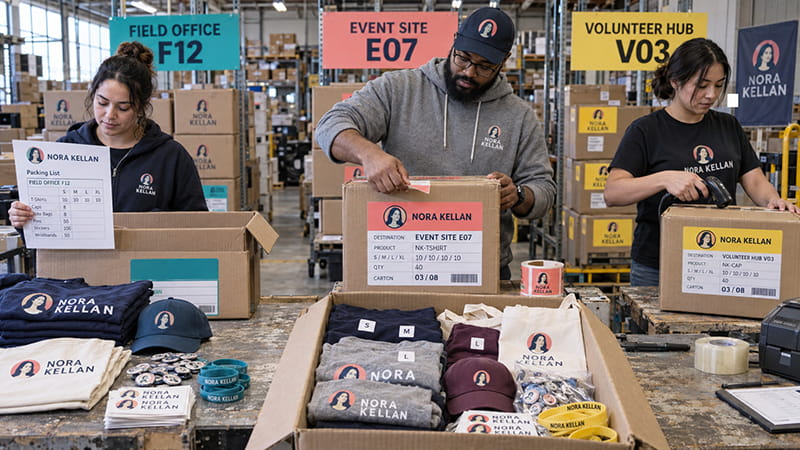
Packing by state, province, or administrative region may sound organized, but field events do not always follow those boundaries. When possible, pack by the actual office, event, volunteer hub, or distribution point.
A practical carton label can include:
- Product code
- Product or apparel size
- Carton number and total carton count
- Destination code
- Quantity inside
- A visible color label for fast sorting
Mixed-size cartons can be more useful than single-size cartons when each location needs a working size assortment. The size ratio should appear on both the carton label and packing list.
Keep Replacement Stock Separate
Reserve approximately 2-3% additional stock when the event cannot operate with shortages. Pack these units separately and keep them at the warehouse instead of releasing them with the first shipment.
For repeatable products, undecorated blanks may also be held for a small urgent replenishment. In one TOMAS project, suitable blanks and approved artwork made it possible to decorate a limited additional quantity in approximately 48-72 hours.
That timing depended on blank stock, the decoration process, available production capacity, artwork approval, and destination. It should not be treated as a standard promise for every order.
Buyer takeaway: Pack by the final distribution point, use matching codes on cartons and packing lists, and keep replacement stock separate from the first release.
Compliance for Political Campaign Materials
Political products may be subject to authorization, disclaimer, placement, fundraising, sourcing, or reporting requirements. The applicable rules depend on the buyer, product, communication, jurisdiction, and distribution method.
For U.S. federal campaigns, the Federal Election Commission explains that certain public communications require disclaimers and that required notices must be clear and conspicuous. Review the current FEC guidance on advertising and disclaimers before approving campaign artwork.
State and local requirements can differ. Campaigns should consult the appropriate election authority and qualified legal counsel when necessary. A manufacturer can follow approved production files, but it should not make legal decisions on behalf of the campaign.
TOMAS requires written authorization before printing the protected name, logo, or identity of a candidate, committee, institution, or organization. Buyers should also confirm any union-made, domestic sourcing, environmental, or product-safety claims before placing them on merchandise.
Final Ordering Checklist and Risks
| Confirm before ordering | Risk it helps prevent |
|---|---|
| Recipient group and intended use | Products that do not suit the people receiving them |
| Final quantity or approved quantity range | Overstock or shortages |
| Apparel size mix | Popular sizes running out early |
| Material, weight, dimensions, and construction | Substitution with a lower specification |
| Decoration method and logo dimensions | Poor detail, weak adhesion, or an unsuitable print area |
| Vector artwork, Pantone colors, and written approval | Incorrect logos, colors, or wording |
| Physical sample or actual production photo | Problems hidden by a digital mockup |
| Single- or double-sided flag construction | Mirrored or pale reverse-side artwork |
| Packaging and kit contents | Missing products or boxes that do not close correctly |
| Carton labels and destination packing | Sorting delays and allocation errors |
| Spare quantity and replacement-stock plan | No usable stock for damage or shortages |
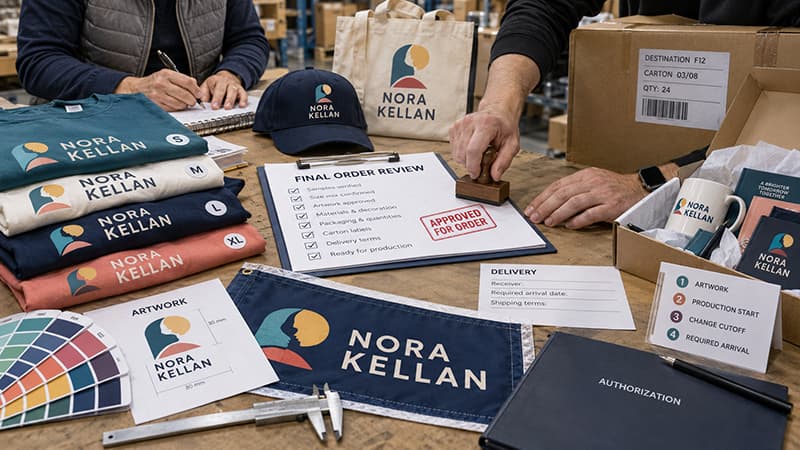
| Production start point and change cutoff | Missed deadlines caused by late approvals |
| Delivery destination, receiver, and shipping terms | Failed delivery or unexpected landed costs |
| Authorization and applicable disclosures | Unauthorized branding or compliance problems |
A good request for quotation should include the campaign purpose, recipient groups, quantity range, destination, required arrival date, artwork, preferred materials, logo positions, packaging, and compliance requirements. Comparable quotations must use the same specifications and delivery terms.
FAQs
Q1: How early should campaign products be ordered?
Start planning before the first distribution date. Production usually begins after TOMAS receives approved artwork and the agreed payment.
Leave time for sample review, production, inspection, packing, and shipping. During a busy campaign season, late artwork can shorten the production window. If demand is uncertain, TOMAS can divide the order into a launch batch and a later replenishment batch.
Q2: What is the minimum order quantity for custom campaign merchandise?
The minimum order quantity varies by product, material, print process, and customization. Stock political campaign supplies usually support smaller orders. Custom molds, special materials, and bespoke packaging often require higher quantities.
Ask for prices at several quantity levels. Setup costs are spread across the order, so the unit price usually falls as quantity rises. Reducing the number of logo positions or choosing a stock product may save more than negotiating the unit price alone.
Q3: Should campaigns approve a physical sample before bulk production?
Approve a physical sample for large orders, outdoor products, unfamiliar materials, or color-sensitive branding. A digital proof checks the layout. It cannot fully show fabric weight, stitching, transparency, packaging fit, or print adhesion.
TOMAS can provide sample photos, videos, or physical samples for selected political campaign materials. The buyer should approve and record the final specifications before mass production.
Q4: Can TOMAS pack and ship campaign merchandise to multiple locations?
TOMAS can pack products by event, team, or final delivery point. Each carton can show the product code, size, quantity, box number, and destination code. Color labels can make sorting faster.
The buyer should provide a confirmed destination list, quantities, receiver details, and a final revision deadline. TOMAS can also prepare mixed-size cartons and pack replacement stock separately.
Conclusion
The right political campaign items serve a clear purpose. Apparel identifies volunteers. Signs and flags provide outdoor visibility. Bags, drinkware, and stationery support repeated use. Each product needs its own quantity, material, and production plan.
Before ordering, confirm the materials, decoration method, sample, inventory plan, carton labels, and delivery destinations. Keep dated products separate from reusable items. Test outdoor materials under realistic conditions before approving mass production.
Plan Your Political Merchandise Project With TOMAS
TOMAS Crafts can manage sourcing, customization, sample approval, kit assembly, quality checks, and destination-based packing. One team can coordinate apparel, bags, badges, flags, drinkware, stationery, and event materials through one production workflow.
For a project-specific proposal, provide:
- Product categories and estimated quantities
- Campaign or event date
- Recipient groups and delivery destinations
- Approved artwork and brand colors
- Packaging or kit requirements
- Required materials, sourcing documents, or product claims
Contact TOMAS to review product specifications, sample requirements, packing plans, and production risks before approving a bulk order.