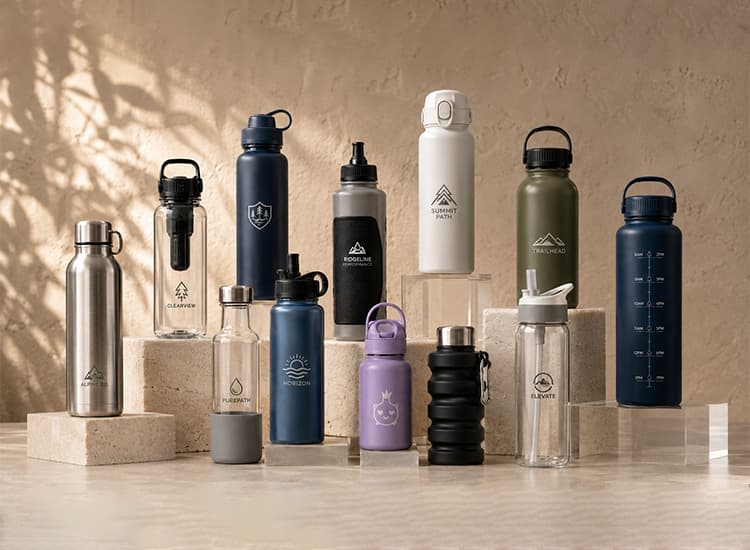
Reusable water bottles are now used in more daily settings, from offices and schools to gyms, events, and travel kits. The right bottle should match how people drink, carry, clean, and reuse it.
This guide compares 12 common types of water bottles by material, lid style, insulation, capacity, and best use, helping different projects choose a more practical and brand-friendly option.
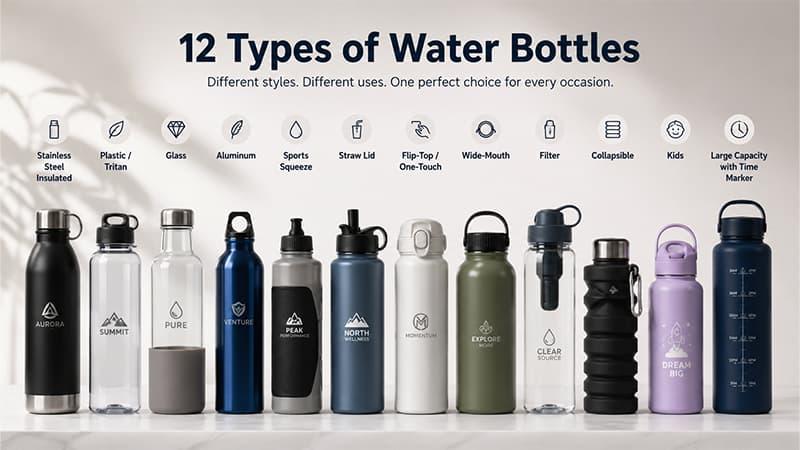
12 Types of Water Bottles and Their Best Uses
Water bottle types can be grouped in different ways. Some are defined by material, such as stainless steel, plastic, glass, and aluminum. Others are defined by lid design, insulation, capacity, or use case, such as straw lid bottles, sports squeeze bottles, and kids bottles.
1. Stainless Steel Insulated Water Bottle
A stainless steel insulated water bottle is one of the most popular choices for daily use, corporate gifts, outdoor campaigns, and travel. Most styles use double-wall or vacuum insulation, so they can keep drinks cold or hot longer than standard uninsulated bottles.
This type gives a gift a more premium feel than a basic plastic bottle. It works well for employee welcome kits, wellness programs, gym gifts, commuting, and outdoor events.
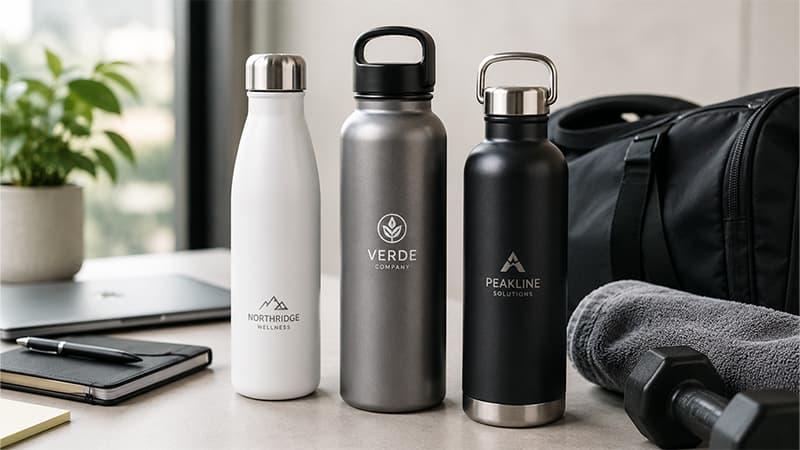
The trade-off is weight and price. Stainless steel bottles are usually heavier and more expensive than plastic bottles, and they can dent if dropped. For branding, they work well with laser engraving, screen printing, powder coating, and clean logo placement.
2. Plastic Water Bottle
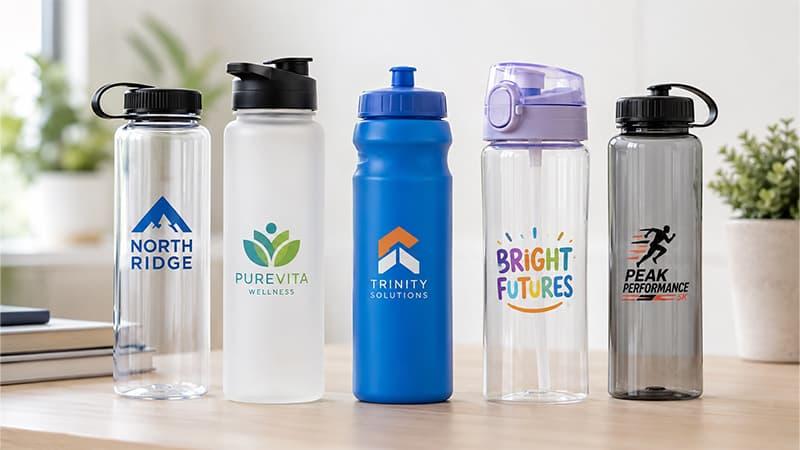
Plastic and copolyester water bottles are lightweight, practical, and cost-effective. They are common for schools, sports programs, trade shows, youth events, gyms, and large giveaways.
This type makes sense when a project needs easy distribution and controlled cost. Transparent, frosted, or colorful bottle bodies also make plastic bottles useful for bright event branding.
The main limits are temperature retention and odor control. Plastic bottles are usually not ideal for hot drinks, and some may retain flavors if users do not clean them well. Before production, the project team should also check food-contact suitability and BPA-related claims.
3. Glass Water Bottle
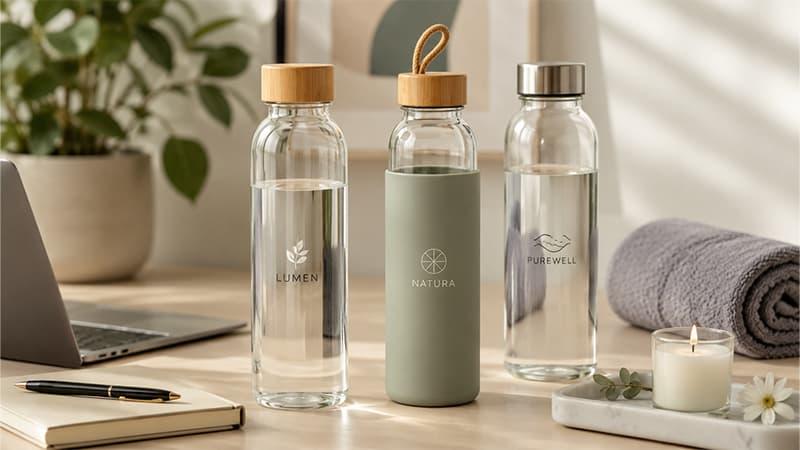
A glass water bottle gives a clean look and a neutral drinking taste. It is often used for desk work, yoga studios, wellness gifts, spa programs, beauty campaigns, and premium lifestyle gift sets.
Glass works best when appearance and drinking experience matter more than rough outdoor durability. Many designs include silicone sleeves, bamboo lids, or metal lids to improve grip and presentation.
The main drawback is breakage risk. Glass is heavier than plastic and metal bottles, and it is not ideal for children, sports teams, hiking, or rough travel. A simple logo helps the bottle keep its premium look.
4. Aluminum Water Bottle
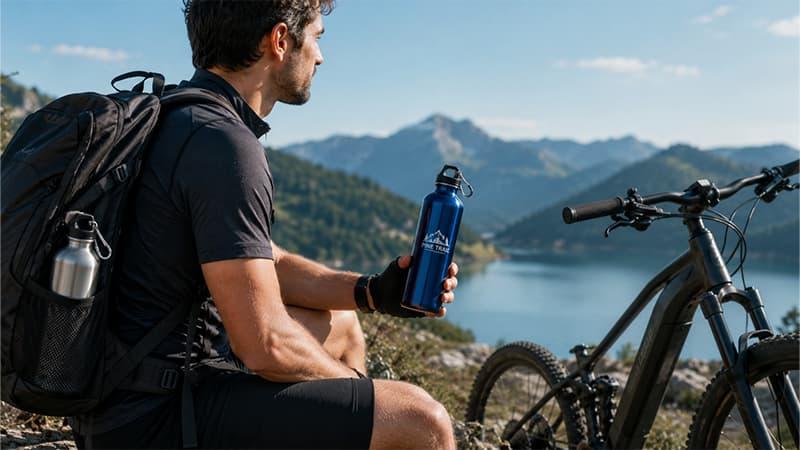
An aluminum water bottle is a lightweight metal option. It can work for travel, cycling, outdoor events, and budget-friendly metal bottle projects.
Compared with stainless steel insulated bottles, aluminum bottles are usually lighter and more affordable. But they are generally less insulating and can dent more easily.
Many aluminum bottles need an internal lining, so the coating details should be checked before an order is confirmed. This type is better for simple logo printing than complex premium decoration.
5. Sports Squeeze Bottle
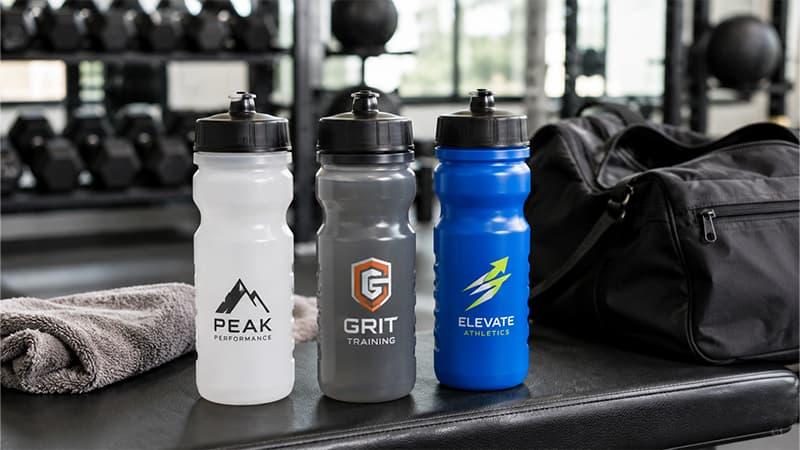
A sports squeeze bottle is designed for fast drinking during activity. It is often made from plastic and used by teams, races, gyms, schools, training programs, and sports events.
This bottle works well when users need quick access to water without opening a screw cap. It can be held with one hand and used during practice, games, or workouts.
The main limitation is perceived value. Sports squeeze bottles feel more functional than premium, so they are not the best fit for formal corporate gift sets. Choose this bottle when the goal is function, visibility, and large-quantity distribution.
6. Straw Lid Water Bottle
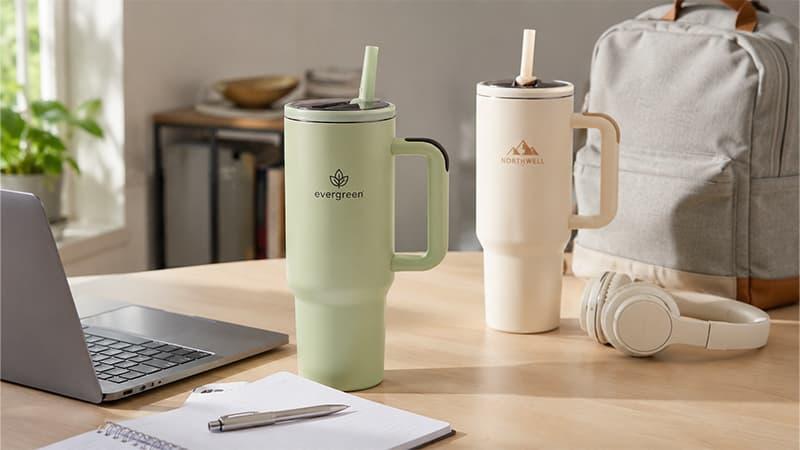
A straw lid water bottle is built for easy sipping without tilting the bottle. It works well for desk use, driving, school, gym, and daily hydration.
This style is popular because it makes drinking feel effortless. If the bottle stays beside a laptop, in a car cup holder, or near a gym machine, a straw lid can encourage users to drink more often during the day. The CDC suggests carrying a reusable water bottle as one practical way to drink more water throughout the day.
The trade-off is cleaning. Straw parts need more attention than simple screw caps, and leak resistance depends on the lid design. This type works well for employee wellness gifts and daily-use branded bottles.
7. Flip-Top / One-Touch Water Bottle
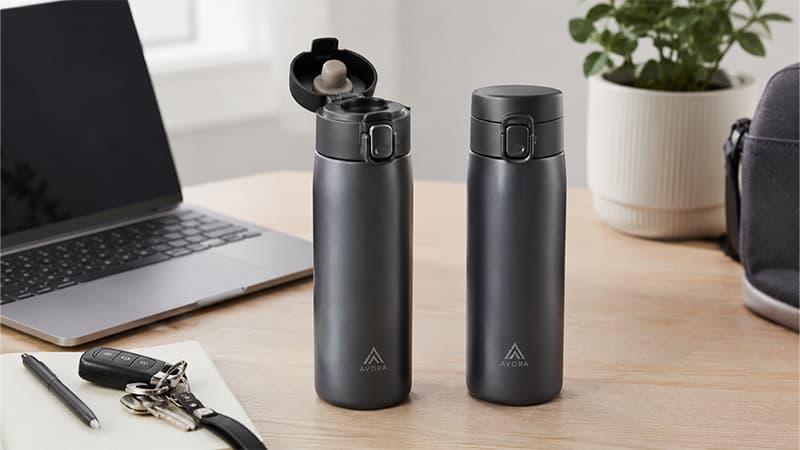
A flip-top or one-touch water bottle opens quickly with one hand. It fits commuting, gym use, school programs, travel, and active daily routines.
This style is convenient when people need quick access to water. A good flip-top bottle can feel easier to use than a screw cap, especially when walking, driving, or moving between activities.
The lid quality matters. Hinges, locks, buttons, and seals are used often, so weak parts can affect the user experience. Flip-top bottles are a strong choice when a project needs a practical gift that feels more convenient than a basic screw-cap bottle.
8. Wide-Mouth Water Bottle
A wide-mouth water bottle has a larger opening for ice cubes, fruit, fast filling, and easier cleaning. It can be made from stainless steel, plastic, or other materials.
This type is useful for outdoor activities, hiking, camping, sports, and travel. The wide opening makes it easier to add ice or clean the inside with a bottle brush.
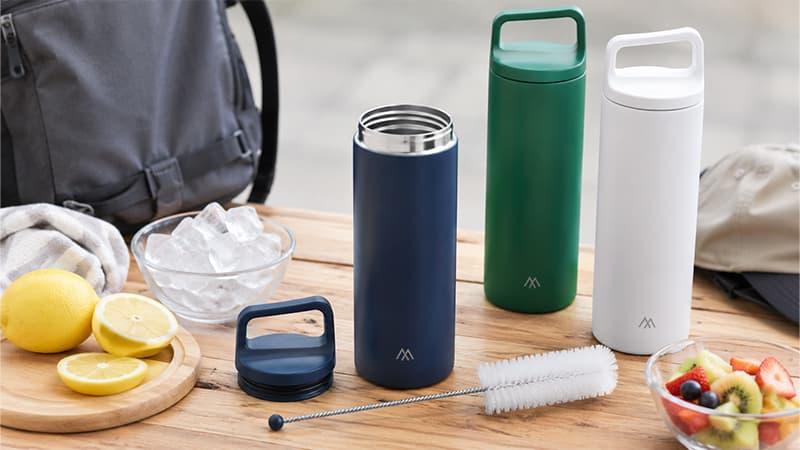
The downside is drinking comfort. A wide opening can be harder to drink from while walking or driving unless the bottle is paired with a chug cap or spout lid. For outdoor and adventure campaigns, a simple front logo or engraved mark usually stays easier to see.
9. Filter Water Bottle
A filter water bottle includes a built-in filter for better-tasting water or certain travel situations. It is often used for travel, camping, outdoor use, and wellness campaigns.
This type is useful when the audience cares about water taste, convenience, or outdoor function. But not every filter solves the same water quality problem.
Filter replacement details, certification, and supplier documentation should be checked before any product claims are used. If the filter feature is not truly relevant to the audience, a simpler bottle may be easier to manage.
10. Collapsible Water Bottle
A collapsible water bottle is made from flexible silicone or soft materials. It can fold, roll, or compress after drinking, which saves space in a bag or suitcase.
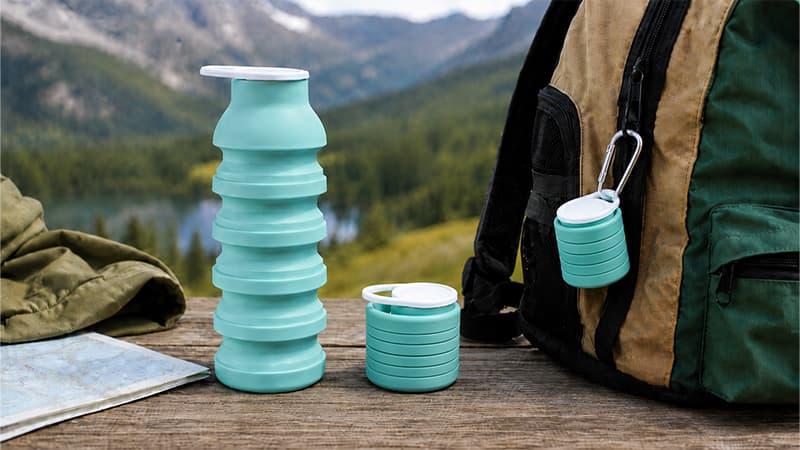
This bottle is useful for travel, camping, hiking, outdoor events, backpacking kits, and compact gift sets. It works especially well as a backup bottle when users need something light and packable.
The trade-off is structure and perceived value. Collapsible bottles can feel less stable in the hand, especially when they are not full, and they may not feel as premium as stainless steel bottles. Use this style when portability matters more than a high-end look.
11. Kids Water Bottle
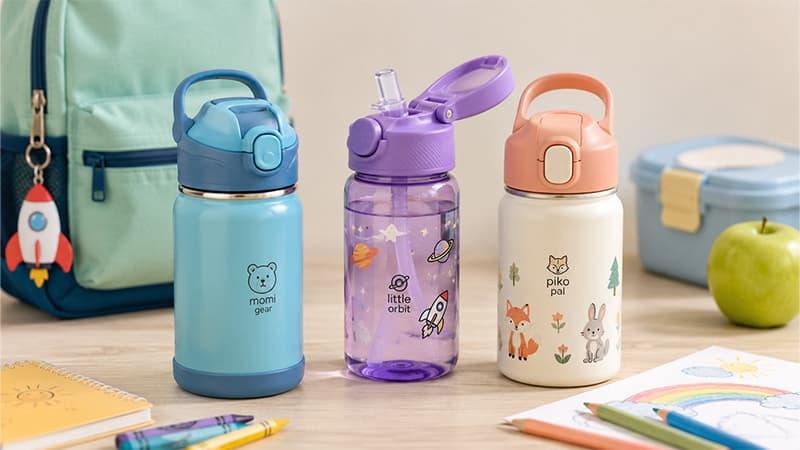
A kids water bottle is smaller, lighter, and easier to grip. It often includes a straw lid, flip-top lid, handle, or leak-resistant design.
This type is useful for schools, camps, children’s events, family programs, and youth sports. The best kids bottle should be easy to open, not too heavy, and simple enough to clean.
Oversized bottles may look attractive, but they are not always practical for younger users. Safety, lid design, weight, and cleaning should matter more than decoration alone.
12. Time-Marker Water Bottle
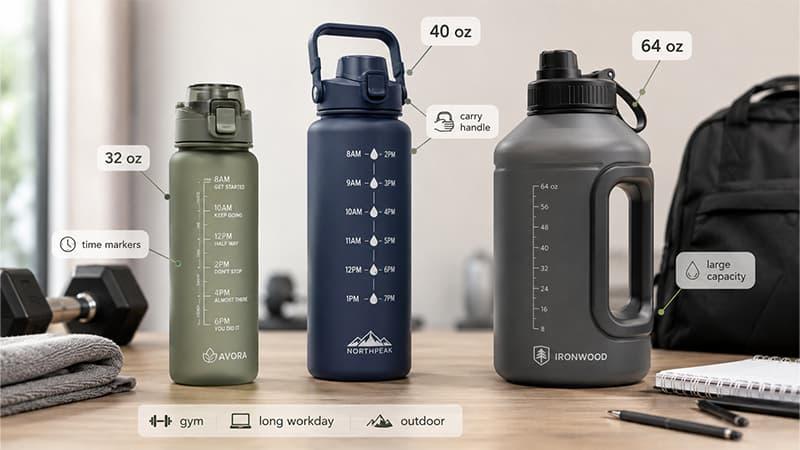
A large-capacity or time-marker water bottle is often 32 oz, 40 oz, 64 oz, or larger. It is used for gym sessions, long workdays, outdoor activities, and hydration tracking.
Time markers can remind users to drink throughout the day. Larger bottles are also useful when refilling is not convenient, which makes them popular for fitness, wellness, and health campaigns.
The limitation is portability. Large bottles can feel heavy and may not fit car cup holders, backpack side pockets, or small desks. For bulk orders, confirm the bottle size, handle design, and packing volume before production.
How to Choose the Right Water Bottle Type
After comparing the main water bottle types, the next step is choosing based on real use. The right bottle should match the setting, user, lid preference, cleaning needs, and carrying method.
Start with Where People Will Use the Bottle
Start with the real setting. Will people use the bottle at an office desk, in a gym, at school, during a trade show, on a sports field, or while traveling?
Many projects start with a target price. But the better choice often changes after the audience and use case are confirmed.
A sports squeeze bottle may fit a youth team better than a stainless steel bottle. A stainless steel insulated bottle may work better for an employee gift. A collapsible bottle may be the better fit for a travel or outdoor campaign.
If it is part of a gift set, the bottle should also match the overall value of the package.
Choose the Material and Insulation Level
Material affects weight, durability, temperature control, taste, cost, and branding method.
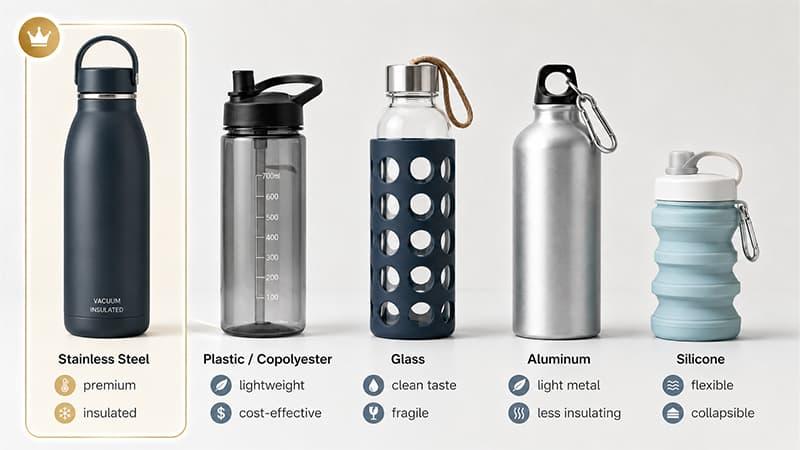
Stainless steel is durable, premium, and strong for insulation and engraving. Plastic or copolyester is lightweight, cost-effective, and suitable for events and sports programs. Glass gives a clean taste and premium look but is heavier and breakable.
Aluminum is lightweight but usually less insulating than vacuum stainless steel. Silicone is flexible and useful for collapsible bottles.
Insulation is another key decision. Insulated bottles are better when users want cold water in summer, hot drinks in winter, or a more premium gift. Uninsulated bottles are lighter, simpler, and more cost-effective for short events or frequent refills.
Material should not be chosen alone. It should match the user, budget, drink type, safety requirements, and project positioning.
Match the Lid and Mouth Style to the User
Many people like or dislike a bottle because of the lid. The lid affects leak resistance, drinking speed, cleaning, and daily comfort.
A straw lid works well for desk use, driving, and daily sipping. A flip-top lid is useful for gym, school, and one-hand use. A screw cap is simple and secure for travel.
A chug cap gives faster drinking with more control than a fully open wide mouth. A squeeze lid is practical for sports teams and quick drinking. A wide mouth helps with ice cubes and cleaning. A spout lid fits hiking, cycling, and active use.
For events or gifts, the bottle should not only look good. It should also match how people will drink from it during the day.
Check Capacity, Portability, and Cup Holder Fit
Capacity affects both user comfort and bulk order planning.
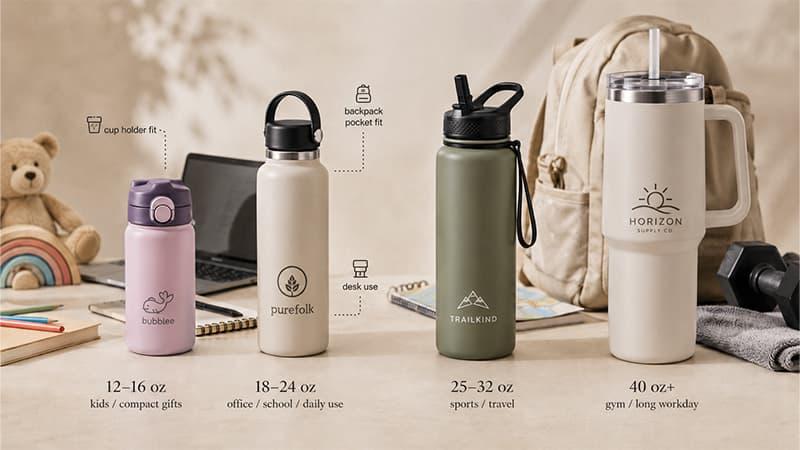
A 12–16 oz bottle works well for kids, compact gifts, and short-use events. An 18–24 oz bottle suits office, school, trade shows, and daily use. A 25–32 oz bottle fits sports, outdoor activities, and travel.
A 40 oz or larger bottle is useful for gym, long workdays, and desk hydration, but it can be heavy.
Portability also matters. Slim bottles fit car cup holders and backpack side pockets more easily. Very large bottles may work well as desk or gym bottles but feel inconvenient during commuting.
Handles, loops, and textured finishes can make heavier bottles easier to carry. For bulk orders, capacity can also affect carton volume, shipping cost, and delivery planning.
Consider Logo Area and Decoration Method
Water bottle is not a flat product. It is round, so people never see the full design at once.
A logo that looks good on a design file may become too curved, too small, or hard to read after printing. If the artwork has small text, thin lines, or too many colors, a simple front logo may work better than a full wraparound design.
Common decoration methods include screen printing, UV printing, heat transfer, full-wrap printing, laser engraving, and powder coating. The best method depends on the bottle material, surface finish, logo color, and order quantity.
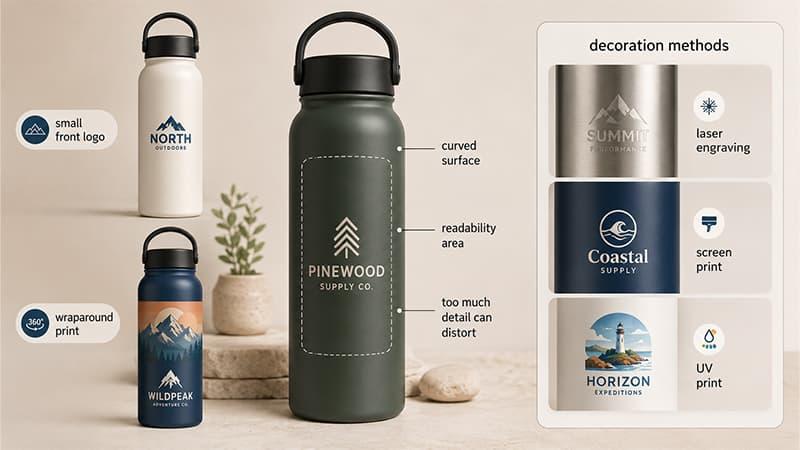
For premium bottles, a smaller engraved logo can look better than a large promotional print. For event giveaways, a clear front logo may be more practical.
Think About Cleaning, Taste, and Daily Reuse
A bottle that is hard to clean may not be reused often. Wide-mouth bottles are usually easier to clean because brushes can reach the inside more easily. Straw lids and flip-top lids need more detailed cleaning because they include narrow parts, seals, and hidden areas.
Glass bottles often keep the cleanest taste. Stainless steel is durable and usually strong for daily reuse. Plastic and silicone parts can retain odors if used with flavored drinks, coffee, or sports mixes.
For daily-use gifts, choose a bottle people can clean without frustration. A beautiful bottle that sits unused in a cabinet gives a brand less value than a simple bottle people refill every day.
Which Water Bottle Type Fits Your Project?
Different projects need different water bottle choices. The right style should match the people receiving it, the setting where they will use it, and the level of the gift or giveaway.
For Office and Employee Gifts
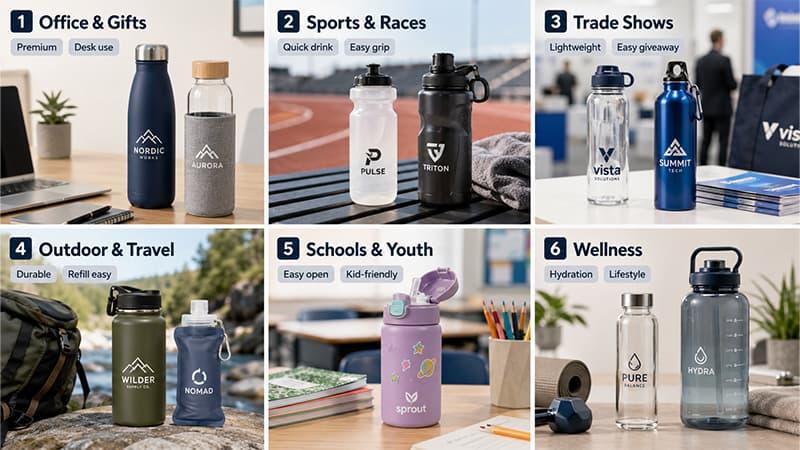
Stainless steel insulated bottles, straw lid bottles, and glass bottles usually work better for office and employee gifts. They feel more suitable for daily desk use, commuting, and welcome kits. For this type of project, the bottle should not look too basic. A clean logo, simple color choice, and better material can make the gift feel more thoughtful.
For Sports Teams and Races
Sports squeeze bottles, plastic bottles, flip-top bottles, and chug-cap bottles are more practical for sports teams and races. People need to drink quickly during activity, so the bottle should be light, easy to hold, and simple to open. A bold team logo or sponsor mark usually works better than a small detailed design.
For Trade Shows and Giveaways
Plastic bottles, aluminum bottles, and other lightweight bottles are usually better for trade shows and large giveaways. Visitors may already be carrying brochures, bags, and samples, so the bottle should be easy to take away. For this type of project, cost control, clear logo visibility, and simple distribution matter more than a premium feel.
For Outdoor and Travel Projects
Wide-mouth bottles, collapsible bottles, insulated bottles, and filter bottles can work well for outdoor and travel projects. A travel bottle should be easy to pack, carry, and refill. For outdoor use, lid security and durability matter more than decorative details.
For Schools and Youth Programs
Kids bottles, plastic bottles, and flip-top bottles are better choices for schools, camps, and youth programs. The bottle should be lightweight, easy to open, and comfortable for younger users to carry. Oversized bottles may look attractive, but they are often less practical for school or children’s activities.
For Wellness Campaigns
Glass bottles, stainless steel bottles, and large-capacity bottles can fit wellness campaigns, gym programs, and hydration-themed gifts. The style should match the campaign message. A glass bottle may feel cleaner and more lifestyle-focused, while a large-capacity bottle can work better for fitness or hydration tracking.
What to Check Before Ordering Custom Water Bottles
Choosing the bottle type is only the first step in a custom water bottle project. Before sampling or bulk production, the project team should confirm the practical details that affect cost, usability, branding, packing, and delivery.
Confirm Material, Capacity, Lid Type, and Cleaning Needs
Before ordering, confirm the material, capacity, lid style, leak resistance, insulation requirement, drinking method, and cleaning convenience.
A premium bottle that is too heavy, too small, hard to clean, or easy to leak may not be reused. A low-cost bottle that fits the event perfectly may perform better than a high-end bottle that does not match the audience.
For straw lid bottles, check whether the straw parts are easy to remove and clean. For sports bottles, check squeeze comfort and cap security. For large bottles, check handle design, cup holder fit, and carton volume.
Confirm Logo Size, Print Area, and Decoration Method
Logo placement on a bottle needs more attention than logo placement on a flat notebook, tote bag, or box.
Confirm the logo size, print area, color contrast, proof, and decoration method before production. Common methods include screen printing, UV printing, heat transfer, laser engraving, powder coating, and full-wrap printing.
A curved bottle surface changes how the logo is seen. If the artwork has small text, thin lines, or many colors, a simpler front logo may work better than a large wraparound design.
For premium stainless steel bottles, engraving or a small clean logo may look more professional. For plastic event bottles, larger printed logos can work well for quick brand visibility.
Check Food-Contact Safety and Sustainability Claims
For plastic, copolyester, stainless steel, silicone, or coated aluminum bottles, the project team should confirm food-contact safety and related documentation.
If the product is described as BPA-free, reusable, recycled, eco-friendly, or suitable for food contact, the claim should be supported by supplier information or relevant testing.
The FDA provides information about BPA in food-contact applications, which is useful when discussing plastic materials and BPA-related claims.
Avoid vague claims if they cannot be verified. For custom projects, clear and accurate wording is better than broad environmental or safety claims that may create risk later.
Check Packaging, Carton Volume, and Delivery Date
Packaging can change the final cost and shipping plan.
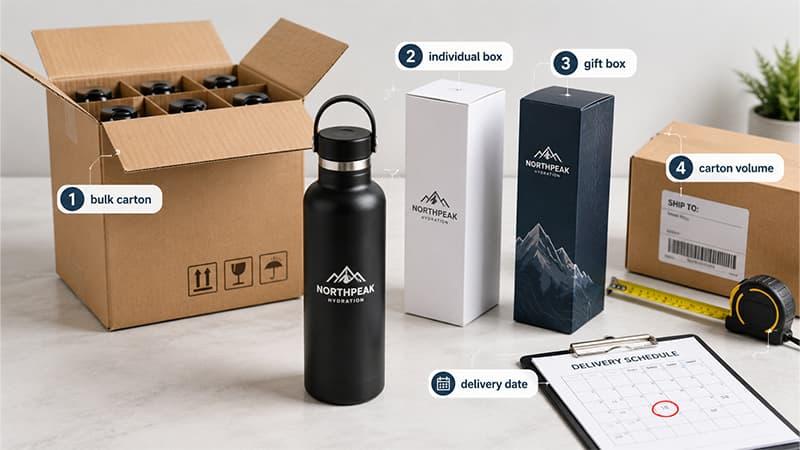
Water bottles may be packed in bulk cartons, individual white boxes, color boxes, gift boxes, sleeves, or full gift set packaging. Large-capacity bottles, gift boxes, and stainless steel bottles can increase carton volume and shipping cost.
For event orders, confirm the delivery date early. The best product is not useful if it arrives after the event.
Before production, confirm quantity, bottle size, carton quantity, packing method, shipping route, and deadline. This is especially important for corporate gifts, sports events, school programs, and promotional campaigns with fixed launch dates.
Choose a Water Bottle That People Will Actually Use
A good water bottle for a gift or event is not just a bottle with a logo on it. It should fit the people receiving it. An employee gift may need a stainless steel bottle that feels suitable for daily work. A school or sports program may need something lighter, easier to open, and safer to carry. A trade show giveaway should be simple, practical, and easy for visitors to take away.
Before choosing the final style, look at the real use case first: who will receive the bottle, where they will use it, how visible the logo needs to be, and whether the bottle feels right for the gift level. A bottle that recipients actually keep and use gives the brand more value than one chosen only because it looks large, trendy, or premium in a product photo.
Need Custom Water Bottles for an Upcoming Project?
Choosing the right water bottle is easier when the project goal is clear. TOMAS Crafts helps companies, schools, event teams, and promotional projects compare bottle styles, logo methods, material options, and bulk order choices based on the audience, budget, and use case.
Share your bottle type, quantity, logo file, target audience, and deadline with the TOMAS Crafts team. We can help recommend practical water bottle options for employee gifts, sports events, school programs, travel kits, and promotional campaigns.
👉 Request a Custom Water Bottle Quote
FAQs
What are the main types of water bottles?
The main types of water bottles include stainless steel insulated bottles, plastic bottles, glass bottles, aluminum bottles, sports squeeze bottles, straw lid bottles, flip-top bottles, wide-mouth bottles, filter bottles, collapsible bottles, kids bottles, and large-capacity bottles.
What is the best water bottle type for corporate gifts?
Stainless steel insulated bottles, straw lid bottles, glass bottles, and premium wide-mouth bottles usually work well for corporate gifts. They feel useful, reusable, and gift-worthy.
For higher-end gift sets, stainless steel bottles with a clean logo or engraved mark often create a stronger impression.
Which water bottle is best for sports events?
Sports squeeze bottles, plastic bottles, flip-top bottles, chug-cap bottles, and wide-mouth bottles are practical for sports events.
They are easy to drink from during activity and can be customized with team logos, sponsor logos, or event branding.
Stainless Steel vs Plastic Water Bottle: Which Is Better?
Stainless steel is more durable, more premium, and better for insulation. Plastic is lighter and more cost-effective for large events, schools, and sports programs.
The better choice depends on budget, audience, use case, branding goals, and whether temperature control matters.
What should be checked before ordering custom water bottles?
The project team should check the material, capacity, lid type, logo position, printing method, packaging, quantity, carton volume, and delivery date.
For food-contact or sustainability claims, the supplier’s documentation should also be confirmed before those claims are used in a campaign.