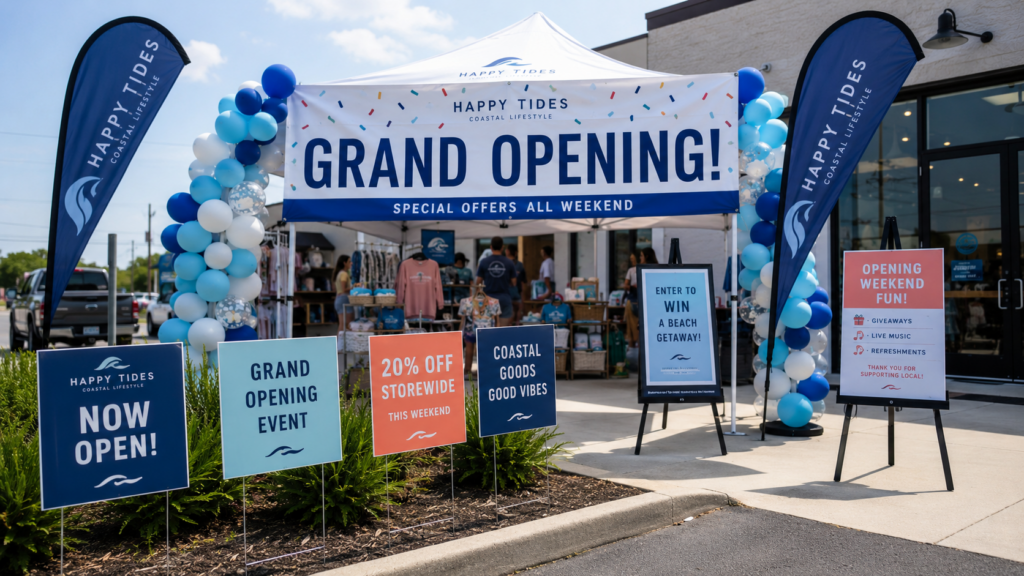
A good sign does more than show your business name. It helps people notice your offer, understand where to go, and remember your brand after they leave.
For many campaigns, a printed sign does the job better than a permanent storefront sign. It is easier to customize, ship, and replace when the message changes.
This guide compares practical business signage and real-world business sign examples. You will learn how to choose signs by goal, location, viewing distance, and campaign use.
For most marketing campaigns, the best signs are not the most complex ones. They are easy to read, cost effective, and matched to how people will see them.
Key Takeaways
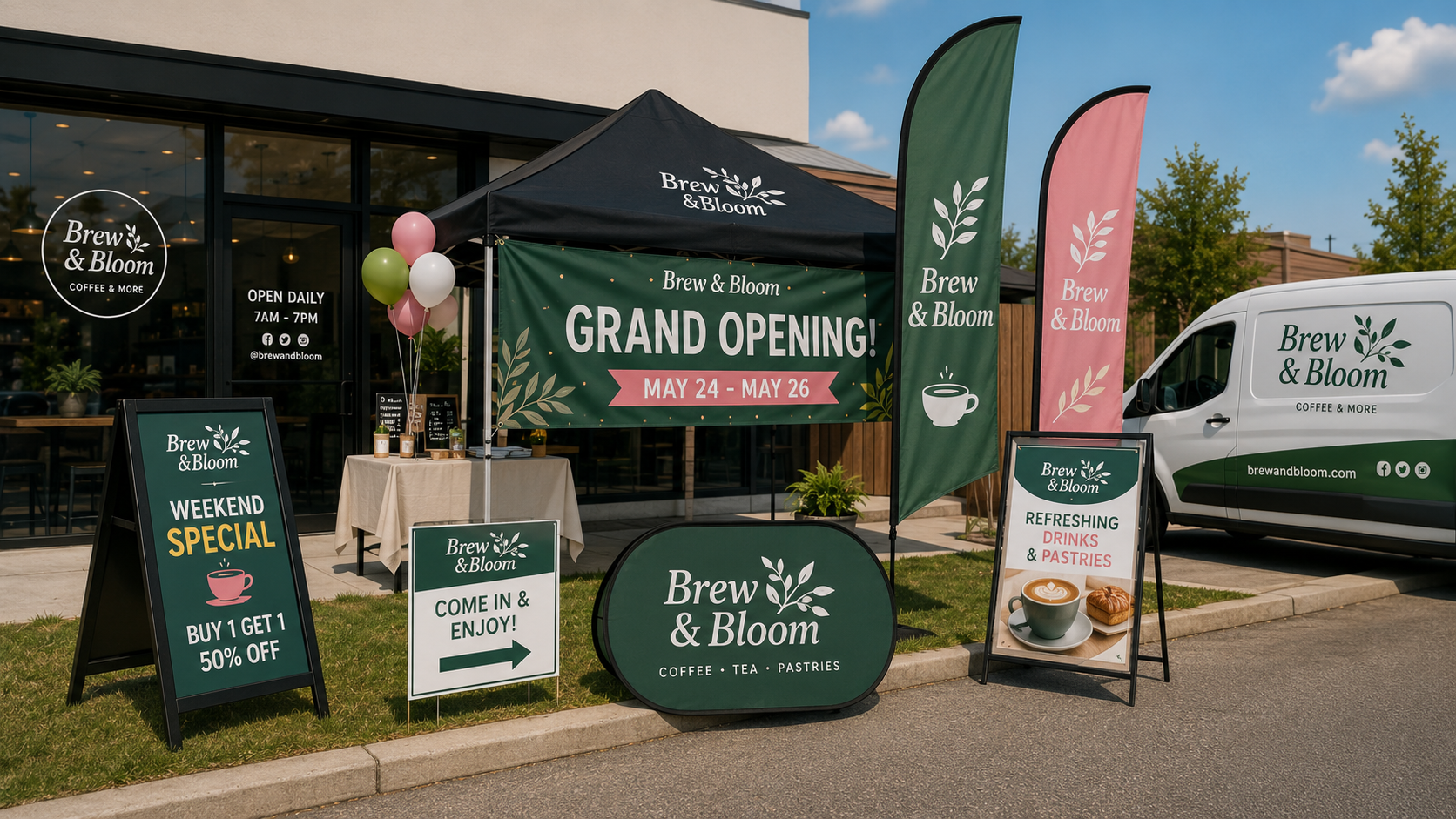
- Banners, posters, decals, flags, and display signs are practical for business promotions and events.
- Window graphics and A-frame signs work well for storefront campaigns and foot traffic.
- Roll-up banners and booth backdrops help people notice your trade show booth.
- Table signs and directional signs help visitors understand where to go next.
- The best sign type depends on where people see it and what action you want them to take.
What Are Business Signs?
Business signs are visual materials that help people identify a company, notice an offer, follow directions, or understand a message. They can appear outside a store, inside a venue, on a booth, on a vehicle, or across a retail window.
For many businesses, signs are not only permanent storefront items. They can also be printed marketing tools for product launches, seasonal sales, exhibitions, school events, hotel events, community activities, and corporate campaigns.
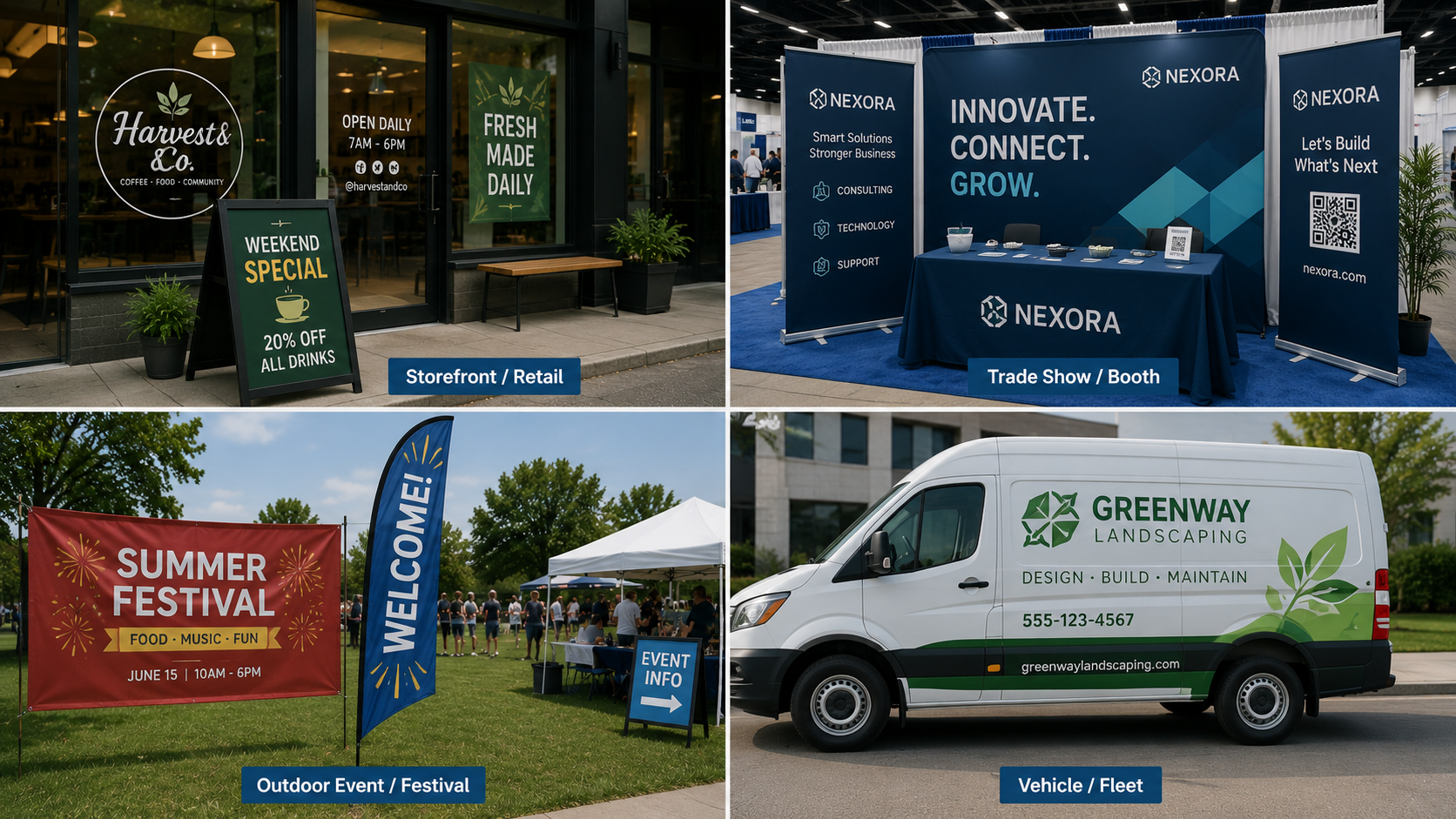
Common types of signs for business include banners, posters, window decals, A-frame signs, floor decals, yard signs, vehicle decals, flags, tabletop signs, and directional signs. These signs are easier to print, customize, transport, and replace than large architectural signs.
A good sign does one clear job. It may attract attention, explain an offer, guide visitors, or support brand recognition. For small businesses, signs also work best when they support a broader marketing plan, including target audience, sales goals, promotion channels, and budget.
In this article, we focus on promotional signs and printed display materials that are easier to customize, transport, and use for short-term campaigns.
12 Types of Signs for Business Marketing
1. Banners
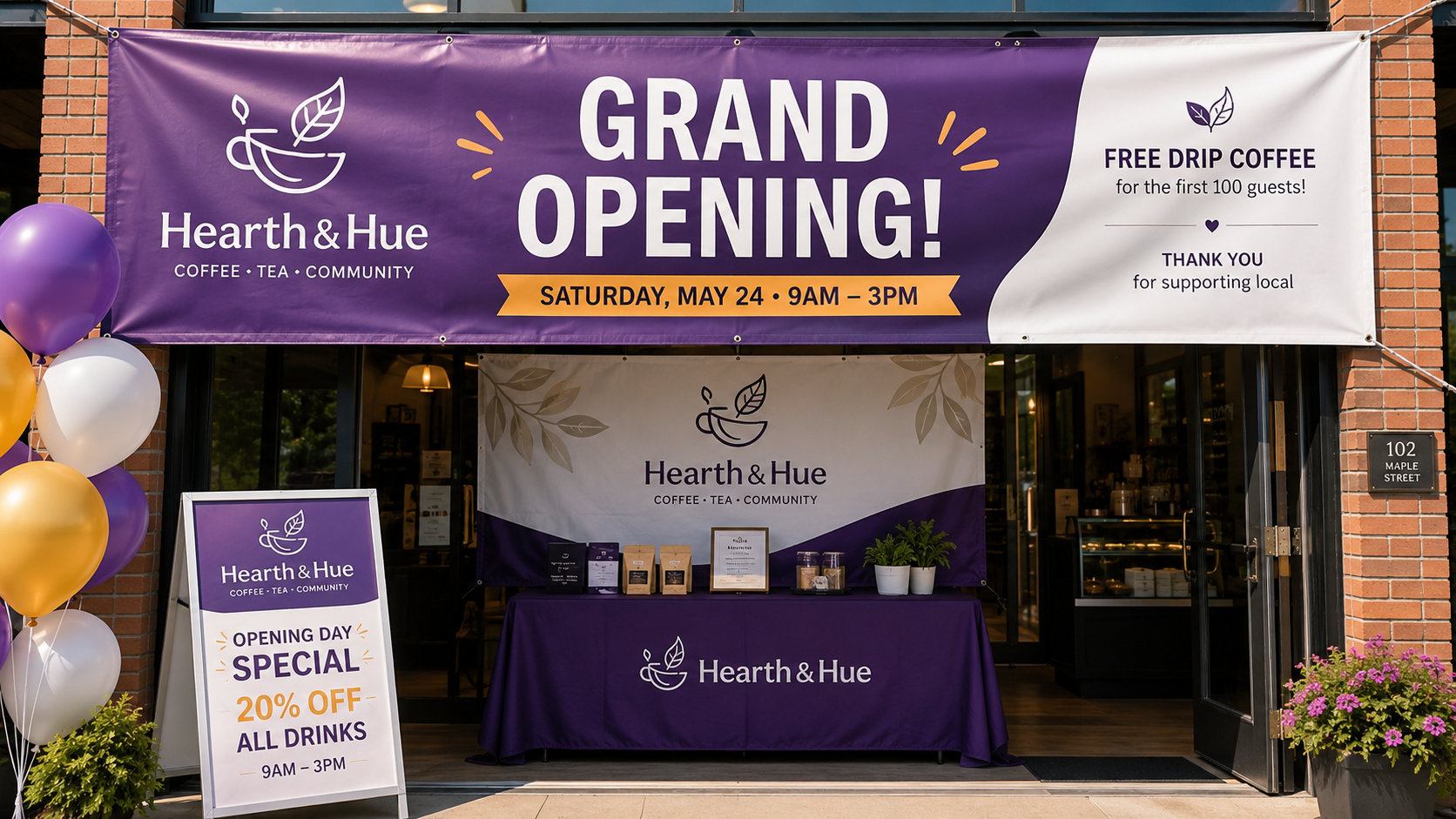
When you need a large message for a promotion, banners are usually the first sign type to consider. They work well for grand openings, sales campaigns, exhibitions, sports events, school activities, charity events, and brand promotions.
Vinyl banners suit outdoor signage because they are durable and cost effective. Fabric banners look cleaner for indoor events, conferences, waiting areas, and photo areas. Mesh banners can help in windy outdoor spaces.
You can hang banners on walls, fences, booth frames, stages, railings, or storefront areas. For short-term promotions and bulk event use, banners are one of the most flexible choices.
2. Hanging Banners
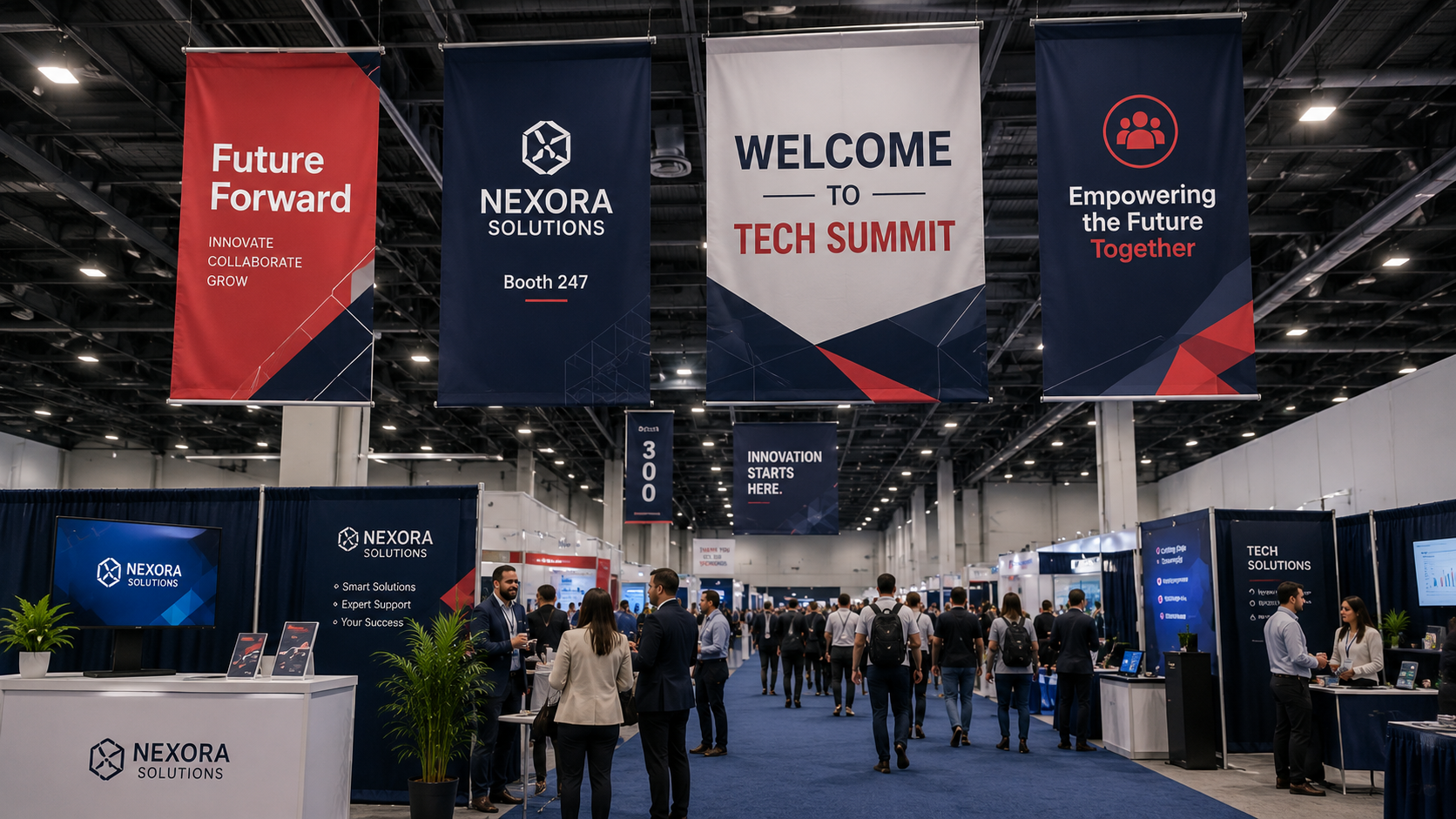
If your message needs to be seen from across a venue, hanging banners can work better than small posters. They are often suspended from ceilings, frames, booths, shopping mall areas, or event structures.
Retail stores may use hanging banners for seasonal campaigns. Trade show booths may use them to make the brand visible above the aisle. Schools and event venues may use them for welcome messages, sponsor displays, or activity zones.
Keep the message short. A hanging banner is usually viewed from a distance, so a large logo, simple headline, and strong contrast work better than detailed text.
3. Roll-Up Banners and Standing Banners
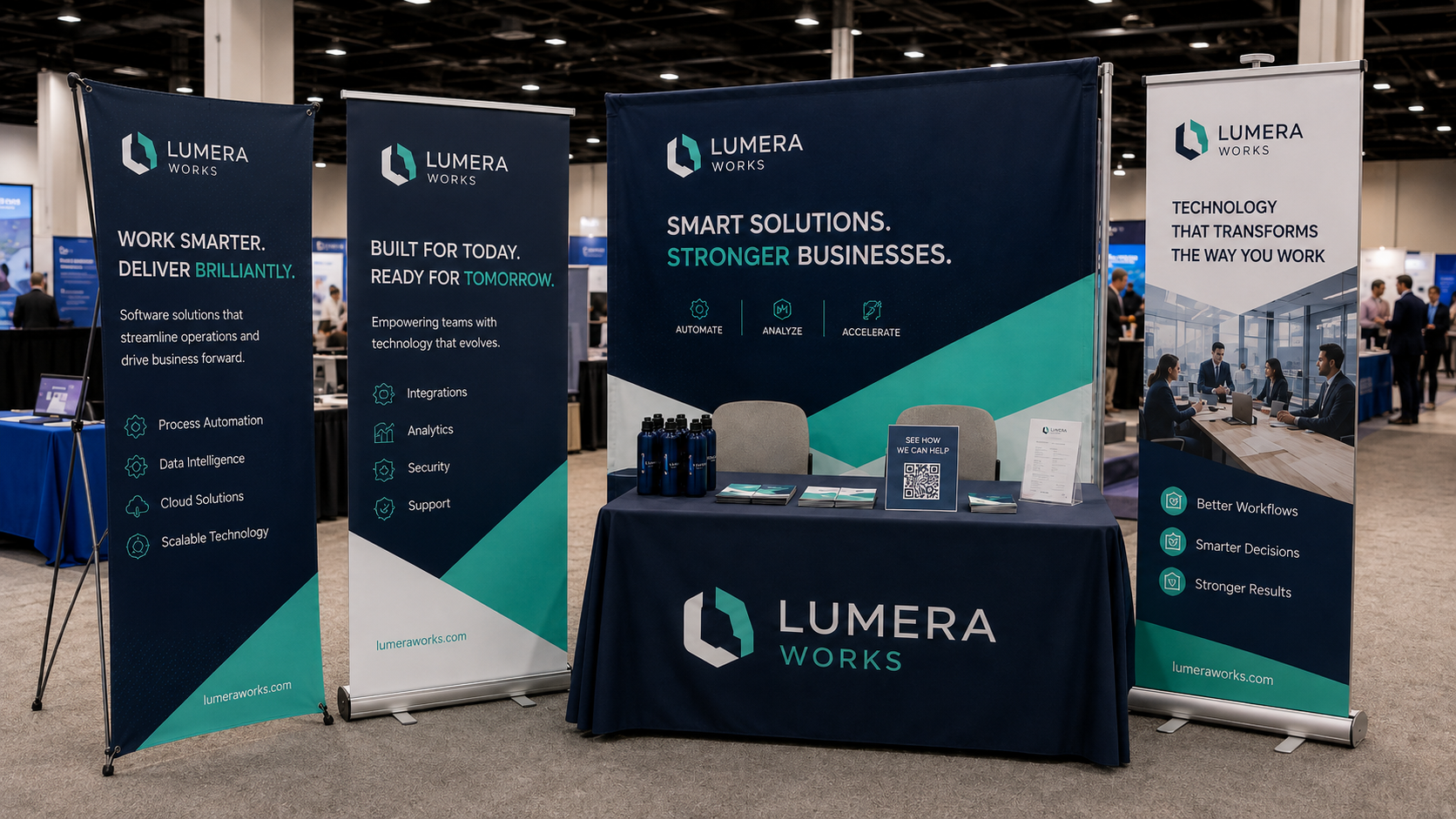
For trade shows and meetings, roll-up banners are popular because they are portable, quick to set up, and easy to reuse. They are also called standing banners or retractable banners.
A roll-up banner can show your logo, offer, product benefit, QR code, or call to action without taking much booth space. You will often see them at conferences, showrooms, product launches, corporate events, and reception areas.
Design roll-up banners for repeated use across multiple events. Avoid printing specific dates unless the banner is only for one campaign. For B2B buyers, this helps reduce waste and control the event budget.
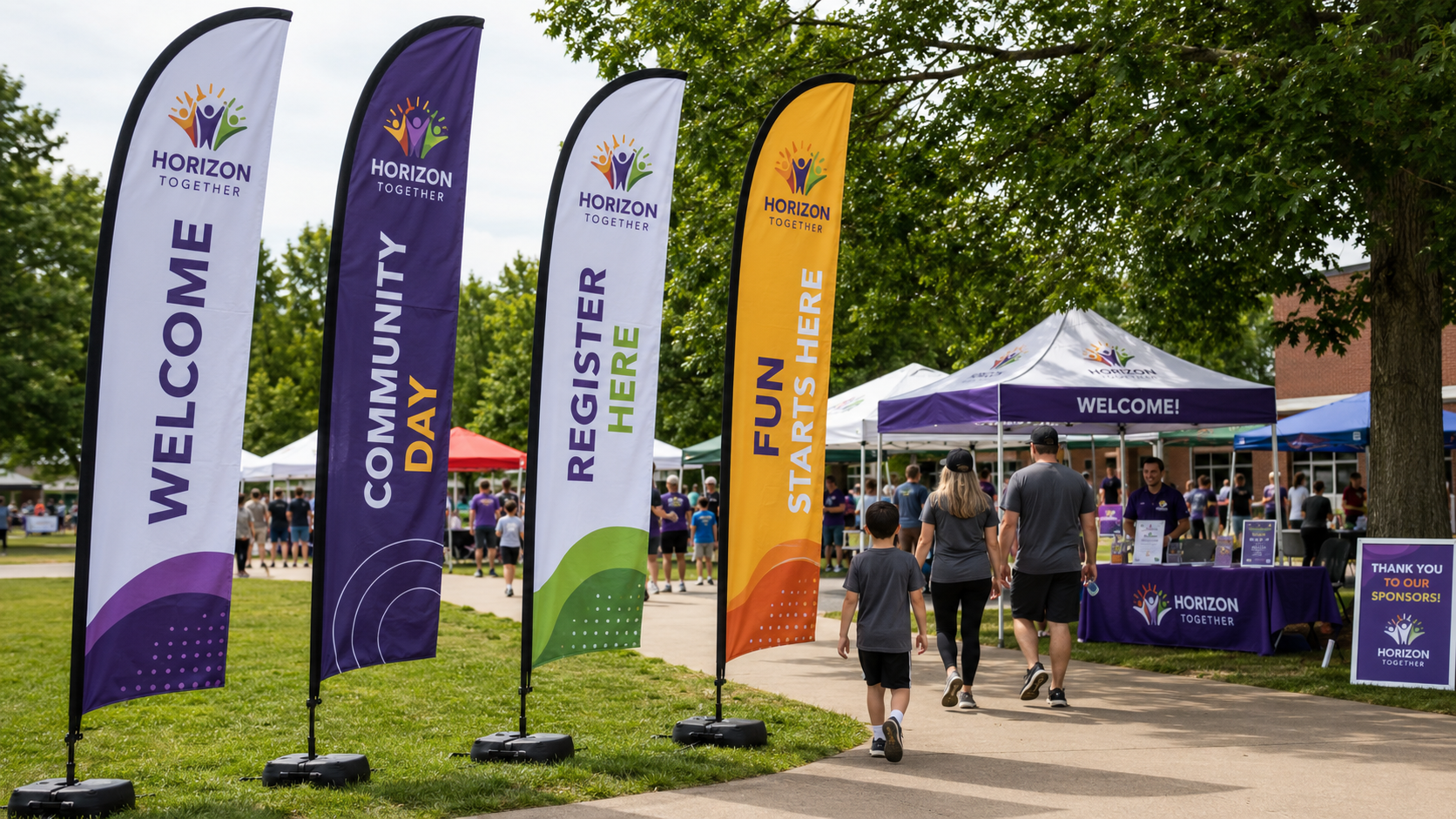
4. Flags and Feather Flags
For outdoor events, flags and feather flags are often used to pull attention from a distance. They work well for storefront promotions, festivals, sports activities, car dealerships, school fairs, residential communities, and community campaigns.
Feather flags move with the wind, which makes them more eye catching in open spaces. They can help people find entrances, registration points, parking areas, or promotional booths.
Use simple words and bold graphics. A flag is not the right place for long product details. For outdoor events, check weather conditions and base stability before confirming the final flag size.
5. A-Frame Signs and Sidewalk Signs
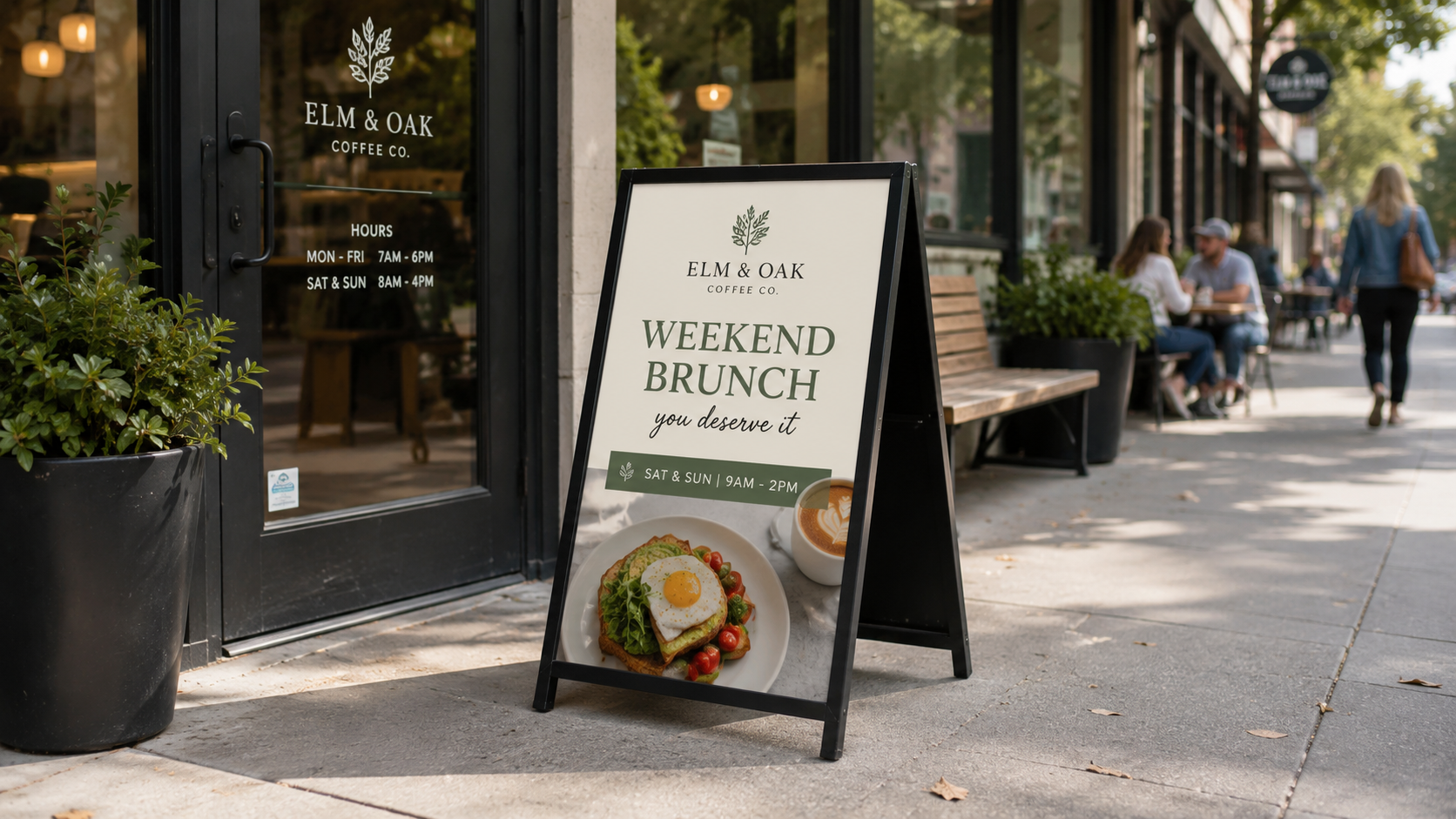
A-frame signs are useful when people pass your business on foot. You will often see them outside cafés, restaurants, retail stores, salons, showrooms, and event entrances.
They work well for daily specials, walk-in traffic, pop-up events, store directions, and local promotions. A café may use one for a lunch deal. A retail store may use one to guide shoppers to a sale. An event team may use one to point visitors toward registration.
A-frame signs are especially useful for stores that want to attract foot traffic near the entrance. Keep the message short and place the sign where it is easy to see without blocking the walkway.
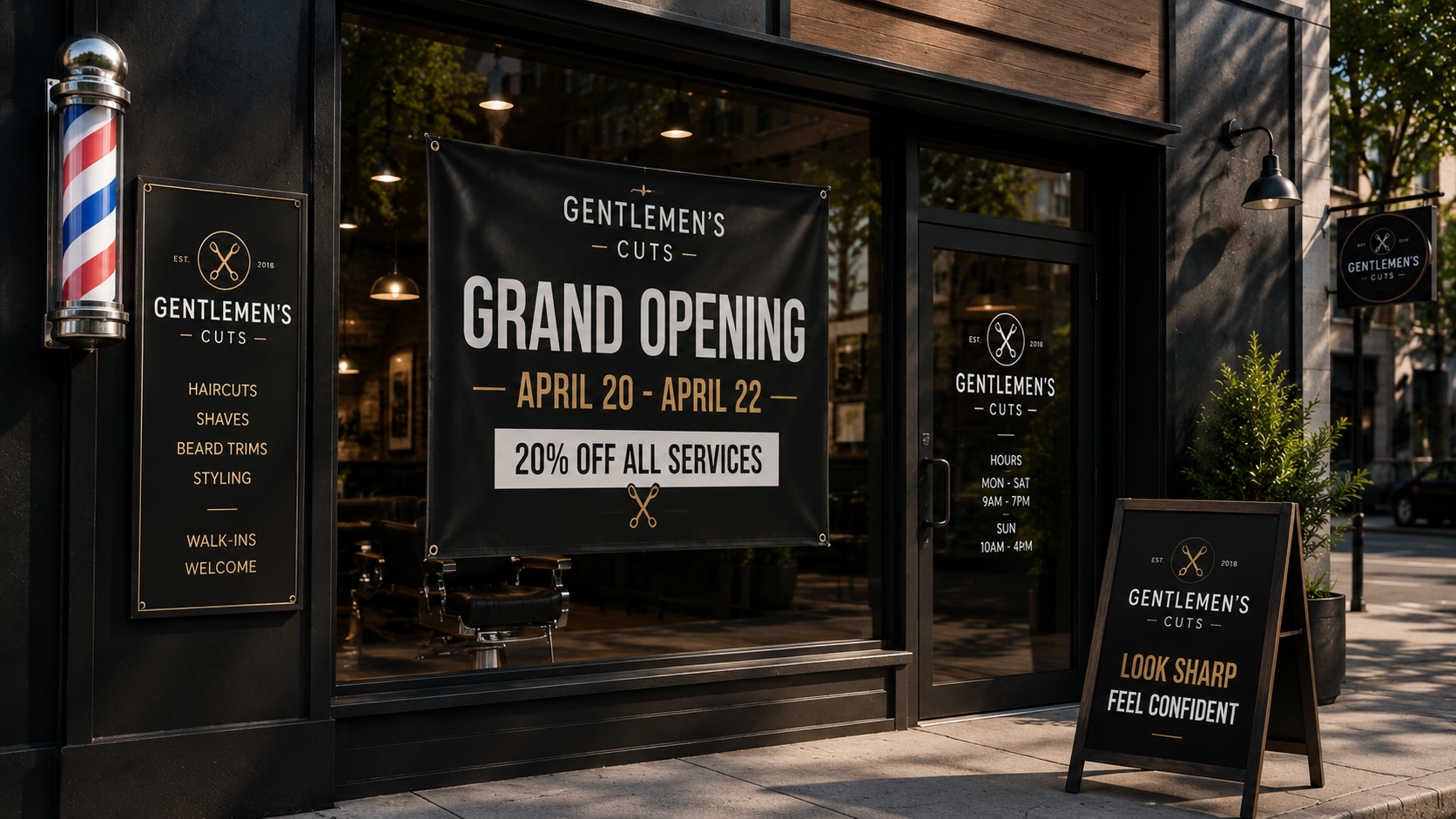
6. Window Decals and Window Graphics
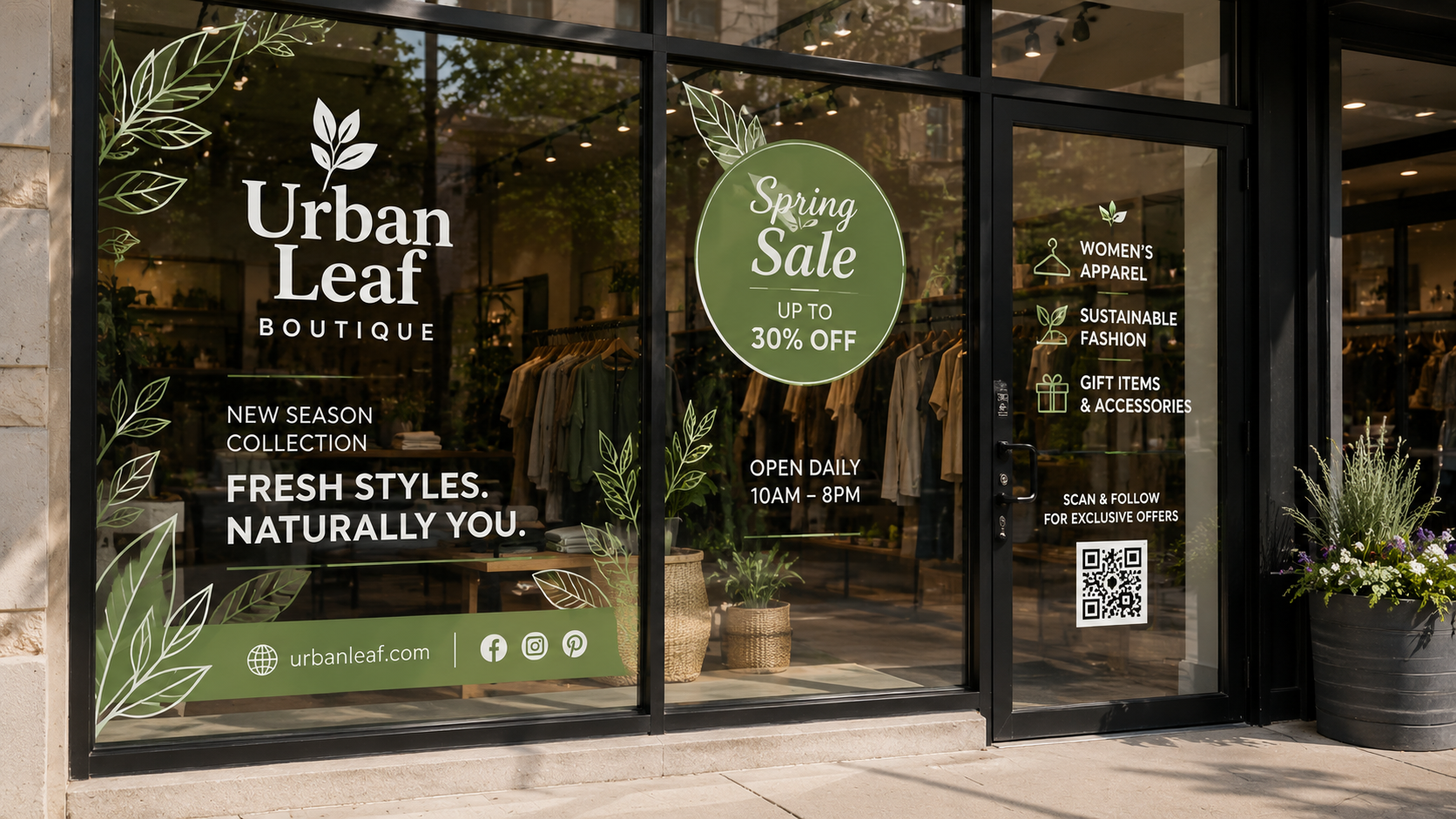
Empty glass can become a useful marketing space with window decals and window graphics. Stores often use them on glass doors, retail windows, office partitions, and storefront panels.
They can show logos, business hours, seasonal offers, product graphics, privacy patterns, or QR codes. They also help support temporary promotions without changing the main storefront sign.
Removable vinyl is better for short-term campaigns. Permanent window graphics are better for long-term branding. For simple store hours, slogans, or web addresses, vinyl lettering may look cleaner than a full-window graphic.
For storefront promotions, one clear offer usually works better than several small messages.
7. Floor Decals
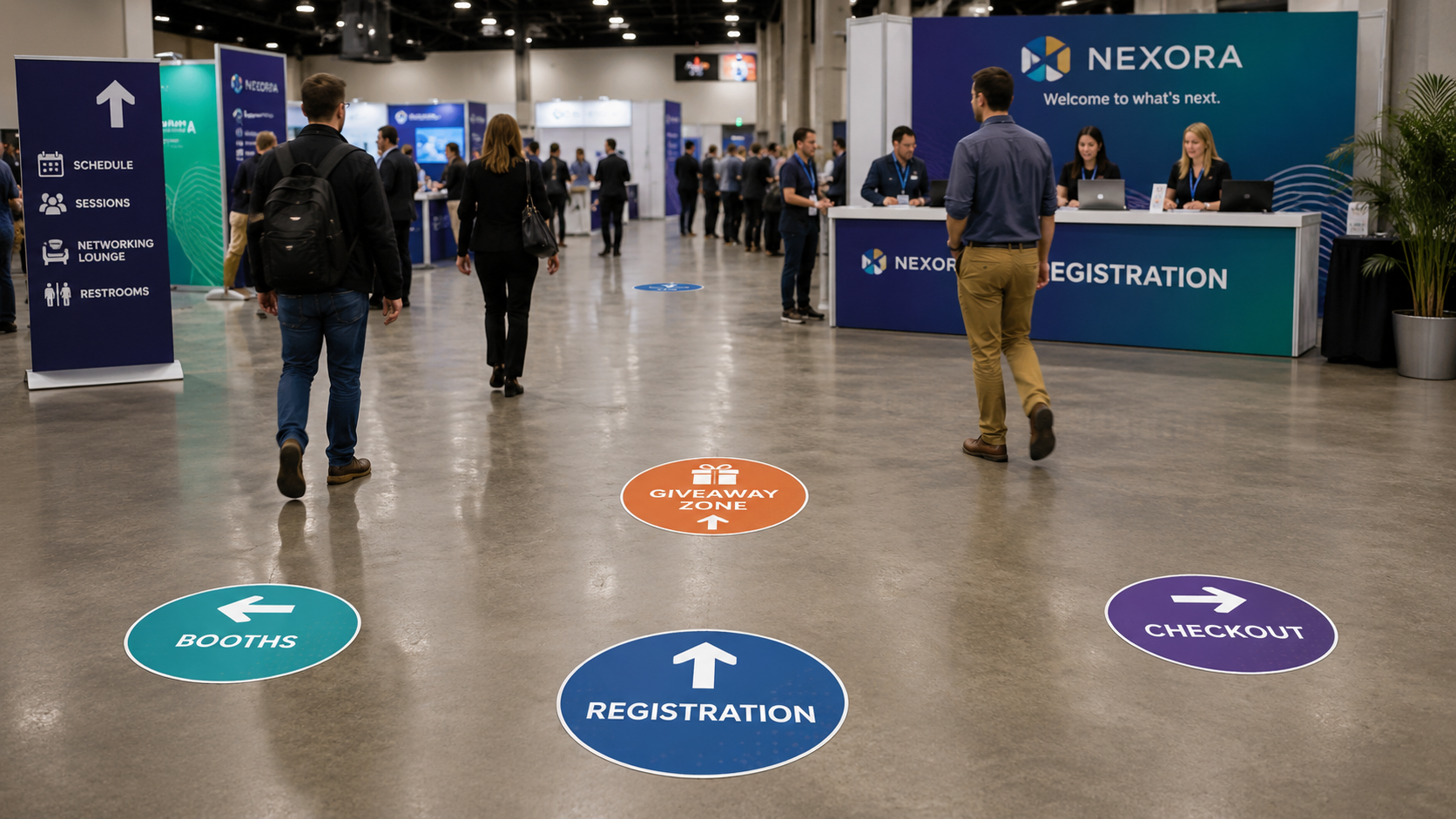
Floor decals help guide movement in places where visitors may not know where to go. They are common in stores, malls, offices, hotels, event venues, and exhibition halls.
They can point visitors to a booth, checkout area, registration desk, product display, or giveaway zone. They can also show promotional messages, safety reminders, or branded graphics.
For events and retail spaces, floor decals work best when the sign content is easy to understand at a glance. Use arrows, icons, and short text. Also check floor material, foot traffic, and removal needs before ordering.
8. Posters
When people will read your message up close, posters are a simple and cost-effective choice. They work well for product launches, sales, menus, event announcements, school activities, community programs, and indoor promotions.
Posters can be used on walls, windows, poster stands, counters, and event boards. They are a good choice when you need more detail but still want a clean visual layout.
Compared with banners, posters can include more text because people read them from a shorter distance. Still, the layout needs a clear headline, image, offer, and call to action.
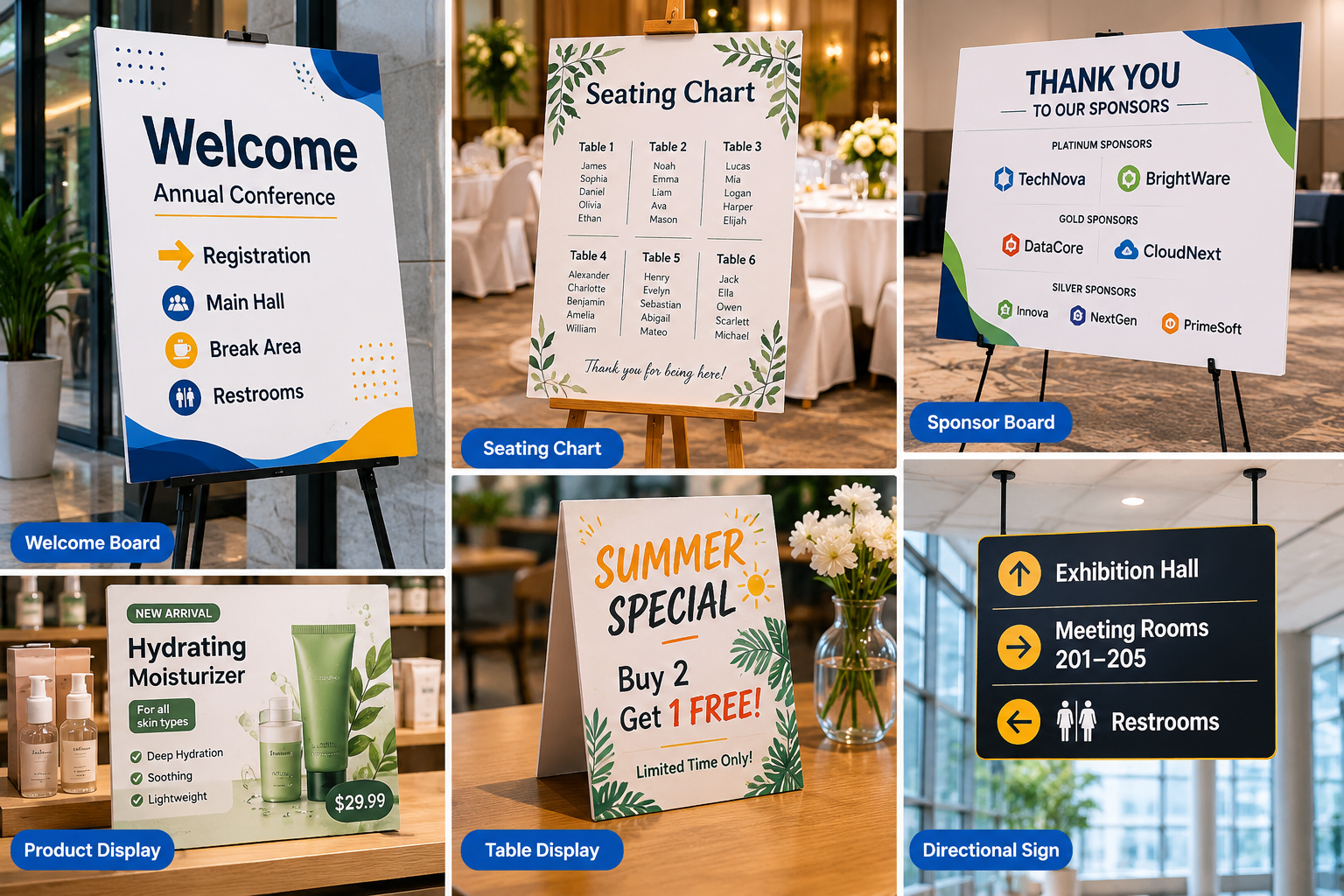
9. Foam Board Signs and Rigid Signs
For a more structured display, foam board signs and rigid signs are useful. They are lightweight, easy to move, and cleaner-looking than standard posters.
Event planners often use them for welcome boards, seating charts, sponsor boards, product displays, photo areas, table displays, and directional instructions. Retail teams may also use them on counters or near product displays.
These signs are best for interior signs or short-term use. If you need outdoor use, confirm the material, thickness, waterproof level, weather conditions, and mounting method before production.
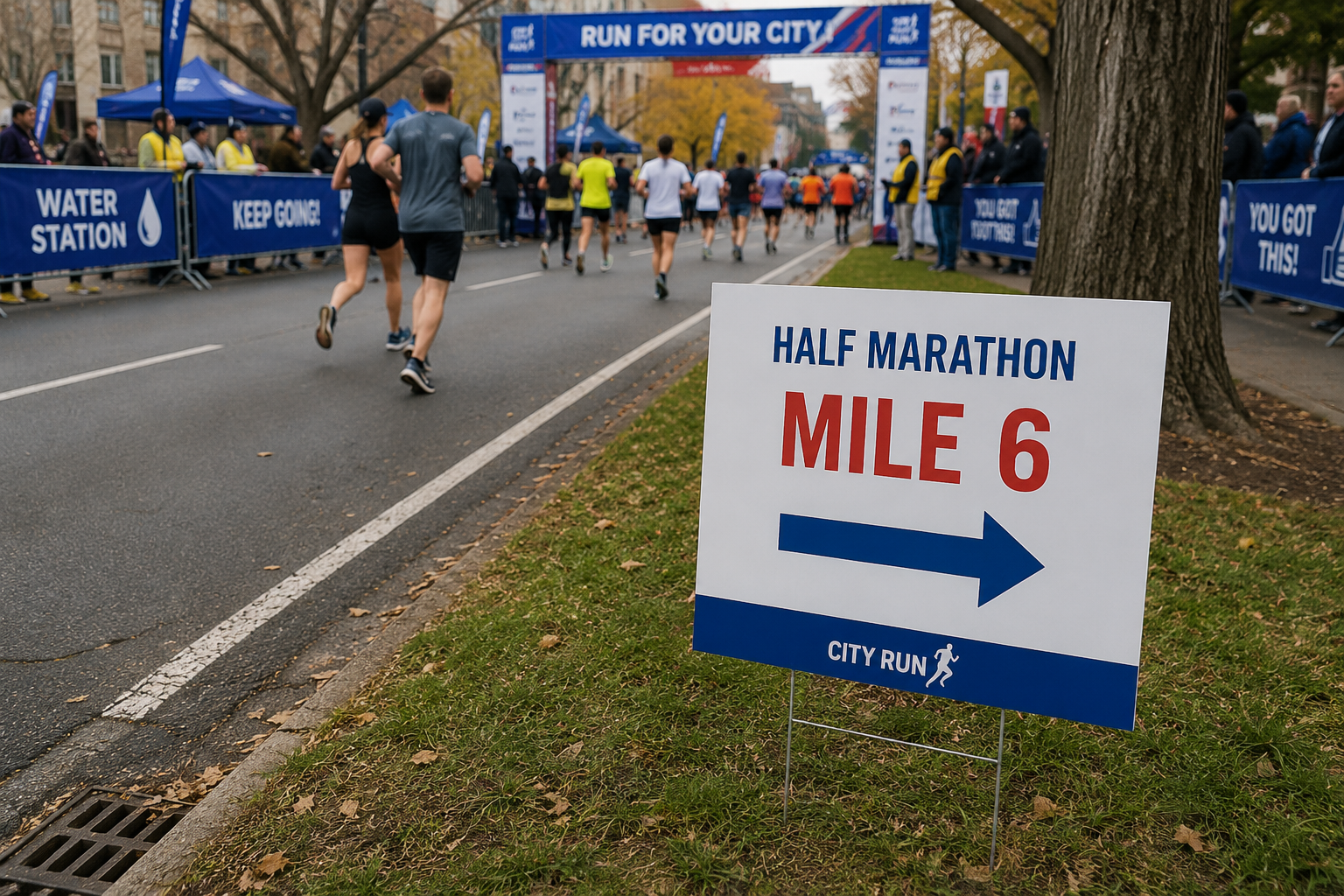
10. Yard Signs
Yard signs are small outdoor signs inserted into the ground. They are common for real estate, school events, community activities, election campaigns, sports events, temporary directions, and local promotions.
They are low-cost and suitable for bulk distribution. A school may use yard signs for event directions. A real estate company may use them for open houses. A campaign team may use them for neighborhood visibility.
Before ordering yard signs, confirm material thickness, stake type, print method, and outdoor durability. If the signs will stay outside for several weeks, they need to handle sunlight, wind, and rain.
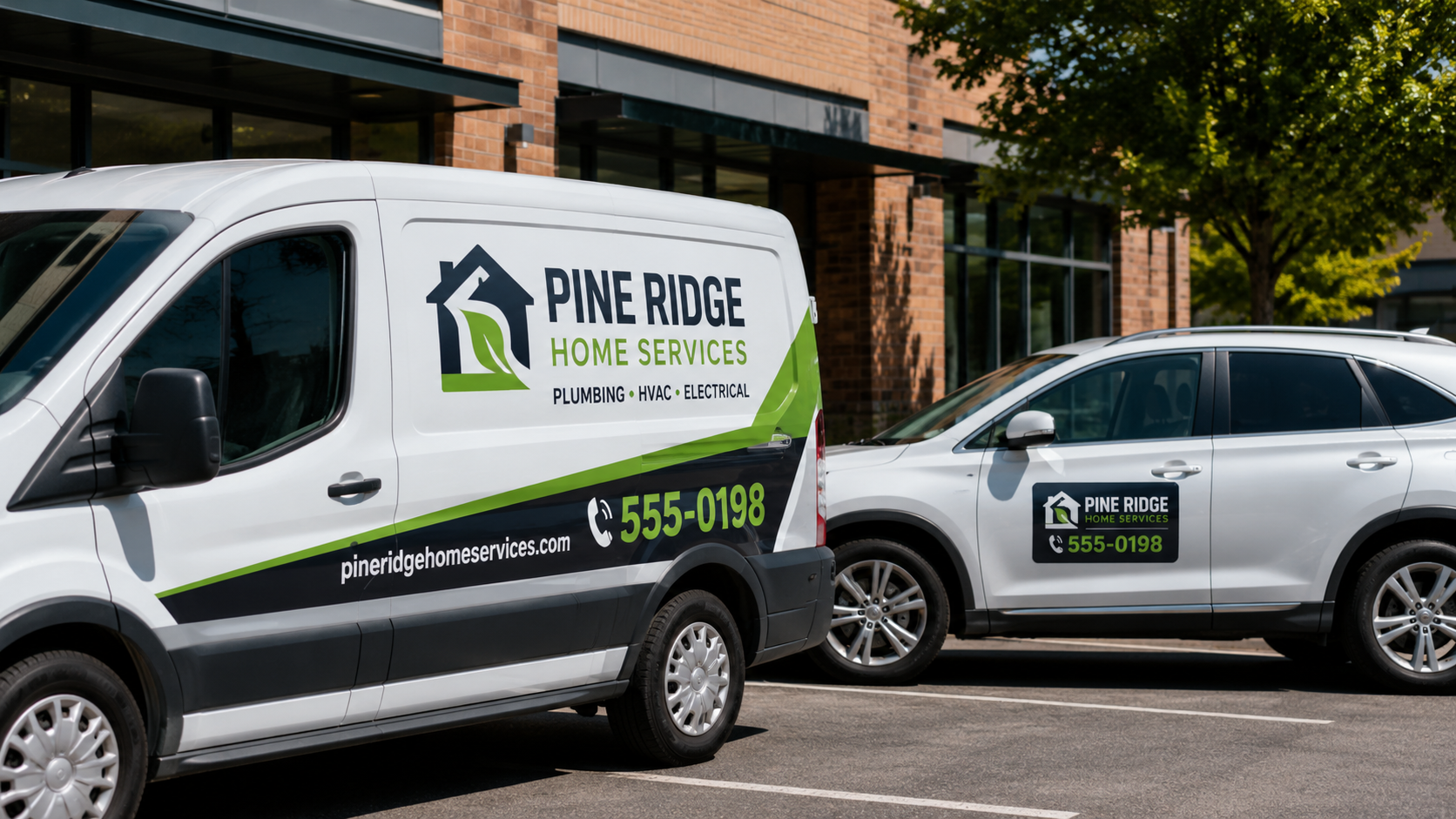
11. Vehicle Decals and Car Magnets
Vehicle decals and car magnets turn cars, vans, trucks, and service vehicles into mobile brand displays. They are useful for delivery teams, local services, event fleets, campaign vehicles, and mobile sales teams.
A vehicle sign should be easy to read while moving. A large logo, short service message, website, phone number, and strong contrast usually work better than a crowded design.
Car magnets are easier to remove and reuse. Vinyl vehicle decals look more permanent and professional. Choose the option based on how long the campaign will run and how often the vehicle branding needs to change.
12. Directional Signs and Event Wayfinding Signs
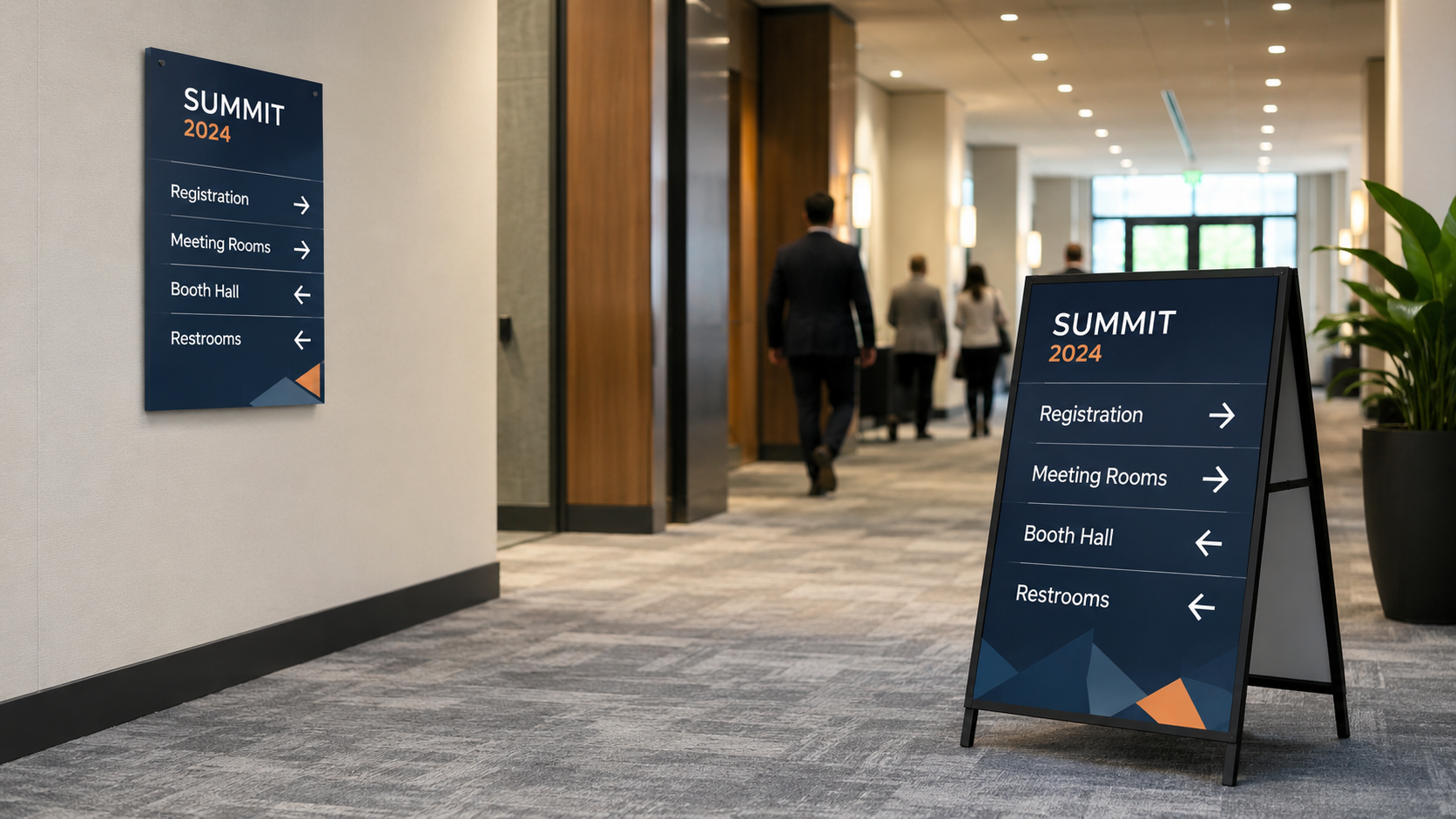
At events, people should not have to ask where to go every few minutes. Directional signs and event wayfinding signs help visitors find entrances, registration desks, booths, meeting rooms, restrooms, parking areas, pickup points, or giveaway zones.
They are useful for trade shows, hotel events, conferences, schools, festivals, corporate meetings, and temporary venues. Clear wayfinding reduces confusion and makes an event feel more organized.
Directional signs can be printed as posters, foam boards, floor decals, A-frame signs, tabletop signs, or hanging signs. Good directional sign content should help with guiding customers, not make them stop and read too much.
Best Types of Signs by Business Goal
| Business Goal | Best Sign Types | Practical Tip |
|---|---|---|
| Promote a short-term offer | Banners, posters, window decals | Keep the offer simple and easy to read |
| Attract walk-in traffic | A-frame signs, flags, window graphics | Use bold colors and short messages |
| Support a trade show booth | Roll-up banners, backdrops, table signs | Make the booth visible from the aisle |
| Guide visitors | Directional signs, floor decals, A-frame signs | Use arrows, icons, and repeated wording |
| Build local awareness | Yard signs, vehicle decals, posters | Keep contact details large and clear |
| Create event atmosphere | Hanging banners, flags, foam board signs | Match colors with the event theme |
The best sign is not always the largest or most expensive option. A good sign should match the viewing distance, campaign goal, usage time, and budget.
How to Choose the Right Sign by Viewing Situation
A useful way to choose business signs is to start with how people will see them.
If people see your message while walking, use signs closer to eye level. A-frame signs, window graphics, posters, and sidewalk signs often work well. They can carry more specific details, such as a daily offer, store direction, or product category.
If people see your message from farther away, use larger and simpler signs. Banners, hanging banners, flags, and yard signs are better for high visibility. The message should be short, bold, and easy to read quickly.
If people are already inside a venue, focus on guidance. Floor decals, directional signs, tabletop signs, and foam board signs can help visitors move through the space without asking for help.
For trade shows and events, signs need to work in a crowded visual environment. Roll-up banners, booth backdrops, table signs, and directional signs should help potential customers recognize your booth, understand your offer, and take the next step.
Practical Sign Packages by Business Scenario
Most businesses do not rely on one sign only. A better approach is to build a small sign package based on the customer journey.
| Scenario | Attract | Explain | Guide |
|---|---|---|---|
| Retail store | A-frame sign or window graphic | Poster or window decal | Floor decal |
| Trade show booth | Roll-up banner or backdrop | Table sign or foam board | Directional sign |
| Outdoor event | Flags or banners | Poster or yard sign | A-frame sign |
| Hotel conference | Welcome banner | Table sign | Wayfinding sign |
| Local campaign | Yard signs | Vehicle decal | Poster |
For a retail store, signs should help customers notice the store, understand the offer, and decide to walk in. For a trade show booth, one large sign should attract visitors from the aisle, while a smaller table sign explains the offer or QR code.
A simple way to avoid over-ordering is to separate signs into three roles: attract, explain, and guide. This prevents buyers from ordering too many signs that repeat the same message.
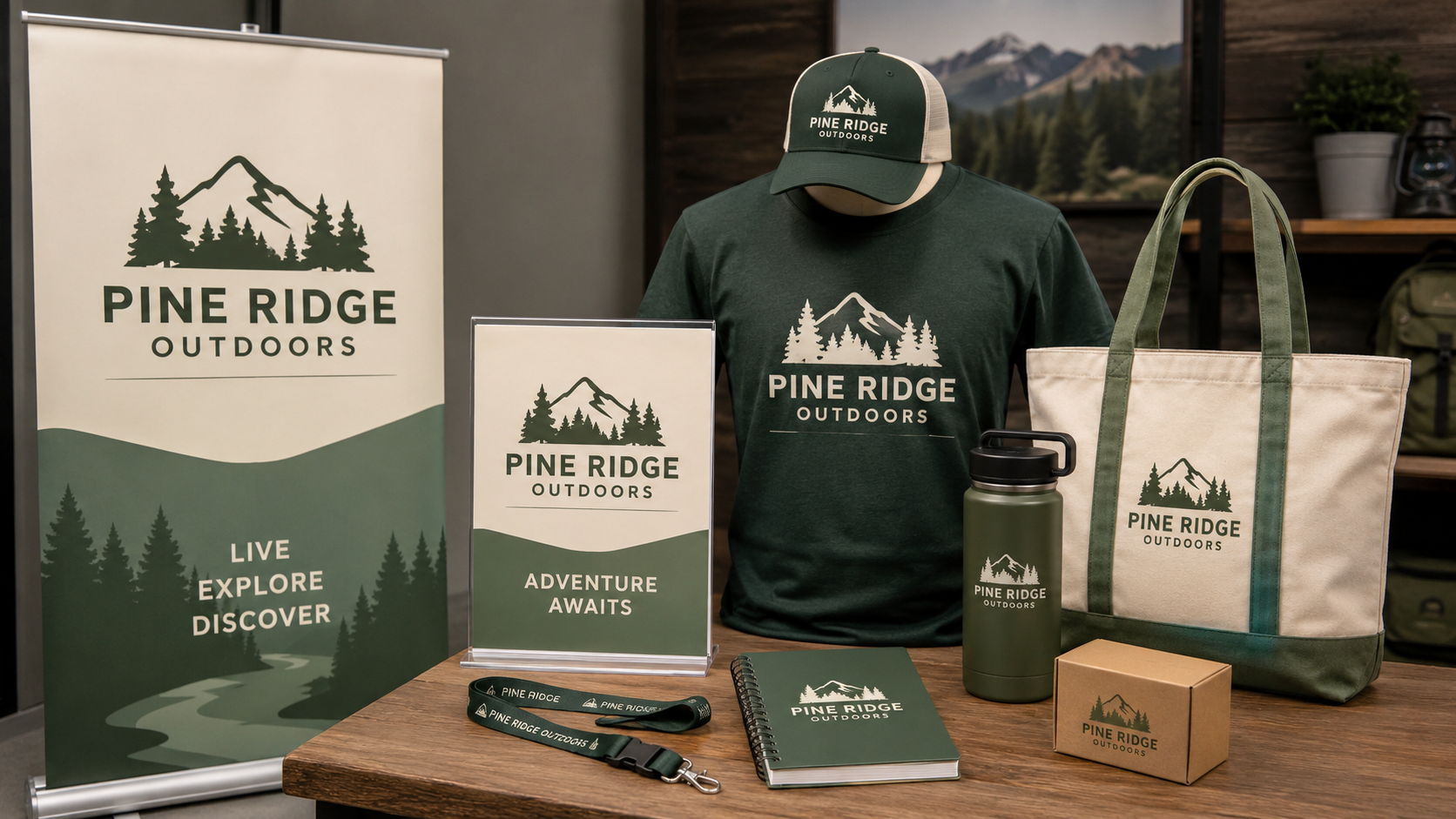
For event and campaign buyers, signs can also be planned together with branded event materials such as lanyards, staff apparel, tote bags, drinkware, notebooks, and giveaways. This keeps the full event setup more consistent and supports brand consistency across many forms of promotional materials.
Custom Sign Design Tips for Better Results
Keep one clear message. A sign is not a brochure. If you try to include the logo, slogan, product list, phone number, address, QR code, discount, and social media handle all at once, people may ignore the whole sign. A sign can be visually appealing, but it still needs to communicate the main message quickly.
Match material to indoor or outdoor use. Vinyl is common for banners and decals because it is flexible and cost effective. Fabric works well for indoor backdrops and event displays. Corrugated plastic is practical for yard signs. Foam board is useful for indoor displays, welcome signs, and presentations. For outdoor use, check waterproof performance, wind exposure, sunlight, and installation method.
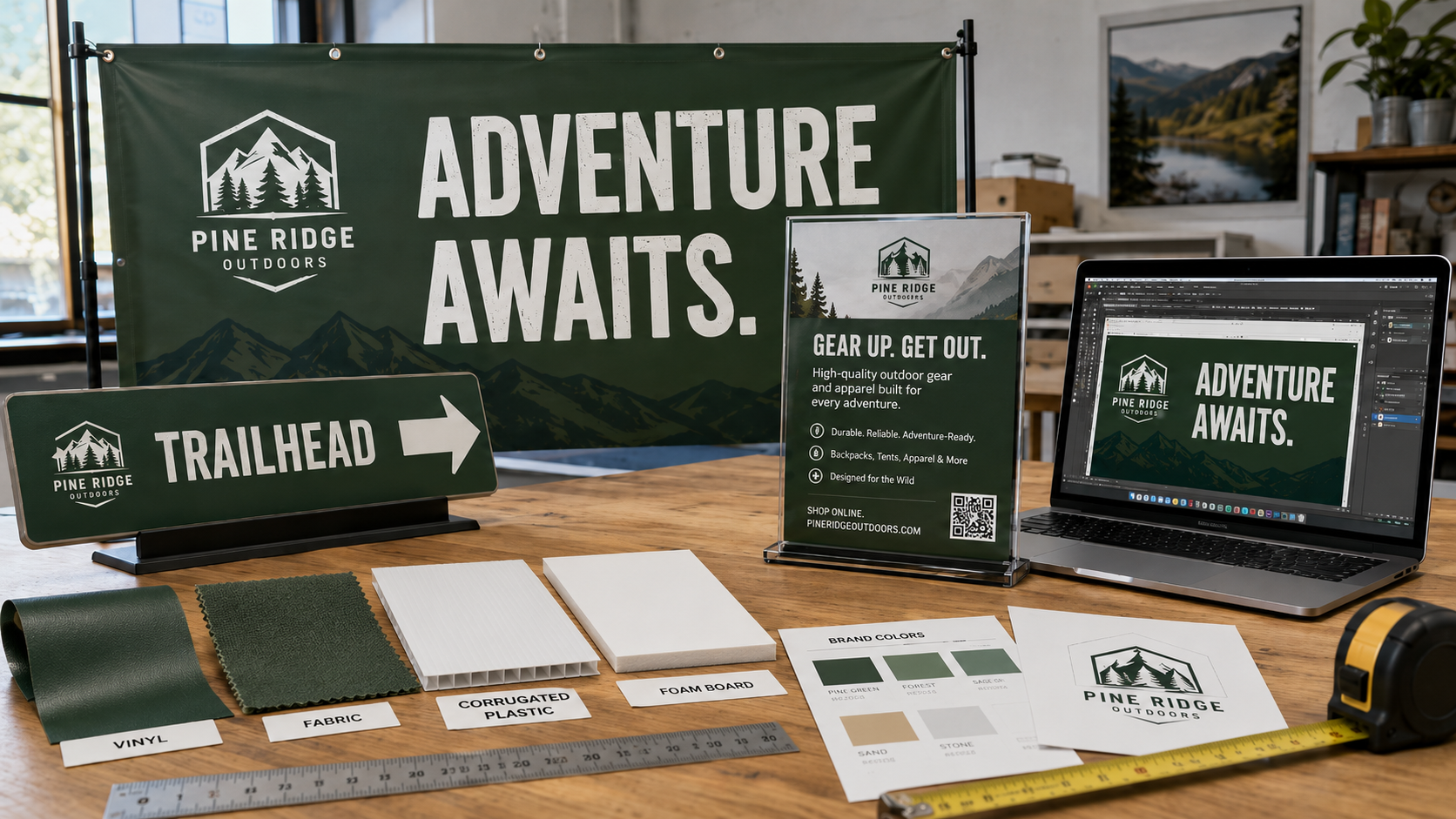
Check size, viewing distance, and artwork layout. Small text may look fine on a design file but fail in the real location. A poster can include more detail because people read it up close. A banner viewed from across a hall needs larger text. A flag seen from a road may only need a logo or short phrase.
In bulk event orders, buyers sometimes reuse the same artwork across banners, table signs, flags, and backdrops to save design time. That can help with brand consistency, but it can also make small text unreadable or leave the logo too weak on large displays.
Before final approval, separate signs into three groups: distance signs, close-reading signs, and directional signs. Distance signs, such as banners, flags, and booth backdrops, need larger logos, fewer words, and stronger contrast. Close-reading signs, such as posters, foam boards, table signs, and some vinyl lettering, can include more details or QR codes. Directional signs need arrows, icons, and repeated wording for guiding customers quickly. This check helps buyers make a more informed decision before production.
Keep logo colors consistent. If a company orders signs, staff apparel, bags, drinkware, and giveaways from different suppliers, the logo color may look slightly different across each item. This can hurt the brand image and make a booth, store opening, or campaign look less professional. A one-stop promotional gift solution can help keep signs, apparel, bags, bottles, lanyards, and gift sets visually consistent.
Common Mistakes When Ordering Custom Signs
Choosing signs before defining the goal is a common mistake. A banner may work for a temporary promotion, but it may not replace a directional sign. A poster may explain an offer, but it may not attract people from far away.
Too much text also hurts performance. Too much text reduces readability, especially for banners, flags, vehicle signs, and outdoor signs. Use short words, clear spacing, and one main message.
Another mistake is choosing the wrong material. Indoor foam board may not work for rain or wind. A removable window decal may be better for a short sale, while a longer campaign may need stronger vinyl.
Ordering too close to an event date can also create risk. Custom signs need time for artwork confirmation, proof approval, material preparation, printing, QC, packing, and shipping. For trade shows or campaigns, buyers should leave enough time before the event date.
Custom Sign Order Checklist
| Before Ordering Custom Signs | Why It Matters |
|---|---|
| Confirm indoor or outdoor use | Affects material and durability |
| Check viewing distance | Affects size, font, and layout |
| Prepare clear logo files | Prevents blurry printing |
| Confirm brand colors | Keeps signs and giveaways consistent |
| Choose the right material | Avoids damage or poor display effect |
| Confirm size and placement | Prevents signs from being too small or too large |
| Check packing size | Helps control shipping cost |
| Confirm event deadline | Reduces rush order risk |
| Review proof before production | Prevents logo, color, or text mistakes |
These checks help buyers make an informed decision before artwork approval and bulk production.
For bulk orders, the sign itself is only one part of the project. Buyers also need to check artwork, quantity, material, packing, and delivery time. This is especially important for trade shows, store openings, seasonal campaigns, and multi-location promotions.
FAQs
What are the most common types of signs for business marketing?
Common types of signs for business marketing include banners, roll-up banners, posters, window decals, A-frame signs, flags, yard signs, vehicle decals, foam board signs, and directional signs. The best choice depends on where the sign will be used and what message it needs to show.
What signs are best for trade shows and events?
Roll-up banners, booth backdrops, table signs, hanging banners, flags, floor decals, and directional signs work well for trade shows and events. They help visitors find your booth, understand your offer, and take the next step.
What is the difference between banners, posters, and decals?
Banners are larger signs for distance visibility. Posters are better for close viewing and detailed messages. Decals stick to surfaces such as windows, floors, walls, or vehicles. Each one works best in a different viewing situation.
How do I choose the right custom signs for my business?
Start with the goal. Decide whether the sign needs to attract attention, explain an offer, guide visitors, or support brand identity. Then choose the size, material, and display method based on where people will see it.
Conclusion
The best types of signs for business depend on your goal, viewing distance, usage time, material, and budget. Banners, roll-up banners, A-frame signs, window decals, posters, flags, yard signs, and directional signs all support different marketing needs.
Before ordering, check logo readability, brand colors, material, quantity, packing, and delivery time. A clear sign can help people notice your business. But a consistent branded setup can help them remember it.
Planning signs for a trade show, store opening, or branded event?
TOMAS Crafts can help you coordinate promotional signs with matching lanyards, bags, drinkware, apparel, and custom gift sets, so your campaign looks consistent from display to giveaway. Share your event type, quantity, logo file, budget, and delivery timeline, and contact US for a custom quote.