
Uniforms do more than make people look the same. They help customers identify staff, show team roles, create a consistent brand image, and make schools, companies, stores, healthcare teams, hotels, and events feel more organized.
But not all uniforms work the same way. A hotel front desk shirt, warehouse workwear, school polo, medical scrub, retail apron, sports jersey, and event staff T-shirt all need different fabric, fit, logo placement, and ordering details.
This guide explains the main types of uniforms and shows how to choose suitable uniform apparel for real teams, work settings, branding needs, and bulk orders.

What Is a Uniform?
A uniform is a standard set of clothing worn by members of the same company, school, team, organization, or work group. It may include polo shirts, T-shirts, dress shirts, jackets, trousers, skirts, aprons, scrubs, vests, caps, or full workwear sets.
Uniforms help people identify staff, students, departments, or team members. They also support brand recognition, make customers or visitors easier to guide, and create a more unified appearance across an organization.
In some workplaces, uniforms also support safety, hygiene, or job-specific needs. A high-visibility vest helps outdoor staff stand out. A scrub set helps healthcare teams maintain a clean and organized appearance. A branded polo helps customers find retail staff quickly.
A good uniform should not only look neat in a product photo. It should match how people move, work, wash, and wear it every day.
Main Types of Uniforms
Corporate Uniforms
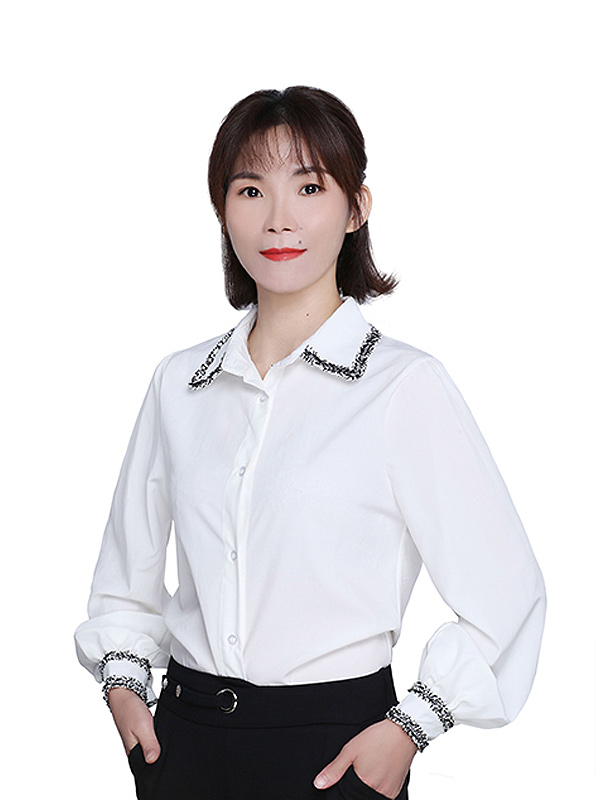
Corporate uniforms are usually chosen for teams that need to look professional in front of customers, visitors, or clients. This includes reception staff, office teams, sales teams, banks, real estate companies, customer service teams, and other client-facing roles.
The main challenge is balance. If the uniform is too formal, employees may feel uncomfortable during daily work. If it is too casual, the company image may look less polished. A dress shirt, blazer, scarf, or tie may work well for a front desk or finance team, while a branded polo or lightweight jacket may be more practical for sales teams, showroom teams, or office support staff.
Corporate uniforms usually look better with subtle branding than large front prints. Small embroidery on the chest, sleeve, scarf, or jacket can look clean and refined. Large front prints may work for event staff, but they can make office uniforms feel too promotional for daily wear.

Work Uniforms
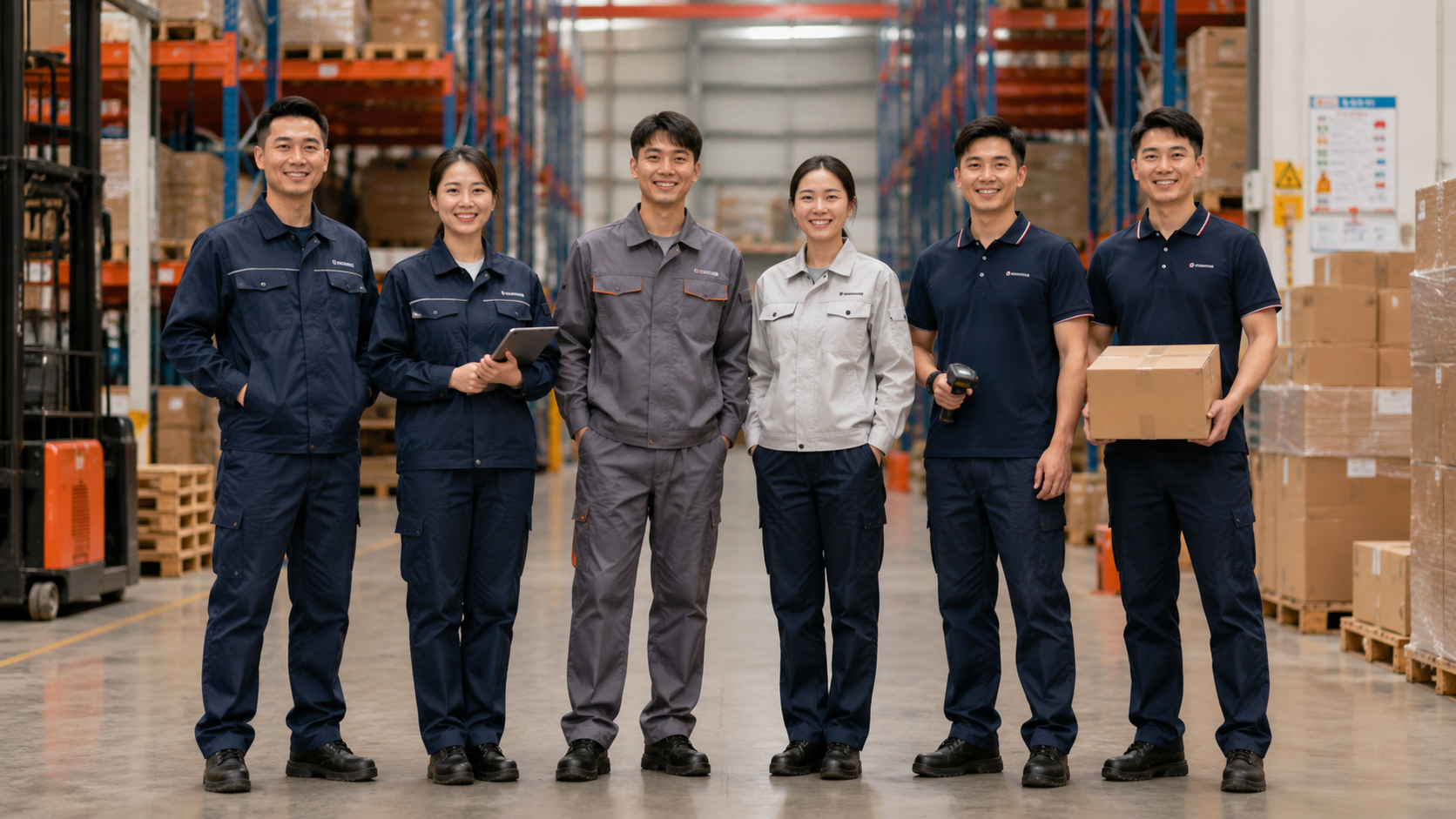
Work uniforms need to handle real movement, repeated washing, and different working conditions. They are used by warehouse staff, factory teams, cleaning crews, delivery teams, technicians, maintenance workers, logistics teams, and service crews.
Many buyers first think about durability, but durability does not always mean choosing the thickest fabric. A heavy shirt may look strong, but it can feel uncomfortable for staff who move all day. A cleaning team may need lighter fabric that dries faster. A delivery crew may need jackets, caps, or reflective details for outdoor work. A warehouse team may care more about movement, pockets, and fabric strength.
The best work uniform is chosen around the task. Before ordering, check whether the team works indoors or outdoors, how often the garments will be washed, whether pockets are needed, and whether staff will meet customers while wearing the uniform.
School Uniforms
School uniforms need to look consistent, but they also need to survive long school days, repeated washing, student growth, and seasonal use. They are common for primary schools, secondary schools, private schools, training centers, summer camps, school clubs, and educational events.
Common school uniform pieces include polo shirts, button-down shirts, sweaters, jackets, skirts, trousers, sportswear, and caps. The design does not need to be complicated, but the fabric, logo method, and size range need to be practical. Students may wear the same garments many times each week, so comfort and washability are usually more important than decorative details.
Sizing is often the detail buyers underestimate. A school uniform order may need youth sizes, adult sizes, jackets, sportswear, and seasonal items in the same program. Embroidery, woven patches, or clean heat transfer logos can all work, but the final choice should match the fabric, budget, and washing frequency.

Healthcare Uniforms
Healthcare uniforms are used by clinics, hospitals, dental offices, laboratories, wellness centers, care homes, and healthcare service teams. Common items include scrubs, lab coats, scrub jackets, tunics, and medical caps.
For healthcare teams, the uniform should support long shifts without drawing too much attention to itself. Comfort, movement, easy care, and role recognition usually matter more than heavy branding. A small logo, department color, name label, or simple embroidery is often enough.
Color can also help teams work more smoothly. Some healthcare organizations use different scrub colors for different departments or roles, making it easier for patients, visitors, and staff to recognize the right person. Before bulk ordering, check fabric feel, washing instructions, size range, and whether the style is comfortable for long hours of wear.

Restaurant Uniforms
Restaurant uniforms are used by chefs, kitchen crews, servers, baristas, bakers, and catering teams. Common garments include chef coats, kitchen shirts, trousers, caps, and bib or waist aprons.
Kitchen staff usually need comfortable, easy-care clothing that supports movement and frequent washing. Servers and baristas may need cleaner styles that match the restaurant or café’s brand. Different roles can wear different garments while using consistent colors and logos to maintain a unified team appearance.

Hotel Uniforms
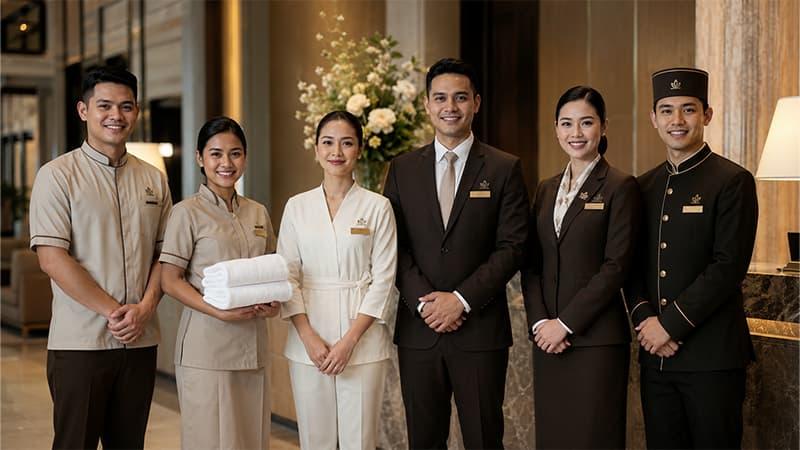
Hotel uniforms are worn by housekeeping staff, room attendants, spa teams, and other guest-service employees. Housekeeping and cleaning staff often wear easy-care tunics, shirts, trousers, or aprons that allow comfortable movement and withstand frequent washing.
Spa employees may wear clean, minimalist tunics or coordinated sets in soft, neutral colors to create a calm and professional appearance. Although front-desk teams may use more tailored styles, consistent colors, trim details, and subtle logos can connect every role under one hotel brand.
Retail Uniforms
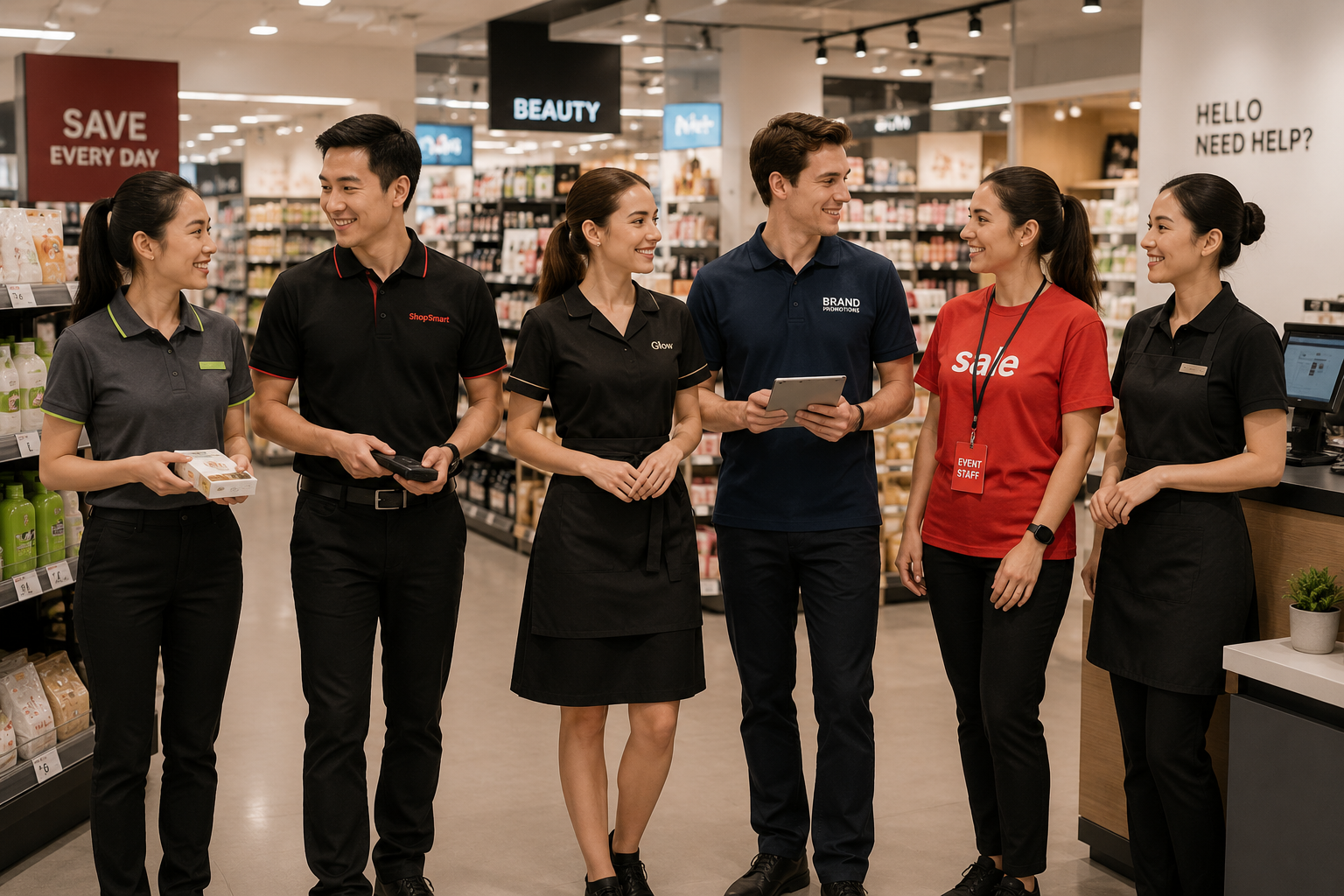
Retail uniforms need to make staff easy to recognize without making the store feel too stiff. They are used by store staff, supermarket teams, beauty stores, brand promoters, pop-up shops, and customer service counters.
In a supermarket, a strong color and clear logo may help customers find help quickly. In a beauty store or premium retail space, smaller embroidery, a clean apron, or tone-on-tone branding may look more refined. For pop-up shops and promotional retail teams, T-shirts, polos, caps, and vests can make the brand more visible.
Comfort still matters. Retail staff may stand for long hours, fold products, carry stock, arrange shelves, and speak with customers throughout the day. A uniform that looks good but feels uncomfortable may not be worn properly, which weakens both the staff experience and the brand image
Sports Uniforms
Sports uniforms are chosen for movement first. They are used by school teams, clubs, fitness groups, running teams, fan events, and sports programs.
A jersey may look great, but it still needs to breathe, stretch, and allow the wearer to move freely. Common sports uniform items include jerseys, shorts, tracksuits, training shirts, warm-up jackets, and caps. Team colors, numbers, sponsor logos, and player names also need to stay readable from a distance.
Design layout is especially important for sports uniforms. If sponsor logos, numbers, and team marks are crowded into one jersey, the final result can look messy. For sports teams and event groups, color consistency should also be checked across different items, especially when jerseys, shorts, jackets, and caps use different fabrics.

Safety Uniforms
Safety uniforms are designed around visibility and workplace function before branding. They are commonly used by outdoor crews, logistics teams, warehouse staff, roadwork teams, construction crews, and event security. Common garments include high-visibility vests, reflective jackets, safety shirts, work trousers, and rainwear.
Before ordering, confirm the work environment, lighting conditions, weather, movement needs, and applicable safety requirements. For U.S. projects, employers should assess workplace hazards and select suitable protective equipment under relevant OSHA’s PPE standards. Logo placement should not cover reflective tape, safety panels, pockets, or fasteners. Safety and visibility should always come before decoration.

Event Staff Uniforms
Event staff uniforms have to work from a distance. Visitors should be able to spot staff in a crowded exhibition hall, stadium, booth area, festival, campaign site, or outdoor venue without guessing who to ask for help.
Common event staff items include custom T-shirts, polo shirts, caps, vests, lanyards, aprons, and lightweight jackets. A small chest logo may look neat in a product photo, but it may not be visible enough in a large venue. For trade shows, festivals, sports events, charity events, product launches, and promotional teams, a clear front logo, back print, or cap logo may work better.
Climate and event length also matter. Outdoor summer events may need breathable T-shirts and caps. Exhibition teams may prefer polo shirts or lightweight jackets for a more polished look. Multi-day events may need extra pieces so staff can rotate uniforms during the event.

Uniform Types Comparison Table
| Uniform Type | Best For | Common Items | Main Buying Focus |
|---|---|---|---|
| Corporate uniforms | Offices, reception, banks, sales teams | Polo shirts, dress shirts, jackets, scarves | Professional look and subtle branding |
| Work uniforms | Warehouses, factories, service crews | Work shirts, pants, jackets, coveralls | Durability, comfort, movement |
| School uniforms | Schools, camps, training centers | Polo shirts, sweaters, jackets, trousers | Size range, washability, logo durability |
| Healthcare uniforms | Clinics, hospitals, care teams | Scrubs, lab coats, tunics | Comfort, easy care, role recognition |
| Hospitality uniforms | Hotels, restaurants, cafés, resorts | Shirts, aprons, chef coats, vests | Guest experience and staff function |
| Retail uniforms | Stores, pop-ups, brand promoters | T-shirts, polos, aprons, vests | Staff recognition and brand consistency |
| Sports uniforms | Teams, clubs, fitness groups | Jerseys, shorts, tracksuits | Breathability, movement, team identity |
| Safety uniforms | Outdoor crews, logistics, event security | Hi-vis vests, reflective jackets | Visibility, safety needs, work environment |
| Event staff uniforms | Exhibitions, festivals, campaigns | T-shirts, polos, caps, lanyards | Fast recognition and brand visibility |
Many organizations need more than one type of uniform.
A hotel may need front desk shirts, housekeeping uniforms, restaurant aprons, chef coats, and event polos. A school may need daily uniforms, sportswear, jackets, and event T-shirts. A retail chain may need store polos, promotional T-shirts, aprons, and seasonal campaign uniforms.
The goal is not always to make everyone wear the same item. A stronger uniform program often uses different garments under one consistent brand style.
How to Choose the Right Uniform
Choosing the right uniform starts with how employees actually work. Focus on the job role, fabric, fit, branding, and long-term ordering needs rather than selecting garments by appearance alone.
Start With the Job Role
Different roles require different uniforms.
Reception and sales teams may need a polished appearance, while warehouse and maintenance employees need durability and freedom of movement. Retail staff should be easy for customers to identify, and event teams may need larger logos that remain visible in a crowd.
Before choosing a garment, consider:
- Where employees work
- How much they move
- Whether they meet customers
- Whether different roles need separate identification
One garment style rarely works equally well for every department.
Match the Fabric to Daily Use
Fabric should be selected according to climate, activity, washing frequency and expected wearing time.
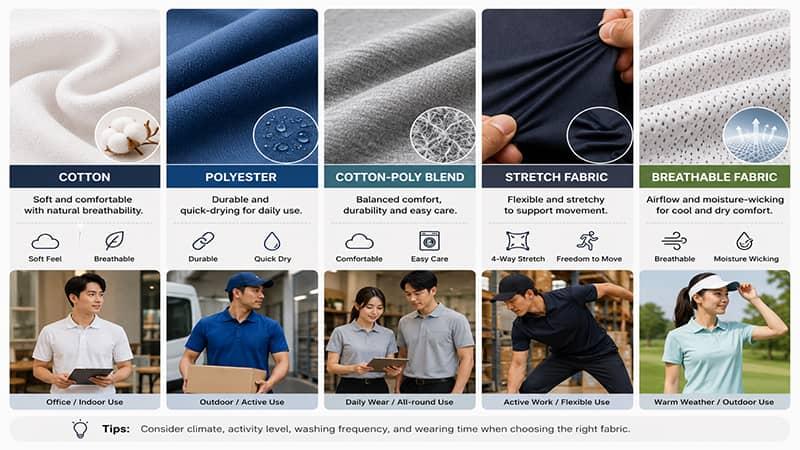
Cotton can feel soft and comfortable but may take longer to dry.
Polyester can provide durability and faster drying, although performance varies according to fabric construction and quality.
Cotton-polyester blends often balance comfort, durability and ease of care.
Stretch fabrics can help employees who bend, reach or move frequently.
Breathable fabrics are useful in warm environments, while heavier materials may suit outdoor or high-wear work.
The wrong fabric can undermine a good design. A shirt may look professional but feel too hot. A jacket may appear premium but restrict movement. A thin event T-shirt may not be durable enough for everyday employee use.
Confirm Fit and Size Range
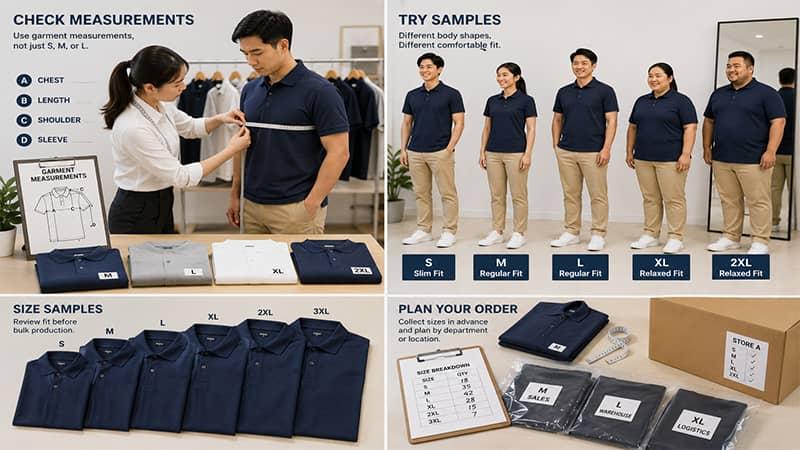
Uniform orders often include men’s, women’s, unisex, youth, and plus-size options. Different garments can also fit differently even when they carry the same size label.
Use garment measurements rather than relying only on S, M, or L labels. For larger or long-term programs, request size samples before bulk production and collect employee sizes in advance.
This reduces exchanges, delays, and garments that employees are unlikely to wear properly.
Choose Suitable Logo Placement and Branding
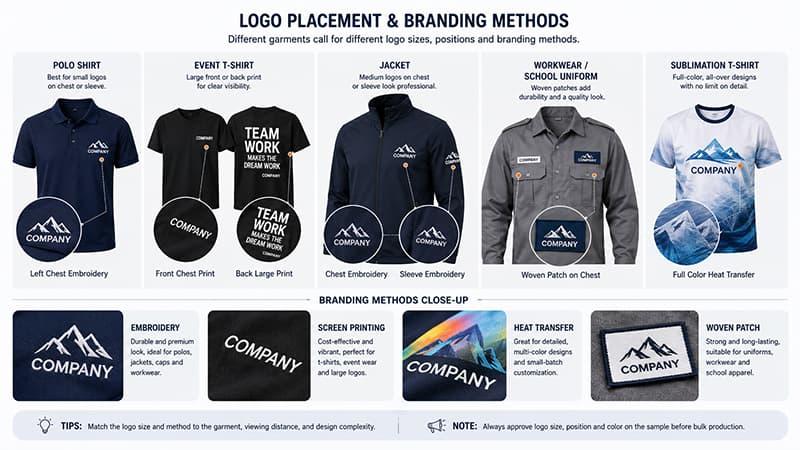
Logo size and decoration should match the garment and viewing distance.
Smaller embroidered chest or sleeve logos often suit corporate, hospitality, healthcare, and premium retail uniforms. Event staff, promoters, and outdoor teams may need larger front or back prints.
Common branding options include:
| Method | Suitable for | Main consideration |
|---|---|---|
| Embroidery | Polos, jackets, and caps | Fine details may lose clarity |
| Screen printing | T-shirts and event apparel | Best for bold, simple artwork |
| Heat transfer | Detailed or full-color logos | Check fabric and wash compatibility |
| Woven patches | Workwear and school uniforms | Adds a separate production step |
Do not apply one logo size to every garment. Artwork that fits a polo may be too wide for an apron or too detailed for a cap. Approve the size, position, and branding method before bulk production.
Plan for Long-Term Use
For uniforms worn regularly, consider washing, employee replacements, and future reorders.
Choose stable garment styles and colors when possible, and keep records of approved artwork, measurements, logo dimensions, and decoration methods. For large orders, confirm whether garments need to be packed by size, department, branch, or employee.
Planning these details early makes replacement orders and distribution easier.
What Can Be Customized on Uniforms?
Custom uniform apparel can be adjusted in many ways, but the most important areas are garment style, logo method, color, and distribution plan.
Garment style comes first. T-shirts, polo shirts, dress shirts, jackets, vests, aprons, caps, pants, scrubs, coveralls, and sportswear all work differently. A logo that looks good on a T-shirt may not work the same way on a jacket, cap, apron, or scrub.
Branding can include company logos, school logos, team names, department names, employee names, sponsor logos, and campaign slogans. Detailed logos should be checked carefully because very small text, thin lines, gradients, and complex sponsor marks may not work equally well on every fabric or decoration method.
Color and design details should support the brand but still fit real use. Very light colors may not suit kitchens, warehouses, cleaning teams, outdoor crews, or messy work environments. Dark colors can look polished but may feel warmer in outdoor settings. Small details such as contrast collars, sleeve trims, woven patches, reflective strips, or matching caps can make a simple uniform look more complete without overcomplicating production.
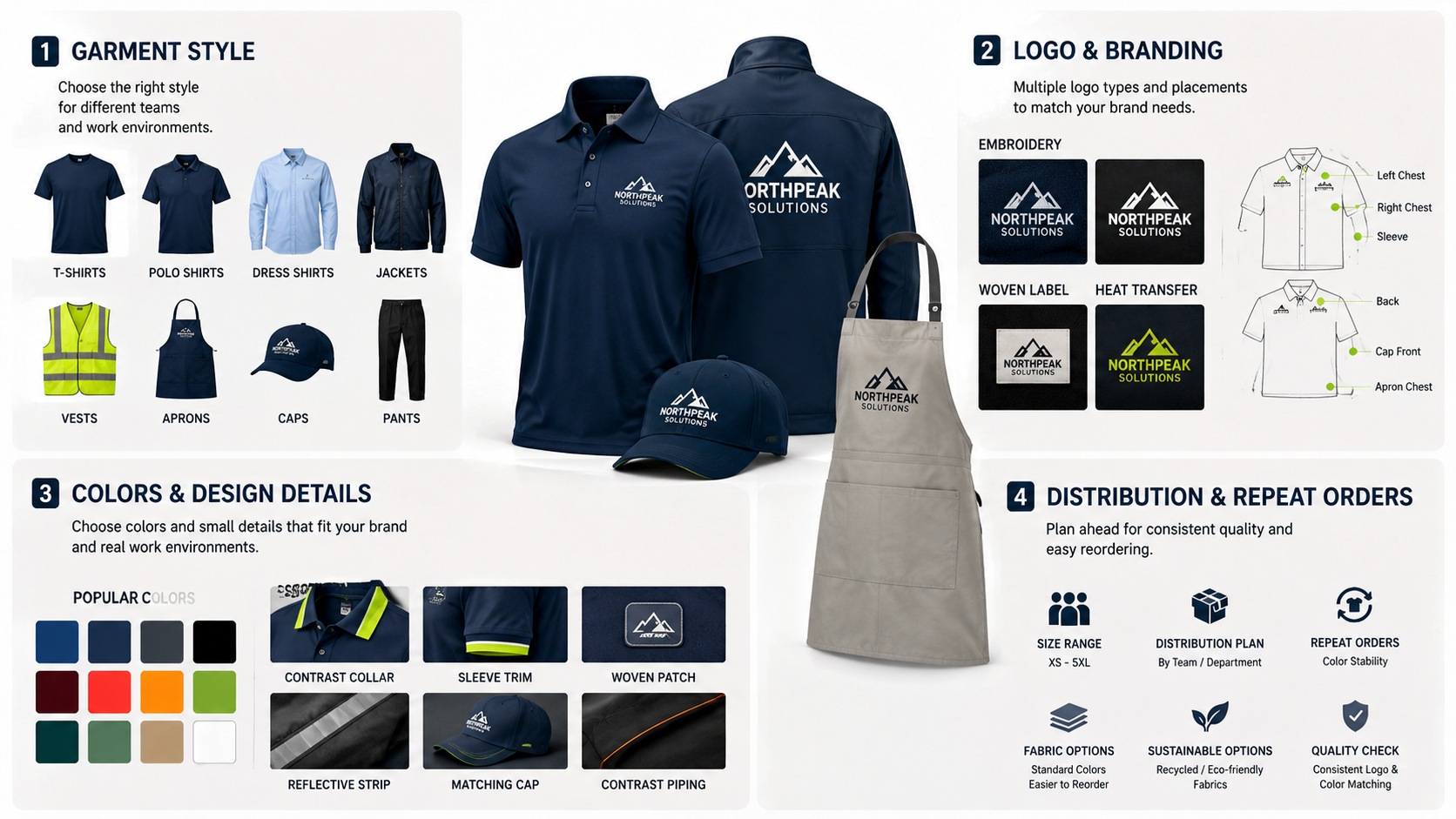
For uniforms that need repeat orders, color stability matters. Standard fabric colors are usually easier to repeat than highly customized colors. For long-term programs, this can affect cost, lead time, and consistency across future orders. If recycled, eco-friendly, or sustainable fabric options are requested, buyers should also ask for clear material information and avoid broad environmental claims that cannot be supported; the FTC’s guide on green marketing claims is a useful reference for this point.
What to Prepare Before Requesting a Uniform Quote
Before asking for a uniform quote, prepare the basic project details. You do not need every specification finalized, but clear information helps the supplier recommend suitable uniform apparel faster and avoid wrong product choices.
Use and Quantity
Share the uniform type, industry, target users, quantity, delivery country, and deadline. These details help the supplier understand the use case and choose a suitable production and shipping plan.
Garment Details
Include the garment style, preferred fabric, color, and size range. For example, the order may need polo shirts, jackets, aprons, scrubs, caps, or a full uniform set. For larger teams, also mention whether you need men’s, women’s, unisex, youth, or plus-size options.
Branding and Packing
Prepare your logo file, logo position, and preferred branding method if you already know them. Also mention whether the uniforms should be packed by size, department, branch location, or employee set.
It is also helpful to tell the supplier whether you expect future reorders or replacement stock. For example, “We need 500 navy polo shirts for retail staff, with left chest embroidery, packed by store location, delivered to Australia before September” is much easier to quote accurately than only saying “We need 500 polo shirts.”
FAQs
What are the main types of uniforms?
The main types of uniforms include corporate uniforms, work uniforms, school uniforms, healthcare uniforms, hospitality uniforms, retail uniforms, sports uniforms, safety uniforms, and event staff uniforms.
Each type serves a different purpose. Corporate uniforms focus on professional appearance. Work uniforms focus on durability and movement. School uniforms need comfort and washability. Healthcare uniforms need easy care and role recognition. Event staff uniforms need clear visibility.
What is the difference between a uniform and a dress code?
A uniform is a specific set of clothing worn by members of the same company, school, team, or organization. A dress code is a set of clothing rules or guidelines, but it usually allows more personal choice.
For example, a company uniform may require a specific branded polo shirt and jacket. A dress code may only say that employees should wear business casual clothing in approved colors.
What type of uniform is best for employees?
The best employee uniform depends on the job role, work environment, comfort needs, brand image, and washing frequency.
Office staff, warehouse teams, retail staff, hospitality staff, healthcare staff, and event staff may need different uniform styles. Start with the role first, then choose the garment style, fabric, logo placement, and branding method.
How many sets of uniforms should each employee have?
It depends on the role, washing frequency, and work environment. Many full-time employees need several sets so they can rotate uniforms during the work week.
Roles in kitchens, healthcare settings, factories, warehouses, or outdoor work may need more frequent changes. Seasonal items such as jackets, rainwear, or summer-weight shirts may also be needed.
What fabric is best for work uniforms?
There is no single best fabric for every work uniform. Cotton, polyester, cotton-poly blends, stretch fabrics, breathable fabrics, and heavier workwear fabrics all fit different uses.
The best choice depends on comfort, durability, washing frequency, climate, and daily work needs. A warehouse team, cleaning team, delivery crew, and front desk team may all need different fabric choices.
Can uniforms be customized with a logo?
Yes. Uniforms can be customized with embroidery, screen printing, heat transfer, woven patches, name labels, sleeve logos, cap logos, and other branding methods.
The best logo method depends on the garment type, fabric, logo detail, order quantity, washing needs, and final appearance. For example, embroidery may suit polos and jackets, while screen printing may work better for event T-shirts.
Choose Uniforms Around the Real Work
Different types of uniforms serve different purposes. The right uniform is not always the most formal, the thickest, or the most heavily branded option.
A good uniform should fit the job role, work environment, comfort needs, brand image, and daily use. It should help people look professional, feel comfortable, and do their work more easily.
Before choosing a uniform, start with the people who will wear it. Then think about the fabric, logo method, sizing, washing, packing, and future reorders. That is how a uniform program becomes easier to manage from the first order to the next one.
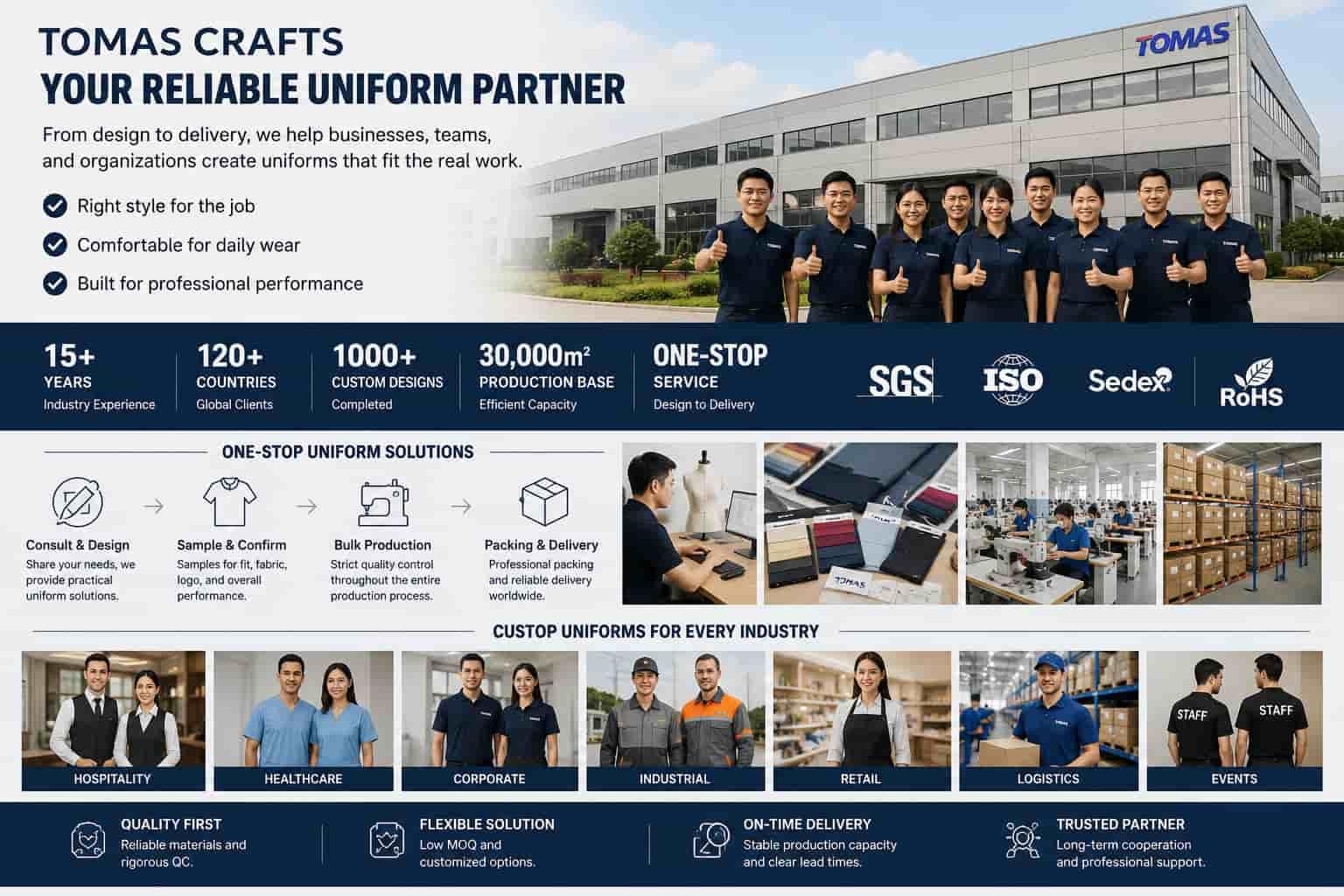
Plan Your Custom Uniform Apparel With TOMAS Crafts
Not sure which uniform style fits your team? Share your quantity, logo, target use, and delivery plan with TOMAS Crafts. We can help you compare practical uniform options before production.