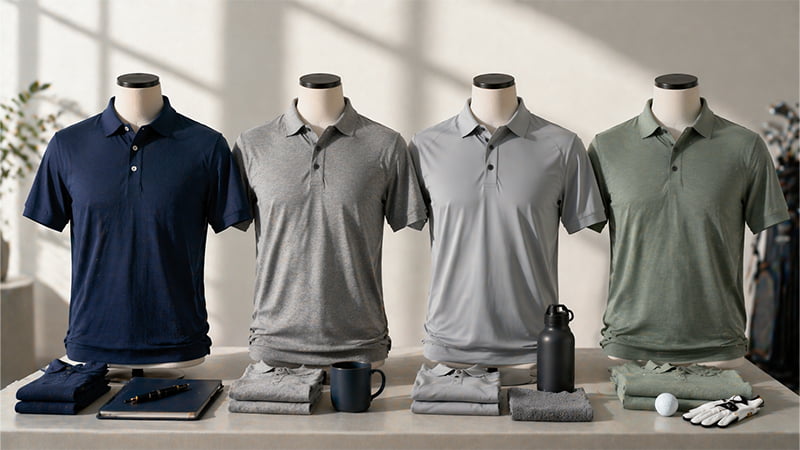
Not all polo shirts solve the same problem. Some are better for office uniforms. Some are designed for golf and outdoor comfort. Others work better for casual branded apparel or more premium-looking team wear. If you are choosing polos for a company, event, golf day, trade show, or promotional campaign, the right style affects comfort, logo appearance, team consistency, and overall brand image.
This guide explains the main types of polo shirts, how they differ, and how to choose the right polo shirt for branding, uniforms, promotions, and business use.
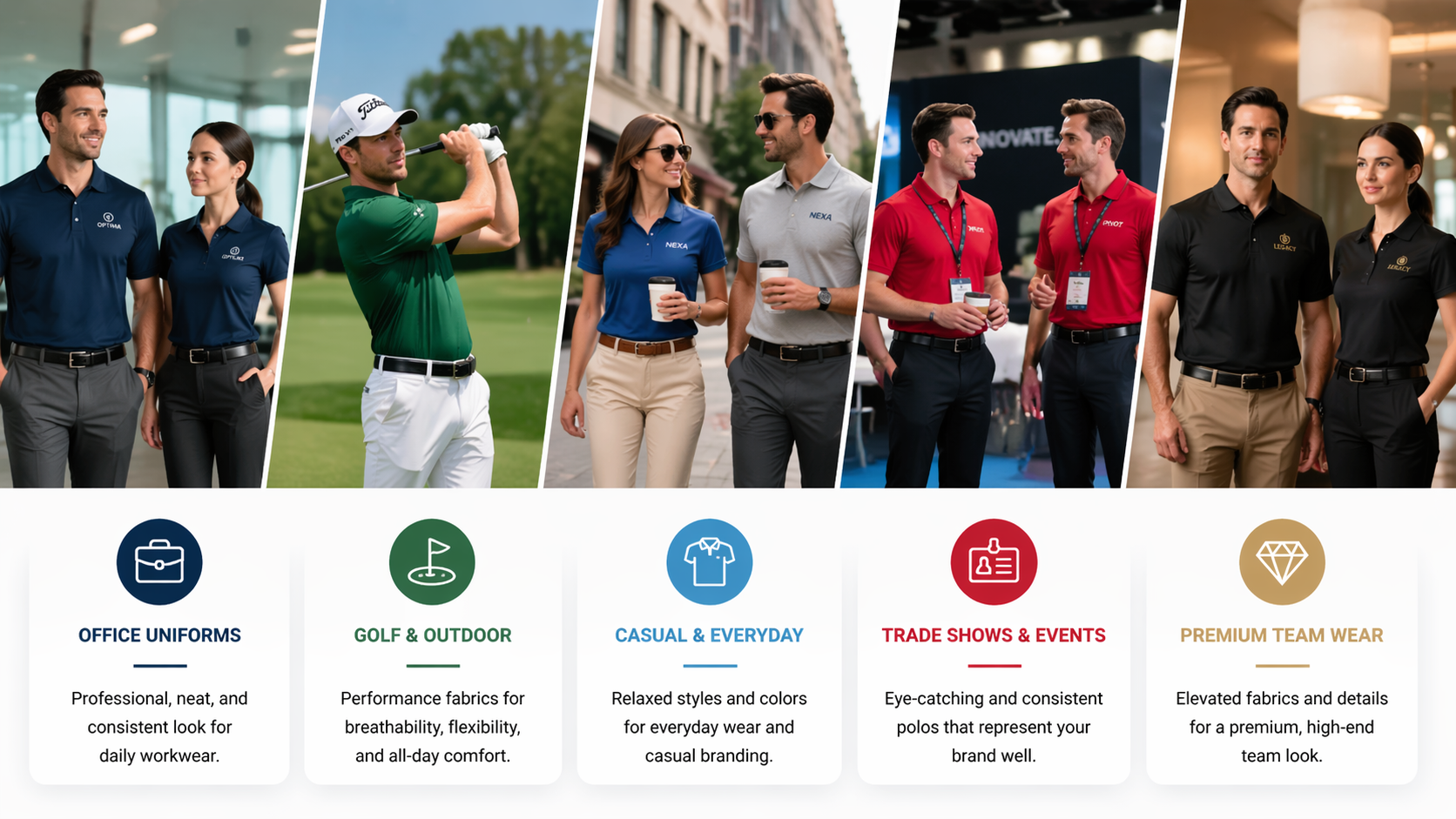
Which Type of Polo Shirt Should You Choose?
| Polo Type | Best For | Best Logo Option | Watch Out For |
|---|---|---|---|
| Classic piqué polo | Office uniforms, staff wear, trade shows | Embroidery | Can feel warmer than performance styles |
| Jersey polo | Casual team apparel, internal wear | Simple print or embroidery | May look too relaxed for formal uniforms |
| Performance polo | Outdoor events, active staff, warm climates | Print, heat transfer, simple embroidery | May look sportier than classic office polos |
| Golf shirt | Golf events, sports promotions, resorts | Simple chest logo | Not always ideal for conservative office settings |
| Knit or fashion polo | Premium brand image, upscale gifting | Subtle embroidery | Less practical for budget-led bulk orders |
| Long sleeve polo | Cooler weather, layered uniforms | Embroidery | Less suitable for hot events |
FFor repeat uniform programs, classic piqué polos and stable cotton-poly blends are often the safest choices. They are usually easier to reorder consistently across colors, sizes, and future runs than more trend-led styles.
What Makes Polo Shirts Different?
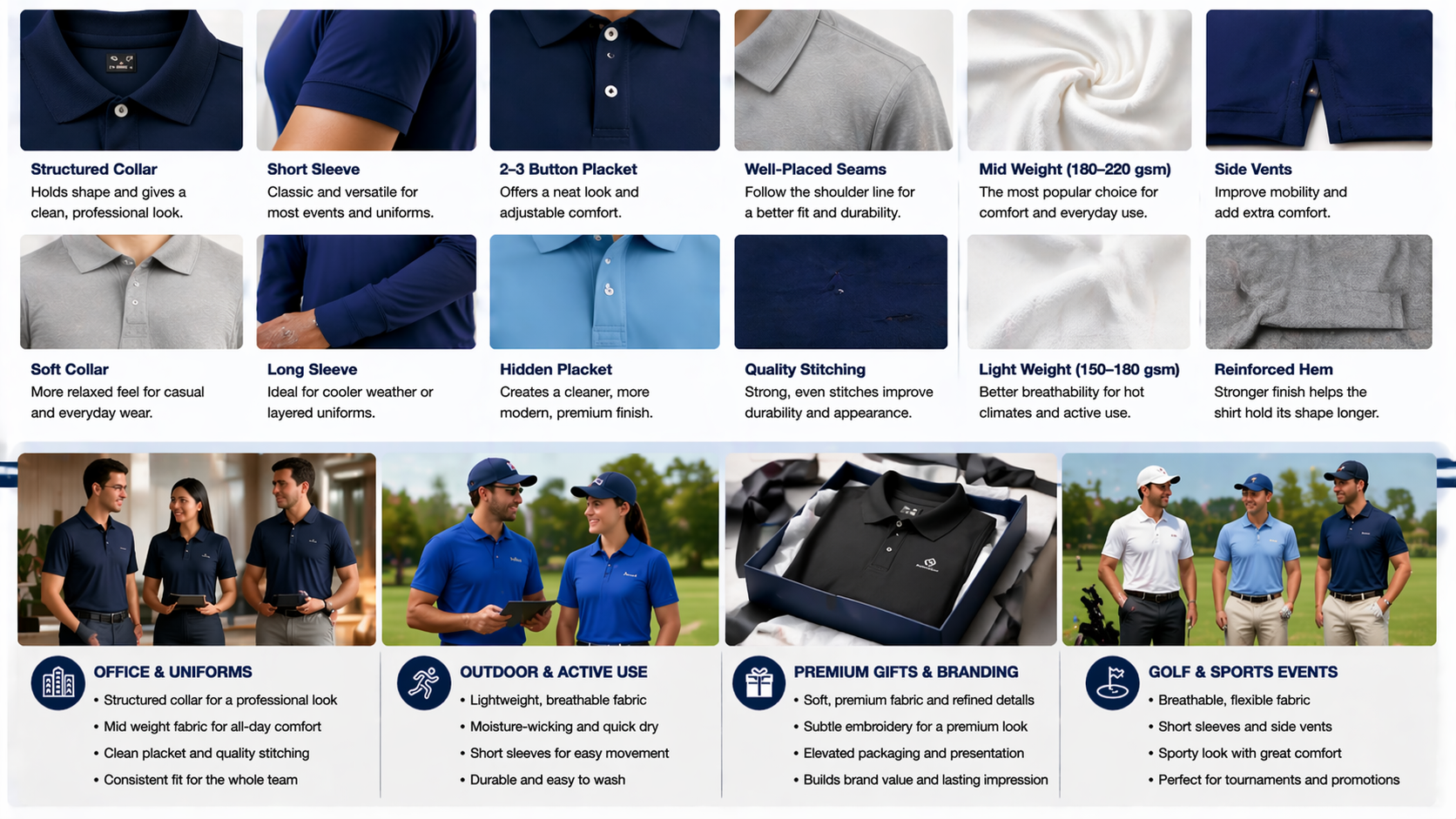
A polo shirt is easy to recognize because of its collar and placket, but not every polo is built the same way. The biggest differences usually come from fabric, knit structure, fit, and intended use. Those details affect comfort, durability, breathability, formality, and logo results. Two shirts may look similar in a supplier photo but perform very differently once they are worn in the real setting.
Fabric and Knit Structure
Piqué polos have a textured surface and usually feel more structured. That is one reason they are a common choice for uniforms, office teams, and embroidery-friendly branding. The honeycomb weave increases surface area for evaporation, making piqué polo shirts up to 20–30% more breathable than smooth weaves while providing excellent durability.
Jersey polos feel smoother and softer. They are closer to T-shirts in hand feel, which makes them more relaxed and more casual. Jersey knit offers good natural stretch but only moderate durability compared to piqué.
Performance polos often use polyester-rich or technical blends. These fabrics are usually lighter, quicker to dry, and more comfortable in warm weather or active environments. If you want a broader fabric comparison before choosing, see Polyester vs. Cotton: The Best Fabrics for Everyday Wear.
If the team will wear the shirts indoors in a business setting, you may care more about structure and appearance. If they will wear them outside for long hours, breathability and movement become more important.
Fit and Silhouette
A classic fit is usually the safest choice for mixed-size group orders because it works across a wider range of body types. Classic fit polos offer a relaxed torso with slightly lower armholes, making them universally flattering for group uniforms. A slim fit can look modern with tailored lines, but it is less forgiving when one style needs to work across an entire team. Modern fits sit between the two, allowing movement while sharpening the silhouette.
For one person, fit is a personal style choice. For a team, fit is part of operational planning.
Collar, Sleeve, and Construction Details
Small details can change the message a polo sends.
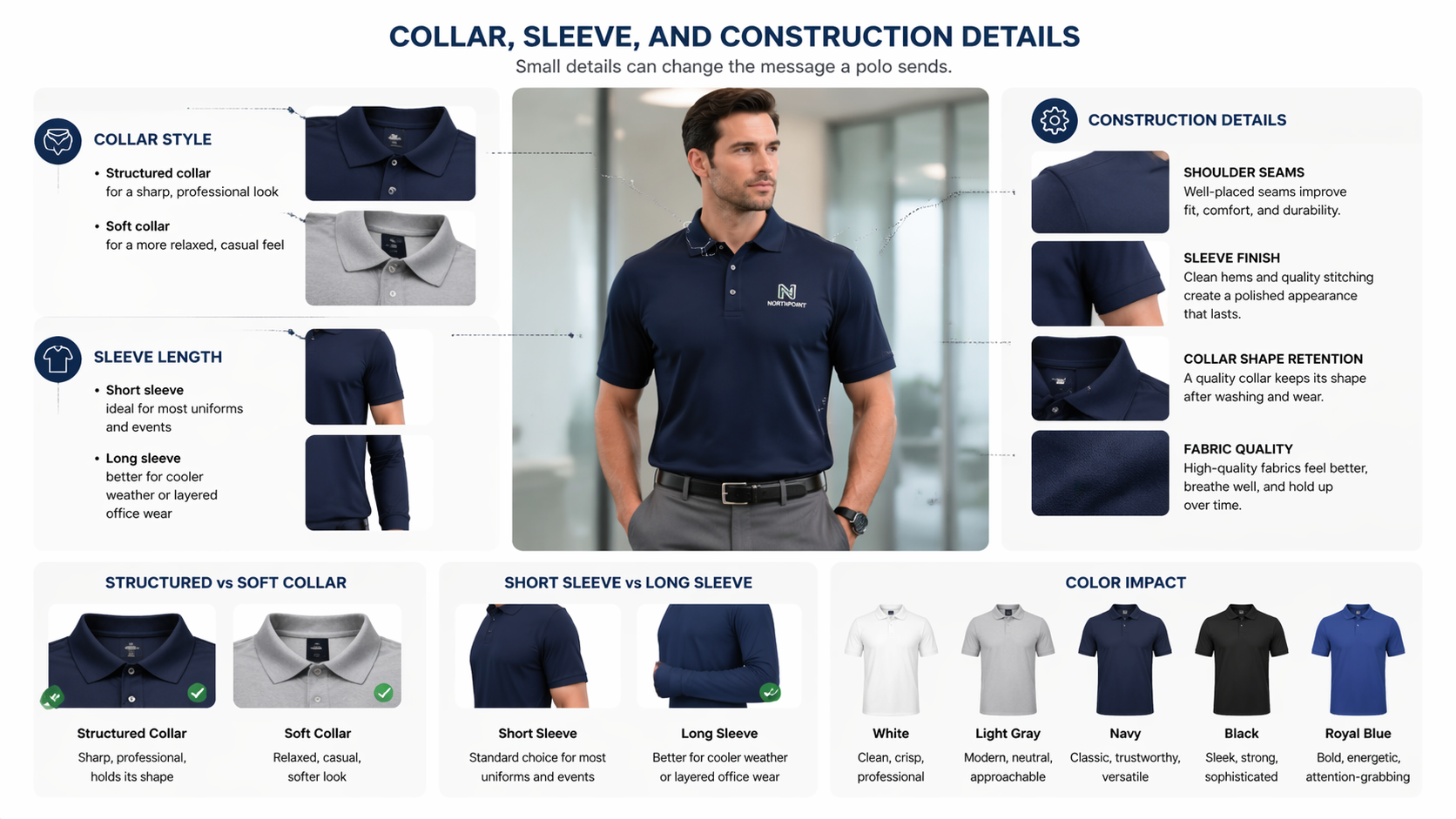
A structured collar usually looks cleaner in office settings or front-facing roles. A softer collar feels more casual. Short sleeve polos are the standard for most uniforms and events, while long sleeve polos work better for cooler weather or layered office wear.
Where shoulder seams sit, how sleeves fall, and whether the collar holds its shape after washing — these details seem minor until you compare a polished front-desk uniform with a casual golf-event shirt. Then the difference becomes obvious.
Intended Use
This is where many buying decisions go right or wrong.
A polo for a golf tournament does not need to solve the same problem as a polo for daily office staff. A shirt for relaxed branded merchandise does not need to perform like one for outdoor event crews.
Start with the use case, not the color or the fabric name. That usually leads to a better choice faster. If your order is tied to a wider client or team program, you can also look at TOMAS Corporate Gift Solutions to plan the polo together with other branded items
Main Types of Polo Shirts
There are many different types of polo shirts, but most business projects fall into a handful of practical categories.
Classic Piqué Polo Shirts
Classic piqué polos are the safest starting point for many buyers.
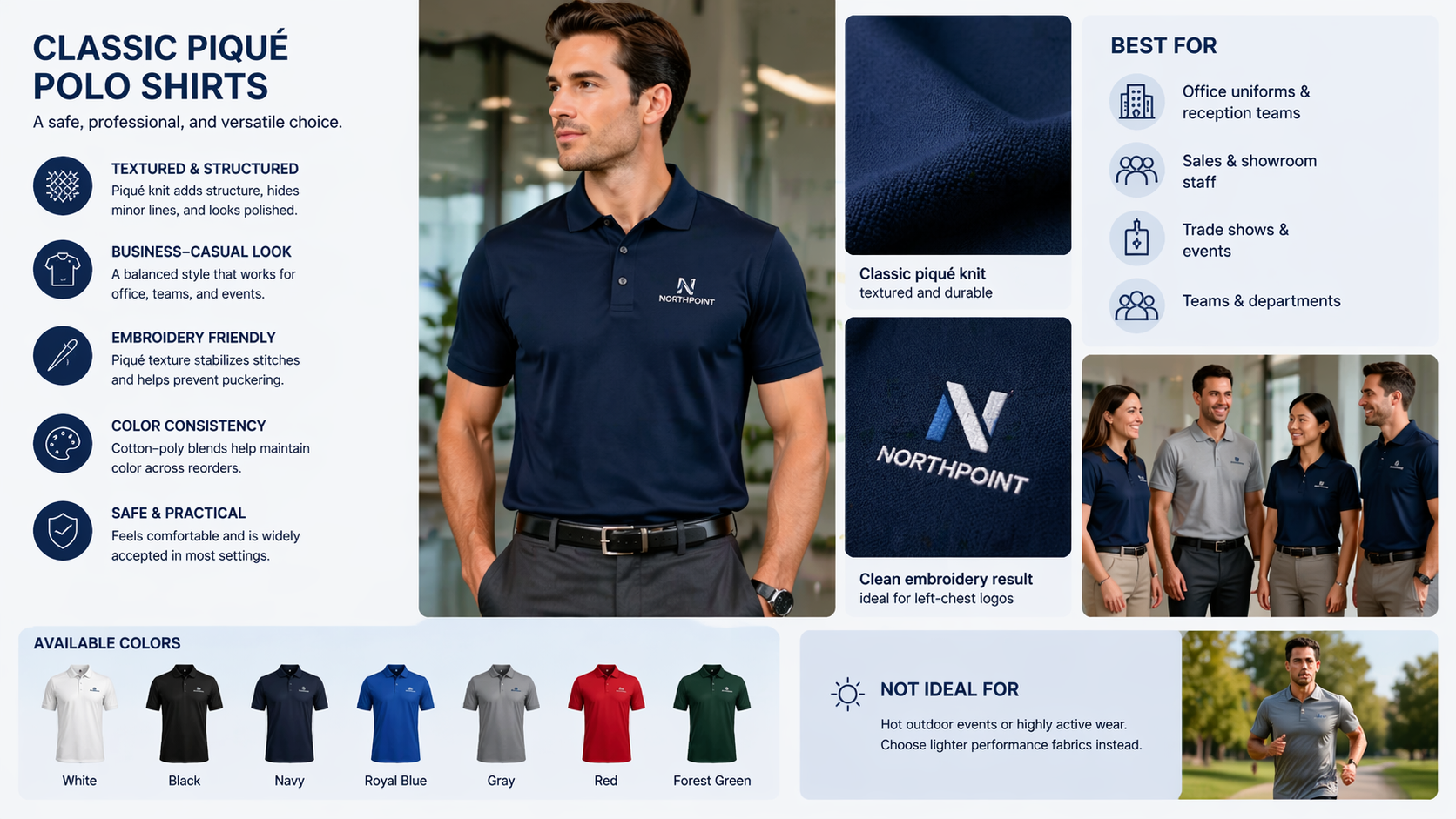
They usually have a textured surface, a more structured appearance, and a balanced business-casual look. That makes them a strong choice for office uniforms, reception teams, showroom staff, sales teams, and trade show apparel. The textured knit helps hide minor body lines and creates a more polished appearance than smooth fabrics.
They also tend to work well for embroidery, especially for left-chest logos, because the fabric usually supports a cleaner and more consistent result. The piqué texture stabilizes stitches and helps prevent puckering.
If your project needs a professional look that feels safe, practical, and widely acceptable, a classic piqué polo is often the right place to start. Cotton-poly blends commonly help with color consistency across reorders while keeping shrinkage lower than many all-cotton options.
They are not always the best choice for hot outdoor events or highly active wear. In those situations, a lighter performance option may make more sense.
Jersey Polo Shirts
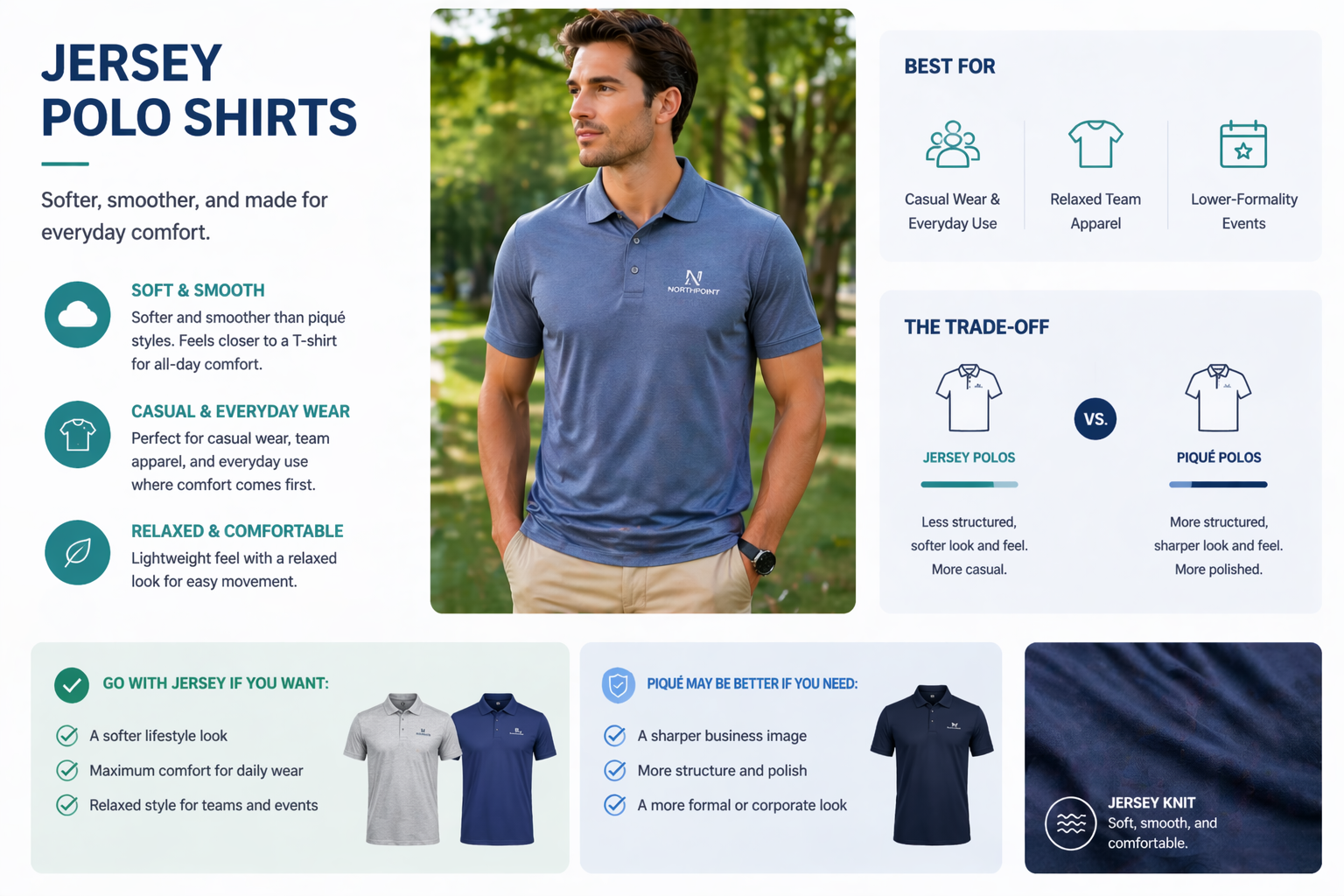
Jersey polos are softer and smoother than piqué styles. Because the fabric feels closer to a T-shirt, they are often more comfortable for casual wear and everyday wear. This type works well for relaxed team apparel, internal brand wear, and lower-formality events where comfort matters more than structure.
The trade-off is appearance. Jersey polo shirts are usually less structured than piqué polos, so they may feel slightly too casual for polished corporate uniforms or business-casual settings.
If the goal is a softer lifestyle look, jersey can be a good fit. If the goal is a sharper business image, piqué is usually safer.
Performance Polo Shirts
Performance polos are built for comfort during movement.
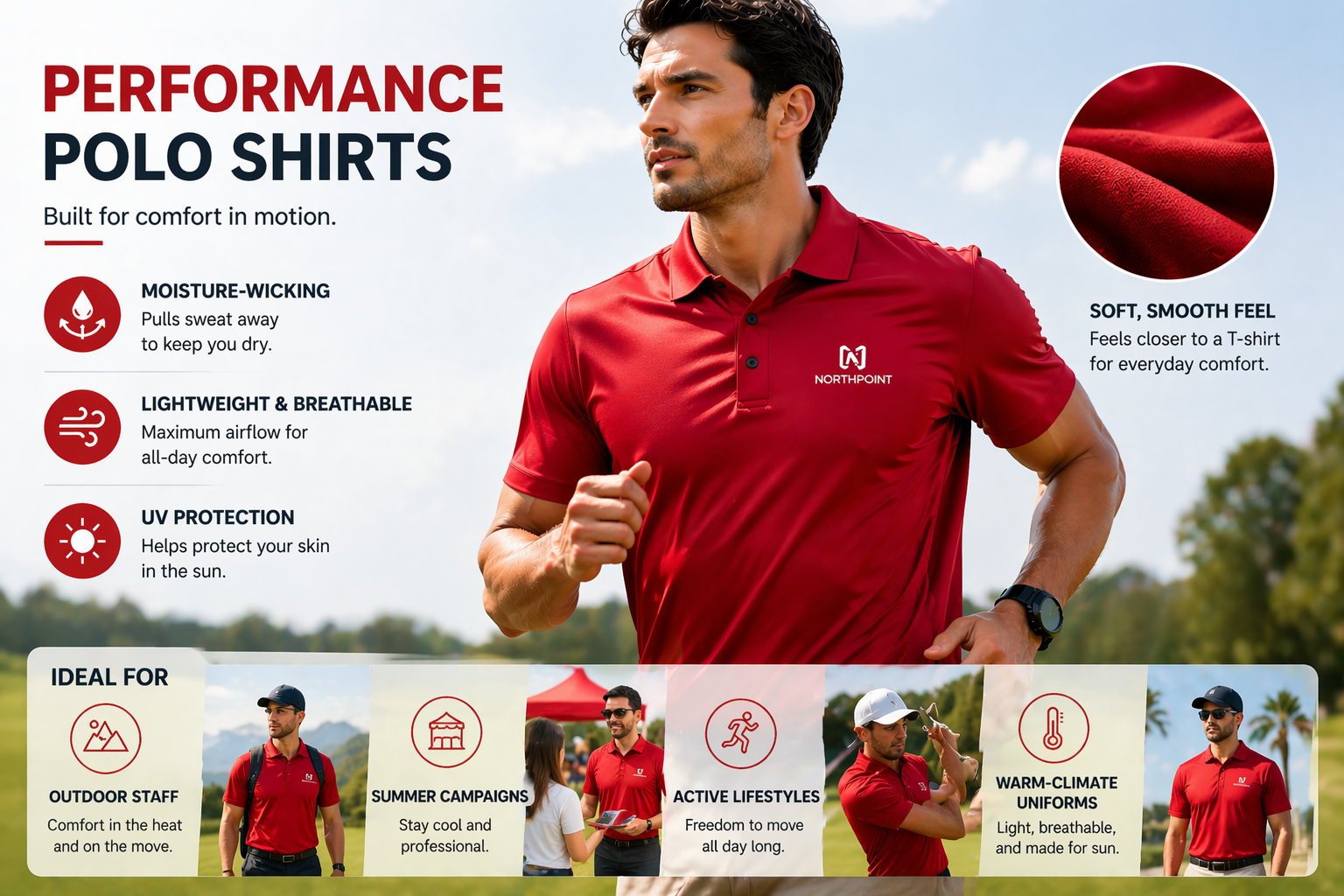
They are usually lighter, more breathable, and faster to dry than more traditional cotton-heavy polos. Data from textile studies shows moisture-wicking fabrics can pull sweat away from skin faster, reducing clamminess in heat. That makes them especially useful for outdoor staff, summer campaigns, active lifestyles, and warm-climate uniforms.
If the team will be outdoors for hours, moving around a venue, or working in heat, performance polos often make more sense than standard uniform polos. In those situations, comfort affects whether people actually want to wear the shirt. Some performance styles also include UV protection for extended outdoor use.
The main drawback is image fit. Some polyester polos can look more athletic than business-like, which may not match every office or brand environment.
Golf Shirts
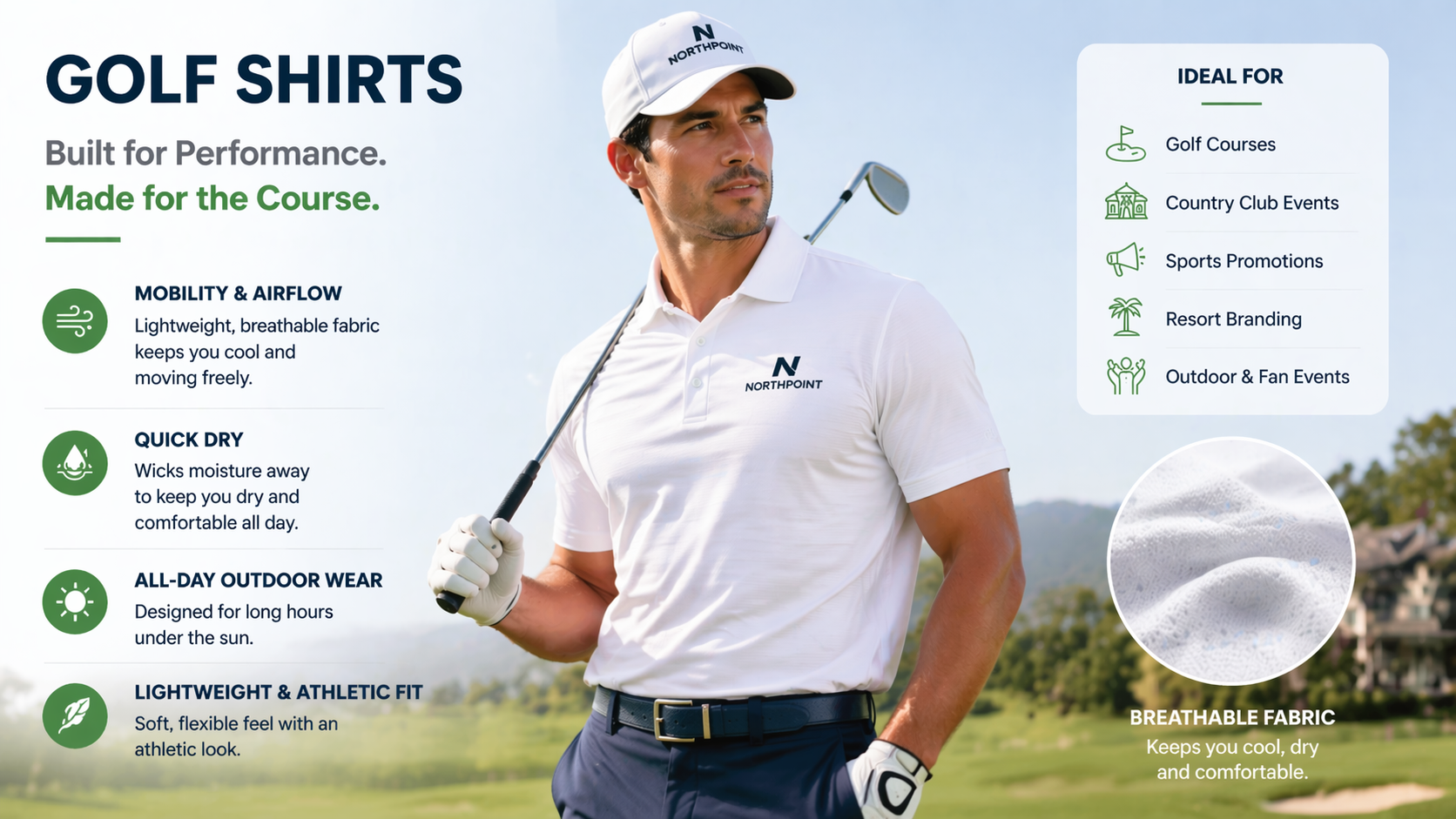
A golf shirt is usually a performance-focused type of polo shirt.It is designed for mobility, airflow, and all-day outdoor wear on the golf course. That often means lighter fabric, quicker drying, and a more athletic feel.
Golf shirts are a strong choice for golf tournaments, country club events, resort branding, sports promotions, and premium summer giveaways. If your campaign is tied to fan engagement or active outdoor events, TOMAS’s Sports Events Solutions page is a good internal next step. Golf shirts feel polished, but they are usually more comfortable than classic polos in active outdoor settings or casual sports environments.
They are not always the best choice for traditional office uniforms, where a cleaner corporate look matters more than movement performance.
Long Sleeve Polo Shirts
Long sleeve polos are more situational.
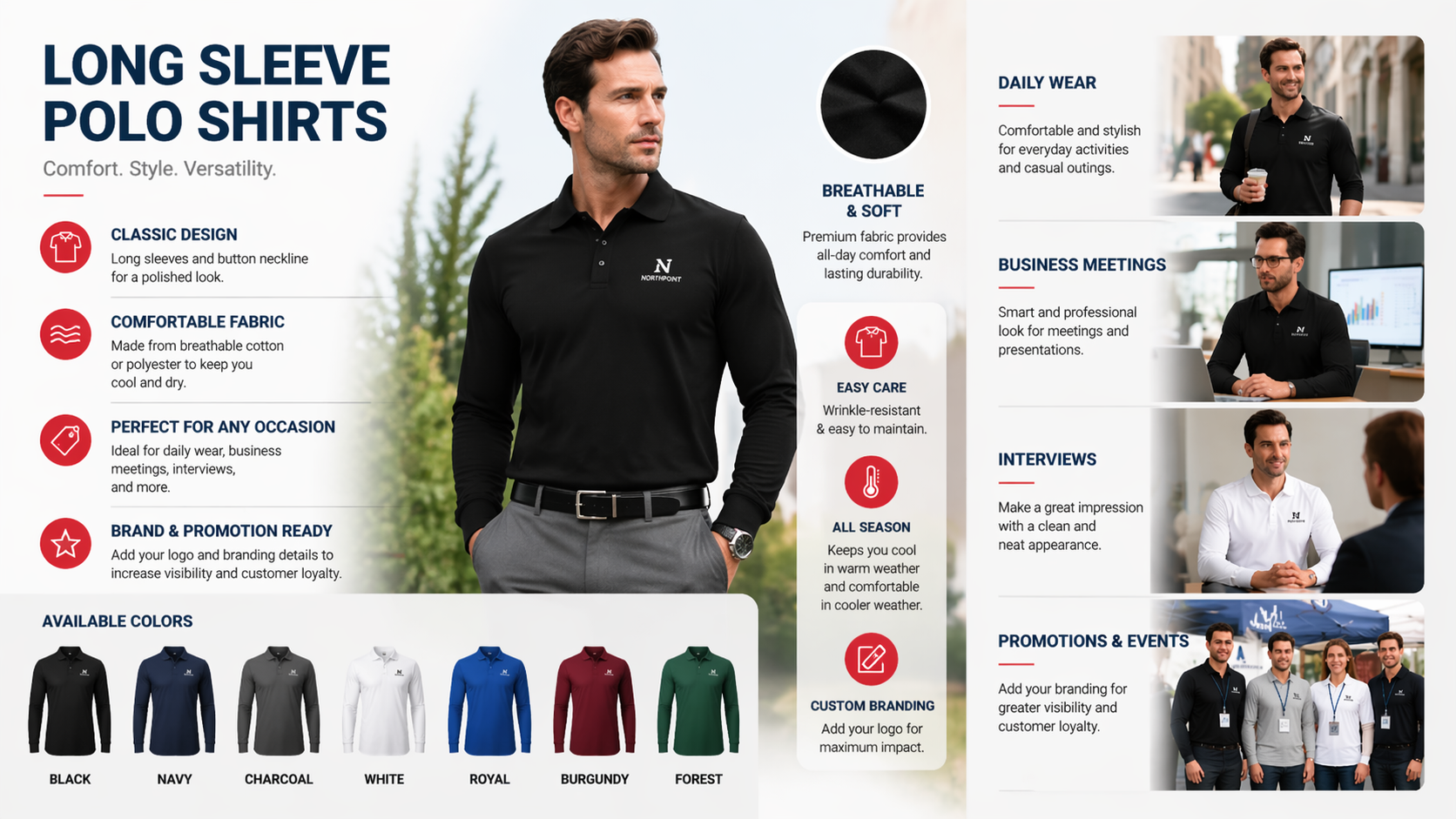
They work well for cooler weather, autumn and winter uniforms, layered office wear, and teams that need a more covered look. In cooler months, they can make a team look coordinated and slightly more formal. Many feature buttoned cuffs that add a touch of dress shirts formality while maintaining the comfort of knit construction.
They are less practical in hot climates and high-activity outdoor settings. Pair them with tailored trousers for a polished, unfussy office look, or layer them under jackets and sweaters when temperatures drop.
Specialty Styles: Pocket, Color-Block, and Striped Polos
Some polos stand out because of design features rather than fabric.
Pocket polos add function for storing pens or glasses, though the pocket can limit logo placement. Color-block and striped polos create stronger visual identity and can work well for teamwear, event crews, or more expressive brand projects. Rugby-style polos with bold horizontal stripes and durable rubber buttons work well for casual sports promotions.
These are not bad choices. They just need a clearer reason behind the selection. For long-term reorders, simpler styles are often easier to manage.
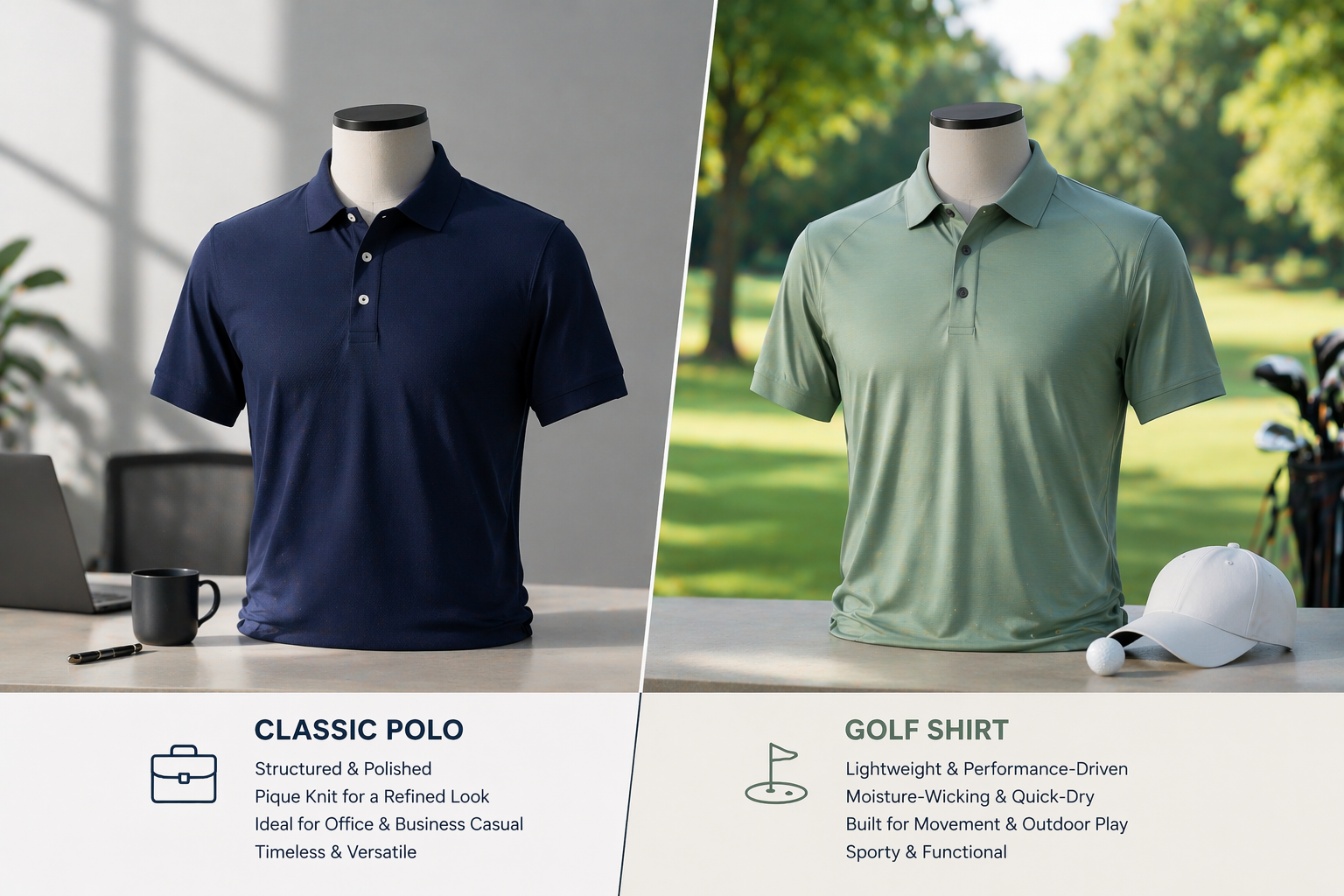
Golf Shirt vs. Polo Shirt: What’s the Difference?
Many buyers use these terms as if they mean the same thing, but there is a practical difference.
A classic polo shirt is usually chosen for everyday business-casual appearance. It works well for office uniforms, staff teams, and general branding. The fabric is typically heavier and more structured.
A golf shirt is more purpose-built for movement, heat, and outdoor wear. It usually feels lighter and performs better during active use. Golf polos often feature mesh panels, vented hems, and athletic fits optimized for swing mobility.
If you are buying for indoor teams, front-desk staff, or more polished corporate wear, a classic polo is often the safer choice. If you are buying for a golf event, sports promotion, or outdoor summer program, a golf shirt is often the better fit.
How to Choose the Right Polo Shirt for Your Needs
The perfect polo shirt is not just the one that looks good in a catalog. It should match how the shirt will actually be used.
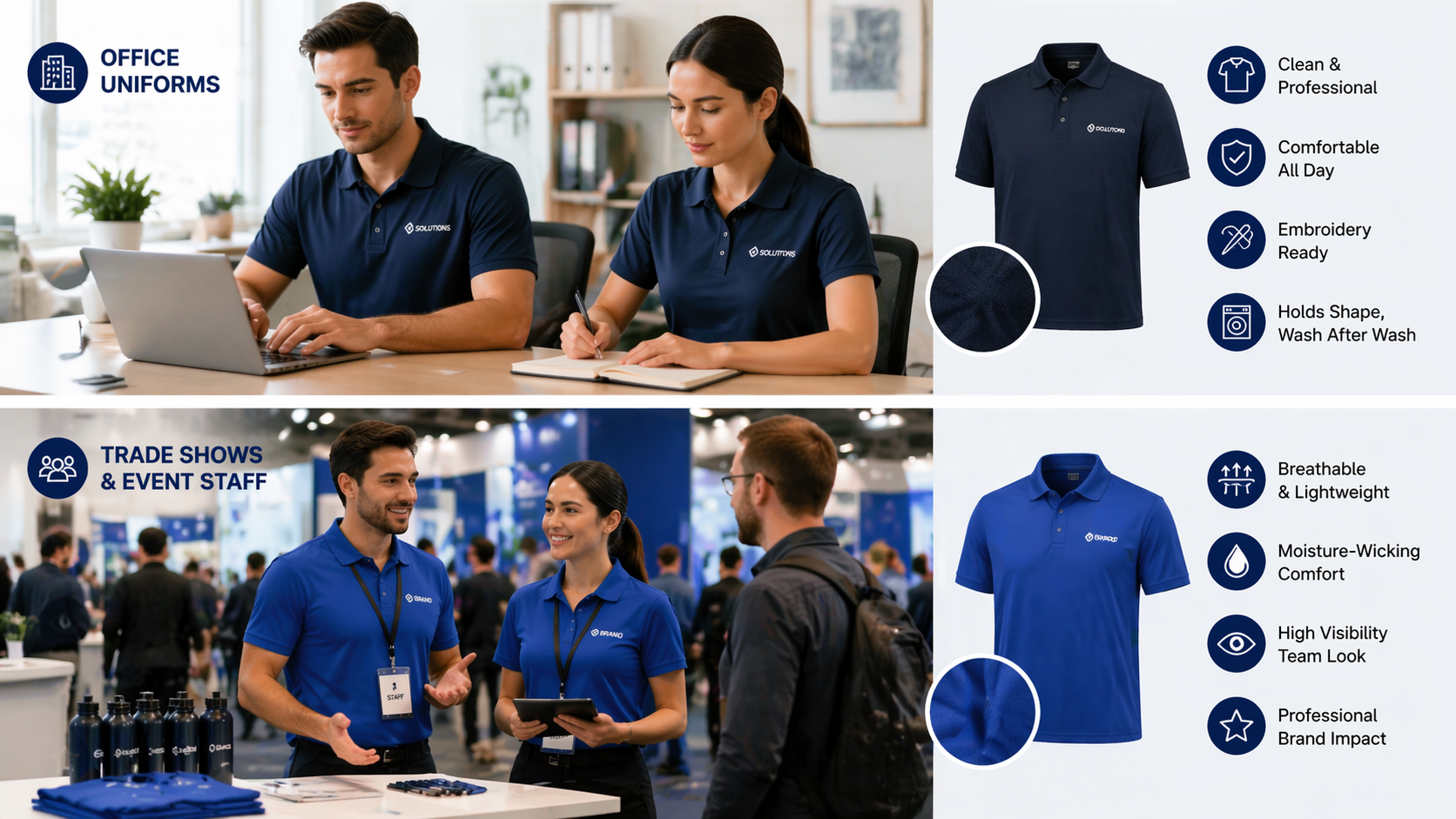
Best for Office Uniforms
For office uniforms, start with appearance and consistency.
You usually want a clean silhouette, a comfortable fit, and a fabric that supports embroidery well. Classic piqué polos and selected cotton-blend polos are often the best fit because they balance polish, comfort, and repeatability. They tend to maintain shape well through frequent washing, which matters in daily-use uniforms.
Best for Trade Shows and Event Staff
For trade shows, think about wear time and visibility. Staff may wear the same shirt all day while standing, walking, talking, and moving between indoor and semi-outdoor areas. A piqué polo or a breathable performance blend usually offers the best balance between comfort and a polished team look. Consider that 70% of business polos are embroidered for professionalism.
Best for Golf Events and Sports Promotions
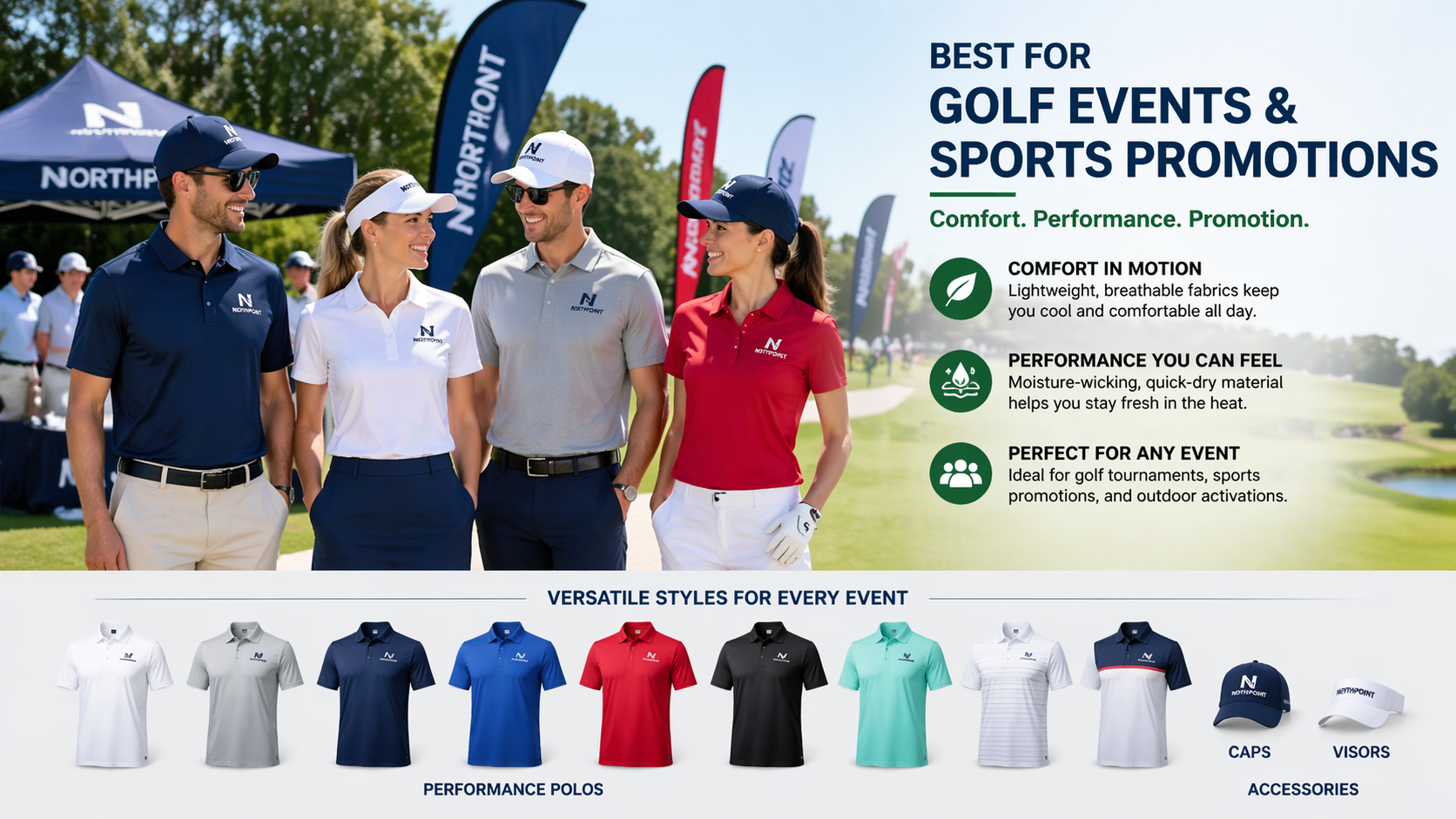
For golf events, comfort during movement matters more than traditional uniform structure.
That is why golf shirts and performance polos are usually the better choice. They are lightweight, easier to wear in heat, and better suited to active environments. Research often shows higher wearer satisfaction in warm climates when moisture-wicking fabrics are used.
Best for Premium Branded Apparel
When your priority is brand image, look beyond the most basic uniform styles.
Knit polos or better-quality blended polos can create a more premium feel and help branded apparel look intentional rather than generic. These styles are stronger when image matters more than low-cost volume. Consider solid, muted colors like navy, charcoal, or camel for a more refined look.
Best for Budget-Friendly Bulk Orders
For budget-focused projects, cotton-poly blends often make the most sense.
They usually offer a practical mix of cost control, easy care, and stable repeat ordering. These blends often cost less than premium options while offering better colorfastness and lower shrinkage than many pure cotton styles. If you expect reorders, that stability often matters more than choosing the most fashion-forward option.
A Quick Buying Checklist
Before you place a polo order, ask these six questions:
- Where will the shirt be worn: office, trade show, golf course, outdoor event, or daily field use?
- How active will the wearer be?
- What logo method will you use: embroidery, printing, or heat transfer?
- What should the final look feel like: sporty, casual, or corporate?
- Is this a one-time project or a repeat order?
- What matters most: cost, comfort, image, or low-risk consistency?
If you answer those questions first, you can usually narrow down the right polo style much faster.
Best Polo Shirts for Logo Customization
A polo that looks good blank may not be the best choice for your decoration method. Logo planning should happen early, not after the shirt has already been selected.
Best Types for Embroidery
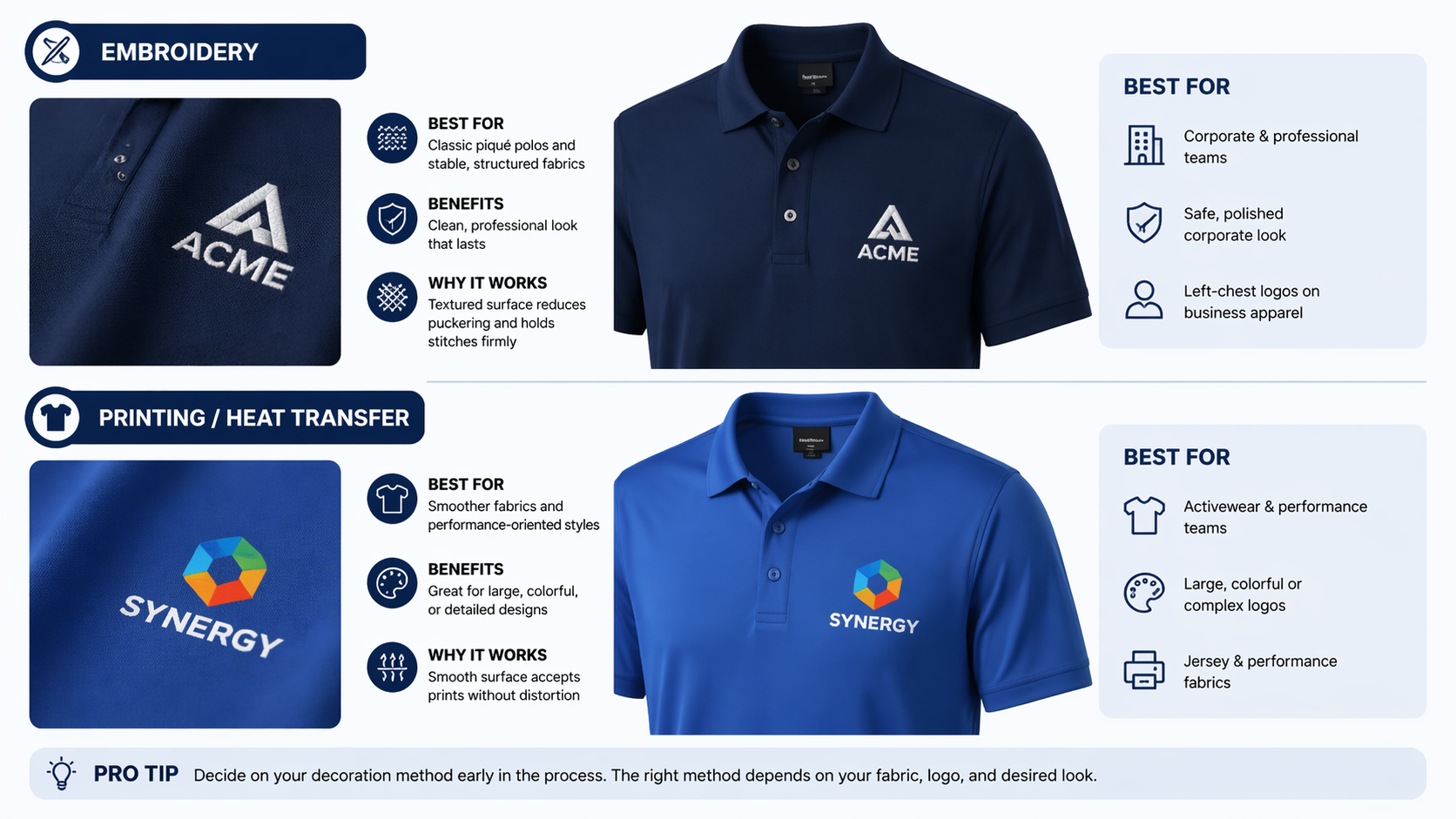
Classic piqué polos and other stable, structured fabrics are often the best choice for embroidery. They usually provide a cleaner and more professional result, especially for left-chest logos on business apparel. The textured surface helps reduce puckering and holds stitches more firmly in place.
If your priority is a safe, polished corporate look, structured polos usually reduce risk.
Best Types for Printing or Heat Transfer
Printing and heat transfer can be a better fit for smoother fabrics or performance-oriented styles, especially when the logo is larger, more colorful, or more detailed. Jersey and performance fabrics often accept print transfers without distortion.
What to Confirm Before Placing a Bulk Custom Order
Before approving production, confirm:
- Logo placement and size
- Full size breakdown across the team
- Fabric hand feel (request samples when possible)
- Decoration method compatibility
- Wear environment and climate
- Delivery timeline requirements
- Reorder expectations for future runs
Decoration tip: Softer or stretchier polos are more likely to show puckering when the embroidery is dense or the logo fill is heavy. If you want a low-risk result, a more structured fabric is usually safer.
Conclusion
The right polo shirt is usually the one that fits the way your team will actually wear it. For most projects, the smartest approach is to start with the use case, logo method, and reorder needs first, then compare styles based on comfort, appearance, and practicality.
If you are planning uniforms, golf event polos, trade show apparel, or branded bulk orders, don’t wait until sampling to find out the style is wrong for your logo, budget, or wearing scenario.
At TOMAS Crafts, you can review our broader product and solution categories first, then contact us here to send your logo, quantity, timeline, and project use. We’ll help you move the inquiry forward with a clearer brief and a faster quote.
FAQs
1. What do I need to prepare before ordering custom polo shirts?
Before ordering, it helps to confirm your use case, quantity, size breakdown, logo method, and delivery timeline. These details make it easier to recommend the right polo style and decoration option.
2. Do I need to decide the logo method before choosing the polo shirt?
Yes, ideally. Embroidery, printing, and heat transfer do not work equally well on every fabric, so the decoration method should be considered early.
3. What information should I send when requesting a quote for custom polos?
The most useful starting details are your logo file, estimated quantity, target use, preferred logo method, size breakdown, and required delivery date.
4. Should I order samples before bulk production?
For most team or event orders, yes. A sample helps you check fabric feel, fit, logo placement, and overall appearance before confirming the full order.
5. If I may reorder later, what should I confirm in the first order?
If repeat orders are likely, confirm fabric consistency, color, fit, logo size, and style availability early. This reduces problems later.