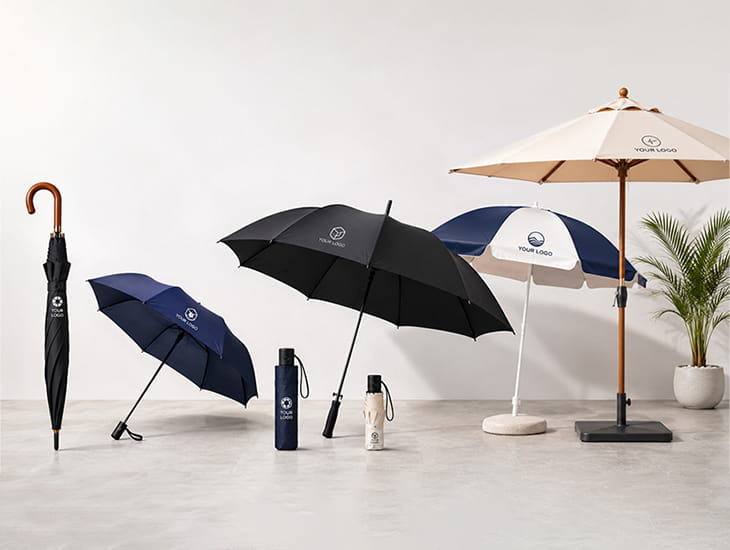
Choosing umbrellas for gifts, events, hotels, or outdoor branding is not only about rain protection. The wrong style can affect logo visibility, user experience, packing volume, and delivery planning. In custom umbrella projects, the best choice often changes after confirming the real use case, quantity, canopy size, and branding needs. This guide compares 12 types of umbrellas and shows where each style works best, so you can choose better options for events, gifts, and outdoor campaigns.
Key Takeaways
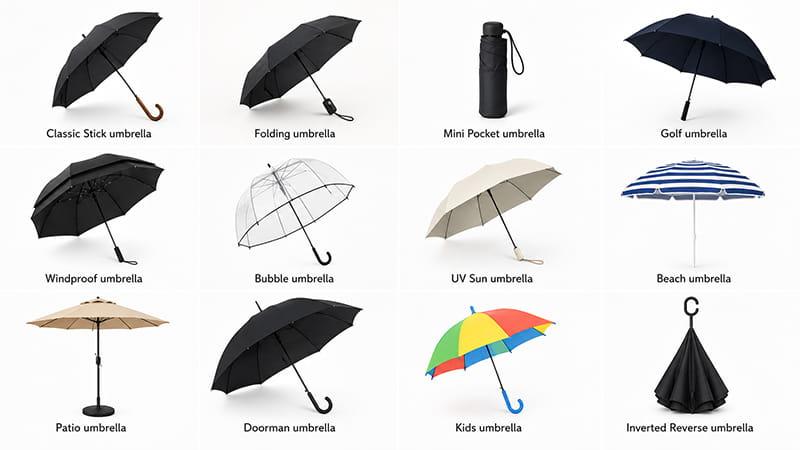
Most umbrellas fall into two main structures: straight / stick umbrellas and foldable / compact umbrellas.
Different umbrella styles solve different needs, from rain protection and sunshade to wind resistance, travel, outdoor shade, fashion, and branding.
Compact umbrellas work well for carry and giveaways. Golf, patio, and beach umbrellas give larger coverage and stronger logo visibility.
For custom umbrellas, check canopy size, logo position, frame quality, packaging, carton volume, and delivery date before production.
Umbrella Types Compared at a Glance
| Umbrella Type | Best For | Main Benefit | Branding Fit |
| Classic stick umbrella | Daily rain use, business gifts | Clean and traditional look | Good canopy logo space |
| Folding umbrella | Commuting, travel, giveaways | Portable and practical | Good for frequent daily exposure |
| Mini / pocket umbrella | Bags, travel kits, compact gifts | Easy to carry | Good for sleeve or handle branding |
| Golf umbrella | Golf events, outdoor promotions | Large coverage | Excellent logo visibility |
| Windproof umbrella | Rainy and windy weather | Better wind performance | Good for premium gifts |
| Bubble umbrella | City rain, weddings, visibility | Dome coverage | Distinctive visual style |
| UV / sun umbrella | Sun protection, summer events | Helps reduce sun exposure | Good for summer campaigns |
| Beach umbrella | Beaches, resorts, leisure | Large sunshade | Good for tourism branding |
| Patio umbrella | Outdoor seating, cafés, hotels | Fixed outdoor shade | Strong large-format branding |
| Doorman umbrella | Hotels, service teams, venues | Elegant guest coverage | Good for hospitality use |
| Kids umbrella | Schools, family events | Smaller and child-friendly | Good for themed programs |
| Inverted / reverse umbrella | Cars, commuting, entrances | Keeps wet side inside | Good practical gift option |
Start with the Two Main Umbrella Structures
Before comparing every umbrella style, it helps to understand the two basic structures behind most umbrellas: straight umbrellas and foldable umbrellas. Many common umbrella types are variations of these two frames.
Straight / Stick Umbrellas
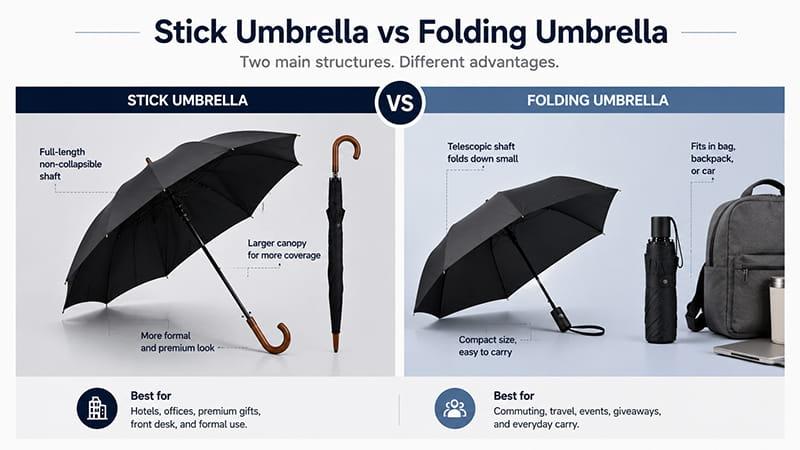
Straight umbrellas are full-length umbrellas with a non-collapsible shaft. They often feel stable in hand and offer more coverage than very small compact umbrellas.
Classic stick umbrellas, doorman umbrellas, many golf umbrellas, and some windproof umbrellas use this structure. They are harder to pack into a small bag, but they usually look more formal and premium.
For business gifts, hotel service, or executive-style umbrellas, a straight umbrella can create a stronger impression than a small giveaway umbrella.
Foldable / Compact Umbrellas
Foldable umbrellas use a telescopic shaft and collapse into a smaller size. They are common for commuters, travelers, students, event giveaways, and car storage.
Their main benefit is portability. Many folding umbrellas come in 2-fold, 3-fold, or mini pocket designs.
The trade-off is coverage. Smaller folding umbrellas usually cover less than stick or golf umbrellas. For promotional use, they remain popular because they are practical, easy to distribute, and used often.
How to Choose the Right Umbrella Type
The best umbrella type depends on how the umbrella will be used. Do not choose only by price, color, or appearance. Start with the real use case. Then check coverage, portability, weather protection, and branding needs.
Choose by Daily Use, Travel, Outdoor, or Event Needs
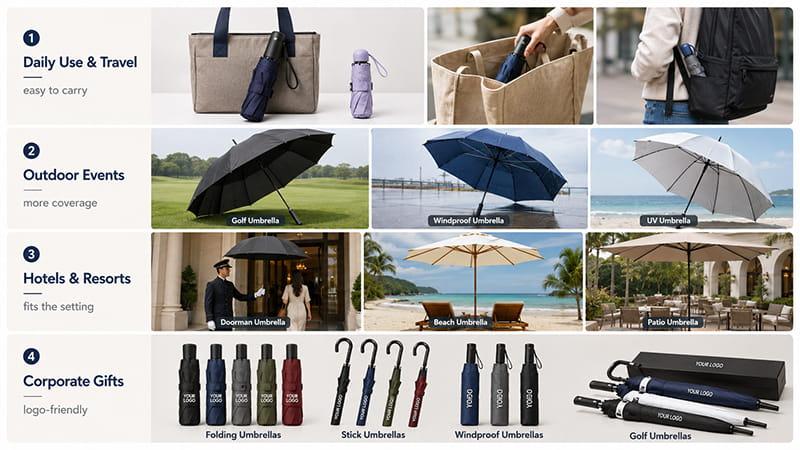
For daily commuting, folding umbrellas, mini umbrellas, and classic stick umbrellas are common choices. If people need to carry the umbrella in a bag, folding or mini styles are more practical. If the umbrella stays in an office, hotel entrance, or car, a stick umbrella may work better.
For outdoor events, golf umbrellas, windproof umbrellas, and UV umbrellas are often stronger choices. They offer more coverage and more utility.
For hotels and resorts, doorman umbrellas, beach umbrellas, patio umbrellas, and stick umbrellas usually match the setting better.
For corporate gifts, folding umbrellas, stick umbrellas, windproof umbrellas, and golf umbrellas are practical options. They are useful, visible, and suitable for logo customization. If your project is part of a broader gifting plan, you can also review TOMAS corporate gift solutions for more branded gift ideas.
Supplier note: In many custom umbrella inquiries, buyers first ask for the lowest-cost model. But the final choice often changes after we confirm the real use case. Folding umbrellas are easier to distribute for trade shows and daily giveaways. Golf umbrellas work better for golf tournaments and outdoor brand events because they offer wider coverage and stronger logo visibility. Stick or doorman umbrellas often fit hotels and premium service programs because they create a more formal guest-service impression.
Balance Portability, Coverage, and Weather Protection
A mini umbrella is easy to carry, but it cannot cover as much as a golf umbrella. A patio umbrella gives strong outdoor shade, but it is not portable. A windproof umbrella may be heavier than a basic folding model, but it can work better in rainy or windy cities.
Use this simple guide:
Choose folding or mini umbrellas when portability matters most.
Choose stick or golf umbrellas when coverage and visual impact matter more.
Choose windproof umbrellas for rainy and windy conditions.
Choose UV, beach, or patio umbrellas for sun protection and outdoor shade.
Choose inverted umbrellas for commuting, car use, or rainy entrances.
Consider Logo Space Only If Ordering Custom Umbrellas
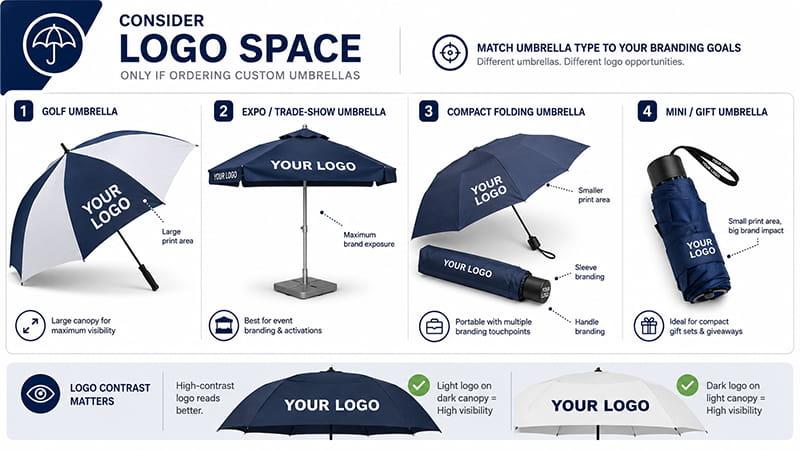
If you are choosing umbrellas for brand promotion, logo space matters. Golf umbrellas and patio umbrellas offer larger printing areas. Folding umbrellas give less space, but people may carry them more often. That can create repeated brand exposure.
Stick umbrellas can feel more premium for business gifts. Mini umbrellas work better for compact gift sets. In some cases, sleeve or handle branding can also help.
For any logo umbrella, color contrast matters. A dark canopy with a light logo is easier to read. A light canopy with a dark logo also works well.
12 Types of Umbrellas and Their Best Uses
1. Classic Stick Umbrella
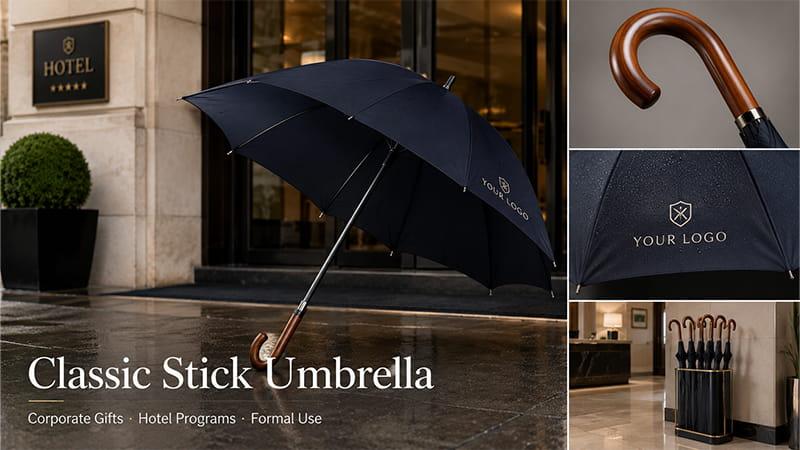
A classic stick umbrella is a full-length umbrella with a straight shaft and a traditional shape. It is common for daily rain protection, business settings, hotels, and formal occasions.
This style usually has a larger canopy than a pocket umbrella. Handle material also changes the final look. A wooden or curved handle often feels more premium than a basic plastic handle.
For custom branding, classic stick umbrellas work well for corporate gifts, hotel programs, and formal business use. The canopy has enough space for a visible logo without making the product feel like a cheap giveaway.
2. Folding Umbrella
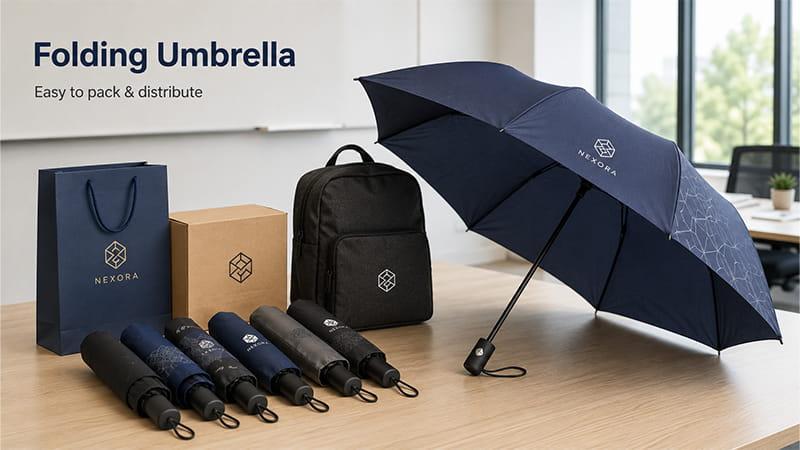
A folding umbrella has a collapsible shaft, so it can fit into a handbag, backpack, car, or office drawer. It is one of the most practical umbrella types for everyday carry.
This style is popular for commuters, students, travelers, trade show giveaways, and employee gifts. It may use manual open, auto open, or auto open/close mechanisms.
For promotional use, folding umbrellas are strong because people may carry them often. They are also easier to pack and distribute than large umbrellas. Logo placement can go on the canopy, sleeve, strap, or handle.
3. Mini / Pocket Umbrella
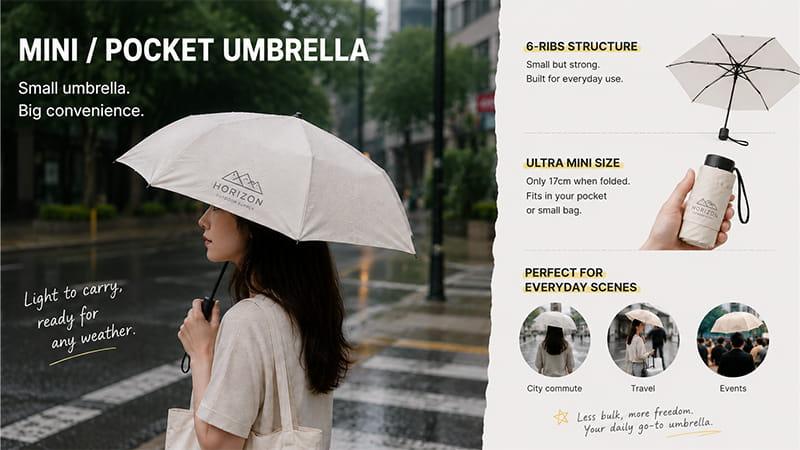
A mini umbrella is a smaller version of a folding umbrella. It is made for people who want something light, compact, and easy to keep in a bag.
This type works well for travel kits, customer giveaways, event gift bags, and compact promotional sets. It is easy to distribute and takes little storage space.
The limitation is coverage. A mini umbrella is usually not the best choice for heavy wind or wide rain coverage. For custom projects, simple canopy branding or sleeve branding is often more practical than large artwork.
4. Golf Umbrella
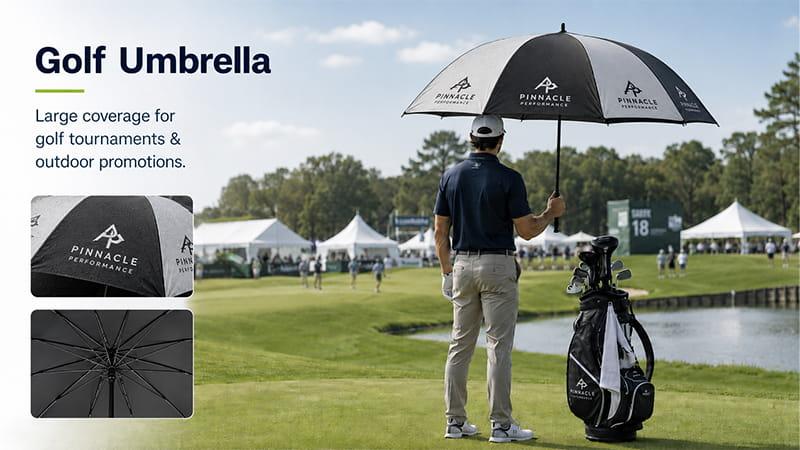
A golf umbrella has an oversized canopy. It is designed to cover a golfer, a golf bag, or even two people. It is also used for outdoor events, sports teams, coaches, photographers, and brand campaigns.
The main advantage is coverage. A golf umbrella gives a large visual surface, which also helps logo visibility. Many golf umbrellas use stronger frames, fiberglass ribs, or vented canopy designs for outdoor conditions.
For business buyers, golf umbrellas work well for golf tournaments, outdoor promotions, executive gifts, and sports events. The trade-off is size. Golf umbrellas take more carton space and can increase shipping volume, so packing details should be checked before confirming a bulk order.
5. Windproof Umbrella
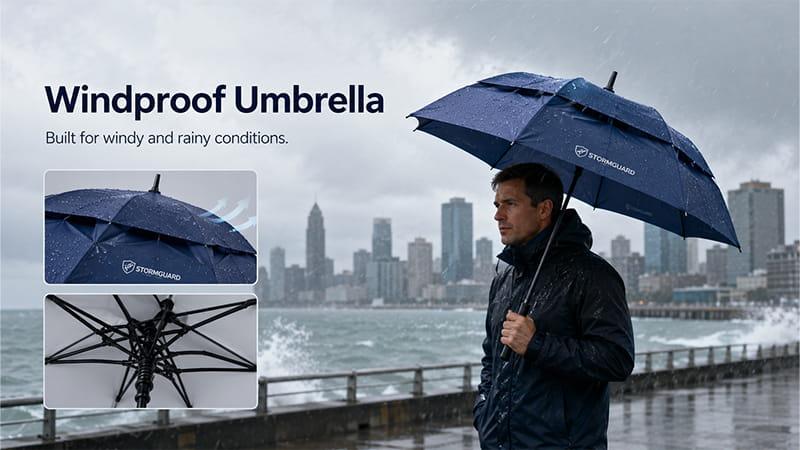
A windproof umbrella is designed to perform better in wind and rain. It may use fiberglass ribs, reinforced joints, a vented double canopy, or a flexible frame.
This type is useful for coastal cities, rainy regions, campuses, outdoor workers, sports events, and premium gifts. Windproof does not mean the umbrella can survive every storm. It means the structure is stronger than a very basic umbrella.
For custom branding, windproof umbrellas can create a higher perceived value. If people will use the umbrella often, frame quality matters more than choosing the lowest unit price.
6. Bubble Umbrella
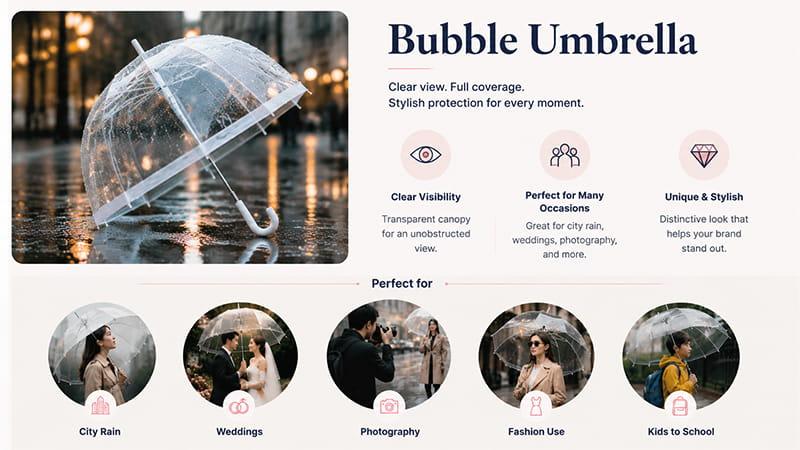
A bubble umbrella has a rounded, dome-shaped canopy. Many bubble umbrellas use clear or semi-clear material, so the user can see through the canopy while staying covered.
This design is popular for city rain, weddings, photography, fashion use, and walking children to school. The dome shape covers the head and shoulders well, which helps during heavy rain or windy streets.
Bubble umbrellas are not as compact as folding umbrellas, but they have a unique visual style. For custom projects, they work best when the event or brand wants a distinctive look instead of a standard giveaway item.
7. UV Umbrella
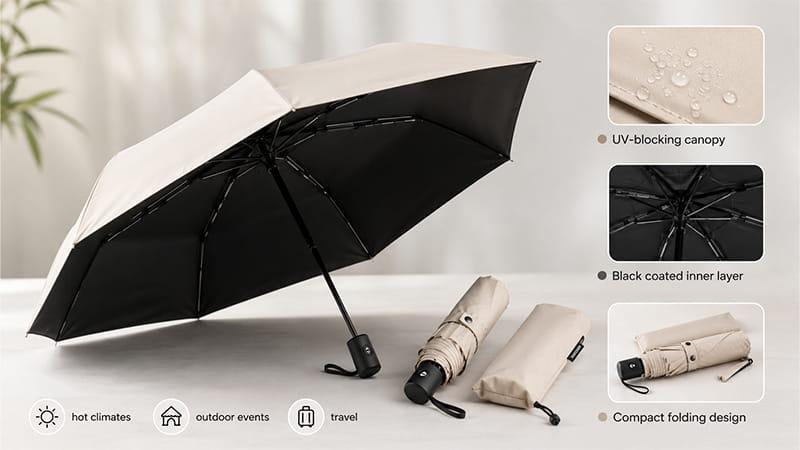
A UV umbrella, also called a sun umbrella, is designed for sun protection. It may use UV-blocking coating, special canopy fabric, or reflective layers to reduce sun exposure.
This umbrella type is useful for hot climates, outdoor events, travel, sports activities, tourism campaigns, and summer promotions. Some UV umbrellas can also protect against rain, depending on the fabric and coating.
For outdoor projects, UV protection should not be treated as a decorative claim only. The World Health Organization notes that shade structures, including umbrellas and canopies, do not offer complete UV protection. Reflected and scattered UV can still reach the skin. If sun protection is the main purpose, confirm the canopy material, UV coating, and supplier documentation before production.
For custom branding, UV umbrellas fit summer campaigns, resort promotions, outdoor wellness programs, and sports events. They can also work with other warm-weather promotional products. For more campaign ideas, see TOMAS summer giveaway ideas.
8. Beach Umbrella
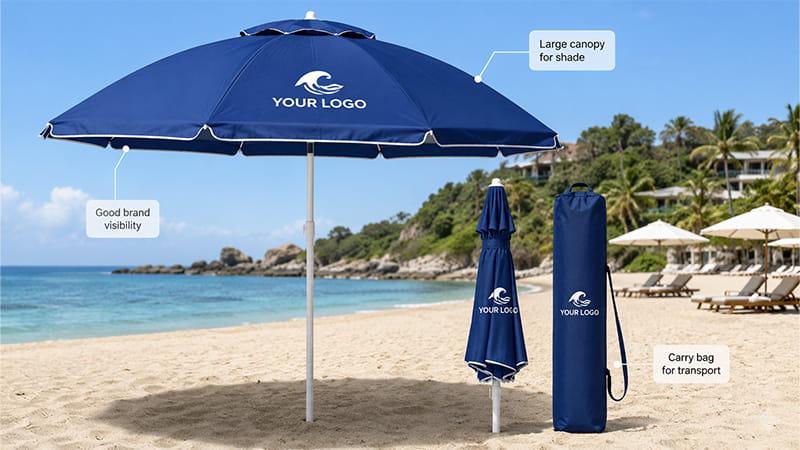
A beach umbrella has a large canopy that creates shade on sand, near pools, or in leisure areas. It may include a tilt function, anchor pole, screw tip, or larger support structure.
This type is not made for daily carry. It works better for beaches, resorts, tourism projects, outdoor leisure programs, summer campaigns, and beverage brand activations.
For B2B buyers, beach umbrellas offer good brand visibility because they stay in one place and can be seen from a distance. Check the size, pole structure, packing method, and shipping volume early.
9. Patio Umbrella
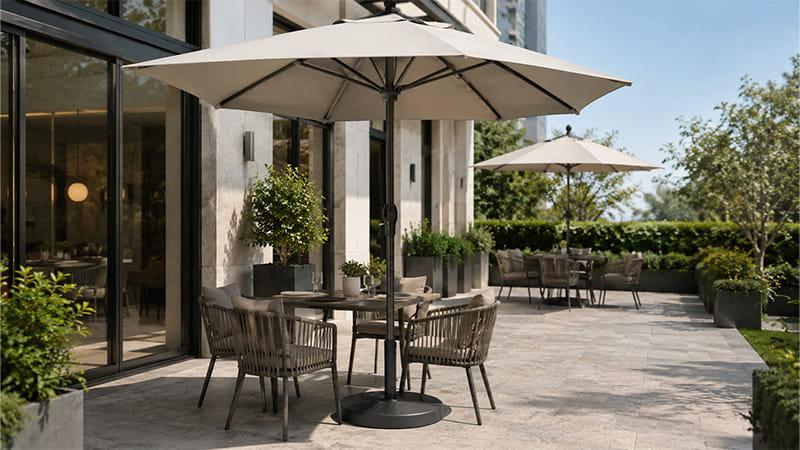
A patio umbrella is a large outdoor umbrella used for fixed shade. It is common in cafés, restaurants, hotels, gardens, patios, terraces, and outdoor retail spaces.
This umbrella type usually needs a stable base and a stronger frame. It may use a center pole, side pole, or cantilever structure. Its main purpose is not portability. It is long-term shade and outdoor visibility.
For branding, patio umbrellas offer a large surface for logos, patterns, or brand colors. Buyers should confirm canopy fabric, frame strength, base requirements, wind conditions, and packing volume before ordering.
10. Doorman Umbrella
A doorman umbrella is a large and elegant umbrella used by hotels, luxury buildings, event venues, and service teams. It helps guests stay dry when they enter or leave a location.
This umbrella often has a classic long-handle look and a larger canopy. Compared with a compact umbrella, it gives a more formal and service-oriented impression.
For hotels, clubs, premium event venues, and hospitality programs, doorman umbrellas can support both function and brand image. Logo placement should stay clean and tasteful, especially in a luxury setting.
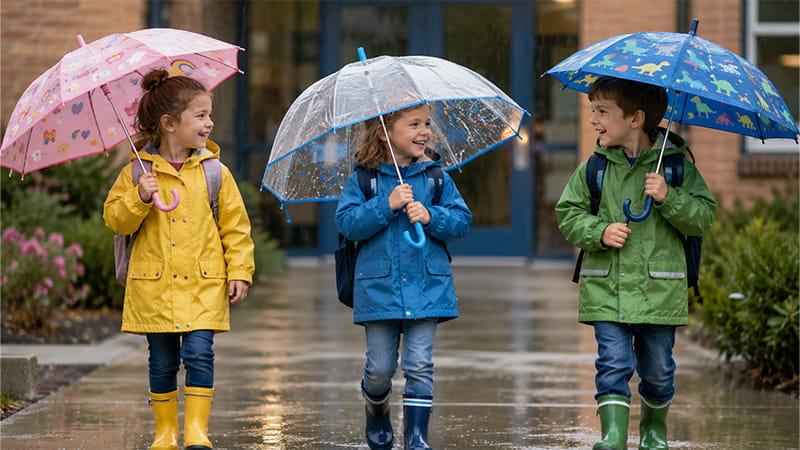
11. Kids Umbrella
A kids umbrella is smaller and lighter than a standard adult umbrella. It is designed for children, schools, family events, and themed programs.
Common features include bright colors, fun patterns, rounded tips, lightweight frames, and easy-grip handles. Some kids umbrellas use bubble-style canopies to give extra coverage and visibility.
For custom projects, kids umbrellas can work for school programs, children’s activities, family campaigns, and themed gift sets. Safety and usability matter more than large logo placement.
12. Inverted / Reverse Umbrella
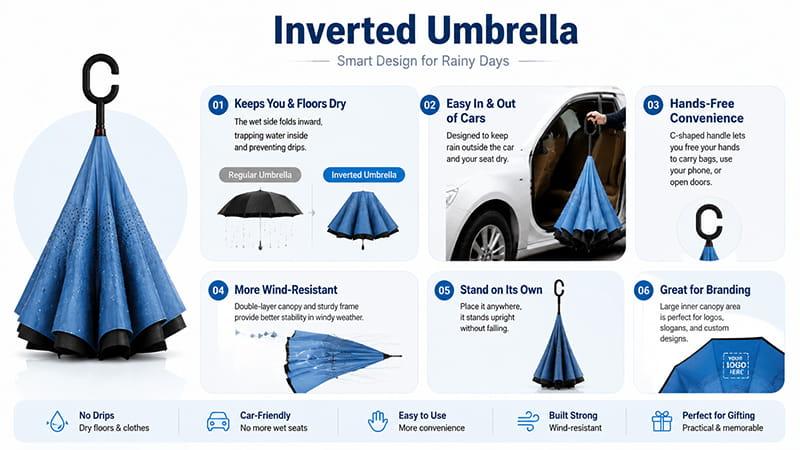
An inverted umbrella folds in reverse. The wet side folds inward when the umbrella closes. This helps reduce dripping indoors and makes it easier to get in and out of cars, offices, or building entrances.
Many inverted umbrellas have a double-layer canopy and a C-shaped handle. They are useful for commuters, drivers, office workers, and rainy-city promotions.
For business gifts, inverted umbrellas can feel more practical and memorable than a standard umbrella. The structure solves a real daily problem. They may be bulkier than regular folding umbrellas, so packing size still needs to be checked.
Specialty Umbrellas You May Also See
You may also see specialty umbrellas such as fashion umbrellas, paper parasols, hat umbrellas, pet umbrellas, wedding umbrellas, and cocktail umbrellas. These are useful for styling, decoration, cultural events, pets, hands-free use, or novelty settings.
For everyday use, business gifts, events, and outdoor branding, most buyers usually compare stick, folding, mini, golf, windproof, UV, beach, patio, doorman, kids, and inverted umbrellas first.
What Affects Umbrella Quality and Performance?
Umbrella quality depends on more than size or shape. Fabric, frame, ribs, coating, and opening mechanism all affect how the umbrella feels and performs.
Canopy Fabric and Coating
Common canopy fabrics include polyester, nylon, pongee, Oxford cloth, PVC, and POE. Polyester is common and cost-effective. Pongee often feels smoother and more premium. Oxford cloth is often used for heavier outdoor umbrellas, such as beach or patio styles. Transparent PVC or POE is common for bubble umbrellas.
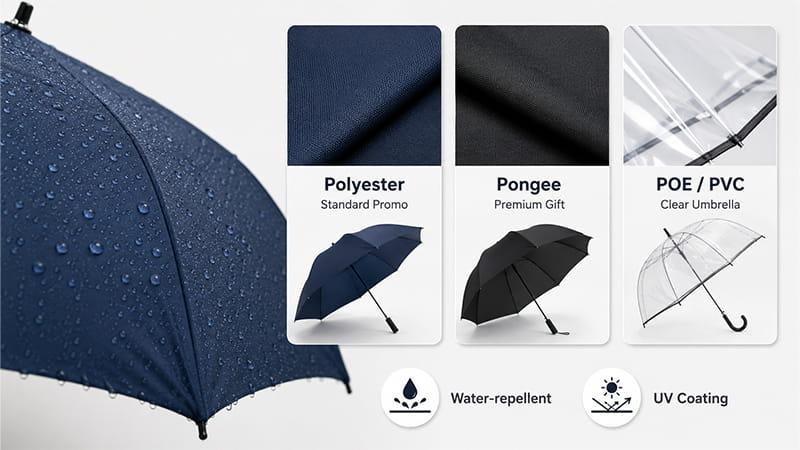
Coatings also matter. A water-repellent coating helps rain slide off the canopy. A UV coating helps with sun protection. If UV protection is part of the selling point, ask for canopy fabric, coating, or UVE rating details. ARPANSA’s shade fabric testing guidance explains that high UVE-rated materials offer better sun protection in shade structures.
For outdoor umbrellas, confirm whether the fabric fits the weather, usage period, and display environment.
Frame, Ribs, and Wind Resistance
The frame affects durability. Steel can be strong but heavier. Aluminum is lighter. Fiberglass ribs are flexible and often used in windproof umbrellas or golf umbrellas.
Reinforced joints and vented double canopies can also improve wind performance. For patio umbrellas and beach umbrellas, the base or anchor matters as much as the canopy. A large umbrella without stable support can be hard to use in outdoor wind.
Manual vs Automatic Opening
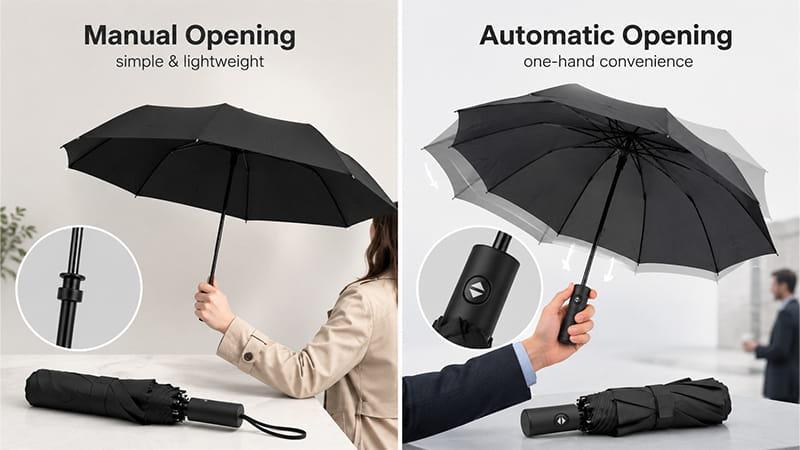
Manual umbrellas are simple and often lighter. Automatic umbrellas open with a button and are convenient for commuters, parents, and people who need one-handed use.
Some umbrellas offer auto open and close. This adds convenience but may increase weight and cost. For travel or commuting, automatic folding umbrellas can be useful. For premium stick umbrellas or simple event giveaways, manual designs may still be practical.
Best Umbrella Types for Different Uses
| Use Case | Better Umbrella Types | Why |
| Everyday carry and commuting | Folding, mini, inverted | Portable and easy to store |
| Golf, sports, and outdoor events | Golf, windproof, UV | More coverage and outdoor utility |
| Hotels and hospitality | Doorman, stick, beach, patio | Fits guest service and outdoor spaces |
| Beach, patio, and outdoor shade | Beach, patio | Larger shade and fixed outdoor use |
| Corporate gifts and promotions | Folding, stick, windproof, golf | Useful and suitable for logo branding |
Use this table as a starting point, not a fixed rule. A good umbrella choice still depends on the recipient, climate, budget, logo needs, and delivery timeline.
What to Check Before Ordering Custom Umbrellas
If you are ordering custom umbrellas in bulk, check the product details before you approve production. This helps avoid sampling delays, unclear logo results, or unexpected shipping costs.
Logo Position and Canopy Size
Logo placement can go on the canopy panel, sleeve, strap, handle, or packaging. Larger umbrellas usually give more visible branding space. Smaller umbrellas may need simpler logo placement.
Check logo contrast before production. A light logo on a dark canopy is easier to read. A dark logo on a light canopy also works well. If you need multi-panel printing, confirm the extra cost and proofing time early.
Frame, Fabric, and Opening Style
Confirm the canopy material, ribs, shaft, handle, and opening mechanism. Decide whether the umbrella should be manual, auto open, or auto open/close.
If wind resistance matters, ask about fiberglass ribs, reinforced joints, and vented canopies. If sun protection matters, confirm the UV coating or canopy fabric. If sustainability matters, ask about recycled PET canopy fabric, bamboo handles, wooden parts, or reduced-plastic packaging. For broader sustainable sourcing ideas, you can also read TOMAS eco-friendly promotional products guide.
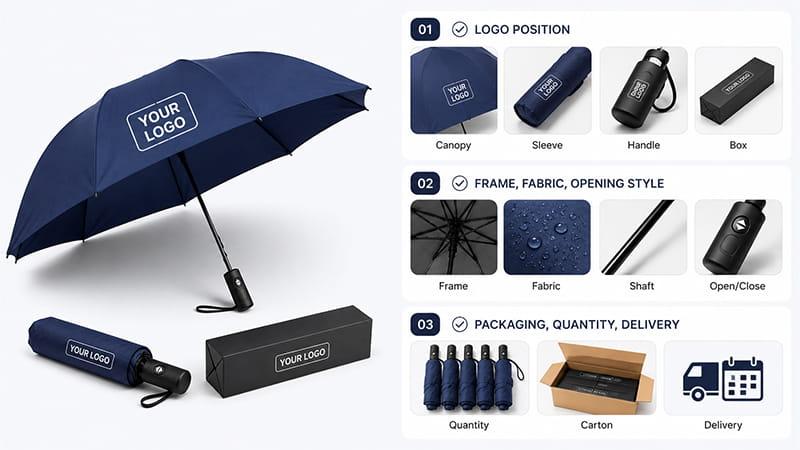
Packaging, Quantity, and Delivery Date
For custom umbrella orders, packaging can affect cost and delivery as much as the product itself. Confirm whether you need an individual sleeve, gift box, carton marks, or retail packaging.
Supplier note: For bulk umbrella orders, buyers often compare only unit price at first. But large umbrellas, such as golf umbrellas, beach umbrellas, and patio umbrellas, can change carton size, shipping volume, and delivery cost. For event orders, confirm umbrella size, packing method, carton details, and delivery schedule early, especially when the event date is fixed.
For large umbrellas, check packing and shipping details before you confirm the final style. This helps avoid a product that looks suitable in the quote but becomes difficult to ship on time or within budget.
FAQs
What are the main types of umbrellas?
The main types of umbrellas include stick, folding, mini, golf, windproof, bubble, UV, beach, patio, doorman, kids, and inverted umbrellas. Most buyers can start with three groups: portable umbrellas, large-coverage umbrellas, and outdoor shade umbrellas.
Which umbrella type is best for events and giveaways?
Folding umbrellas are usually the easiest to distribute at events because they are compact and practical. Golf umbrellas are better for outdoor events, sports campaigns, and brand activations because they offer larger coverage and stronger logo visibility. Mini umbrellas work well for travel kits or compact gift sets.
Which umbrella type gives the best logo visibility?
Golf, patio, beach, and stick umbrellas usually give better logo visibility because they have larger canopy areas. Folding umbrellas have less print space, but people may use them more often. For custom umbrella projects, choose by logo size, viewing distance, and use frequency.
What should I prepare before ordering custom umbrellas?
Prepare the umbrella type, quantity, logo file, canopy color, logo position, packaging needs, and delivery date. For large umbrellas, such as golf, beach, or patio umbrellas, confirm carton size and shipping volume early. These details make the quote, sample, and bulk order easier to confirm.
Ready to Choose the Best Umbrella for Your Project?
After comparing these types of umbrellas, the best choice is not always the cheapest or the most eye-catching style. A better umbrella should match the user, the setting, the weather, the logo needs, and the delivery plan.
For custom umbrella orders, preparation makes the project easier to control. Before production, confirm the canopy size, printing area, frame, packaging method, carton volume, and delivery date, especially for golf, beach, patio, hotel, or event umbrella projects.
TOMAS Crafts help B2B buyers source custom umbrellas and promotional gifts for events, hotels, corporate programs, and outdoor campaigns, with support for logo options, sampling, QC, packing, and bulk order coordination. Request a Custom Umbrella Quote