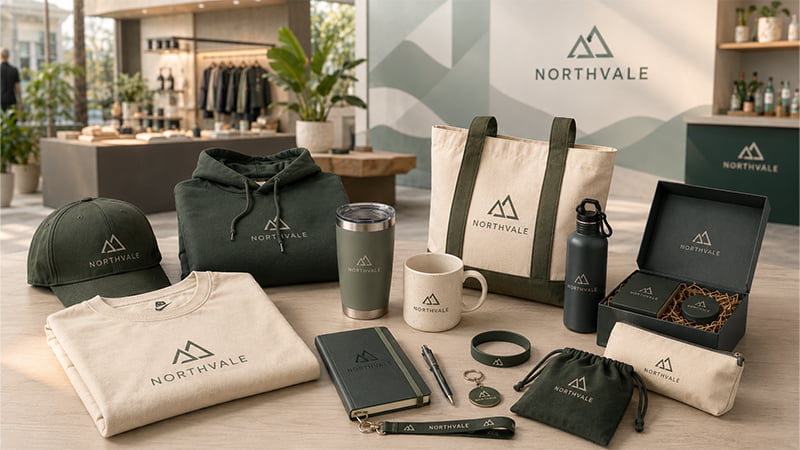
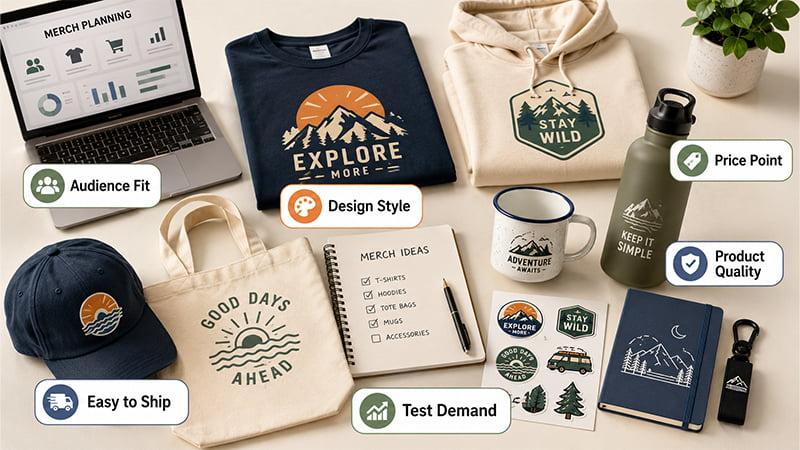
Good merch ideas are not just products with a logo. They should match the audience, design style, selling price, product quality, and shipping plan. This guide covers 29 merch ideas for creators, schools, brands, events, and ecommerce businesses, with practical tips on testing demand, controlling costs, and preparing for custom merch production.
Quick Answer: What Are the Best Merch Ideas to Sell?
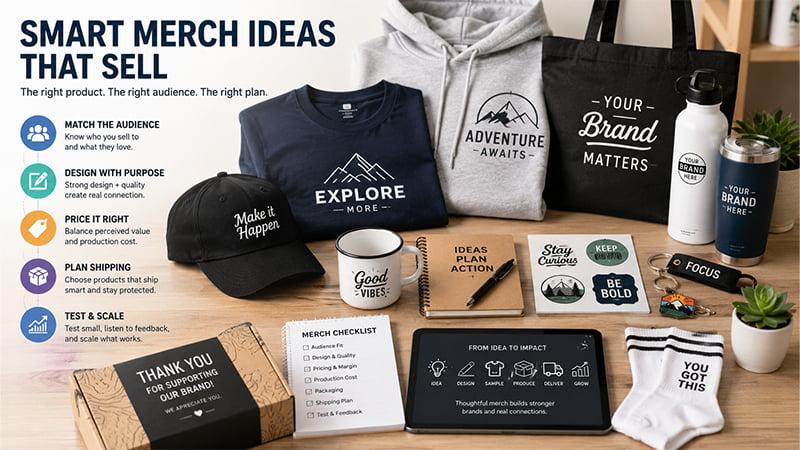
The best merch ideas often include custom shirts, hoodies, caps, reusable bags, mugs, tumblers, water bottles, stickers, enamel pins, keychains, lanyards, notebooks, socks, phone cases, tech accessories, pouches, and gift sets.
Custom apparel and hoodies work well when the design has strong identity. Reusable bags and drinkware work well because people use them in everyday life. Stickers, pins, keychains, and wristbands are good cheap merchandise ideas for testing demand. Gift sets and bundles are better for branded merchandise, company merch, and premium brand campaigns.
The right product depends on your audience, design concept, selling price, production cost, shipping method, and restock plan.
How to Choose Merch Ideas That Can Actually Sell
A merch product should start with the customer, not the product catalog. Before choosing 29 items, narrow the goal and decide what your audience would actually want to wear, carry, collect, or use.
Start with the audience: Creators, schools, sports teams, coffee brands, gaming communities, fitness brands, bands, and corporate buyers all need different merch. A creator may sell graphic tees and stickers. A school may need spirit shirts and water bottles. A company may need notebooks, tumblers, and custom packaging for welcome kits.
Check daily use value: Products people use often can create stronger brand exposure. Custom shirts, caps, custom bags, drinkware, notebooks, pouches, and tech accessories usually stay visible longer than one-time novelty items.
Look at the design surface: Apparel, hoodies, reusable bags, mugs, stickers, posters, and mouse pads work well for visual artwork. Caps, pins, pens, keychains, and branded socks need simpler artwork because the logo area is smaller.
Compare cost and perceived value: Cheap merch can help test demand, but premium items can support higher selling prices. Hoodies, backpacks, tumblers, gift sets, and high quality items can feel more valuable when the design and packaging match the brand.
Think about shipping and storage: Small, lightweight, and non-fragile products are easier for a new merch shop. Bulky, fragile, or heavy products may need stronger packaging and higher shipping budgets.
Test before scaling: Start with a small merch line, track sales, collect customer feedback, and scale the products that show real demand. Creative merch ideas work best when they still match the audience’s daily life, budget, and brand identity.
Not every creative product is worth producing right away. Before you create merch for a new launch, separate fun concepts from products that can be made consistently, packed safely, and shipped without hurting your margin. Cool merch ideas such as graphic tees, enamel pins, custom socks, sticker sheets, and tech accessories can work well when they match a community or campaign theme.
More unusual creative merch items can also work, but they should be tested first through samples, small drops, or limited bundles before moving into larger bulk production.
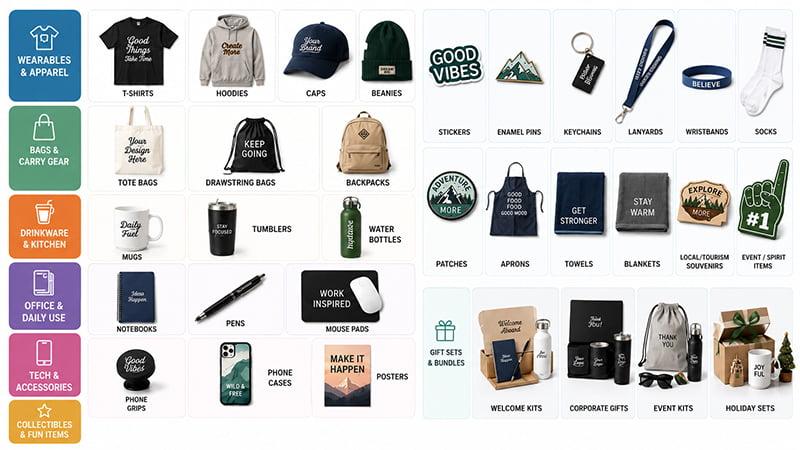
29 Merch Ideas for Online Stores, Creators, and Brands
Use this list as a starting point, not a fixed ranking. The best product depends on your target audience, brand identity, design style, shipping cost, and whether you plan to test with a small order or move into bulk production.
| # | Merch Idea | Best For | Buyer Note |
|---|---|---|---|
| 1 | Custom T-shirts | Creators, schools, brands | Best for slogans, graphics, and community identity |
| 2 | Hoodies | Premium merch, winter drops | Higher perceived value than basic shirts |
| 3 | Caps | Sports, events, lifestyle brands | Strong everyday accessory |
| 4 | Beanies | Winter merch, outdoor brands | Good for seasonal campaigns |
| 5 | Tote bags | Eco brands, bookstores, events | Useful and easy to customize |
| 6 | Drawstring bags | Schools, sports, giveaways | Lightweight and budget-friendly |
| 7 | Backpacks | Campus, travel, staff kits | Better for higher-value merch |
| 8 | Mugs | Coffee brands, creators, offices | Good daily-use product |
| 9 | Tumblers | Fitness, corporate, lifestyle | Higher perceived value than basic mugs |
| 10 | Water bottles | Schools, gyms, events | Practical for everyday routines |
| 11 | Stickers | Creators, artists, clubs | Low-cost and easy to bundle |
| 12 | Enamel pins | Fandoms, events, communities | Collectible and compact |
| 13 | Keychains | Tourism, events, brands | Affordable add-on merch |
| 14 | Lanyards | Schools, events, offices | Practical and visible |
| 15 | Wristbands | Spirit events, charity, teams | Cheap and easy to distribute |
| 16 | Socks | Fashion, sports, fun designs | Good for patterns and humor |
| 17 | Notebooks | Schools, offices, creators | Useful for branded kits |
| 18 | Pens | Events, offices, conferences | Low-cost add-on item |
| 19 | Mouse pads | Gaming, tech, esports | Large design surface |
| 20 | Phone grips | Creators, youth brands | Small and easy to sell |
| 21 | Phone cases | Artists, lifestyle brands | Design-heavy product |
| 22 | Posters | Artists, creators, fandoms | Good visual merch |
| 23 | Patches | Clubs, outdoor brands, uniforms | Useful for identity and customization |
| 24 | Aprons | Food brands, cafés, cooking creators | Practical niche merch |
| 25 | Towels | Fitness, beach, sports events | Seasonal and functional |
| 26 | Bandanas | Pets, outdoor, fashion brands | Lightweight and flexible |
| 27 | Pouches | Beauty, travel, school kits | Good for bundles |
| 28 | Gift sets | Corporate brands, campaigns | Higher order value |
| 29 | Limited-edition bundles | Creators, launches, events | Creates urgency and scarcity |
These 29 products can support many different merch lines. For example, a creator may start with graphic tees, stickers, and mugs. A school may choose spirit week shirts, lanyards, and water bottles. A company may focus on branded merchandise such as notebooks, tumblers, laptop sleeves, and gift sets.
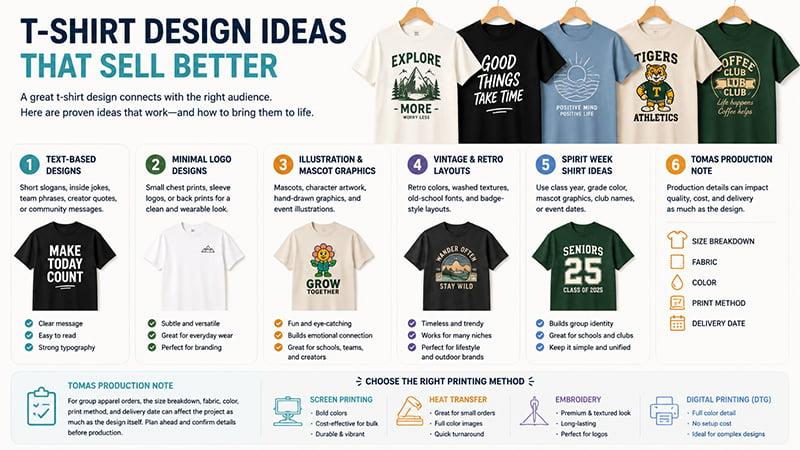
T-Shirt Design Ideas That Sell Better
Custom shirts remain one of the most common merch categories because they offer a large design surface and clear brand visibility. But not all tshirt design ideas sell well. A good shirt needs a message, visual style, or community meaning.
Text-based designs: Short slogans, inside jokes, team phrases, creator quotes, or community messages can work well when the audience understands the meaning. These designs are simple, but they need the right wording and typography.
Minimal logo designs: Small chest prints, sleeve logos, or back prints can feel more wearable than large front logos. This works well for subtle branding, company merch, and lifestyle brands.
Illustration and mascot graphics: Mascots, character artwork, hand-drawn graphics, and event illustrations can create cool tshirt designs for schools, bands, creators, sports teams, and communities.
Vintage and retro layouts: Retro colors, washed textures, old-school fonts, and badge-style layouts can work well for music brands, coffee shops, clubs, outdoor brands, and local businesses.
Spirit week shirt ideas: Schools can use class year, grade color, mascot graphics, club names, team slogans, teacher-student themes, or event dates. For spirit week shirt ideas, clear group identity is usually more important than a complex design.
TOMAS production note: For group apparel orders, the size breakdown, fabric, color, print method, and delivery date can affect the project as much as the artwork itself. Before production, confirm whether the design is better for screen printing, heat transfer, embroidery, or digital printing. Buyers can also review TOMAS Crafts’ guide to types of printing when comparing decoration methods.
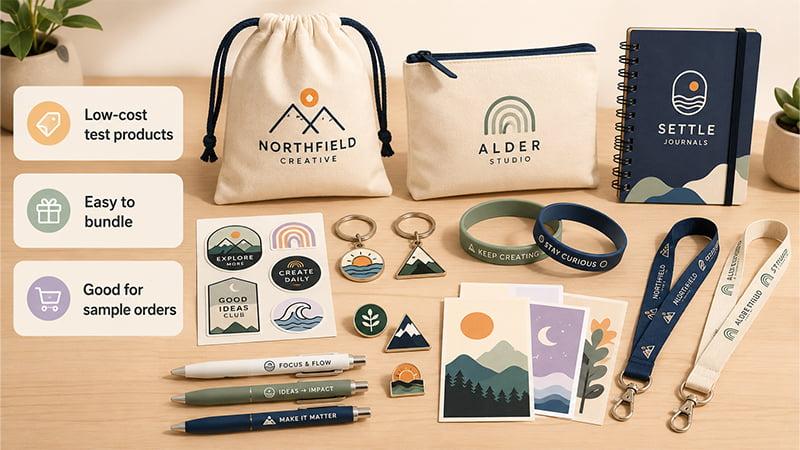
Cheap Merchandise Ideas for Testing a New Online Business
Cheap merchandise ideas are useful for testing demand, but cheap should not mean low quality. A small product can still feel worth keeping when the design, material, and packaging are handled well.
Good low-cost testing products include stickers, keychains, wristbands, enamel pins, pens, lanyards, posters, small pouches, drawstring bags, and notebooks. These items are easier to bundle with larger products and can help increase average order value.
Stickers and sticker sheets work well for creators, artists, clubs, and packaging inserts. Keychains and pins are useful for tourism, events, fandoms, and community brands. Wristbands, lanyards, and drawstring bags are easy to distribute at schools, sports events, and fundraisers.
Cheap merch also works well as an impulse add-on. For example, a customer buying a graphic tee may add a sticker sheet or enamel pin at checkout. A school spirit campaign may bundle a shirt with a wristband. A band merch table may sell posters, pins, and patches next to tour shirts.
The main risk is quality. Poor print quality, weak materials, bad packaging, or items that break quickly can hurt the brand. Before scaling cheap merch, ask for samples and check the material, logo sharpness, color, and packing method.
Branded Merchandise Ideas for Long-Term Brand Value
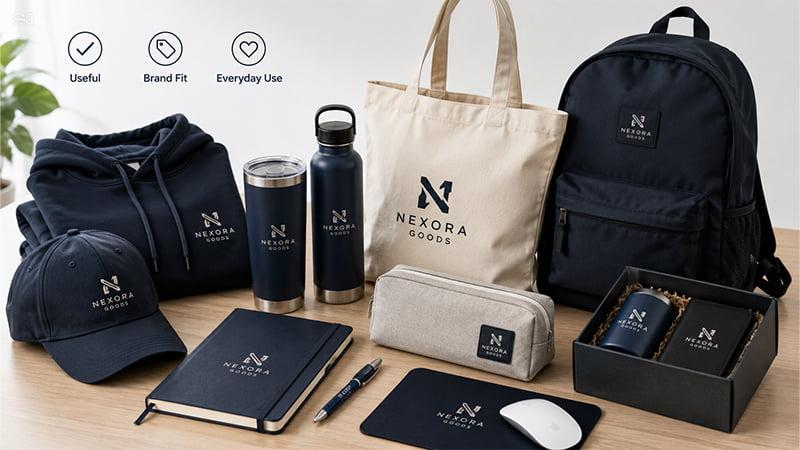
Branded merchandise should not feel like random swag. Good branded merch should match the brand identity, audience lifestyle, and everyday use occasion. The goal is not only to create merch, but to create items people want to keep.
Strong branded merchandise ideas include hoodies, caps, custom bags, tumblers, water bottles, notebooks, backpacks, mouse pads, premium pouches, gift sets, tech accessories, and limited-edition bundles. The best branded merch ideas are usually practical, consistent with the brand, and easy for people to use repeatedly.
The best branded merch ideas are not always the loudest products. Many customers prefer items with a personal touch, subtle branding, clean color matching, and useful everyday function. If a creator, school, or company wants to launch its own merch, the product should feel connected to the brand instead of looking like a random promotional item.
For corporate brands, useful items such as notebooks, pens, tumblers, bottles, laptop sleeves, and gift sets can feel professional and practical. For creators, graphic tees, hoodies, stickers, mugs, posters, and bundles can build fan identity. For schools, spirit shirts, reusable bags, lanyards, water bottles, wristbands, and drawstring bags help create group identity.
For events, caps, towels, drawstring bags, wristbands, pouches, and bottles are easy to distribute and useful during the event. For ecommerce brands, apparel, accessories, drinkware, stickers, and bundles create different price levels.
The best branded merch usually has three qualities: it fits the brand, it is useful in everyday life, and it has a decoration method that feels intentional. A large logo is not always better. Sometimes subtle branding, clean branding, or a small design detail can feel more premium.
For more product categories, buyers can explore TOMAS Crafts’ promotional gifts options for branded merchandise campaigns.
Merch Ideas by Business Type
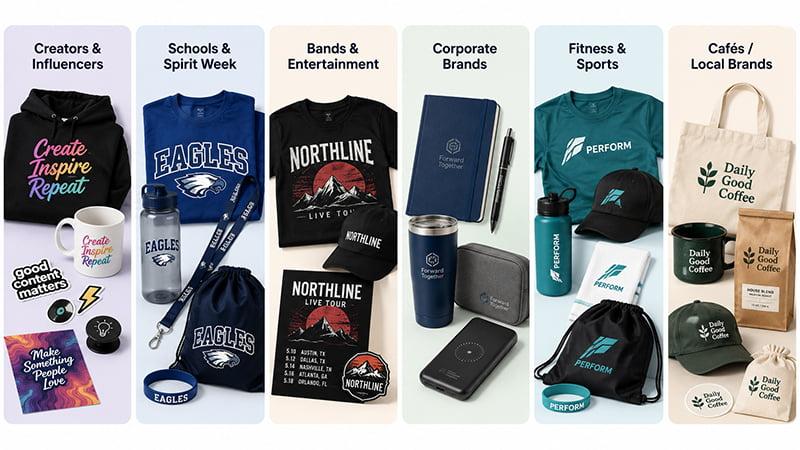
Different businesses need different merch ideas. A product that works for a band may not work for a corporate brand. A school spirit item may not fit a luxury merch shop.
For creators and influencers: Graphic tees, hoodies, stickers, posters, mugs, phone grips, and limited bundles are common choices. These products work when the audience feels connected to the message, artwork, or personal brand.
For schools and spirit week: Spirit week shirts, class shirts, reusable bags, lanyards, wristbands, water bottles, and drawstring bags are practical. Schools also need simple size planning, group packing, and clear delivery dates.
For bands and entertainment brands: Band merch can include tour shirts, hoodies, posters, pins, patches, caps, and limited bundles. Tour dates, album artwork, lyrics, and band logo designs can make the merch feel more collectible.
For corporate brands: Notebooks, pens, tumblers, water bottles, custom bags, laptop accessories, branded power bank options, and gift sets are common company merch choices. These products work best when they are practical and professional.
For fitness and sports brands: Performance apparel, caps, towels, bottles, socks, drawstring bags, wristbands, and gym pouches are useful for active audiences.
For cafés, food brands, and local businesses: Mugs, aprons, reusable bags, stickers, caps, pouches, and gift sets can support everyday brand exposure. These products can also work for seasonal promotions or local community events.
How to Turn Merch Ideas Into Profitable Products
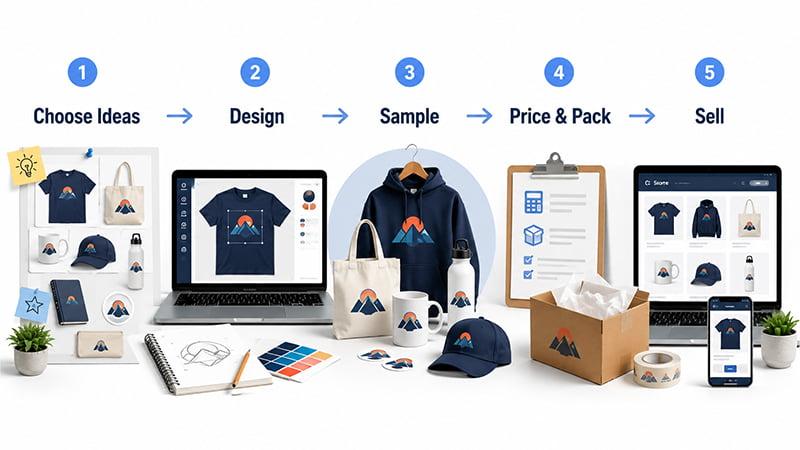
Profitable merch ideas need more than a good product. They need a plan for pricing, production, packaging, shipping, and repeat sales.
Start with 3–5 products, not 29: Testing too many products at once can create inventory pressure, quality control issues, and unclear sales data. A small, focused merch line is easier to manage.
Match price to perceived value: Hoodies, tumblers, backpacks, and gift sets can support higher pricing when the quality and packaging feel strong. Stickers, pins, and keychains work better as add-ons, bundles, or entry-level items.
Use bundles to increase order value: Bundles help connect products into a stronger offer. Examples include custom shirt + sticker + reusable bag, mug + notebook + pen, hoodie + cap, or water bottle + towel + drawstring bag.
Control production and shipping cost: A product may sell well but still leave weak profit if packaging, freight, storage, returns, or replacement costs are too high. A product with a low unit cost is not always profitable if it needs expensive packaging, high freight, or frequent replacement. The U.S. Small Business Administration break-even analysis is a useful reference because it explains how price, variable cost, fixed cost, and unit sales affect whether a product can become profitable.
Plan custom packaging early: Packaging affects unboxing, perceived value, and shipping protection. Custom packaging can make merch feel more premium, but it should be planned before production, not after the goods are finished.
Compare POD and bulk production carefully: Print-on-demand can help test designs with lower inventory risk. Shopify’s print-on-demand guide describes POD as a way to sell custom products with no inventory and low startup costs. Bulk production may be better when demand becomes stable because it gives buyers more control over unit cost, materials, labeling, packaging, and repeat supply.
Track sales by SKU: Monitor which products sell, which designs convert, and which items create repeat orders. Restock winners and retire weak products. This is how merch ideas become a stable ecommerce business, not just a one-time launch.
TOMAS Supplier Insights and Common Mistakes
A merch idea only becomes a good product when the design, material, production method, and delivery plan work together. This is where supplier review matters.
Design should match the product: A shirt design may not work the same way on mugs, caps, stickers, reusable bags, or pins. TOMAS Crafts can help review print area, logo placement, artwork file, and material before production.
Cheap merch still needs quality control: Low-cost products are useful for testing, but buyers should still check sample quality, print sharpness, color, material, and packaging. A low-cost product can still protect brand identity when the quality is controlled.
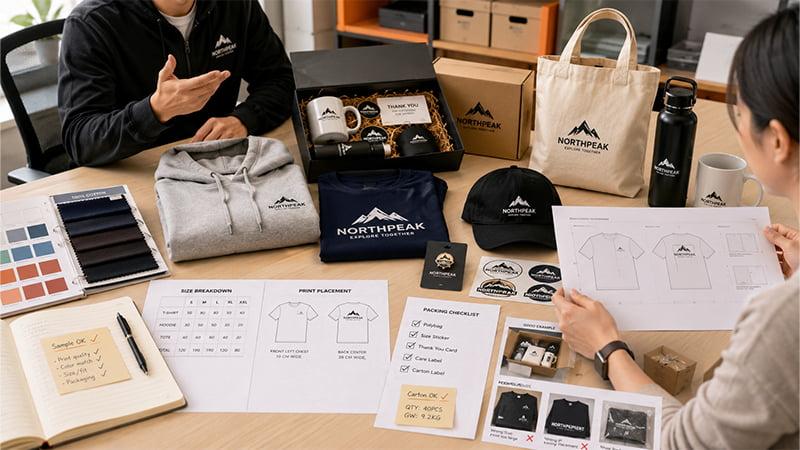
Apparel needs size and fabric planning: For custom shirts, hoodies, and spirit week shirts, buyers should confirm fabric weight, size range, size breakdown, color options, print method, label options, and packing by size. For apparel drops or school spirit orders, packing by size, color, or group can save the buyer time during distribution and reduce sorting mistakes after delivery.
Bundles need packaging planning: Gift sets and limited-edition bundles require product matching, color consistency, insert cards, carton packing, and shipping timing. Without planning, the bundle may look like random items placed together.
Stable ecommerce businesses need repeatable supply: Once a merch idea starts selling, buyers need stable production, repeatable color, consistent logo quality, and reliable lead time for restocking.
For school spirit shirts, creator drops, or company merch kits, TOMAS Crafts can review one sample set before bulk production, including fabric, print method, size breakdown, packaging, and carton sorting.
Common mistakes include choosing products only because they are trending, starting with too many products, ignoring production and shipping cost, using weak designs, skipping samples, forgetting packaging, and forgetting the restock plan.
Quick Comparison and Ordering Checklist
Use this table to decide which merch ideas fit your business goal before requesting a quote.
| Business Goal | Best Merch Ideas | Why It Works |
|---|---|---|
| Test demand cheaply | Stickers, pins, keychains, wristbands | Low cost and easy to bundle |
| Build a creator brand | Graphic tees, hoodies, mugs, posters | Strong design and fan appeal |
| School spirit campaign | Spirit shirts, lanyards, bottles, reusable bags | Easy group identity |
| Corporate branded merch | Notebooks, pens, tumblers, gift sets | Professional and practical |
| Sports or fitness merch | Caps, towels, bottles, socks, drawstring bags | Useful for active audiences |
| Premium merch shop | Hoodies, backpacks, tumblers, bundles | Higher perceived value |
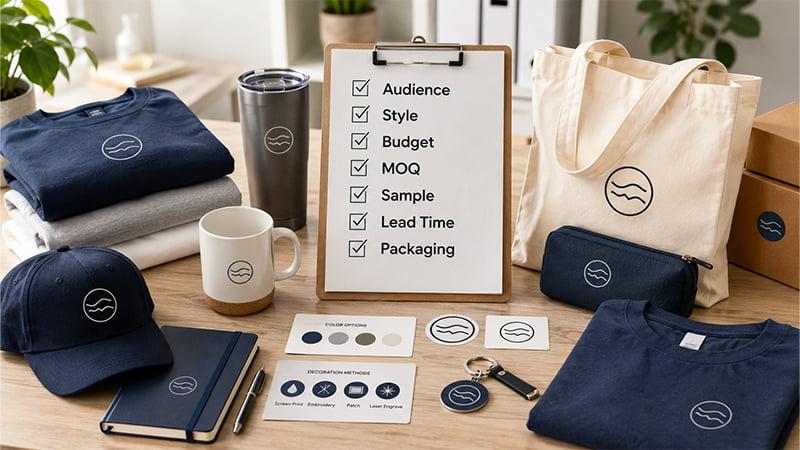
Before custom merch production, confirm these details:
- Target audience
- Business goal
- Product category
- Design concept
- Logo file
- Print method
- Material
- Size range
- Color options
- Sample approval
- MOQ
- Unit cost
- Packaging
- Shipping method
- Launch date
- Restock plan
This checklist helps buyers avoid unclear product selection, weak artwork preparation, unexpected cost, poor packaging, and restock problems.
Conclusion
Good merch ideas are not only popular products. The best choices match the audience, design style, selling price, material quality, production method, shipping plan, and brand story.
Custom shirts, hoodies, caps, reusable bags, mugs, drinkware, stickers, pins, notebooks, pouches, tech accessories, branded socks, and bundles can all work, but each product has different cost, design, packaging, and fulfillment needs.
For repeat merch programs, TOMAS Crafts can help buyers compare material, logo method, packaging, sample approval, MOQ, lead time, and restock stability before bulk production.
Need Help Turning Merch Ideas Into Custom Products?
TOMAS Crafts can help create custom merch for ecommerce businesses, creators, schools, events, corporate brands, and promotional campaigns. Whether you are testing a small merch line or preparing a bulk branded merchandise campaign, the team can help compare product options, decoration methods, sample approval, MOQ, packaging, production lead time, and restock planning.
Share your product ideas, target audience, quantity, logo file or design direction, budget, packaging needs, delivery country, and launch deadline with TOMAS Crafts.
Contact TOMAS Crafts to discuss your custom merch project.
FAQs
What are the best merch ideas for beginners?
Start with low-risk products such as custom shirts, stickers, reusable bags, mugs, caps, and keychains. These products are easy to understand, simple to customize, and suitable for testing audience demand before expanding into larger bundles.
What are cheap merchandise ideas for a new online business?
Cheap merchandise ideas include stickers, pins, keychains, wristbands, pens, lanyards, posters, and small pouches. They work well as add-ons, bundles, event giveaways, or low-cost products for testing designs.
What T-shirt design ideas sell well?
T-shirt designs usually perform better when they connect with a clear audience. Short slogans, community jokes, mascot graphics, vintage layouts, event themes, and minimalist logo designs often work better than generic brand logos.
How do I choose merch ideas for my brand?
Choose merch based on your audience, product use, design style, price point, production cost, and shipping plan. A good merch idea should be easy to understand, useful enough to keep, and realistic to produce consistently.