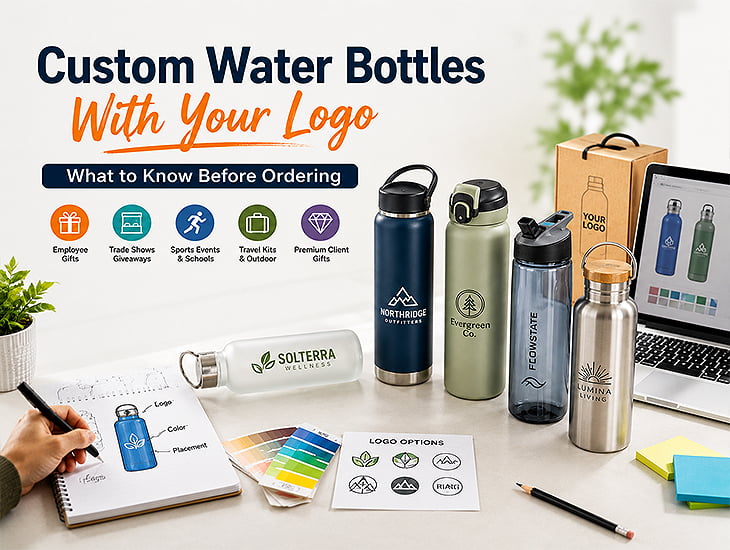
Custom water bottles are often ordered for employee gifts, trade shows, school programs, sports events, travel kits, wellness campaigns, and promotional giveaways.
But a good custom bottle is not just a bottle with a logo on it. The final result depends on who will receive it, how they will use it, what material you choose, where the logo goes, how the bottle is packed, and when the order needs to arrive.
This guide walks through the main decisions behind a custom water bottle project, from bottle style and logo method to artwork proof, sample review, and quote preparation.
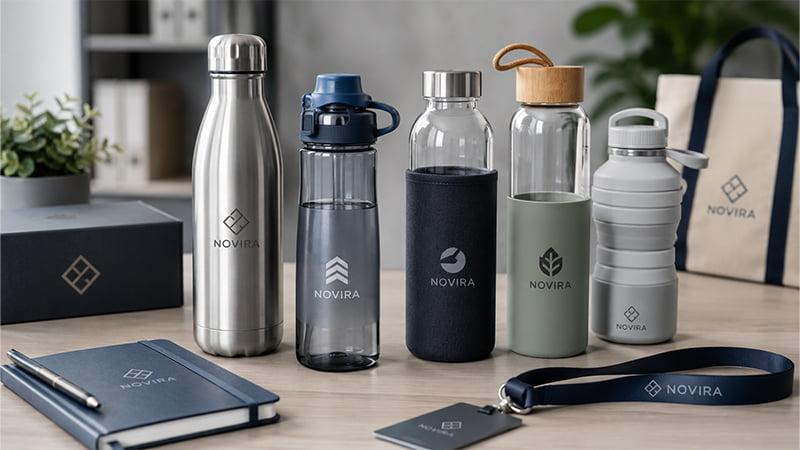
Start With the Gift or Event Goal
The first step is not choosing the bottle. It is understanding who will receive it, where they will use it, and what the gift should communicate.
A corporate welcome kit, school program, trade show giveaway, and sports campaign do not need the same bottle. The goal is to match the bottle style to the real use environment, not just pick the bottle that looks best in a product photo.
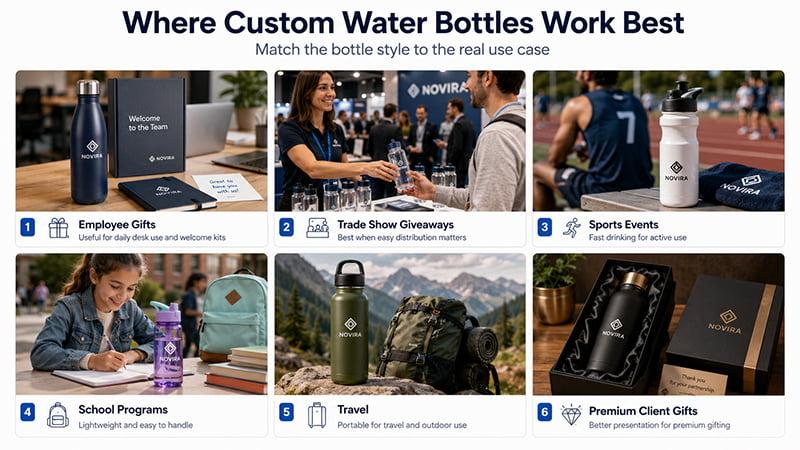
Employee Gifts and Welcome Kits
Employee gifts and welcome kits need water bottles that feel useful, gift-worthy, and suitable for daily work. The bottle may sit on a desk, travel during commuting, or become part of a larger onboarding package.
Stainless steel insulated bottles, straw lid bottles, glass bottles, and premium wide-mouth bottles usually work well here. They feel more considered than basic giveaway bottles and are more likely to stay in use after the gift is received.
A clean front logo, laser engraving, company color, gift box, or insert card can make the bottle feel more complete. For this kind of project, the design should look polished rather than overly promotional.
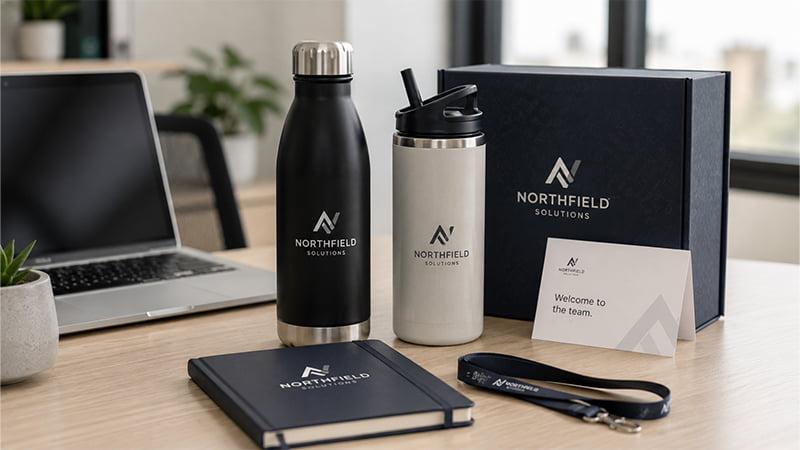
For broader planning, employee bottles can also be paired with corporate gift solutions such as notebooks, bags, lanyards, or welcome kit items.
Trade Shows and Large Giveaways
Trade show giveaways need a different approach. Visitors may already carry brochures, catalogs, samples, tote bags, and other event materials. The bottle should be easy to take away, simple to understand, and practical for larger quantities.
Plastic bottles, copolyester bottles, aluminum bottles, and lightweight flip-top bottles often fit trade shows better than heavy premium bottles. They are easier to distribute, easier to carry, and more suitable for cost-controlled bulk orders.
In a busy exhibition hall, fast logo recognition matters. A bold front logo is usually easier to notice than complex full-wrap artwork. Small text, low-contrast colors, and detailed graphics may disappear in the crowd.
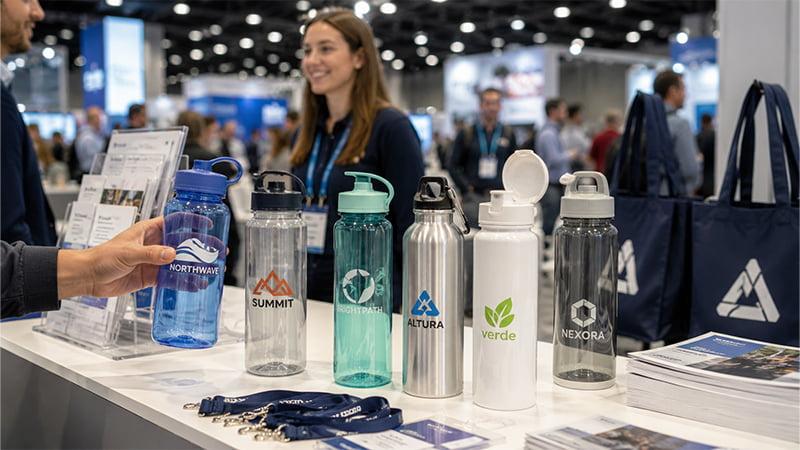
Supplier note: In event and giveaway projects, the bottle that looks most premium in a product photo is not always the best choice. A heavy stainless steel bottle or oversized bottle may feel valuable, but visitors may not want to carry it through a busy exhibition hall. A lighter bottle with a clear front logo can work better for trade shows because it is easier to hand out and may give the brand more real visibility.
For exhibition campaigns, bottles can also be planned together with branded event materials such as tote bags, table covers, badges, lanyards, and giveaway sets.
Sports Events and School Programs
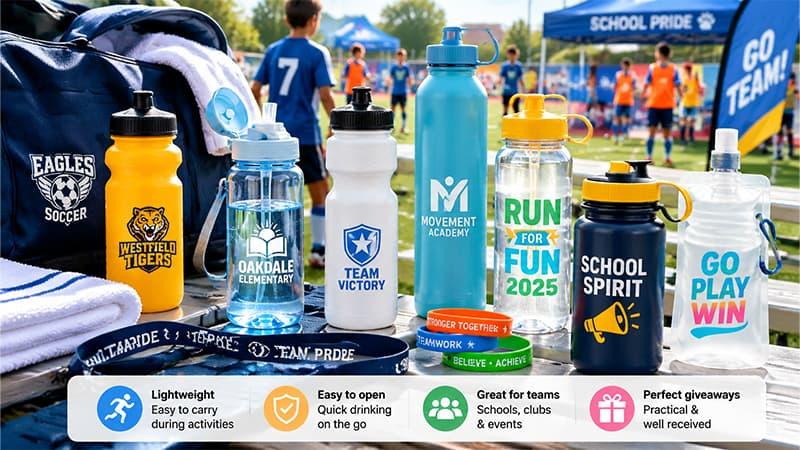
Sports events and school programs need bottles that are light, easy to open, and practical during activity.
Sports squeeze bottles, flip-top bottles, plastic bottles, kids bottles, and chug-cap bottles usually fit these projects. Younger users and active participants need bottles they can hold, open, and drink from quickly.
Logo design should stay bold and readable. Team logos, school names, sponsor marks, and event titles should not rely on tiny text or thin lines.
For school programs, bottle weight and lid security matter. For sports events, fast drinking and easy handling matter more than premium appearance.
Travel Kits and Outdoor Campaigns
Travel kits and outdoor campaigns need bottles that are portable, secure, and easy to pack.
Collapsible bottles, wide-mouth bottles, insulated bottles, lightweight bottles, and filter bottles can fit these projects. A large bottle may look valuable, but it may not fit well in a backpack, travel pouch, or event gift bag.
Check the handle, loop, cap security, and bottle size early. If the bottle includes a filter or special material claim, confirm the supporting information before using that claim in campaign copy.
Premium Client Gifts and Brand Campaigns
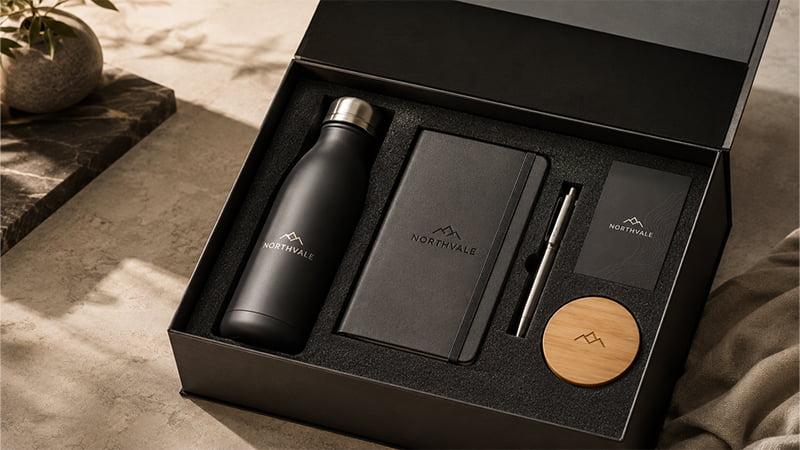
Premium client gifts need cleaner design and stronger presentation.
Stainless steel insulated bottles, powder-coated bottles, glass bottles with sleeves, bamboo lid bottles, and bottle gift sets are stronger options. A smaller engraved logo often feels more refined than a large promotional print.
Gift boxes, insert cards, sleeves, or matching set items can improve presentation. For premium projects, the safest direction is usually simple: better material, cleaner logo placement, fewer unnecessary design elements, and stronger gift presentation.
Choose the Right Bottle Style for Customization
Once the project goal is clear, choose a bottle direction. No need to compare every bottle type again here. The real question is how the bottle style affects logo placement, color choice, lid options, artwork, and gift presentation.
If the bottle style is still open, start with our guide to the main types of water bottles. Once the direction is clear, customization becomes easier to plan.
Stainless steel bottles work well for premium gifts, engraving, insulation, and long-term use. They suit employee gifts, client gifts, and higher-value campaigns.
Plastic bottles are better for large giveaways, school programs, sports events, and simple logo printing. They are lighter, easier to distribute, and more budget-friendly for bulk orders.
Glass bottles fit wellness, spa, lifestyle, or desk-use gifts. They feel clean and gift-worthy, but they are less suitable for rough handling or children’s events.
Bamboo or bamboo-accent bottles fit eco-style gifts, wellness campaigns, office gift sets, and lifestyle promotions. They often use bamboo lids, bamboo sleeves, or bamboo fiber blends to create a warmer, more natural look. Before production, check the food-contact material, coating, and cleaning method.
Aluminum bottles give a lightweight metal look for events and outdoor campaigns. They work when the project needs a metal appearance without the heavier feel of stainless steel.
Collapsible bottles are useful for travel kits and space-saving campaigns. They focus on portability, not premium presentation.
Sports bottles fit teams, races, gyms, and active programs. They are chosen for fast drinking and simple handling, not for luxury appearance.
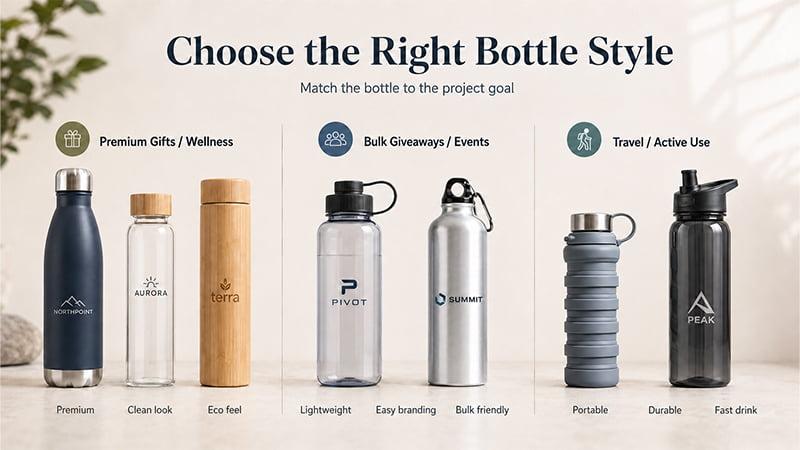
Bottle direction affects the decoration method. A stainless steel bottle may work well with laser engraving. A plastic event bottle may work better with a bold screen-printed logo. A premium bottle gift set may need cleaner branding and stronger presentation.
What Can Be Customized on Water Bottles?
Custom water bottles are not limited to logo printing. A project can also involve bottle color, lid style, capacity, surface finish, accessories, packaging, and gift set combinations.
More customization does not always make the bottle better. The best choices support the project goal.
Logo, Event Name, and Branding
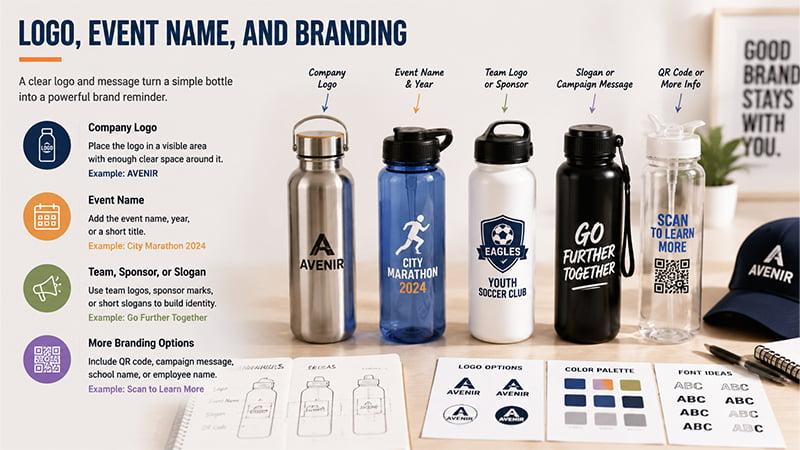
Most projects start with a company logo. The artwork may also include an event name, team logo, sponsor mark, slogan, campaign message, school name, QR code, or employee name.
Keep the branding simple enough to read on the bottle. A bottle is not a poster. Small text and detailed artwork can lose clarity, especially on curved surfaces.
For event bottles, one strong logo or message usually works better than several small design elements competing for attention.
Bottle Color, Finish, and Capacity
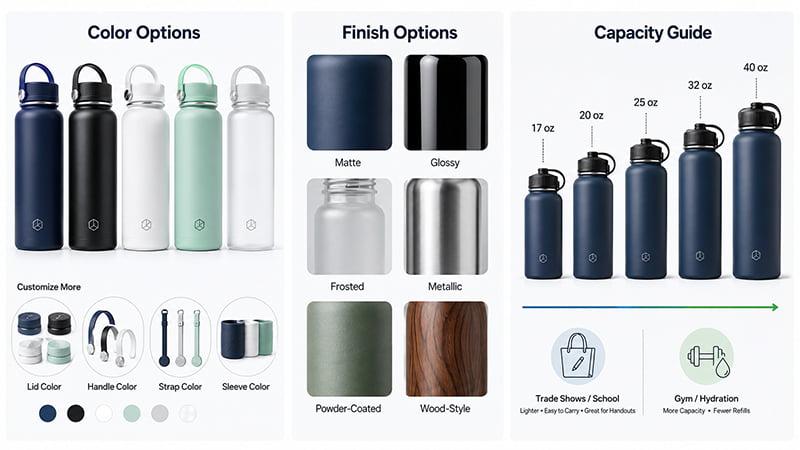
Buyers may customize the bottle body color, lid color, handle color, strap color, or silicone sleeve color.
Surface options may include matte, glossy, frosted, transparent, metallic, powder-coated, wood-style, or soft-touch finishes. Color should support logo visibility. A dark logo on a dark bottle usually looks weak. A light logo on a transparent or frosted bottle may also lose contrast.
Common capacities may include 17 oz, 20 oz, 25 oz, 32 oz, and 40 oz. Bigger capacity is not always better. A 40 oz bottle may be useful for gym or hydration campaigns, but it can be too heavy for trade show handouts or school programs.
Lid Style and Accessories
Lid options may include straw lids, flip-top lids, screw caps, chug caps, wide-mouth openings, loop handles, carry handles, bamboo lids, and carabiner-ready caps.
Accessories may include silicone sleeves, straws, cleaning brushes, clips, or gift packaging inserts.
Match the lid to the use case. A gym bottle needs fast drinking. A school bottle needs lighter weight and secure closure. A travel bottle needs a portable shape and leak-resistant cap.
Packaging and Gift Set Options
Packaging should be planned as part of the gift experience, not only as a shipping detail.
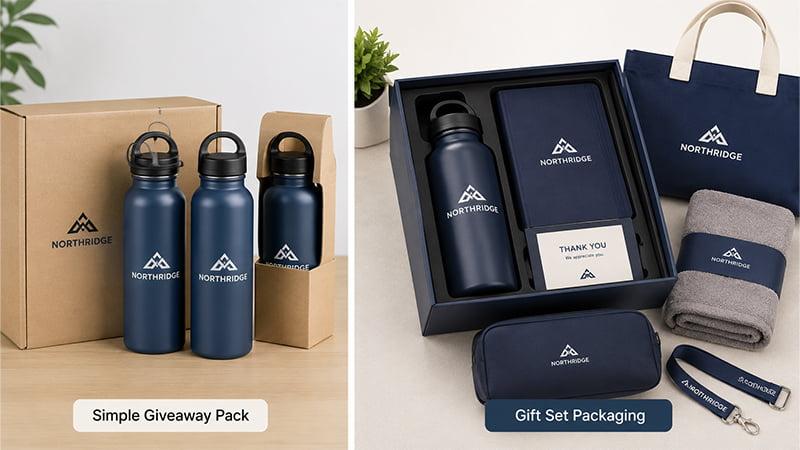
A large giveaway may only need simple packing. An employee welcome kit or client gift may need an individual box, color box, sleeve, insert card, thank-you card, or full gift set packaging.
Custom water bottles can also be paired with custom promotional gift items such as tote bags, notebooks, towels, lanyards, travel pouches, or employee welcome kit items. A set combination can make the campaign feel more complete and connect the bottle to the project theme.
Plan the Logo for a Curved Bottle Surface
This is one of the most important parts of a custom water bottle project.
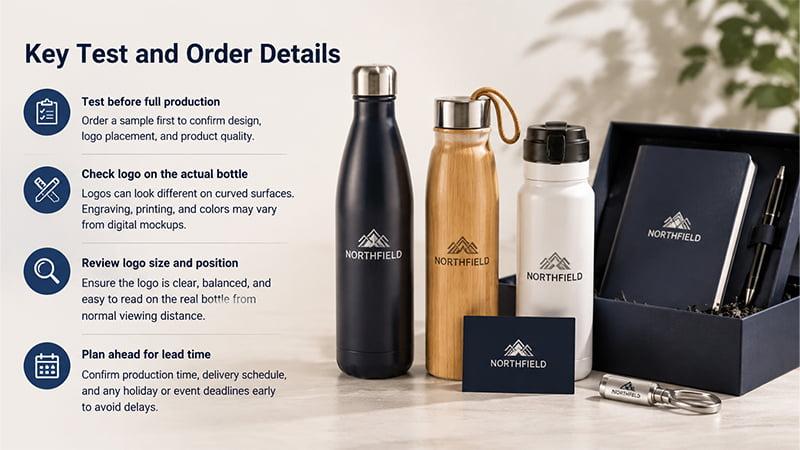
A bottle is round, not flat. People do not see the full design from one angle. A logo that looks clear in a flat mockup may look different when printed or engraved on the bottle body.
Why a Flat Mockup Can Be Misleading
Logo clarity matters more than logo size.
A wide horizontal logo may curve too much on some bottle shapes. Small text, thin lines, QR codes, and detailed sponsor layouts may become hard to read. A design may look balanced on screen but lose impact on the real bottle.
Supplier note: One common issue in custom bottle projects is not logo size, but logo shape. A long horizontal logo, small slogan, sponsor list, or QR code may look fine in a digital mockup. On the real bottle, part of the design can curve away from the viewer, and small text can lose clarity. The issue is often not logo size, but logo shape.
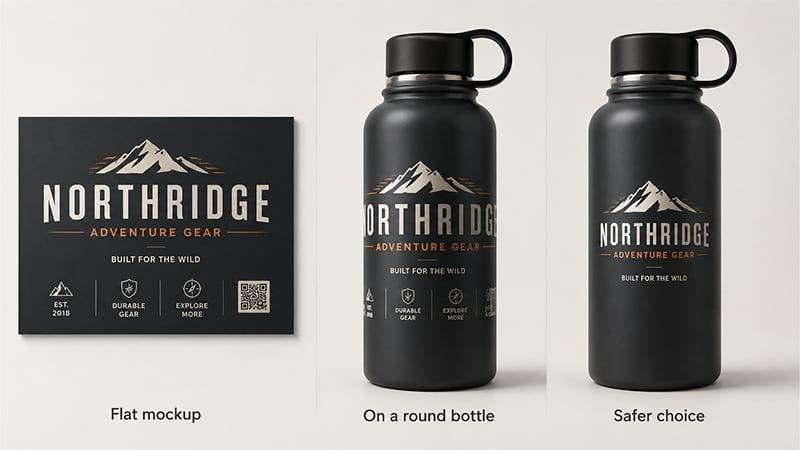
For many gift and event orders, a clean front logo with strong contrast is safer than a wide full-wrap design. The best question to ask is simple: can the logo still be recognized quickly when someone is holding the bottle?
Match Logo Placement to Bottle Shape
Different bottle shapes offer different logo areas.
A front center logo works well for most event bottles. It is simple, clear, and easier to control in production.
A vertical logo may fit tall slim bottles or simple brand names. A wraparound design can create stronger campaign graphics, but it is harder to read at one glance.
A small engraved logo often works better for premium stainless steel bottles, bamboo lids, or wood-accent parts. It creates a cleaner and more understated effect than a large promotional print.
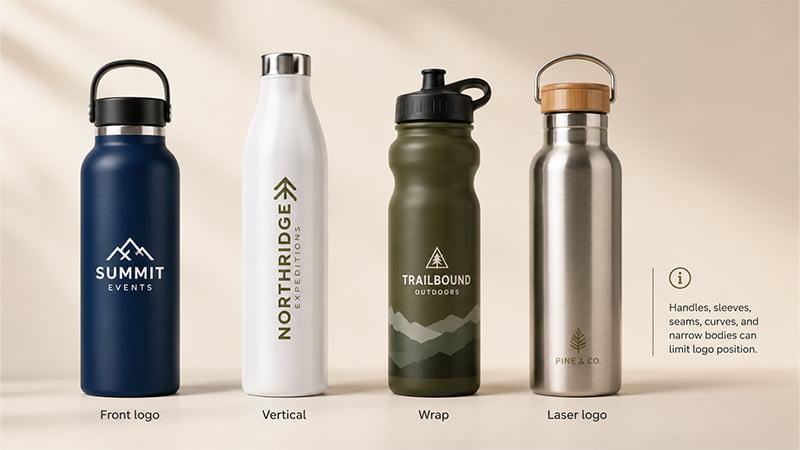
Handles, sleeves, seams, textures, curved shoulders, and narrow bottle bodies can limit logo position. These details should be checked before artwork approval.
Keep Text and Details Readable
Text is often the first part of a design to lose clarity.
Small slogans can become unclear on a curved bottle. Thin-line logos may lose visibility. Busy background patterns can make important information harder to read.
Leave enough clear space around the logo. Avoid placing text too close to handles, seams, textured areas, or curved shoulders.
If the bottle includes an event date, sponsor text, school name, or QR code, check readability carefully before production. High color contrast is usually more important than using every brand color.
Choose the Right Logo Method
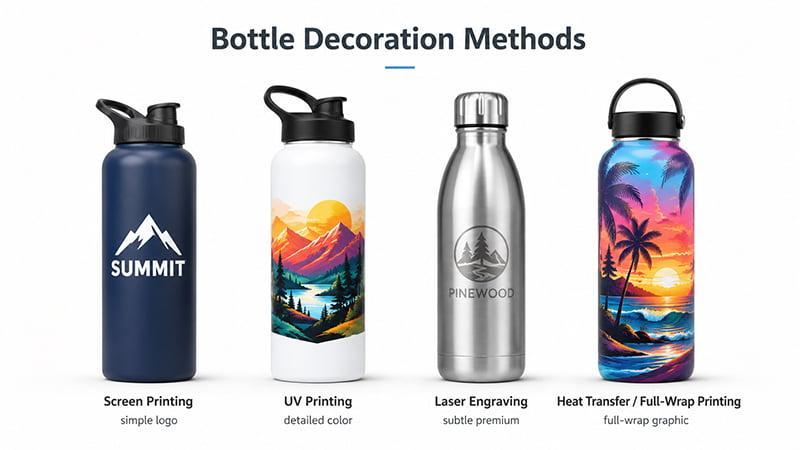
The right logo method depends on the bottle material, surface finish, logo color, order quantity, and gift level.
A premium client gift does not need the same decoration method as a large trade show giveaway. A simple one-color logo does not need the same process as a full-color campaign graphic.
| Logo Method | Best For | What to Watch |
|---|---|---|
| Screen printing | Simple logos, larger quantities | Best for clean, limited-color designs |
| UV printing | Multi-color logos or detailed artwork | Check color accuracy and surface compatibility |
| Laser engraving | Stainless steel, bamboo lids, premium gifts | Creates a durable, understated effect |
| Heat transfer | Full-color artwork on selected surfaces | Needs suitable material and surface |
| Full-wrap printing | Campaign graphics or large visual impact | Needs careful proofing on curved surfaces |
| Powder coating | Premium stainless steel finish | Often paired with engraving or simple printing |
Screen Printing
Screen printing is practical for simple logos, limited colors, larger quantities, and event bottles.
It works well when the logo has clean shapes and strong contrast. It is often suitable for bulk promotional water bottles where cost and consistency matter.
It is not the best choice for complex full-color artwork or designs with many small details.
UV Printing
UV printing can support more colors and detailed artwork on suitable surfaces. It is useful when the design needs stronger visual impact, but the bottle surface and color accuracy should be checked first.
Not every bottle finish gives the same result. Matte, glossy, frosted, transparent, and coated surfaces can affect the final look.
Laser Engraving
Laser engraving works well for stainless steel bottles, bamboo lids, wood-accent parts, premium gifts, employee gifts, and client gifts. It creates a durable and professional effect. It often looks more refined than a large promotional print, especially for corporate or executive gifts.
Laser engraving is a strong option when the goal is subtle branding, long-term use, and a cleaner gift presentation.
Heat Transfer and Full-Wrap Printing
may work for selected full-color designs, depending on the bottle material and surface.
Full-wrap printing
can look impressive for campaign graphics, but it may not be the safest option for small text, detailed artwork, or logos that need to be seen quickly.
Powder coating
Is mainly about surface finish and premium feel. It is often paired with engraving or simple logo printing.
Prepare Artwork Files and Review the Proof
Artwork quality affects how the final branded water bottles look.
A clean file can make proofing faster and reduce production delays. A poor file can create blurry printing, unclear lines, or extra back-and-forth before the order can move forward.
Prepare the Right File Type
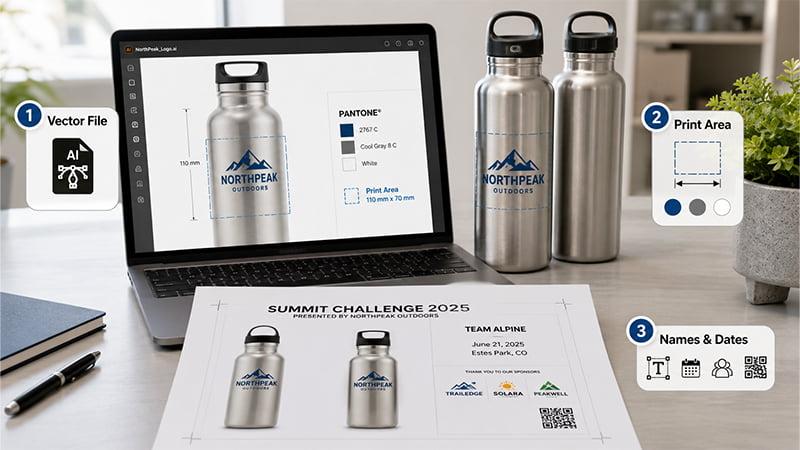
Vector files are usually preferred for company logos. Common formats include AI, EPS, SVG, or editable PDF. High-resolution PNG or JPEG files may work for some artwork, but low-resolution screenshots are not ideal for printing.
If the design includes a graphic, event message, team name, sponsor logo, or QR code, check the file quality before proofing.
Check Logo Size, Color, and Print Area
A digital proof helps confirm how the artwork will be placed on the bottle. Before approving production, check logo size, logo position, bottle color, lid color, print area, color contrast, artwork alignment, and logo method.
Do not only ask whether the logo is included. Check whether the logo still looks clear on the actual print area.
Review Names, Dates, and Sponsor Marks
For event orders, proof review should not only check the logo. Also check event dates, team names, school names, sponsor logos, QR codes, campaign text, and spelling. These details are easy to miss when several people approve the artwork.
Once production starts, correcting a wrong date, misspelled name, or unclear sponsor logo can cost more time than checking the proof carefully at the beginning.
When Should You Request a Sample?
Not every custom water bottle project needs a physical sample. But important projects usually benefit from one.
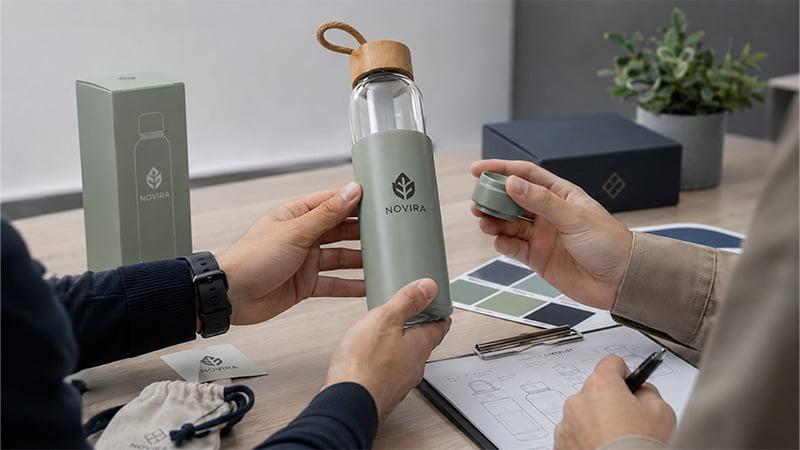
A sample is not only about checking the bottle. It helps the project team decide whether the final gift feels right for the audience.
Projects That Should Use a Sample
A sample is useful for:
- large orders
- premium client gifts
- multi-color logos
- full-wrap artwork
- bamboo or wood-accent styles
- new bottle styles
- fixed event deadlines
- gift box or set combinations
If the project has a strict event date or a higher gift value, a sample can reduce risk before bulk production.
What a Sample Helps Confirm
A sample can help confirm the real logo effect, bottle feel, lid quality, color accuracy, gift presentation, and packaging direction.
It can also reveal problems that are hard to see in a digital proof, such as a logo that feels too small, a lid that feels weak, or a color that looks different on the real surface.
For bamboo or wood-accent bottles, a sample can also help confirm the lid texture, engraving effect, sealing feel, and overall gift presentation.
For important campaigns, sample review is part of quality control, not just a formality.
Check These Details Before Bulk Production
Before bulk production, review the details that could affect user experience, brand presentation, and campaign claims.
This step should focus on the details that create the most risk if they are missed.
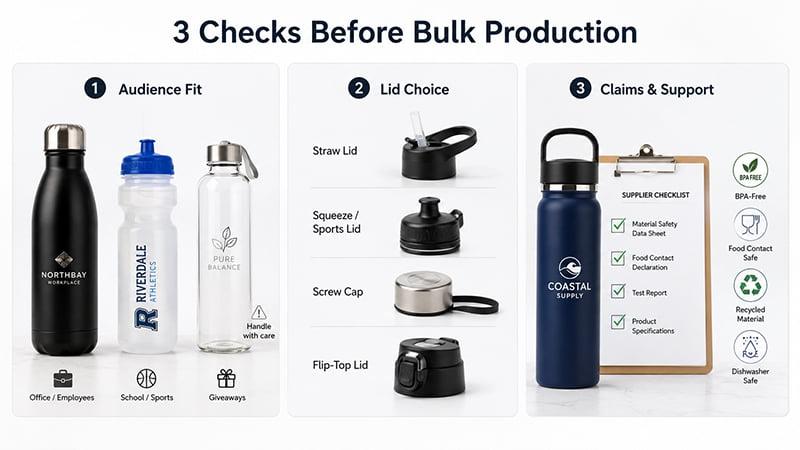
Audience Fit
A bottle that looks good in photos may not fit every audience. A 40 oz bottle may be too heavy for school programs or trade show handouts. A glass bottle may look refined but may not fit sports or children’s events. Stainless steel may be too costly for very large giveaways. Plastic may feel too basic for premium client gifts.
The bottle should match the people receiving it, not only the buyer’s first impression.
Lid Choice
The lid affects how people use the bottle. It can also affect complaints after delivery. A straw lid may fit desk use and wellness gifts. A squeeze lid may fit sports events. A screw cap can feel simple but reliable for travel kits. A flip-top lid is convenient, but it should be checked for leakage or breakage risk.
For bamboo lids or wood-accent caps, check sealing, cleaning instructions, and whether the lid fits the use environment. Small lid details can affect the user experience more than decorative features.
Product Claims and Material Support
Some product claims should be supported before they are used in campaign materials.
These may include BPA-free, food-contact, food-grade stainless steel, recycled content, eco-friendly, dishwasher safe, natural material, bamboo fiber, and filter-related claims.
For plastic, copolyester, silicone, stainless steel, coated aluminum, bamboo, and wood-accent bottles, supplier documentation should be confirmed before those claims are used in marketing copy. The FDA information on BPA in food-contact applications can help buyers understand why food-contact wording should be handled carefully.
Use clear and accurate wording. Avoid broad claims that cannot be supported by supplier documents.
What to Prepare Before Requesting a Quote
A clear inquiry helps the supplier recommend suitable options faster.
Not every detail needs to be final. But the more context you provide, the easier it is to compare practical bottle options and prepare a clear quote.
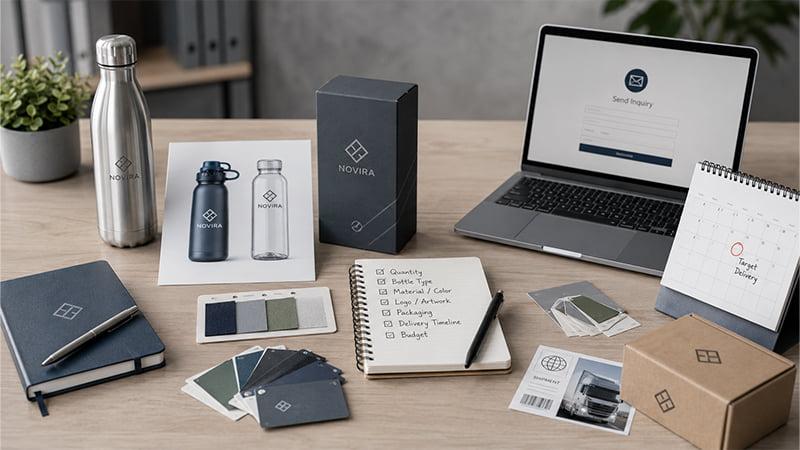
Before asking for a quote, prepare:
- project type
- target audience
- quantity
- bottle style or reference image
- preferred material
- capacity
- lid style
- bottle color
- logo file
- logo color
- preferred logo method, if known
- packaging request
- delivery country
- event or launch deadline
- target budget
- any material or claim requirements, such as BPA-free, recycled content, bamboo, or food-contact documentation
If you are unsure about the bottle style, share the use case first. A supplier can often recommend better options after understanding the audience, budget, timeline, and how the bottles will be distributed.
For more product options, buyers can also review TOMAS custom drinkware before preparing a final inquiry.
FAQs
What can be customized on a water bottle?
Logo, bottle color, lid color, capacity, lid style, surface finish, packaging, insert cards, labels, and gift set combinations can often be customized. The available options depend on the bottle type, material, order quantity, and production method.
How do I add a logo to a water bottle?
A logo can be added by screen printing, UV printing, laser engraving, heat transfer, or full-wrap printing. The right method depends on the bottle material, surface finish, logo colors, order quantity, and desired look.
Which logo method is best for custom water bottles?
Laser engraving is often a strong choice for stainless steel bottles, bamboo lids, wood-accent parts, and premium gifts. It creates a durable and refined logo effect.
Screen printing works well for simple logos and larger quantities. UV printing can support multi-color logos on suitable surfaces.
What file type is best for printing a logo?
Vector files such as AI, EPS, SVG, or editable PDF are usually preferred for company logos. High-resolution PNG or JPEG files may work for some artwork, but low-resolution screenshots can cause blurry printing.
Do I need a sample before ordering custom water bottles in bulk?
A sample is useful for large orders, premium gifts, multi-color logos, full-wrap designs, bamboo or wood-accent styles, new bottle styles, or fixed event deadlines. It helps confirm the real logo effect, bottle color, lid quality, gift presentation, and packaging direction before bulk production.
Choose a Water Bottle People Will Actually Use
A good custom water bottle is not just about shape, size, or logo placement. It should fit the people receiving it, the way they drink, and the setting where they will use it.
Before choosing the final style, check the material, lid type, capacity, cleaning needs, logo method, packaging, carton volume, and delivery date. These details help avoid common problems such as bottles that leak, feel too heavy, hide the logo, or arrive too late for the event.
Ready to Plan Your Custom Water Bottle Order?
TOMAS Crafts helps companies, schools, event teams, and promotional projects compare bottle styles, materials, lid options, logo methods, packaging choices, and bulk order details before production starts.
Share your bottle type, quantity, logo file, target audience, budget, and deadline. TOMAS team can help recommend practical water bottle options for employee gifts, sports events, school programs, travel kits, and promotional campaigns. Contact US for a custom water bottle quote.