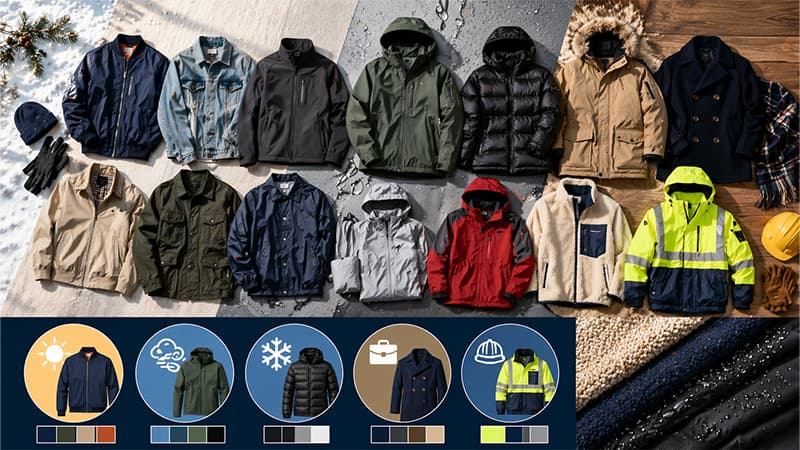
Choosing the right types of jackets isn’t just about style—it affects warmth, weather protection, and how long your branding looks premium. At TOMAS Crafts, we help teams source jackets that match climate, use case, and logo method without costly rework. This guide covers 30 practical jacket types plus two quick tools to help you choose confidently.
How to Use This Types of Jackets List
Identify jacket types by four fast signals
Use these four signals to scan any jacket quickly:
- Length: waist, hip, or long coat
- Shell protection: casual fabric vs technical shell
- Insulation level: none, light, heavy, or multi-layer
- Hood/collar design: hooded vs stand collar vs lapels
Choose by real use case first
Start with the job the jacket must do: everyday wear, commuting, outdoor activities, rain coverage, cold-weather warmth, or formal occasions. Once the use case is clear, jacket selection becomes much faster—and your program gets higher repeat wear.
Jacket Basics That Affect Comfort, Performance, and Branding
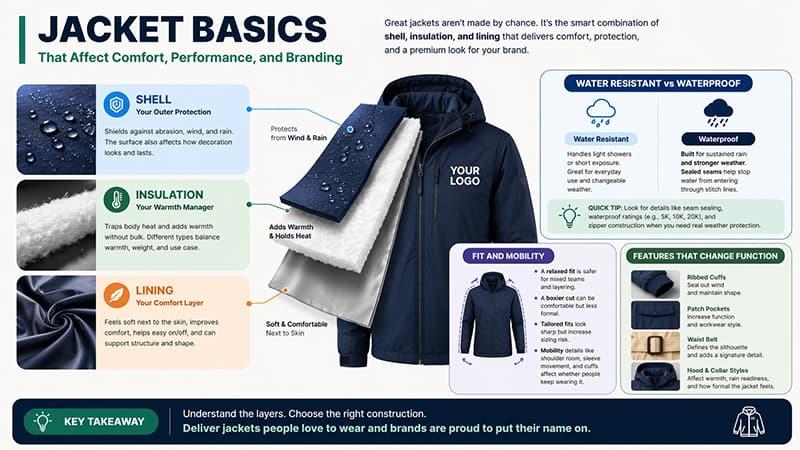
Shell, insulation, lining
Most jacket performance comes from how the shell, insulation, and lining work together. The shell handles abrasion and wind/rain exposure; insulation manages warmth; lining improves comfort and sometimes supports structure. For branding, shell surface matters because smooth technical shells behave differently from stable fabrics during decoration.
Water resistant vs waterproof in real rain
“Water resistant” usually means short exposure or light showers, while “waterproof” is designed for sustained rain and stronger weather protection. Construction details matter—especially sealed seams, which help prevent water from entering through stitch lines. For a quick reference on waterproofing concepts.
Fit and mobility
A relaxed fit is safer for mixed teams and layering; a boxier cut can be comfortable but less formal; tailored fits look sharp but increase sizing risk. Mobility details (shoulder room, sleeve movement, cuffs) affect whether people keep wearing the jacket.
Features that change function
Small features can make a big difference in daily wear:
- Ribbed cuffs help seal out wind and maintain shape
- Patch pockets increase function on workwear-inspired jackets
- A waist belt is a signature trench detail and changes silhouette
- Hood and collar styles affect warmth, rain readiness, and perceived formality
30 Different Types of Jackets
Everyday and casual jacket types
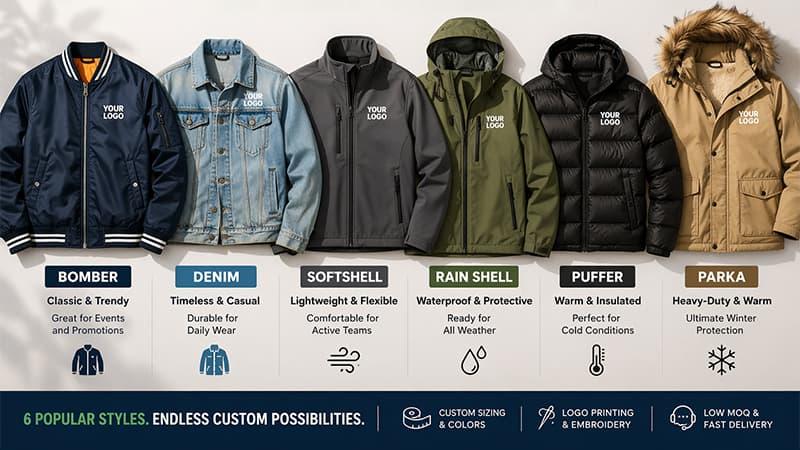
- Bomber jacket
A short, versatile everyday jacket with a clean shape. Often uses ribbed cuffs, which helps comfort and structure; branding usually works well with embroidery or patches. - Denim jacket
A rugged casual staple that stays popular year after year. Denim is highly durable and typically supports embroidery and patches with consistent results. - Varsity jacket
A team-forward silhouette often built with a wool body and contrasting sleeves. Great for chenille patches, embroidery, and high perceived value in community programs. - Leather biker (moto) jacket
A structured, premium style with strong identity and durability. Best for subtle branding—small logos, discreet patches, or inside-label details. - Harrington jacket
Lightweight and refined, bridging casual and professional. Works well for commuting and office-friendly programs; embroidery and patches tend to look clean on the chest area.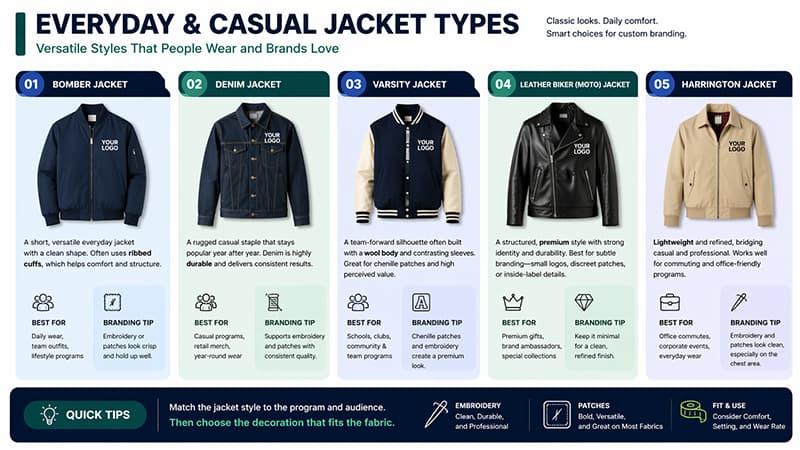
- Blouson jacket
A classic short jacket style with a slightly relaxed silhouette. Good for casual wear and simple branding placement without large back prints. - Coach jacket
Lightweight, clean-paneled outerwear that’s popular for events and merch. Often print-friendly depending on shell finish; patches are a reliable alternative for coated fabrics. - Shirt jacket (shacket)
A layering piece that sits between shirt and jacket for transitional weather. Great for casual uniforms; embroidery and patches usually perform well on stable surfaces. - Chore coat
Workwear-inspired with functional patch pockets and sturdy fabric. Strong for daily wear and brand visibility with embroidery or patches. - Field jacket
Utility styling with multiple pockets and outdoor vibe. Good for functional teams and light outdoor activities; patches and embroidery both work well. - Blazer jacket
A professional option suited to business settings and formal occasions. Branding should be minimal—tone-on-tone embroidery, small logo, or interior labeling. - Track jacket
A sporty, mobility-friendly layer that works for teams and casual programs. Decoration depends on fabric; smaller chest logos are typically safest.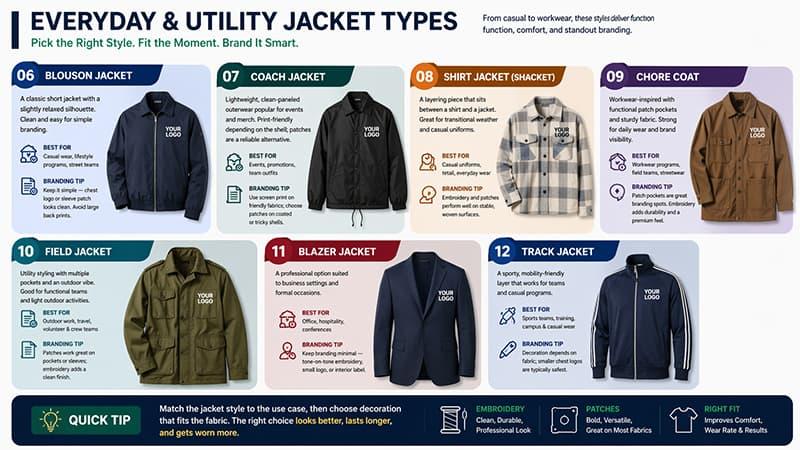
Lightweight and transitional weather jacket types
- Windbreaker
A light shell designed for wind and active use. Many windbreakers work best with heat transfer or patches; always confirm shell coatings before large prints. - Packable jacket
Built for travel and event kits where convenience matters. Prioritize lightweight durability and simple logo placement; heat transfer and patches are common solutions.
Rain and weather protection jacket types
- Rain jacket
Designed for frequent showers and event days. For higher weather protection, prioritize better construction (including sealed seams) and choose decoration that bonds reliably, such as patches or suitable transfers. - Mac jacket
A clean commuter rain style with a streamlined silhouette. Often water resistant rather than fully waterproof; patches and selective embroidery may work depending on coating.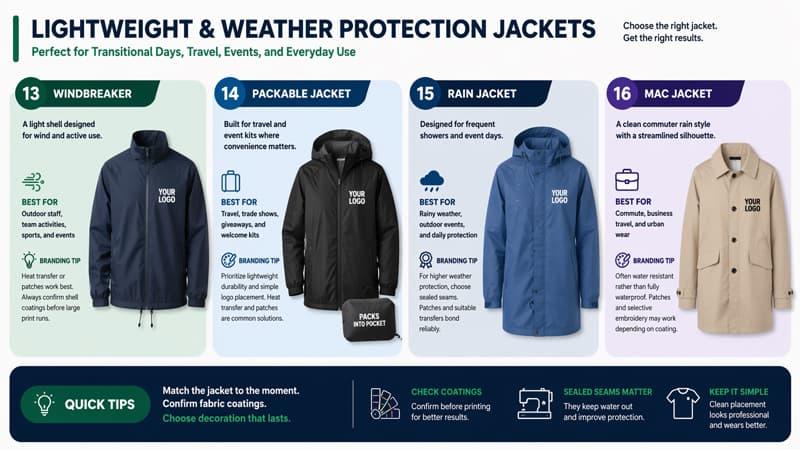
- Trench coat
A classic coat style often defined by a waist belt and refined look. Ideal for premium programs and formal occasions with subtle branding. - Anorak
A pullover jacket style often featuring a half zip and hood. Strong for outdoor events and transitional weather; patches and heat transfer work well. - Softshell jacket
A popular corporate pick for mixed conditions because it’s often breathable and flexible. Embroidery can look great with proper backing to prevent puckering; patches are also reliable. - Hardshell jacket
A technical shell built for stronger wind and rain conditions. Branding often performs best with patches; printing may require testing depending on surface and coatings. - Waterproof shell jacket
A high weather protection option for sustained rain. Sealed seams and construction quality matter; patches are typically the lowest-risk decoration choice for technical shells.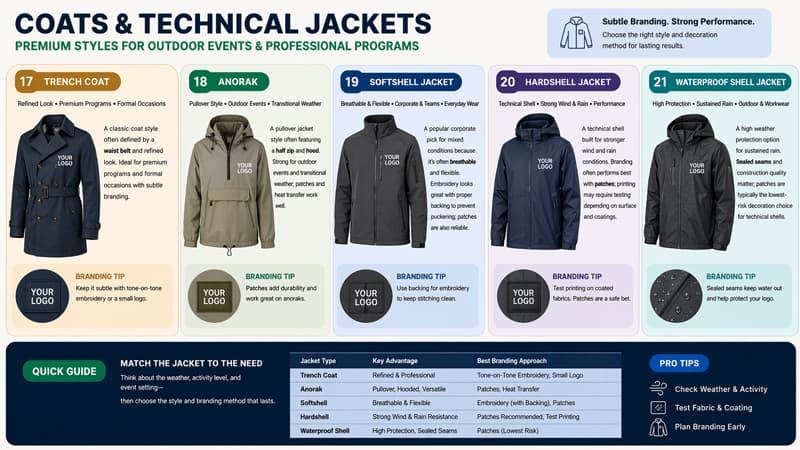
Warmth and winter jacket types
- Quilted jacket
Light insulation with a clean look that fits everyday wear. Keep logos off thick quilting seams to avoid distortion and uneven stitching. - Puffer jacket
High warmth-to-weight and strong perceived value in winter programs. Branding should avoid baffles; patches or carefully placed embroidery on flat zones works best. - Down jacket
Warm and compressible for winter travel and premium programs. Branding depends on shell fabric; patches often reduce risk on technical surfaces. For background on down insulation - Parka
A winter essential with hooded designs and strong utility. Great for outdoor staff; patches and embroidery both work well with correct placement.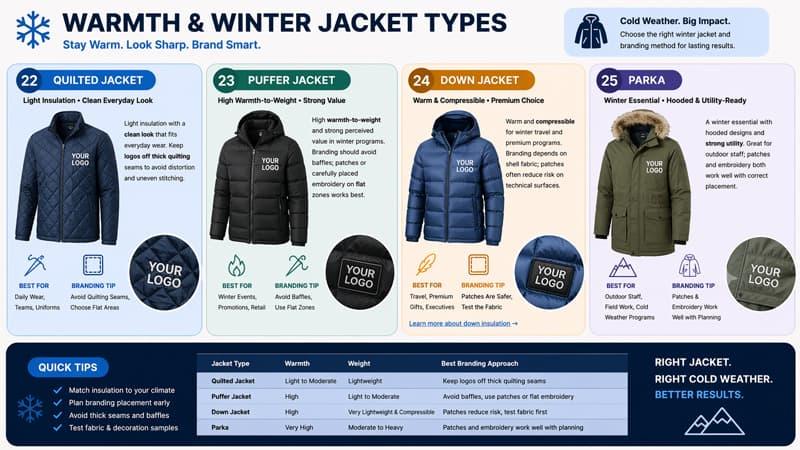
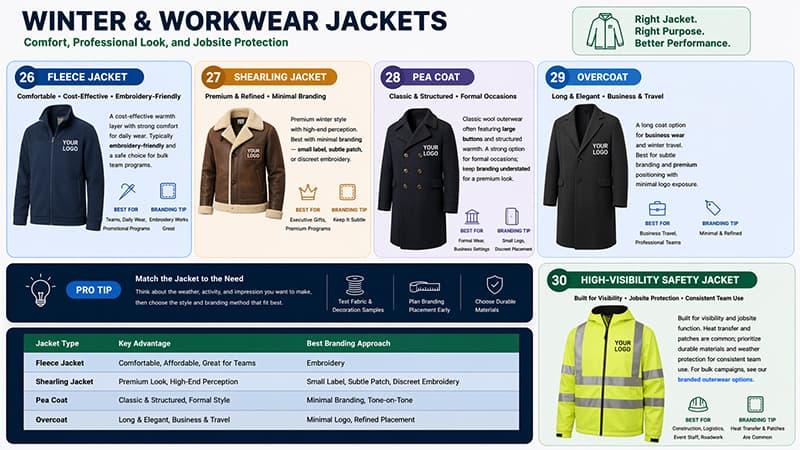
- Fleece jacket
A cost-effective warmth layer with strong comfort for daily wear. Typically embroidery-friendly and a safe choice for bulk team programs. - Shearling jacket
Premium winter style with high-end perception. Best with minimal branding—small label, subtle patch, or discreet embroidery. - Pea coat
Classic wool outerwear often featuring large buttons and structured warmth. A strong option for formal occasions; keep branding understated for a premium look. - Overcoat
A long coat option for business wear and winter travel. Best for subtle branding and premium positioning with minimal logo exposure.
Workwear and safety jacket types
- High-visibility safety jacket
Built for visibility and jobsite function. Heat transfer and patches are common; prioritize durable materials and weather protection for consistent team use. For bulk campaigns, see our branded outerwear options.
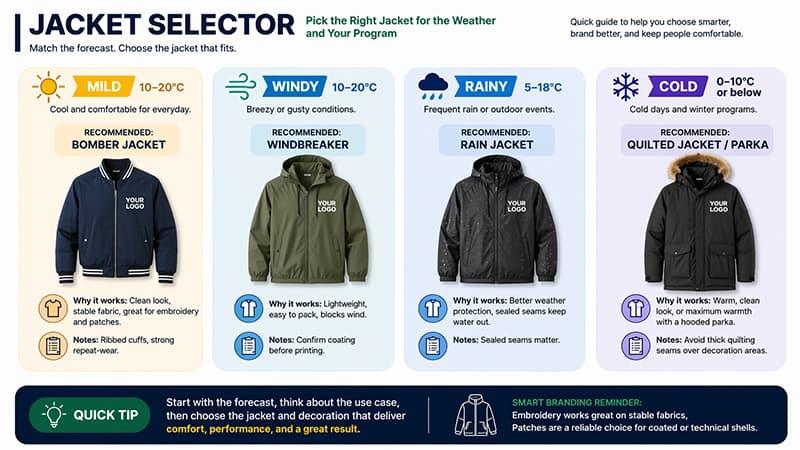
Jacket Selector Table
Use this table to shortlist jacket types by weather and program needs.
| Weather & temp | Use case | Best jacket type | Best branding method | Why it works | Notes |
|---|---|---|---|---|---|
| Mild 10–20°C | Everyday teams | Bomber jacket | Embroidery, patches | Clean panels, stable fabric | Ribbed cuffs, strong repeat-wear |
| Mild 10–20°C | Lifestyle merch | Denim jacket | Embroidery, patches | Durable, “kept” longer | Casual staple |
| Cool 5–15°C | Community/team | Varsity jacket | Chenille/patches, embroidery | High perceived value | Wool body, contrasting sleeves common |
| Transitional 10–18°C | Commuting/office | Harrington jacket | Embroidery, patches | Refined but casual | Mixed-audience friendly |
| Windy 10–20°C | Outdoor staff | Windbreaker | Heat transfer, patches | Lightweight and packable | Confirm coating before printing |
| Light rain 8–18°C | Daily commute | Mac jacket | Patches, select embroidery | Clean silhouette | Often water resistant |
| Frequent rain 5–18°C | Events/outdoor | Rain jacket | Patches, heat transfer | Better weather protection | Sealed seams matter |
| Harsh weather 0–15°C | Work crews | Waterproof shell | Patches recommended | Technical shells resist inks | Prioritize sealed seams |
| Variable 5–18°C | Active work | Softshell jacket | Embroidery with backing, patches | Breathable + flexible | Prevent puckering |
| Cold 0–10°C | Winter commute | Quilted jacket | Embroidery, patches | Warmth + clean look | Avoid thick quilting seams |
| Cold 0–5°C | Premium warmth | Puffer jacket | Patches, careful embroidery | High warmth-to-weight | Place logos on flat zones |
| Very cold ≤0°C | Outdoor winter | Parka | Patches, embroidery | Warm + hooded designs | Durable shell, high utility |
Materials and Warmth Quick Guide
Shell Fabrics
| Shell type | Best for | Branding notes | Keywords |
|---|---|---|---|
| Denim | Casual durability | Embroidery/patch friendly | durability, everyday wear |
| Nylon/poly shell | Windbreakers/coaches | Printing depends on coating | weather protection |
| Softshell | Mixed weather | Embroidery needs backing | breathable, water resistant |
| Membrane shell | Waterproof shells | Patches often safest | waterproof, sealed seams |
| Wool/blend | Formal coats | Subtle branding works best | warmth, formal occasions |
Insulation
| Insulation | Best for | Branding notes | Keywords |
|---|---|---|---|
| Down | Premium warmth | Prefer patches on technical shells | winter essential |
| Synthetic | Damp-friendly warmth | Place logos on flat zones | durability |
| Fleece | Bulk team warmth | Embroidery-friendly | breathable |
| Quilting | Light insulation | Avoid seams for logos | transitional weather |
How to Choose the Right Jacket Type
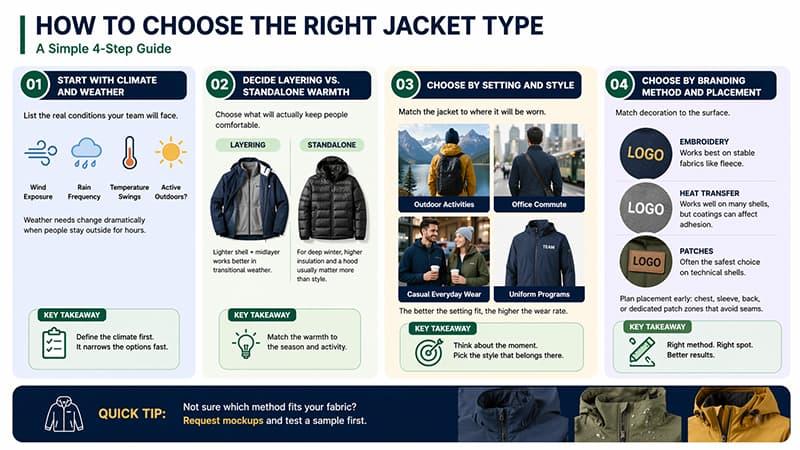
Step 1 — Start with climate and weather
List the real conditions: wind exposure, rain frequency, temperature swings, and whether teams are active outdoors. Weather needs change dramatically when people stay outside for hours.
Step 2 — Decide layering vs standalone warmth
In transitional weather, a lighter shell plus midlayer often outperforms a heavy jacket. For deep winter, insulation level and hooded designs usually matter more than styling.
Step 3 — Choose by setting and style
Match the environment: casual wear vs formal occasions, office commute vs outdoor activities, everyday wear vs uniform programs. The better the setting fit, the higher the wear rate.
Step 4 — Choose by branding method and placement
Match decoration to the surface:
- Embroidery works best on stable fabrics and fleece.
- Heat transfer can work well on many shells, but coatings can affect adhesion.
- Patches are often the safest option on technical shells.
Plan placement early—chest, sleeve, back, or dedicated patch zones that avoid seams.If you’re unsure which method fits your jacket fabric, request mockups.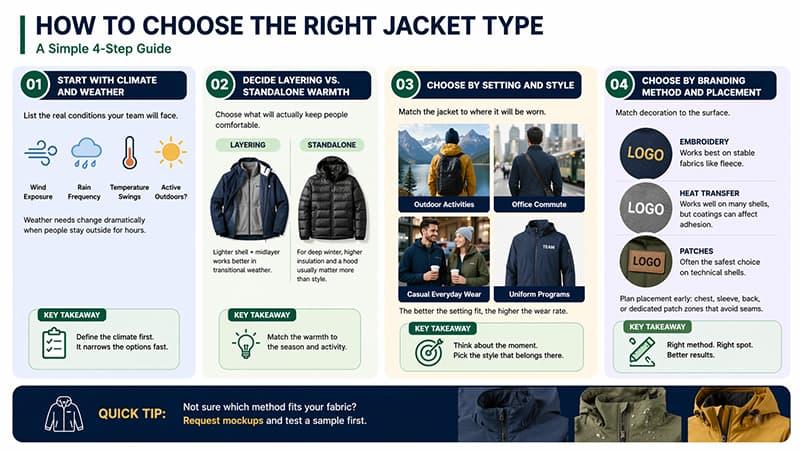
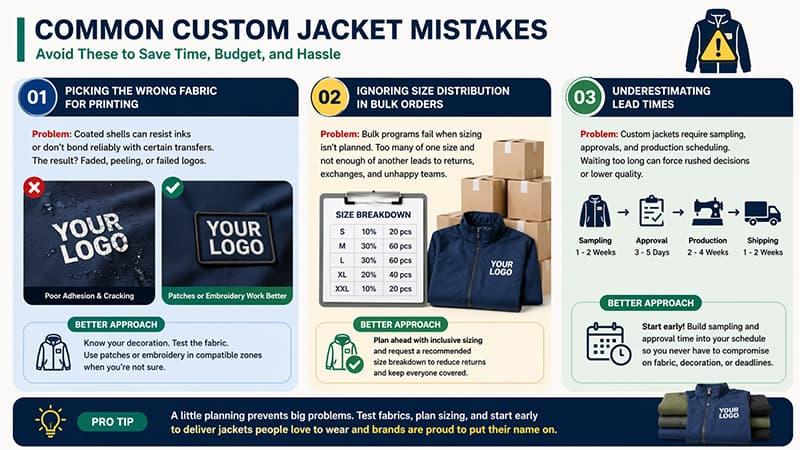
Common Custom Jacket Mistakes to Avoid
Picking the wrong fabric for printing
Some coated shells resist inks or don’t bond reliably with certain transfers. When in doubt, use patches or embroidery in compatible zones.
Ignoring size distribution in bulk orders
Bulk programs fail when sizing isn’t planned. Use inclusive sizing and request a recommended size breakdown to reduce returns and complaints.
Underestimating lead times
Custom jackets often require sampling, approvals, and production scheduling. Start early for seasonal deadlines so you don’t have to compromise on fabric or decoration quality.
Conclusion
The best types of jackets are the ones people actually wear in their real environment. Use the 30-style list to recognize the most common jacket types, then use the selector table and materials guide to choose based on warmth, weather protection, fit, and customization needs. When function and comfort match real life, the jacket becomes a repeat-wear brand touchpoint—not a one-time giveaway.
Call to Action
Planning jackets for an event, team program, or corporate gifting? TOMAS Crafts can recommend the right jacket types for your climate, budget, and logo method, then support sampling, customization, packaging, QC, and shipping.
Inquire Now
FAQs
- Which jacket types are best for rain and strong weather protection?
Waterproof shell jackets and hardshell styles offer the strongest weather protection, especially when construction includes sealed seams. For lighter rain, rain jackets and mac jackets can work well depending on exposure time. - How do I choose between embroidery and heat transfer for custom jackets?
Embroidery is best on stable fabrics and fleece. Heat transfer is common for shells, but coatings can affect adhesion. For technical shells, patches are often the lowest-risk option. - Which jacket types work best for a hybrid office environment?
Harrington jackets, quilted jackets, and softshell jackets usually fit hybrid office needs because they balance comfort, a clean look, and practical weather protection. - Are recycled and sustainable jacket materials durable enough for everyday wear?
Many recycled synthetics perform well for daily use, especially in insulated jackets. Focus on construction quality, seam strength, and matching the branding method to the shell surface.