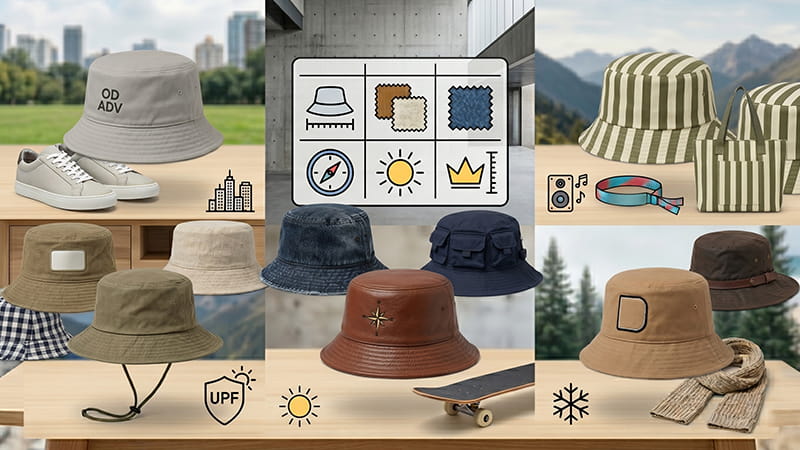
Bucket hats are a year-round accessory, but small spec changes—brim width, crown height, fabric, and structure—can completely change the look, comfort, and sun protection you get. At TOMAS Crafts, we help brands choose bucket hat styles that match use case and logo method. This guide covers 15 types plus two quick tools to choose confidently.
What Does a Bucket Hat Look Like
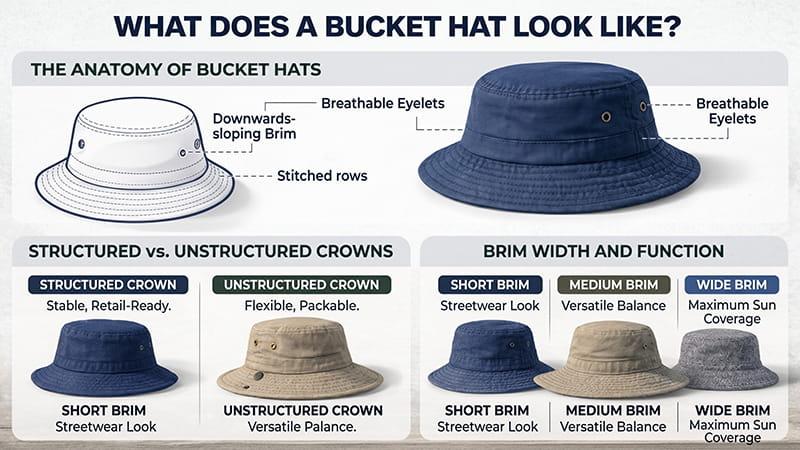
The anatomy of bucket hats
A classic bucket hat has a rounded crown and a downward-sloping brim, usually with stitched rows that help the brim hold shape. Many styles add eyelets for airflow and a sweatband for comfort. If you want a quick reference for the standard definition.
Structured vs unstructured crowns
A structured crown holds its silhouette better and often looks more “retail-ready.” An unstructured crown is softer and more packable. For branding, structure affects how stable the hat stays when worn—so softer crowns may flex more during use, which matters for sharp logo placement.
Brim width and function
Brim width changes both style and function. Short brims feel more streetwear-leaning; medium brims are the most versatile; wide brims prioritize sun coverage for outdoor events and travel. If sun protection is a core requirement, look for UPF-focused materials and coverage design.
Are Bucket Hats in Style
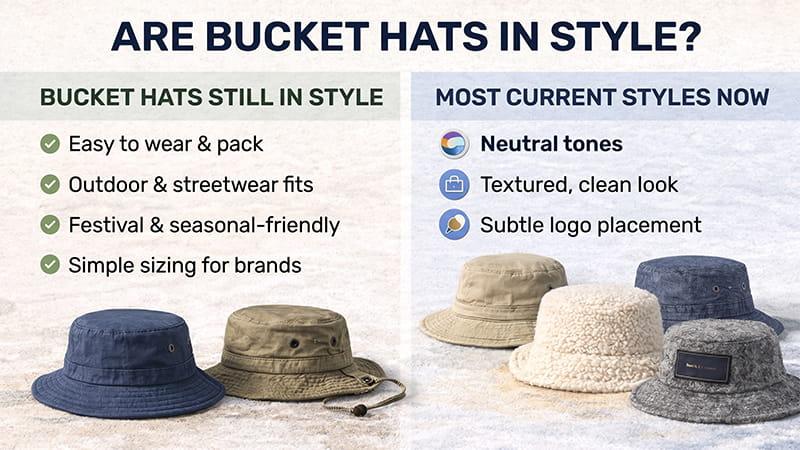
Are bucket hats still in style
Yes. Bucket hats stay relevant because they’re easy to wear, easy to pack, and functional for outdoor use—while still fitting modern streetwear and festival looks. For brands, they also work well in seasonal kits because sizing is simpler than many apparel items.
What bucket hat styles feel most current now
In 2026, the most “current” bucket hat styles lean toward neutral tones, clean stitching, and subtle logo placement. Texture-forward options (denim, corduroy, fleece, sherpa) also perform well because they feel elevated without relying on loud graphics.
Different Types of Bucket Hats
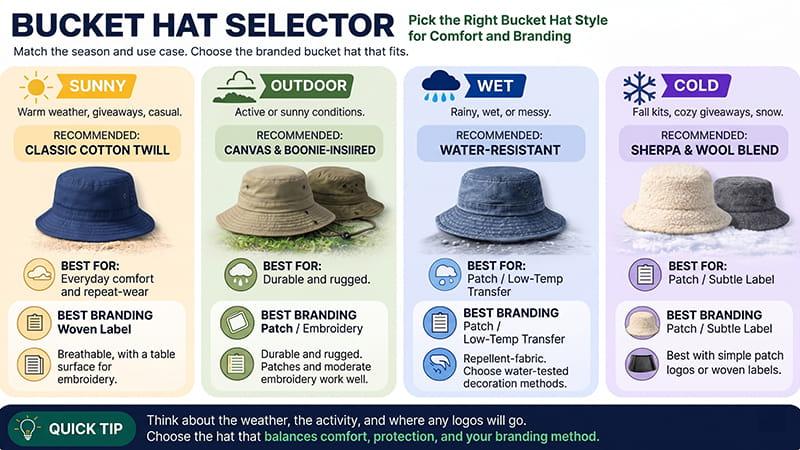
Below are 15 practical bucket hat types. Each style includes a fast “best for” and a branding-friendly note.
Casual and lifestyle bucket hat styles
- Classic cotton twill bucket hat
The everyday default—comfortable, breathable, and easy to repeat-wear. Cotton twill is typically reliable for embroidery and woven labels because the surface is stable. - Denim bucket hat
A rugged lifestyle look that pairs naturally with jeans and casual outfits. Denim handles embroidery and patches well and often ages nicely with wear. - Canvas bucket hat
A tougher feel than twill and often slightly more structured. Canvas is especially good for a patch logo or bolder embroidery placement. - Reversible bucket hat
A “two looks in one” option that works well for events and campaigns. Keep branding simple (patch or minimal embroidery) so both sides remain clean and wearable. - Patch bucket hat
Built around a clean logo zone, usually on the front panel. A woven patch delivers a more premium look and reduces risk on trickier fabrics. - Pattern bucket hat (striped / bold patterns)
Best for statement drops and visibility-heavy campaigns. If you use bold patterns, keep the rest of the color coordination simple so the hat stays wearable.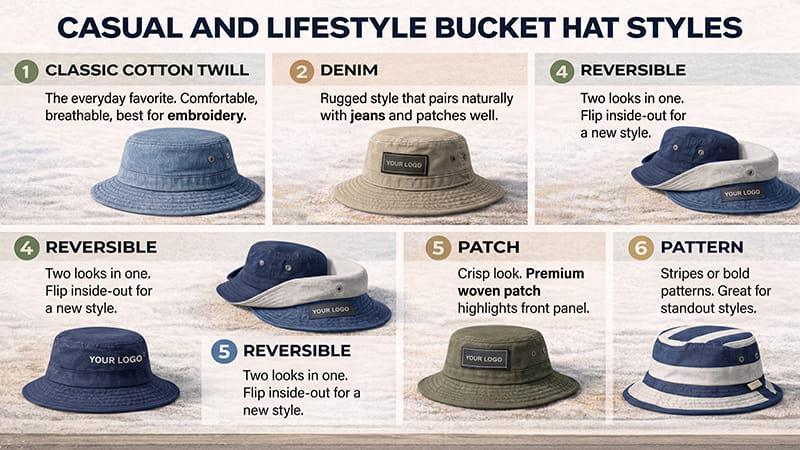
Outdoor and technical bucket hat types
- Wide-brim bucket hat
The best choice for maximum shade and sun protection. Wide brims suit outdoor promotions, tours, and summer events where people stay outside for hours. - Water-resistant bucket hat
Designed for light rain and messy outdoor conditions. Water-resistant shells often look cleanest with a patch or properly tested low-temperature transfers. - Lightweight packable bucket hat
Made for travel and giveaways where portability matters. It’s easy to roll into a bag, but wind can lift very light brims—choose structure accordingly. - Boonie-inspired bucket hat (chin cord option)
A bucket/boonie hybrid for outdoor utility and fishing-style use cases. Chin cords improve stability; patches are usually the safest decoration method. - UPF bucket hat (spec-driven)
If you’re buying for sun-heavy environments, a UPF-focused hat is a practical option. Choose it based on fabric performance and brim coverage, not just appearance.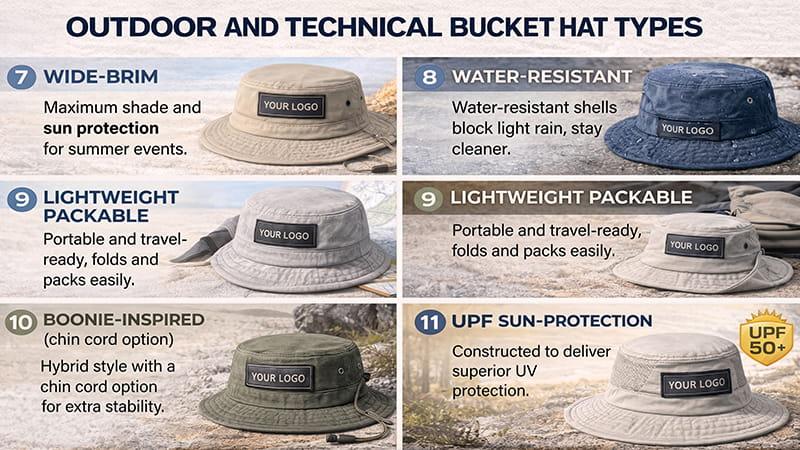
Cooler-weather and texture bucket hat types
- Corduroy bucket hat
A fall-friendly texture that reads “street” without being loud. Corduroy works best with patches or simpler embroidery—tiny text can sink into the ridges. - Wool-blend bucket hat
A more refined option for cooler months. Branding looks best when subtle (woven label or patch) to preserve a premium feel. - Fleece bucket hat
Soft warmth for winter kits and casual wear. Plush surfaces can hide fine detail, so bold shapes or patches are cleaner than tiny text. - Sherpa bucket hat
A cozy winter texture that stands out in photos and gifting. Like fleece, it favors patches over thin-line embroidery.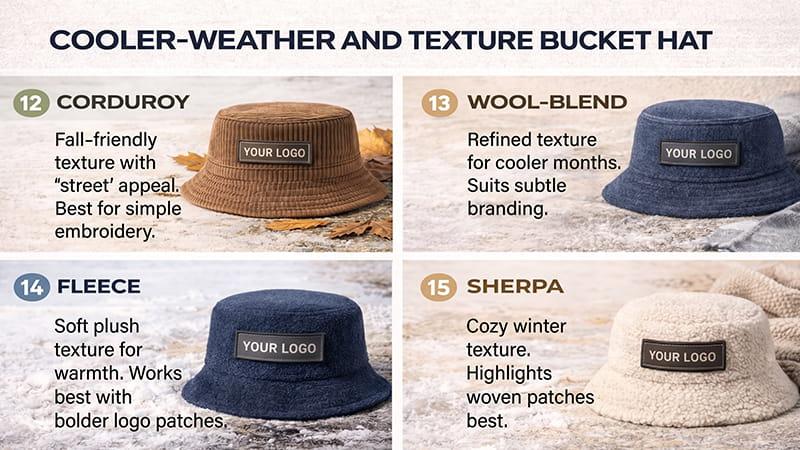
Bucket Hat Style Selector Table
Use this table to shortlist styles quickly (covers the most common buyer scenarios without being too long).
Table 1 — Bucket Hat Styles by Use Case, Season, and Branding Method
| Use case | Season | Best bucket hat type | Best fabric | Best branding method | Why it works | Notes |
|---|---|---|---|---|---|---|
| Everyday casual outings | Spring/Summer | Classic bucket hat | Cotton twill | Embroidery / woven label | Breathable and easy to wear | Works best with neutral tones |
| Streetwear + denim looks | Year-round | Denim bucket hat | Denim | Embroidery / patch | Durable, “kept” longer | Pairs naturally with jeans |
| Outdoor sun coverage | Summer | Wide-brim bucket hat | Cotton canvas | Patch / embroidery | Strong sun protection | Check brim stiffness |
| Rainy festivals / field work | Summer/Fall | Water-resistant bucket | Nylon / rPET shell | Patch / low-temp transfer | Better weather utility | Test coated shells first |
| Travel and packing | Summer | Packable bucket hat | Lightweight nylon | Patch / transfer | Easy to roll and carry | Wind may lift brim |
| Premium minimal branding | Year-round | Patch bucket hat | Cotton canvas | Woven patch | Clean, premium look | Quiet branding reads best |
| Cooler months texture | Fall | Corduroy bucket hat | Corduroy | Patch / simple embroidery | Trend texture + durability | Avoid tiny text |
| Winter refined outfits | Winter | Wool-blend bucket hat | Wool blend | Patch / woven label | Most “dress-up” friendly | Works with blazer/trench |
Specs That Change Fit, Comfort, and Logo Results
Brim width
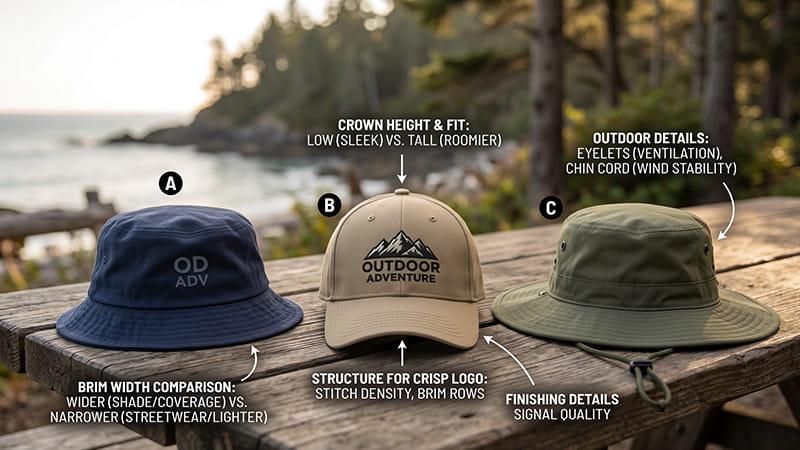
Brim width changes face framing and shade. Wider brims provide more coverage and stronger sun protection; narrower brims lean streetwear and feel lighter.
Crown height and head shape
Low crowns can look sleek and minimal; taller crowns often feel roomier. For mixed audiences, mid-height crowns are typically the safest for comfort and consistent looks.
Structure, stitching, and quality
Soft packable hats are convenient, but structure can improve perceived quality and logo crispness. Stitch density, brim rows, and finishing details often signal quality more than color does.
Wind, ventilation, and outdoor details
For outdoor programs, wind stability matters. Eyelets improve airflow; chin cords reduce fly-offs; sweatbands improve comfort. If the use case includes coastlines or open areas, plan for wind early.
Outfit Pairing Quick Guide
Casual outfits
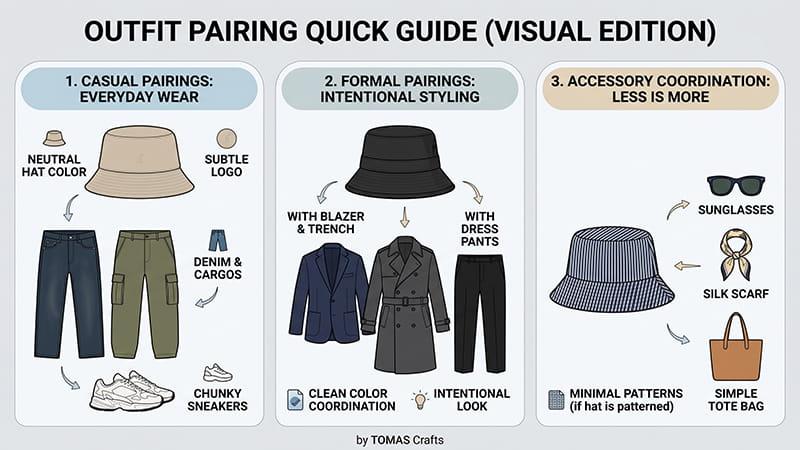
Bucket hats work easily with jeans/denim, relaxed pants, and chunky sneakers. For high repeat wear, keep the hat color neutral and the logo subtle.
Special and more formal occasions
Bucket hats can work with a blazer, trench coat, dress pants, or even suits when the styling is intentional. Use neutral tones and clean color coordination to avoid a random “afterthought” look.
Accessory coordination
Sunglasses, scarves, and a simple bag can complete the look without overdoing patterns. If the hat is patterned, keep the rest of the accessories minimal.
Branding and Customization Tips for Bucket Hat Styles
Best logo placements
Front placement is the most visible, while side/back placements often feel more premium. Brim-edge branding and inner labels are strong for quieter branding programs.
Budget and cost factors for custom bucket hats
Pricing usually depends on fabric (cotton vs technical shells), logo method (embroidery vs patch vs transfer), quantity, and packaging. If you’re comparing options, our custom hat price guide can help you estimate a realistic budget before you finalize the spec.
Table 2 — Best Logo Method by Fabric (Quick Match)
| Fabric / build | Best logo method | Backup method | Avoid / watch-outs |
|---|---|---|---|
| Cotton twill | Embroidery | Woven patch | Dense embroidery on thin crowns may distort |
| Denim | Embroidery | Patch | Heavy stitching near seams can feel stiff |
| Canvas | Patch | Embroidery | Thick canvas needs clean placement |
| Nylon / water-resistant shell | Patch | Low-temp heat transfer | Coatings can reduce adhesion; test first |
| rPET shell | Patch | Low-temp heat transfer | Heat sensitivity; avoid high-temp pressing |
| Corduroy | Patch | Simple embroidery | Fine details sink into ridges |
| Wool blend | Woven label / patch | Minimal embroidery | Keep branding subtle for premium look |
| Sherpa / fleece | Patch | Bold embroidery | Small text/lines get lost in texture |
If you’re comparing decoration methods and fabrics, our custom hat price guide explains the key factors that affect pricing (fabric, logo method, quantity, and packaging).
Packaging for events and giveaways
Keep it retail-clean: a simple fold plus an insert card is usually enough. Over-packaging rarely improves adoption, but a clean presentation often improves perceived value.
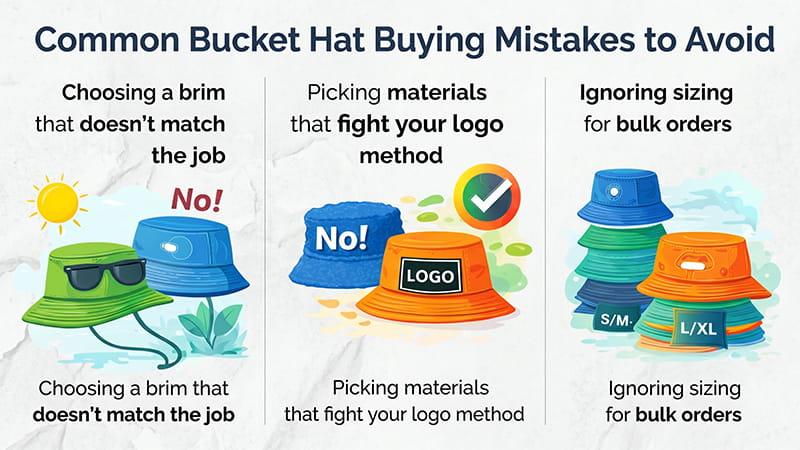
Common Bucket Hat Buying Mistakes to Avoid
Choosing a brim that doesn’t match the job
Short brims may look great but don’t solve sun exposure. If the use case is outdoor activity, pick brim width for function first.
Picking materials that fight your logo method
Water-resistant shells and plush textures (sherpa/fleece) often look best with patches or bolder designs. Forcing fine-detail embroidery can reduce legibility.
Ignoring sizing for bulk orders
If possible, offer two size tiers (S/M and L/XL). This reduces complaints and increases wear rate across mixed head sizes.
Conclusion
The real question isn’t only “are bucket hats still in style,” but which style fits your season, use case, and branding method. Use the 15-type list to identify the main bucket hat styles, then use the selector table and spec guide to choose a hat people will wear repeatedly—so your brand stays visible in real life.
Call to Action
Planning bucket hats for festivals, outdoor promotions, team kits, or branded campaigns? TOMAS Crafts can recommend the right bucket hat styles for your audience, fabric choice, and logo method—then support sampling, customization, QC, and shipping.
Inquire Now
FAQs
- What does a bucket hat look like compared to a boonie-style hat?
Bucket hats usually have a simpler silhouette and downward brim. Boonie-inspired styles often add outdoor details like chin cords and more wind stability. - Are bucket hats still in style for casual outings and events?
Yes. They remain popular because they’re easy to wear, packable for travel, and functional in warm weather while still fitting streetwear and event merch. - Which bucket hat types are best for embroidery vs patch logos?
Cotton twill and denim are strong for embroidery. Water-resistant shells, sherpa, and fleece usually look cleaner with patches. - How do I choose bucket hat sizing for bulk orders?
Offer two size tiers when possible (S/M and L/XL) and confirm head circumference ranges before mass production.