
A business card does not always have to do the same job. A salon may use one to record a client’s next appointment, a plumber may want a magnetic card that stays on the fridge, while a photographer might add a QR code that opens a portfolio.
Some cards simply share contact details. Others encourage repeat visits, promote an offer, or make it easier for someone to continue the conversation online.
Here are 10 common types of business cards, what each one is useful for, and the businesses they tend to suit.
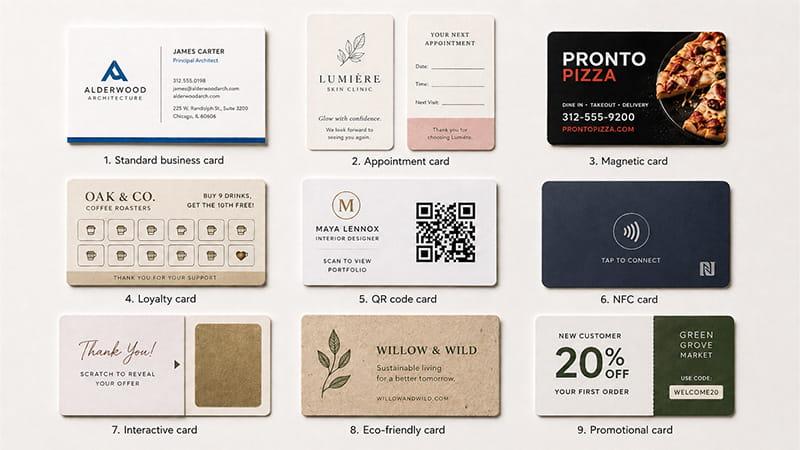
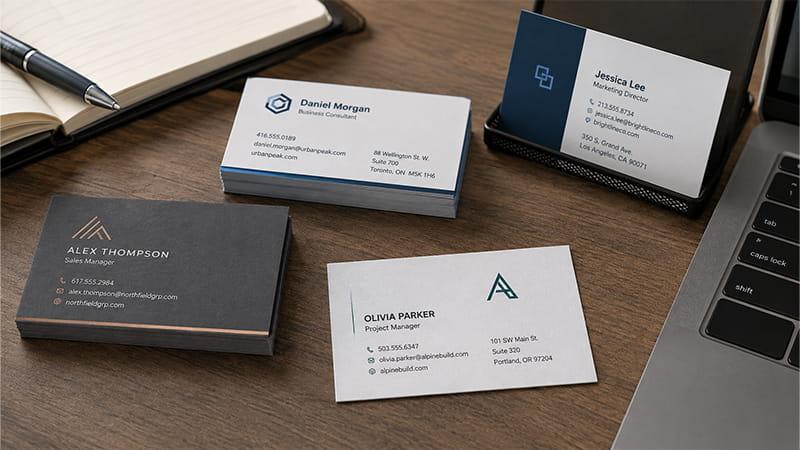
1. Standard Business Cards
Standard business cards are still the most practical choice for everyday introductions. They usually carry the essentials: your name, company, job title, phone number, email address, and website.
Best for: Sales teams, consultants, professional services, trade shows, conferences, and networking events.
A standard card does not need to look ordinary. Clear typography, good spacing, and clean printing can make a simple card feel polished without filling every corner with services, slogans, and social links.
If your website already explains the business in detail, let the card focus on making you easy to contact.
2. Appointment Business Cards
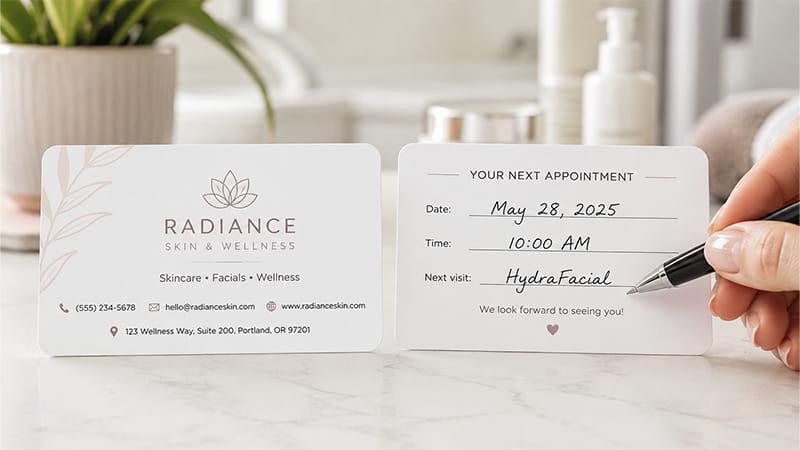
Appointment cards combine normal business information with space for the customer’s next visit. A salon might write down the date and time before a client leaves, while a dental practice could also include the dentist’s name or a number for rescheduling.
Best for: Salons, dental practices, clinics, spas, wellness businesses, and other appointment-based services.
If staff need to write on the card, leave an uncoated or writable area rather than using a glossy finish across the entire surface.
Tip: If customers already receive reminders by text or email, use the extra space for a booking QR code, preparation notes, opening hours, or another detail they may need before returning.
3. Magnetic Business Cards
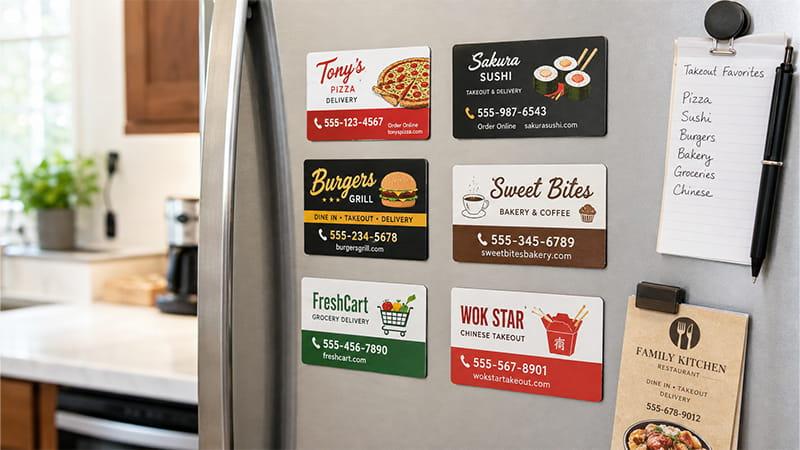
Magnetic business cards are designed to stay visible instead of disappearing into a wallet or drawer. Customers can keep them on a refrigerator, filing cabinet, or another suitable metal surface, making the contact details easy to find later.
Best for: Plumbers, electricians, cleaning companies, repair services, restaurants, veterinary practices, and other local businesses people may need again.
For this type of card, simple information often works best. If someone suddenly needs an electrician, the company name and phone number matter more than a long service list printed in small type.
A customer may forget the company they spoke to months ago, but the magnet on the fridge can still be there when they need help.
4. Loyalty Business Cards
Loyalty cards give regular customers a reason to bring the card back. A café may add a stamp after every purchase, while a salon could offer a reward after a certain number of visits.
Best for: Cafés, bakeries, restaurants, salons, beauty businesses, and retailers with frequent repeat customers.
Keep the reward easy to understand. Something as simple as:
Buy 9 coffees, get the 10th free.
usually works better than a complicated points system squeezed onto a small card.
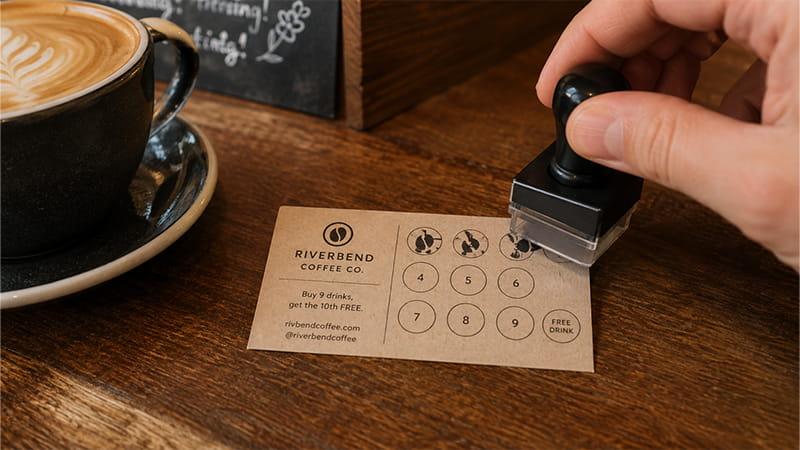
Tip: A physical loyalty card can work alongside a digital program. A QR code can open an online rewards page while the printed card remains a reminder customers can keep in their wallet.
5. QR Code Business Cards
QR code business cards give people quick access to information that would be awkward to fit on the card itself. The code might open a portfolio, menu, booking page, online store, product catalog, event page, or contact profile.
Best for: Consultants, creators, real estate professionals, restaurants, e-commerce businesses, and events.
The page behind the QR code matters more than simply having a code on the card. A photographer can link directly to recent work, while a restaurant may send customers straight to its menu or reservation page.
Sending people to a generic homepage is possible, but it may give them little reason to scan.
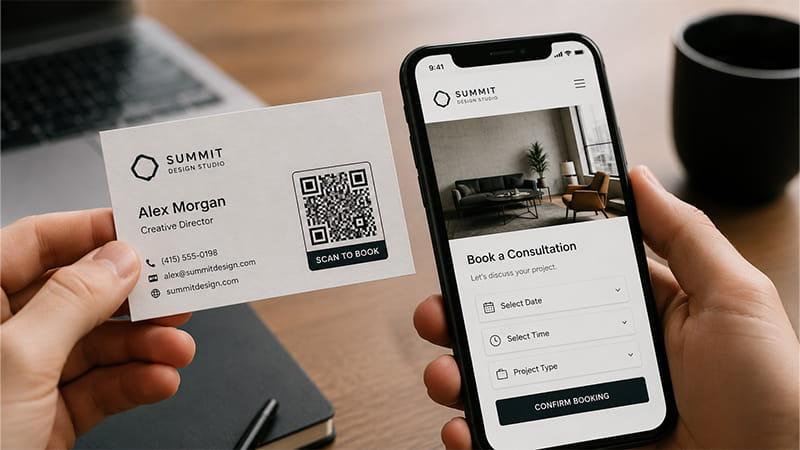
Tip: If the information is likely to change, link to a page you can update. Always test the QR code at its final printed size before approving the card.
6. NFC Business Cards
NFC business cards use Near Field Communication (NFC), a short-range wireless technology that lets a compatible phone interact with the card when it is tapped or held nearby.
The card can open a contact profile, portfolio, booking page, menu, product catalog, or another digital destination.
Best for: Sales professionals, consultants, real estate agents, technology businesses, and people who frequently share digital information in person.
Unlike a QR code, NFC does not need a visible code on the card, leaving more freedom for a clean design.
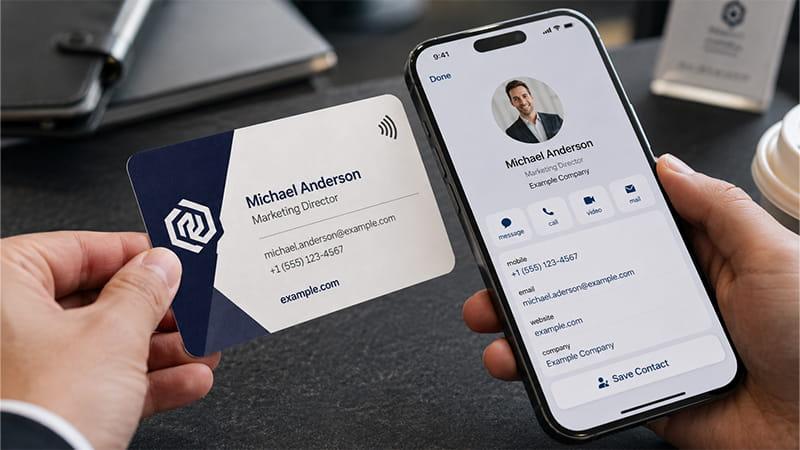
Tip: If your contact details, portfolio, or schedule change regularly, connect the card to an editable profile rather than a page that may soon become outdated. Test the finished card on real phones before handing it out.
7. Digital Business Cards
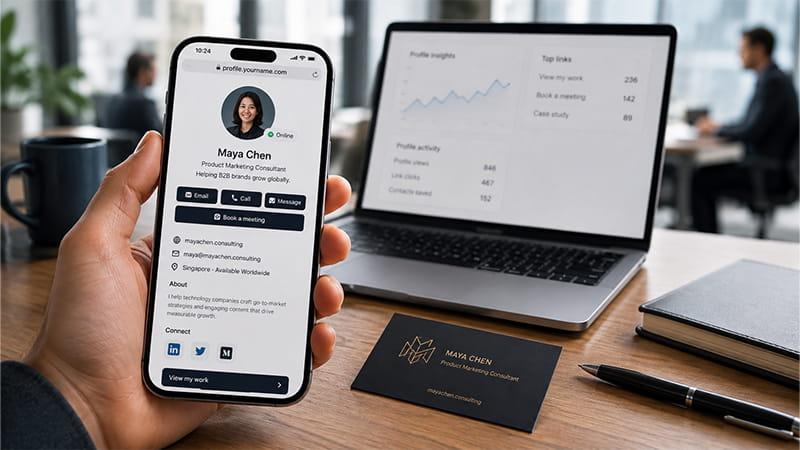
A digital business card is an online profile rather than a printed card. It can bring together your contact details, website, portfolio, social profiles, booking links, and other useful information in one place.
Best for: Freelancers, consultants, remote teams, and people whose contact information changes regularly.
The main advantage is flexibility: details can usually be updated without printing another batch of cards.
Digital and physical cards do not have to replace one another. A printed card works well during a face-to-face introduction, while the digital profile can hold the additional information someone may want afterward.
8. Interactive Business Cards
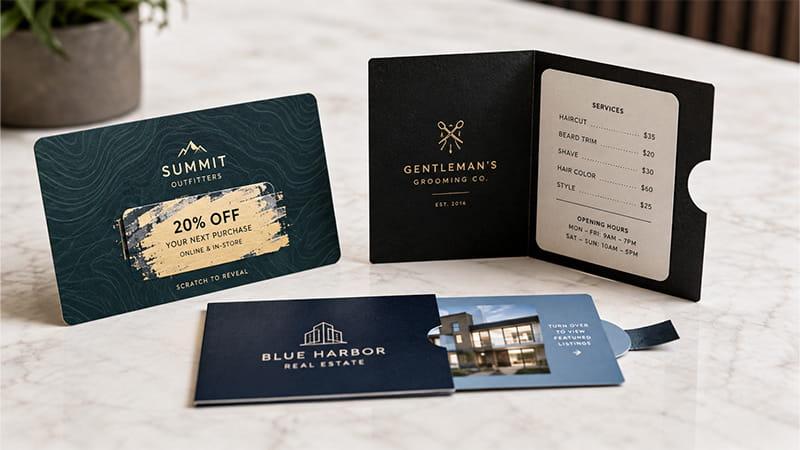
Interactive business cards give the recipient something to do rather than simply read. That could mean scratching off an offer, opening a fold-out section, scanning an interactive experience, or revealing another piece of information.
Best for: Creative studios, events, entertainment businesses, and product launches.
The idea works best when the interaction makes sense for the occasion. A scratch-off discount at an event gives people an obvious reason to participate. A fold-out section that reveals a small menu or service list can also be useful.
If the feature needs a long explanation before people understand what to do, it may be making the card harder rather than better.
9. Eco-Friendly Business Cards
Eco-friendly business cards are usually chosen because recycled content, paper sourcing, or another material consideration matters to the business.
Best for: Companies that already consider sustainability or responsible sourcing when choosing packaging, stationery, and other printed materials.
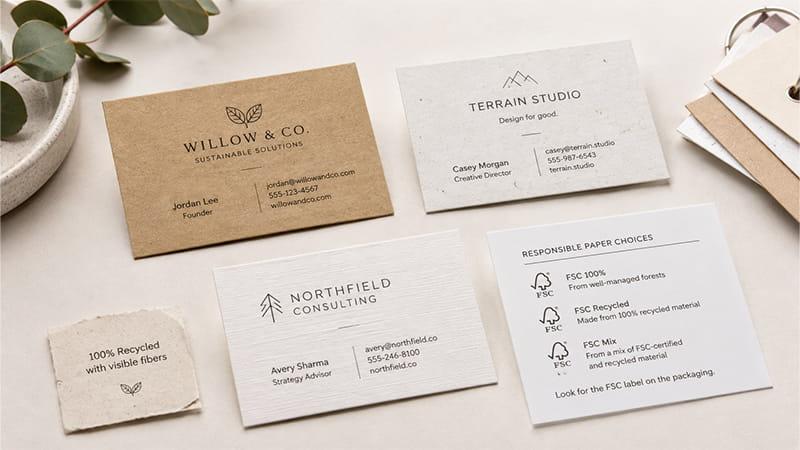
Options may include recycled or responsibly sourced paper, but appearance is not proof of recycled content. Brown paper and visible fibers can create a natural look without confirming how the stock was made.
If you plan to make a specific environmental claim, check the actual paper specification or certification. For example, FSC labels distinguish between FSC 100%, FSC Recycled, and FSC Mix rather than treating every natural-looking paper as the same.
10. Promotional Business Cards
Promotional business cards give people another reason to keep the card besides your contact information. They may carry a discount code, first-order offer, free consultation, event promotion, or referral incentive.
Best for: Retail businesses, restaurants, local services, events, exhibitions, and promotional campaigns.
Keep the offer simple. For example:
10% off your first order — scan to claim.
is easier to understand than several promotions competing for the same small space.
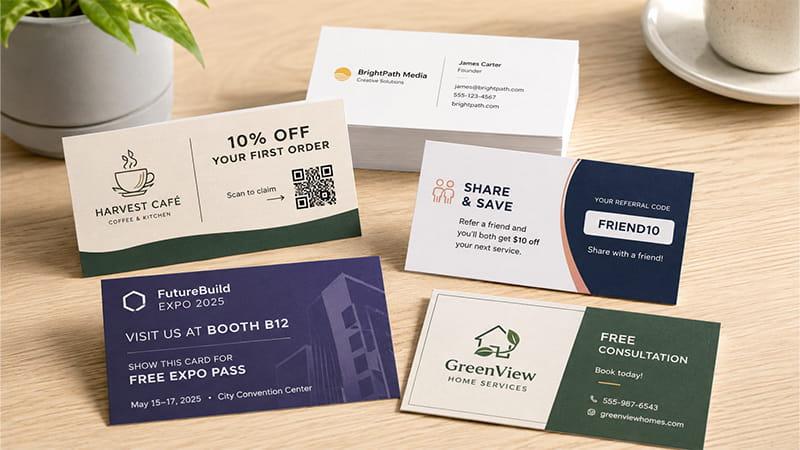
Referral cards can work in a similar way. If an existing customer wants to recommend your business, a card with your contact details, booking link, or referral code gives them something easy to pass along.
Business Card Finishes, Materials, and Shapes
Once you know what the card needs to do, you can decide how it should look and feel.
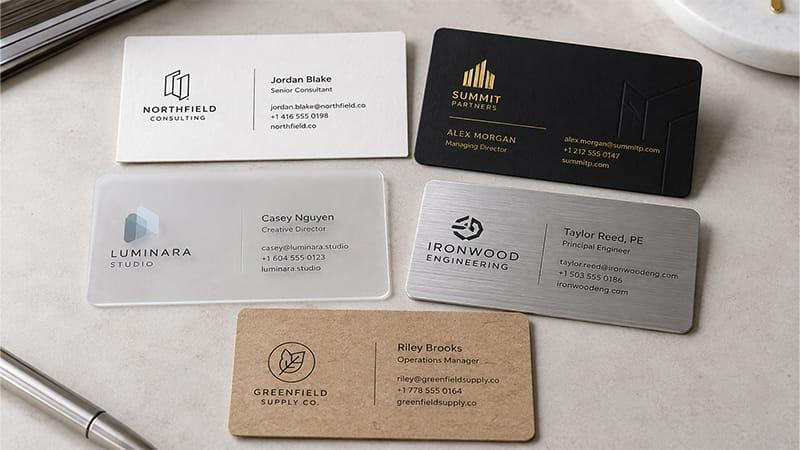
Paper thickness, texture, foil, recycled stock, plastic, metal, and custom shapes are usually business card options rather than completely separate purposes. An appointment card, for example, may use uncoated stock because someone needs to write on it, while a client-facing standard card might use thicker paper or a subtle embossed detail.
| Option | What It Changes | Often Useful For | Keep in Mind |
|---|---|---|---|
| Matte | Clean, low-glare surface | Professional services and general business use | Less shine than gloss |
| Gloss / Spot Gloss | Adds shine or highlights selected areas | Image-led or colorful designs | Reflections can affect readability |
| Uncoated | Writable surface | Appointment cards and handwritten notes | Less surface protection |
| Thick Cardstock | Adds weight and a firmer feel | Client-facing cards | Higher cost and more bulk |
| Textured Paper | Adds a tactile surface | Boutiques, hospitality, creative businesses | Fine details may print differently |
| Foil / Embossing | Highlights selected details | Beauty, fashion, hospitality, premium services | Best used selectively |
| Recycled Stock | Supports sourcing requirements | Sustainability-focused projects | Verify actual specifications |
| Plastic | Changes durability and appearance | Cards handled frequently | Less traditional feel |
| Metal | Creates a strong physical presence | Small premium runs | Higher cost and weight |
| Rounded / Die-Cut Shapes | Changes the outline | Creative or product-led businesses | May not fit every card holder |
Tip: Match the finish to how the card will actually be used. A consultant may prefer matte for a clean, readable finish, while an appointment card benefits from a writable back. A boutique or beauty business might choose textured paper or a small embossed detail when a more tactile feel suits the business.
If you want to understand how different surfaces, artwork, and finishes affect production, our guide to printing methods explains the main printing and decoration options in more detail.
What About Business Card Size and Layout?
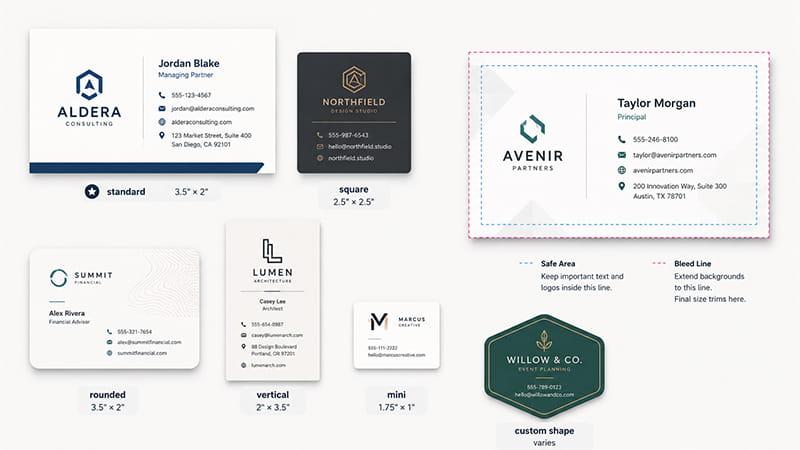
The standard horizontal rectangle remains popular because it fits most wallets and card holders, but square cards, rounded corners, vertical layouts, mini cards, and custom shapes are also available.
Unusual formats can create more visual impact, but they usually involve a trade-off in space or practicality. A small card leaves less room for contact details, while a circle or custom shape may not fit a standard holder.
Whatever format you choose, keep important text and logos inside the safe area and extend backgrounds to the bleed line.
For common business card dimensions, bleed, and artwork setup, see our Business Card Size Guide.
How to Choose the Right Business Card
If several options seem suitable, start with what you want the recipient to do next.
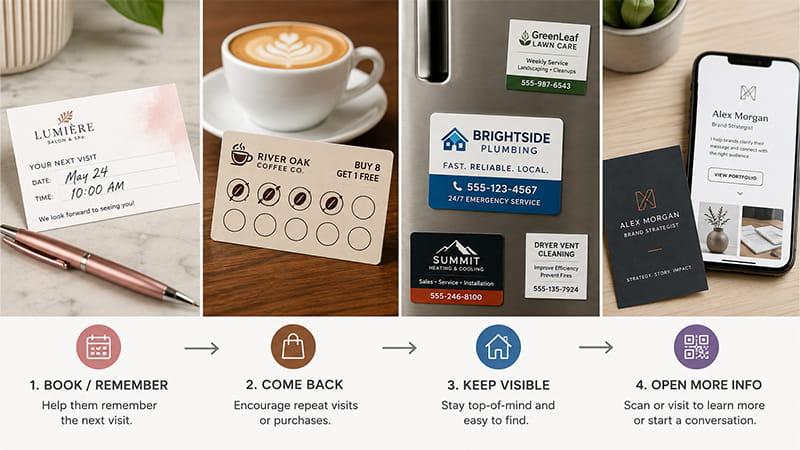
A salon wants a client to remember the next appointment. A café wants customers to return. A plumber wants the phone number to stay somewhere convenient, while a consultant may want a new contact to open a portfolio.
Then think about what happens to the card afterward. Will it sit in a wallet, stay on a refrigerator, return with the customer for a reward, or be scanned immediately?
The best choice is usually the one that fits naturally into something the recipient already does. Once that is clear, choices such as matte versus gloss, QR versus NFC, or standard versus unusual shapes become much easier.
Before You Print
Review the design at its actual printed size, not only while it is enlarged on a monitor. Small type, logo placement, and spacing can feel very different once the design becomes a business card.
Make sure QR codes scan reliably, NFC cards work on real phones, and appointment cards have a surface people can write on. If paper texture, thickness, foil, or another physical feature matters to the design, reviewing a material or physical sample can also be useful.
FAQs
What Type of Business Card Is Best for Most Businesses?
A standard business card works well for many businesses because it is familiar, easy to read, and gives people the contact details they need.
More specialized cards become useful when the card has another job, such as recording an appointment, encouraging repeat visits, promoting an offer, or connecting people to information online.
What Type of Business Card Looks Most Professional?
There is no single type of business card that always looks more professional.
A clean matte card may suit a consultant or financial business, while textured paper or a subtle foil detail may work well for a boutique or hospitality business. Good typography, spacing, and print quality usually matter more than choosing the most expensive material.
Are QR Code or NFC Business Cards Better?
Neither is better in every situation.
QR codes are visible and straightforward to print. NFC provides a tap-based interaction without a visible code but requires an embedded chip and additional testing.
If you simply want someone to open a webpage, QR may be enough. NFC can be convenient when you frequently share the same digital profile in person.
Should I Use a Physical or Digital Business Card?
You can use either one or combine them.
A physical card works well during face-to-face meetings and networking events. A digital business card can hold more information and can usually be updated later.
Many people use a printed card for the introduction and connect it to a digital profile for additional information.
Final Thoughts
Different types of business cards suit different situations. An appointment card can help a client remember the next visit, a magnetic card can keep a service number nearby, and QR or NFC cards can connect a brief introduction with more information online.
Start with what you need the card to do. Once that is clear, decisions about paper, finish, size, shape, and digital features become much easier.
Need Help With Custom Business Cards?
If you know what kind of card you need but are still comparing materials, finishes, shapes, or other custom business card production options, TOMAS Crafts can help you review the practical choices for your project.
Share your artwork, quantity, target market, and requirements, and we can help you work through the details before production. Request a Custom Business Card Quote