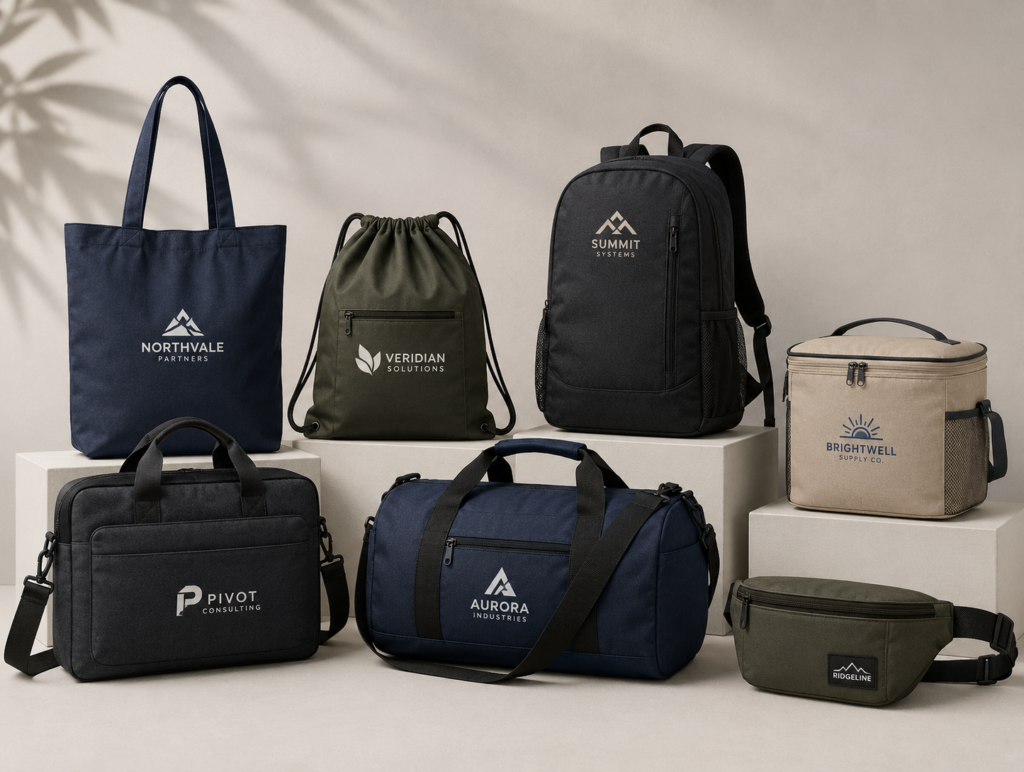
Choosing a bag for an event, gift, travel kit, retail program, or branding campaign is not only about size or appearance. The wrong bag can feel cheap, fail to carry the right items, or hide your logo in the wrong place. This guide compares 18 types of bags and shows where each style works best, so you can choose better options for daily use, events, gifts, travel, and branding projects.
Key Takeaways
- Different types of bags serve different needs, including daily carry, work, travel, shopping, events, sports, and retail packaging.
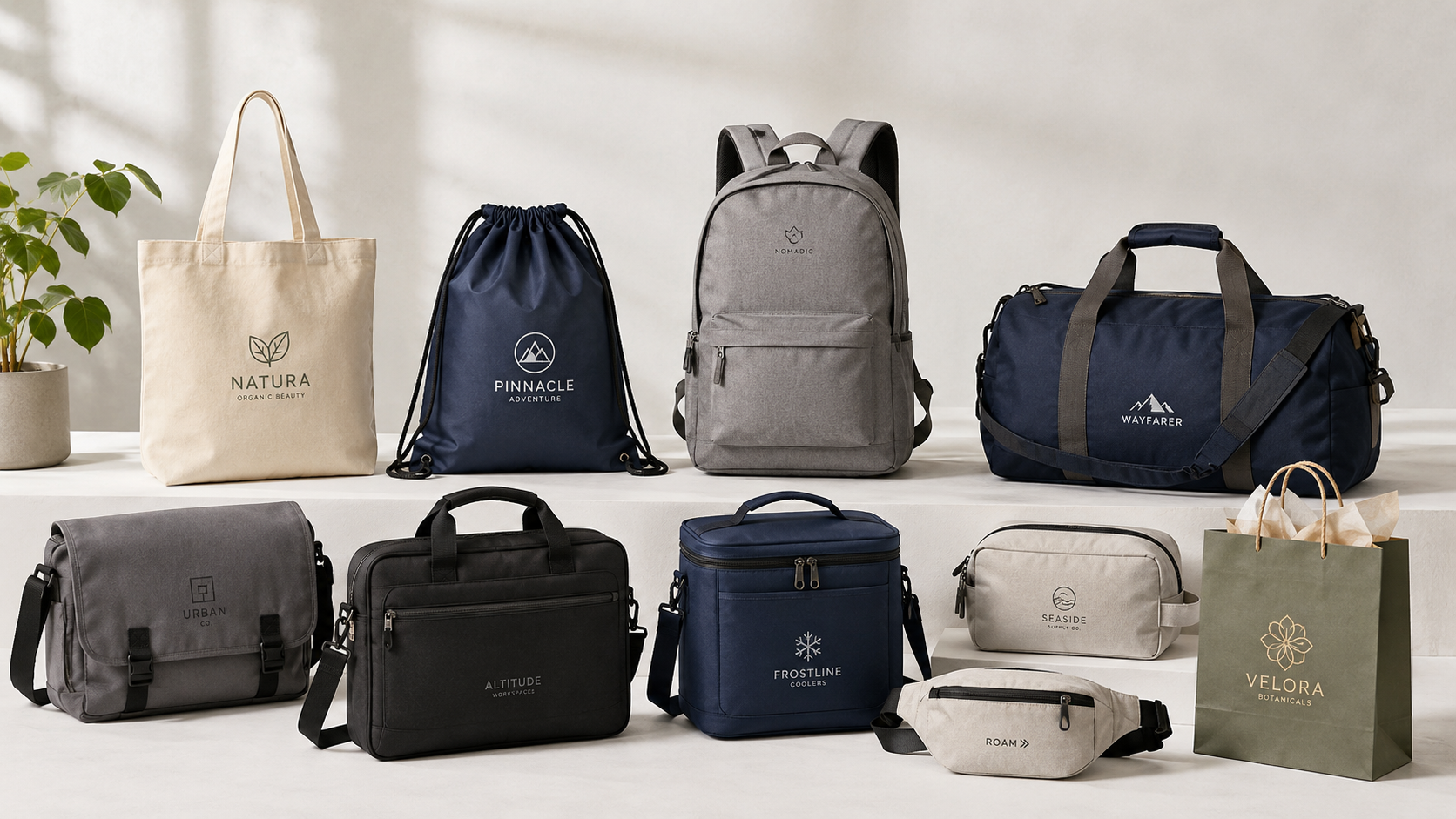
- Tote bags, drawstring bags, backpacks, duffel bags, cooler bags, and laptop bags are common choices for promotional and B2B projects.
- The best bag type depends on what it needs to carry, how people will carry it, material strength, logo space, budget, and delivery timeline.
- For custom bags, check the bag size, fabric weight, stitching, handle strength, zipper quality, logo method, packaging, carton volume, and delivery date before production.
Quick Guide to Bag Types by Use and Branding Fit
If you need a quick starting point, choose the bag type by how people will use it.
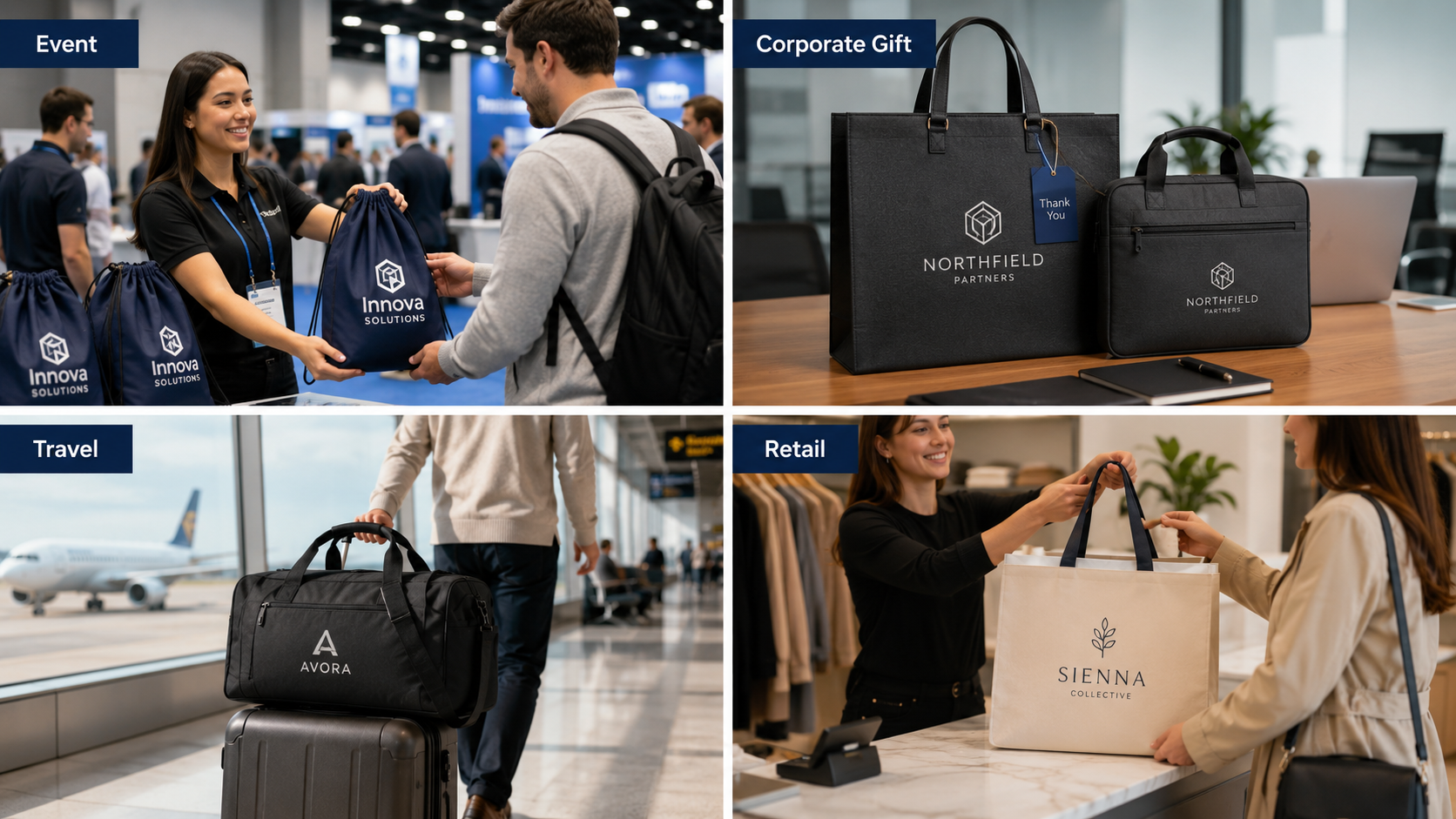
For events and giveaways, tote bags, drawstring bags, and conference bags are easy to print, pack, and distribute.
For corporate gifts and employee programs, backpacks, laptop bags, messenger bags, and travel bags usually feel more practical and premium.
For travel, sports, and outdoor campaigns, duffel bags, cooler bags, beach bags, sling bags, and waist bags are easier to match with active use.
For retail and product packaging, shopping bags and paper gift bags help present the product and keep the brand visible after purchase.
For hotels, uniforms, and utility programs, toiletry bags, garment bags, laundry bags, and storage bags are more practical than fashion-focused bags.
The detailed list below explains each bag type, its best use, and what to check before choosing it for a custom project.
How to Choose a Bag Type by What People Need to Carry
Before comparing different bag styles, start with the real use case. A bag should carry the right items, feel comfortable, show the logo clearly, and fit the budget and delivery plan.
Start with What the Bag Needs to Carry
The first question is simple: what will the bag carry?
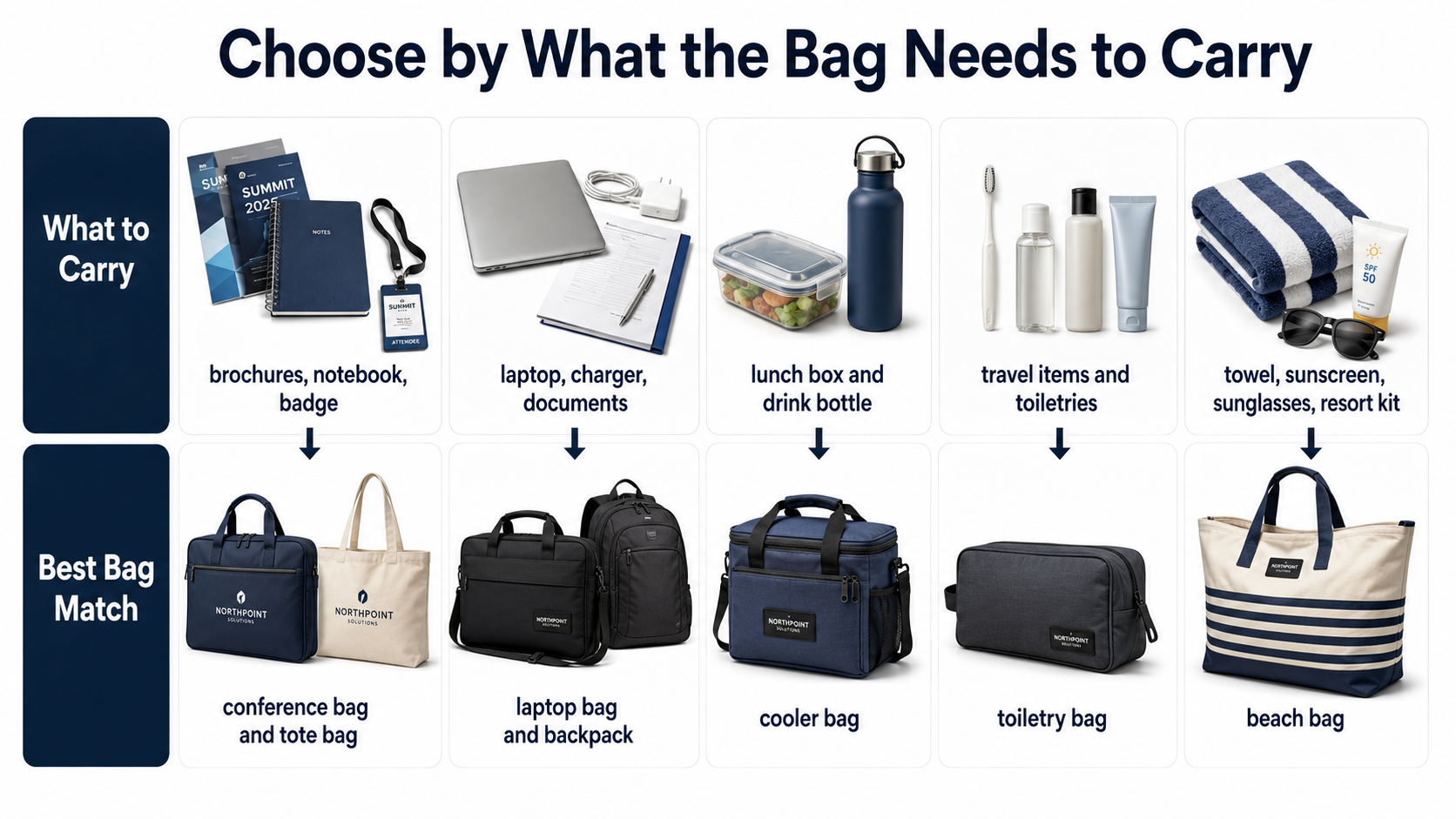
If the bag needs to hold brochures, badges, and notebooks, a conference bag or tote bag may be enough. If it needs to carry a laptop, charger, and documents, a laptop bag or backpack is a better match. If it needs to carry food, drinks, or lunch boxes, choose a cooler bag.
For gift sets, the bag may also act as packaging. A tote bag can hold event materials. A toiletry bag can organize travel items. A beach bag can carry towels, sunscreen, and resort gifts.
Supplier note: Many buyers first ask for the cheapest bag. But the final choice often changes after confirming what people need to carry and how often they will use it. Drawstring bags work well for large event giveaways. Tote bags fit trade shows and shopping. Laptop backpacks suit employee gifts. Cooler bags fit outdoor, food, or summer campaigns.
Choose a Carrying Method That Fits the User
Different bags are carried in different ways. That affects how useful they feel.
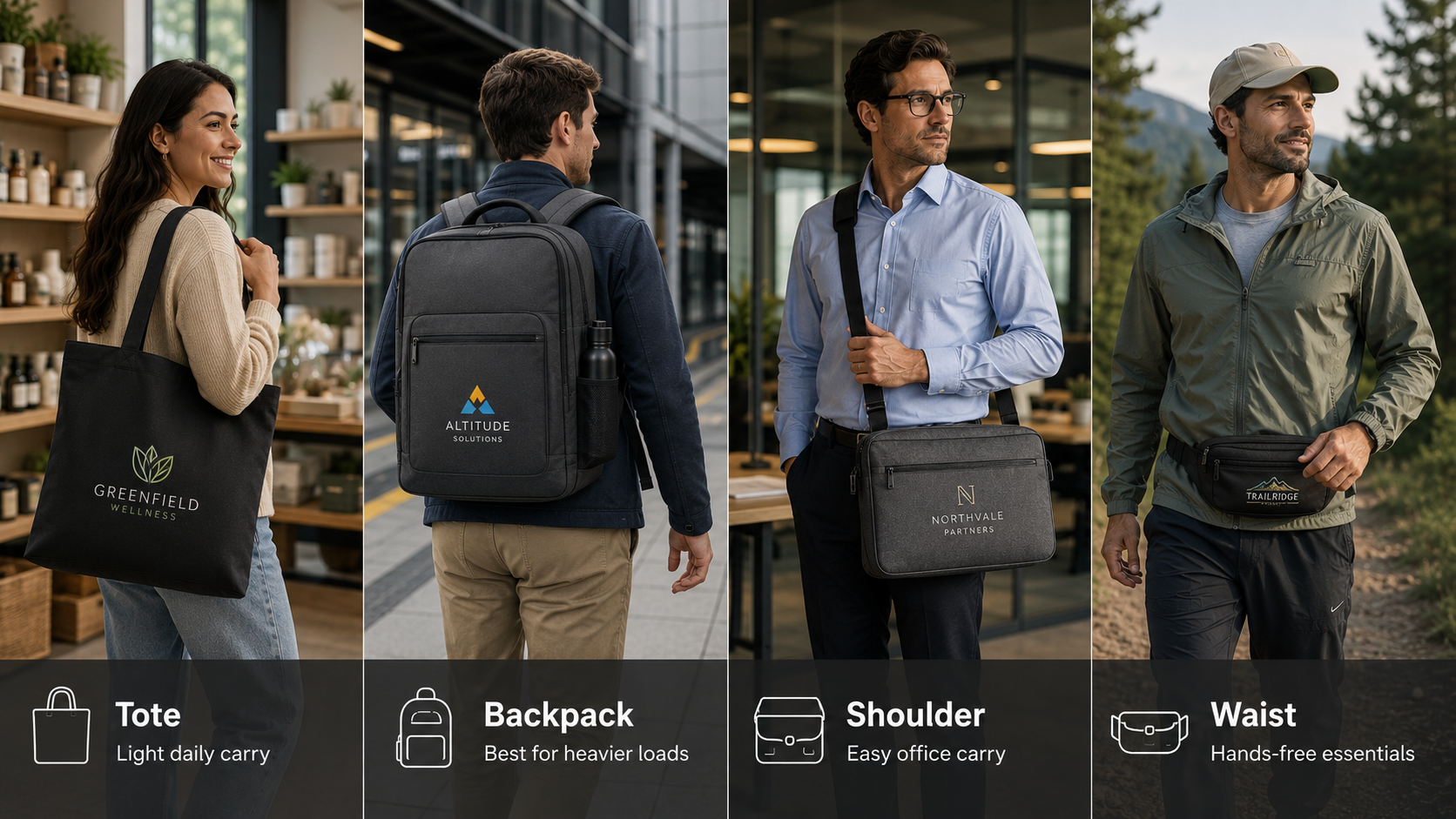
Tote bags are carried by hand or over the shoulder. Backpacks spread weight across both shoulders, so they work better for heavier loads. Messenger bags and shoulder bags look more professional, but they are less balanced when the contents are heavy. Sling bags and waist bags help people reach phones, tickets, keys, or wallets quickly.
For events, comfort matters more than many buyers expect. A bag that is easy to carry is more likely to be reused after the event. That gives the logo more chances to be seen.
Match the Bag Type to Budget and Perceived Value
Not every bag should serve the same budget level.
For low-cost large giveaways, drawstring bags, simple tote bags, and conference bags are practical. For mid-range event gifts, tote bags, cooler bags, document bags, and waist bags work well. For premium corporate gifts, backpacks, laptop bags, messenger bags, and travel bags create a stronger impression.
If your project is part of a broader employee or client gifting plan, you can also review TOMAS corporate gift solutions for more branded gift ideas.
Check Logo Area and Reuse Frequency
Logo visibility depends on more than print size.
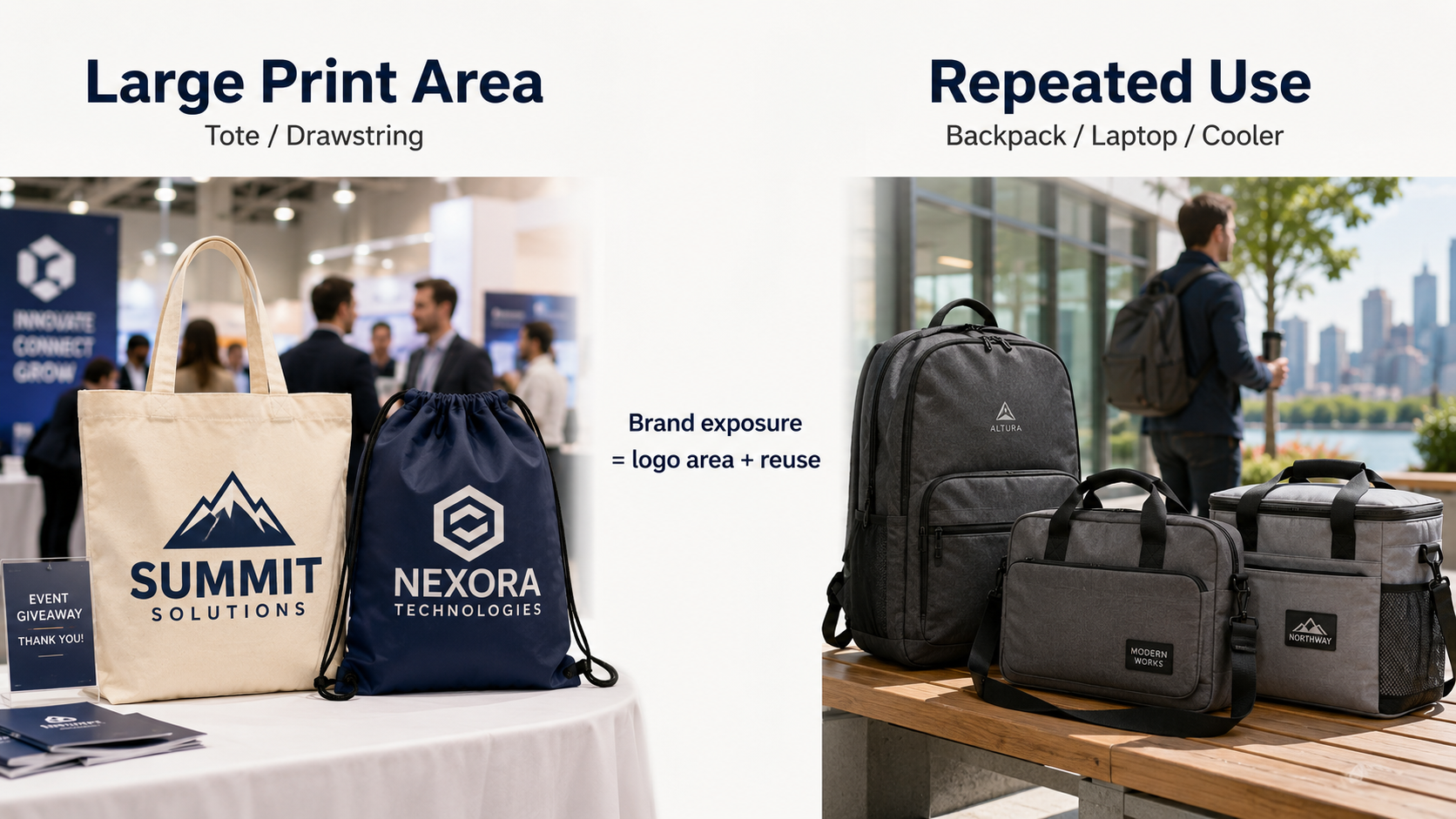
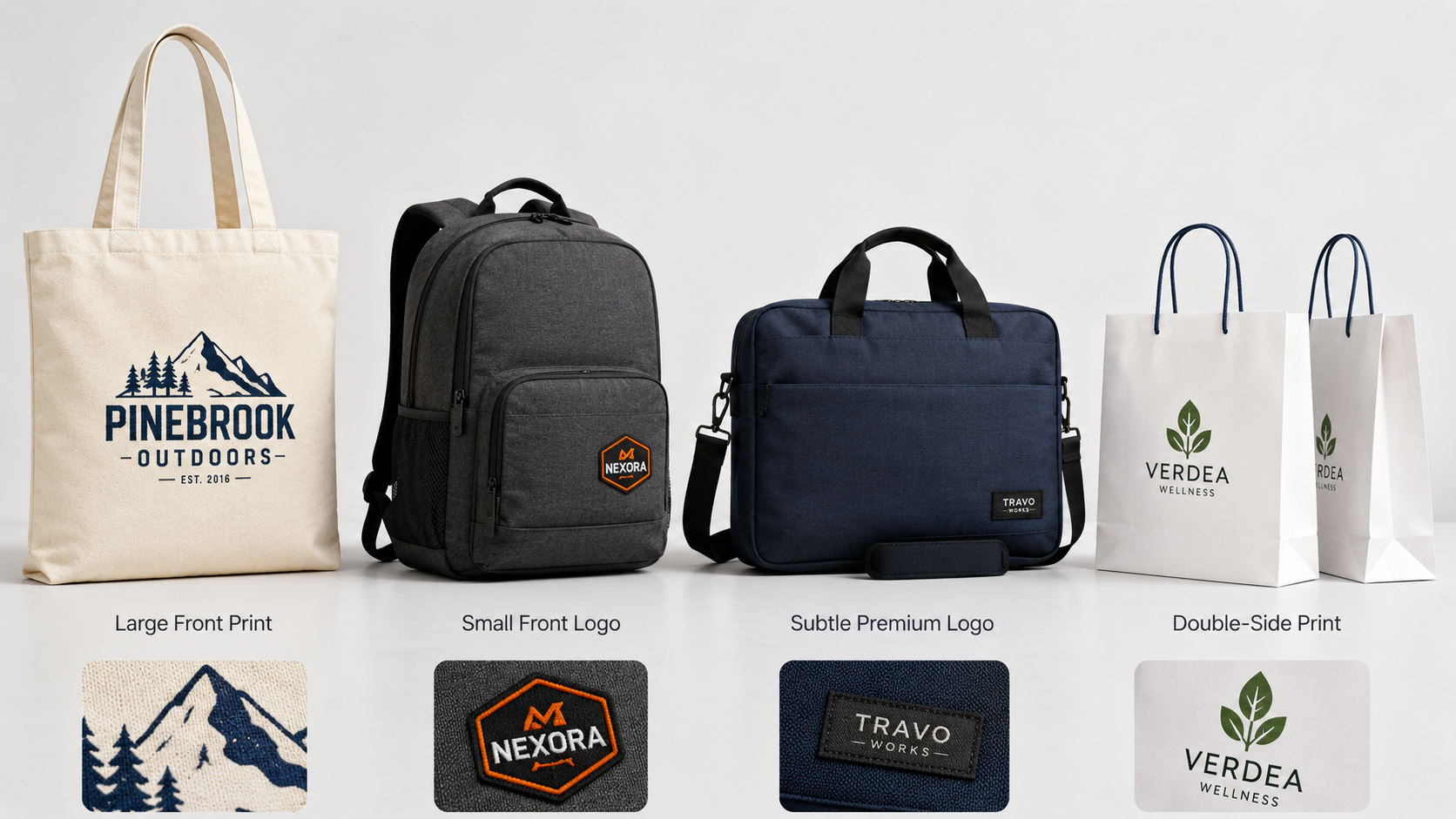
Tote bags and drawstring bags offer large flat front panels. Paper gift bags show the logo during gifting or retail carrying. Duffel bags, cooler bags, and beach bags work well in outdoor or lifestyle settings. Backpacks and laptop bags may use smaller logo placements, but they often look more premium.
A smaller logo on a bag people use often can be more valuable than a large logo on a bag used once. Choose by logo size, viewing distance, material, and reuse frequency.
18 Types of Bags and Their Best Uses
1. Tote Bag
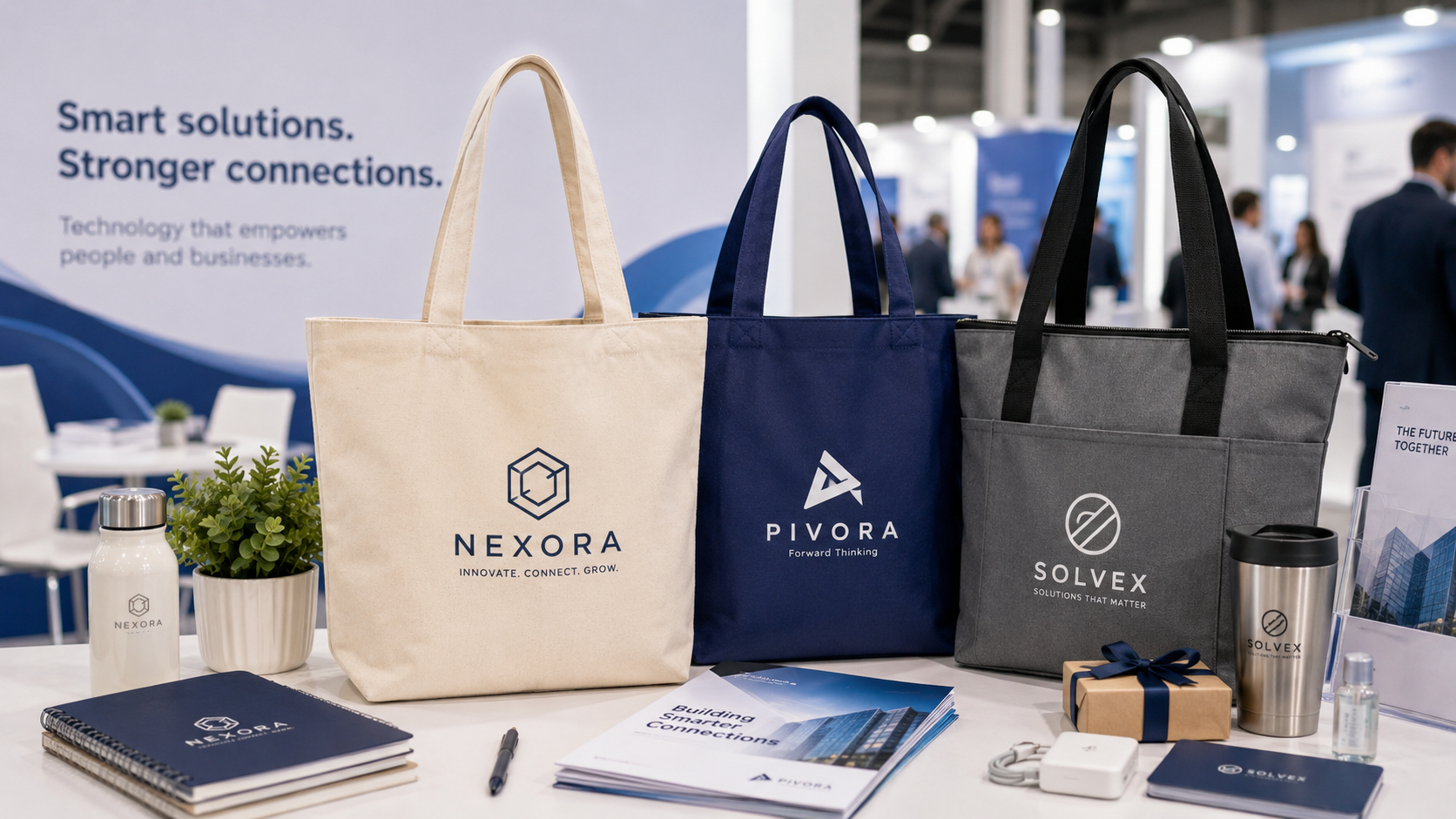
A tote bag is one of the most flexible choices for trade shows, shopping, welcome kits, and event giveaways. It has two handles and a simple carry structure, so recipients can use it right away.
The main advantage is the large front logo area. If your project needs campaign artwork, a slogan, or a clear brand message, a tote bag is easy to customize.
Open-top tote bags suit brochures, samples, and light gifts. If the bag needs to hold personal items, a zipper-top tote gives users more security. Common materials include cotton, canvas, non-woven fabric, polyester, jute, and recycled fabric.
2. Drawstring Bag
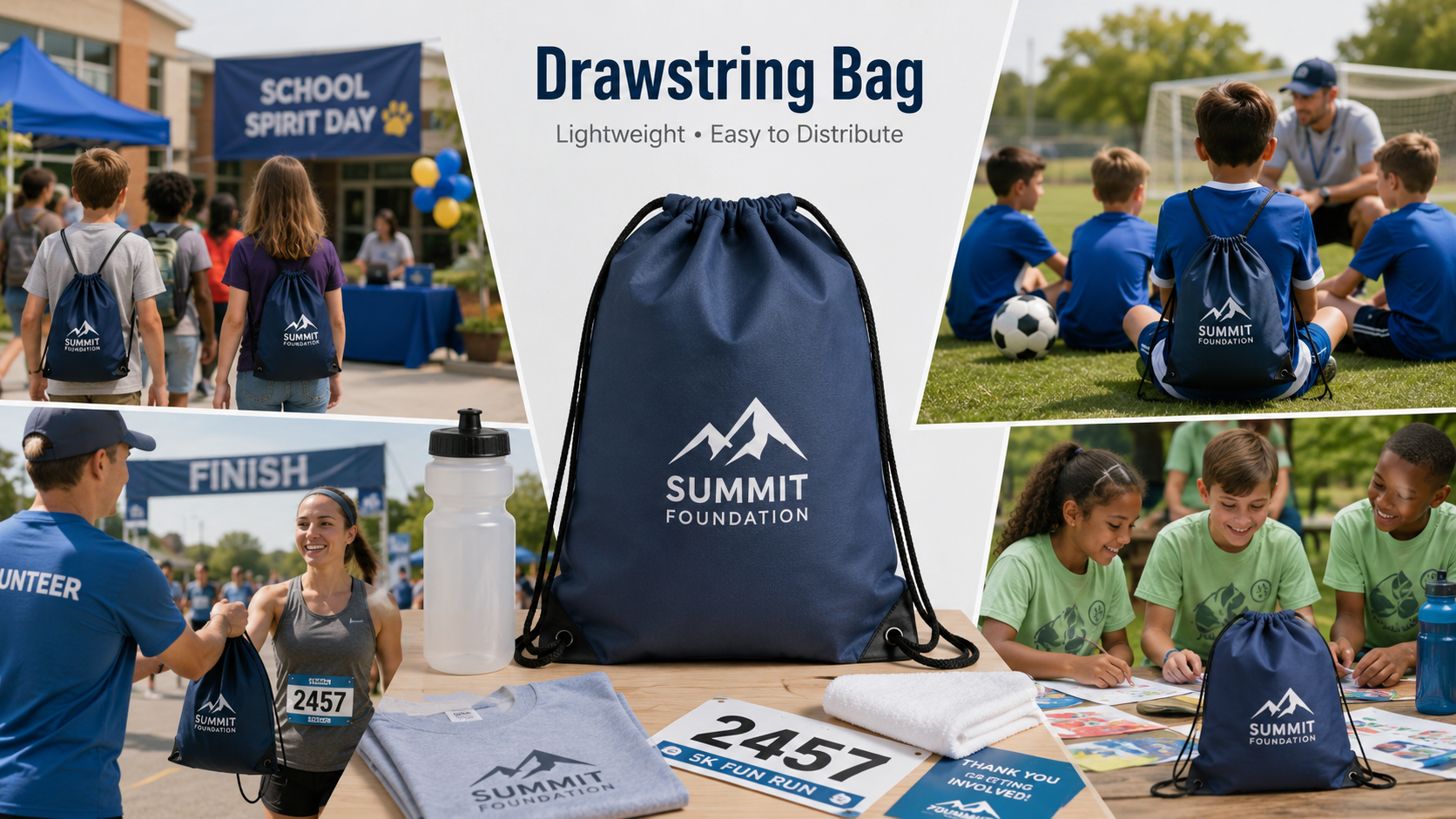
A drawstring bag works best when you need something light, simple, and easy to distribute. The drawcords close the bag and also work as shoulder straps.
Choose this style for school events, races, sports programs, youth activities, and high-volume giveaways. It folds flat, packs easily, and can hold T-shirts, flyers, snacks, small gifts, or sports accessories.
The trade-off is perceived value. A drawstring bag feels more basic than a backpack or duffel bag. Use it when your project needs simple logo printing, easy distribution, and controlled cost.
3. Backpack
A backpack is a stronger option when the recipient needs to carry items often. It works well for employees, students, commuters, travel groups, outdoor programs, and school campaigns.
Because the weight sits on both shoulders, a backpack is more comfortable than a single-strap bag for heavier loads. It can include laptop sleeves, side pockets, front pockets, padding, zipper compartments, and bottle holders.
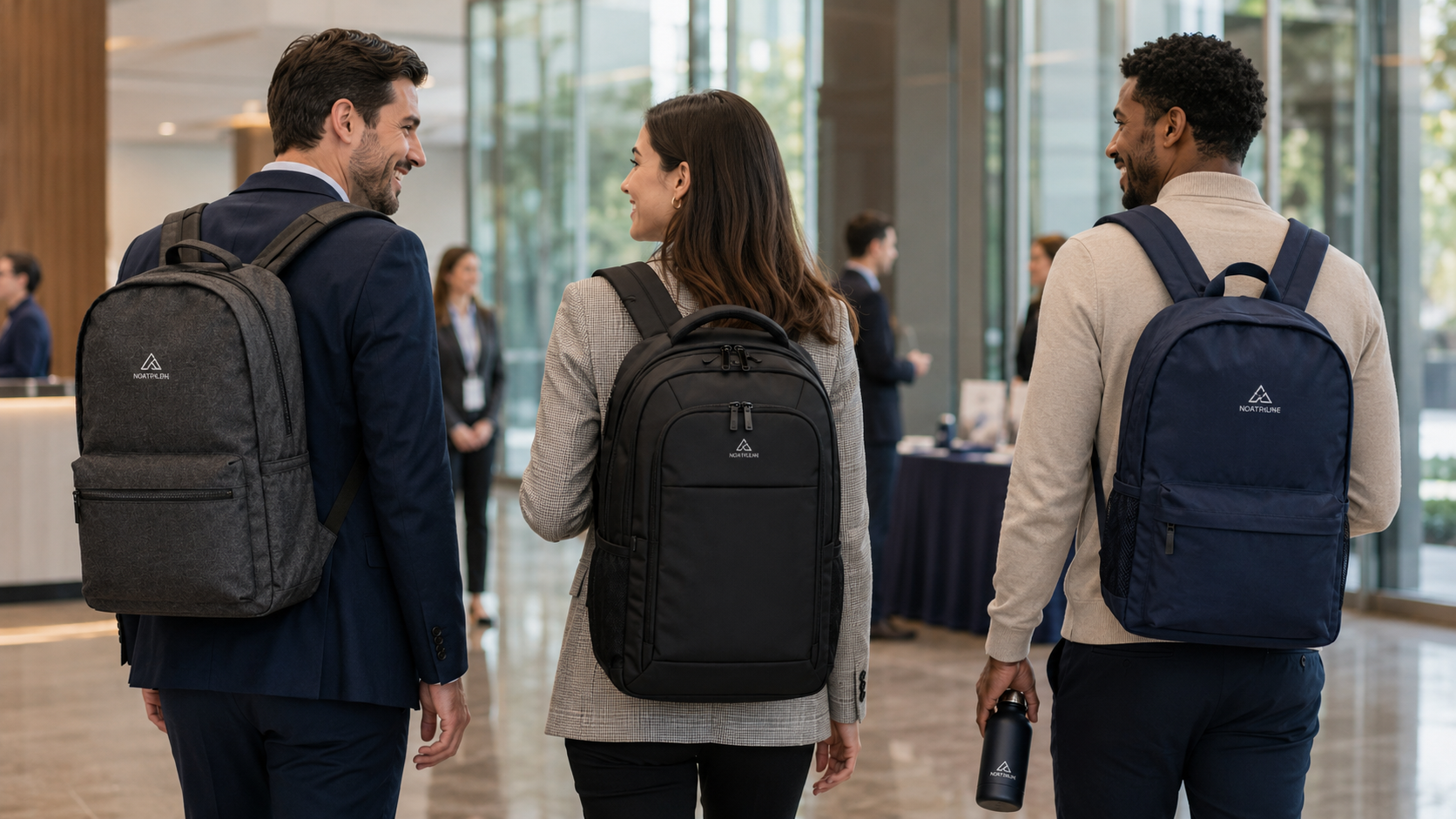
For corporate gifts, backpacks offer strong long-term value. People may use them for work, travel, or commuting, so the logo gets repeated exposure. The cost is higher than a tote or drawstring bag, but the perceived value is also higher.
4. Laptop Bag
If the gift is for office workers, tech teams, conference guests, or business travelers, a laptop bag often makes more sense than a general tote. It protects laptops, tablets, chargers, documents, and daily office items.
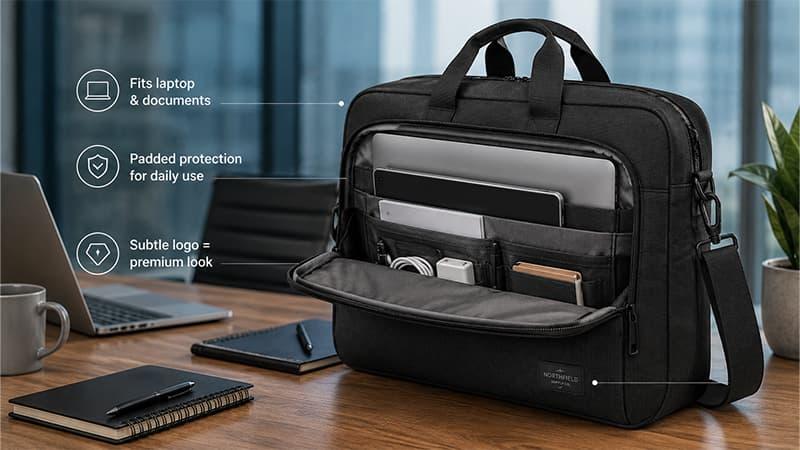
Before choosing this bag type, confirm the laptop size and padding structure. A 13-inch sleeve, a 15.6-inch laptop bag, and a backpack-style computer bag solve different needs.
Laptop bags usually look better with subtle branding. A small logo, woven label, rubber patch, or embroidery can feel more professional than a large promotional print. This makes laptop bags useful for premium corporate gifts and employee onboarding kits.
5. Messenger / Shoulder Bag
A messenger or shoulder bag gives a more professional look than a casual tote. It also offers easier access than a backpack. Most styles include a flap or zipper opening, a shoulder strap, and inner pockets.
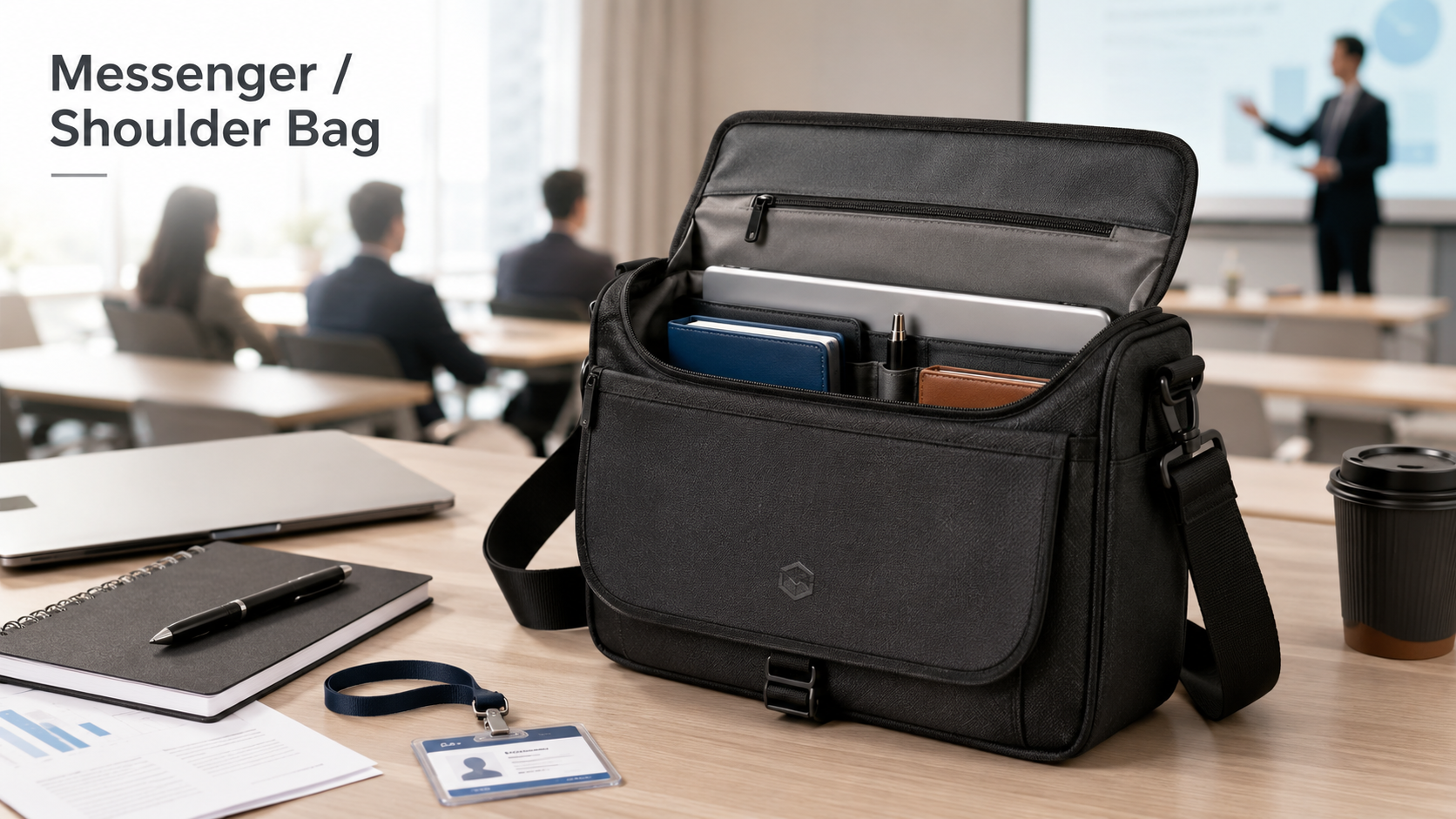
This bag fits sales teams, conferences, training programs, commuting, and business events. It is useful when people need to open the bag often during the day.
The limitation is weight balance. Since the bag sits on one shoulder, it is not ideal for heavy loads. For custom branding, a small logo, patch, embroidery, or front panel print usually feels more polished than oversized artwork.
6. Duffel Bag
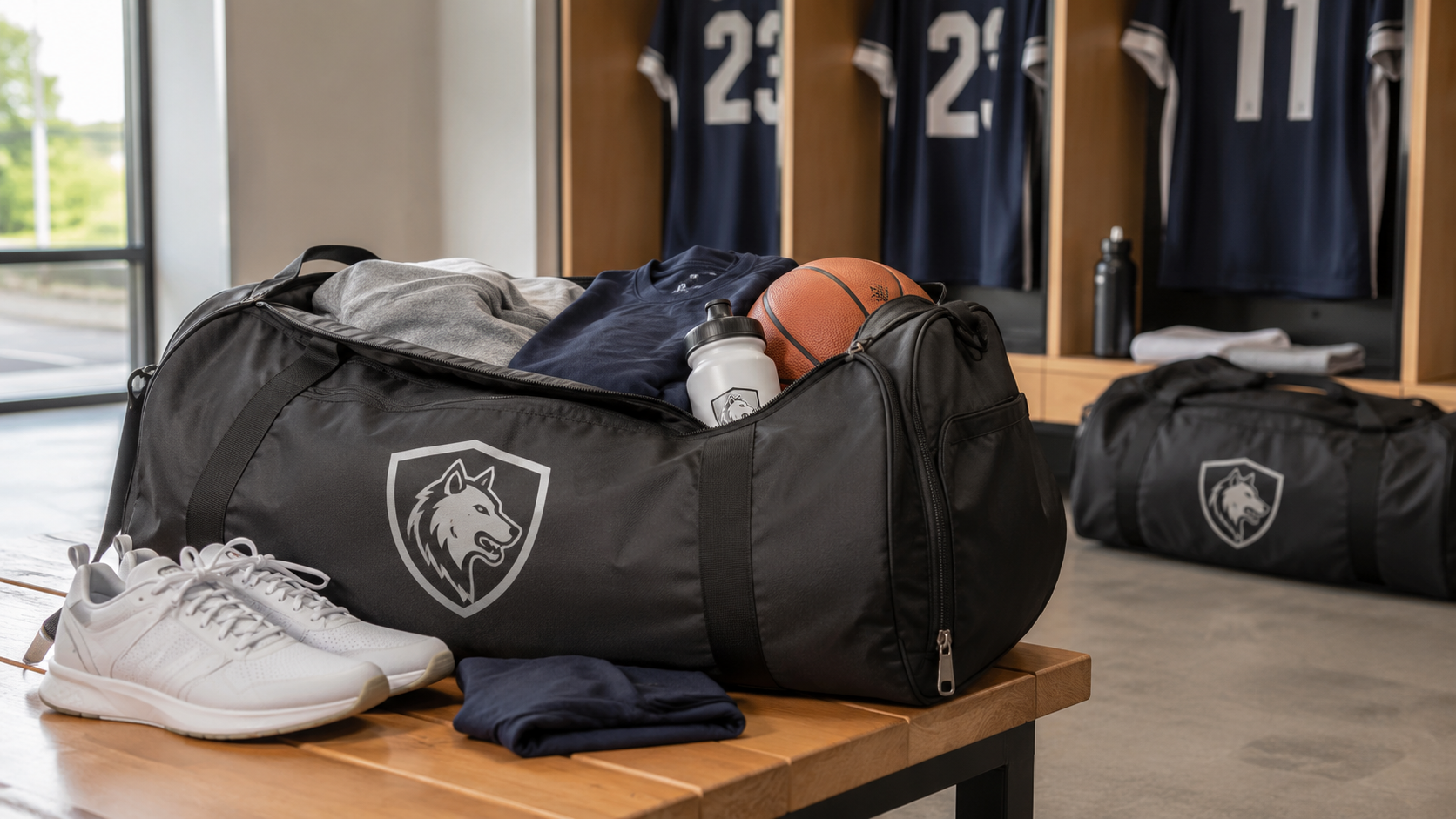
A duffel bag is a good choice when capacity matters. It is often used as a gym bag, sports bag, team travel bag, or short-trip bag.
This style can hold clothes, shoes, sports gear, towels, uniforms, or travel items. It fits sports teams, employee wellness programs, retreats, staff travel, and outdoor campaigns.
A duffel bag gives more storage than a flat bag and offers strong logo visibility on the side or front panel. But it also takes more carton space. For bulk orders, check the bag size, folded size, zipper quality, strap strength, and carton details before production.
7. Cooler / Lunch Bag
A cooler or lunch bag is useful when the gift needs to support food, drinks, lunch boxes, or outdoor refreshments. It may include polyester outer fabric, PEVA lining, aluminum foil lining, or insulation foam.
This bag fits outdoor events, company lunch programs, food brands, picnic campaigns, summer giveaways, and family activities. It can also pair with bottles, lunch boxes, cutlery sets, or picnic accessories.
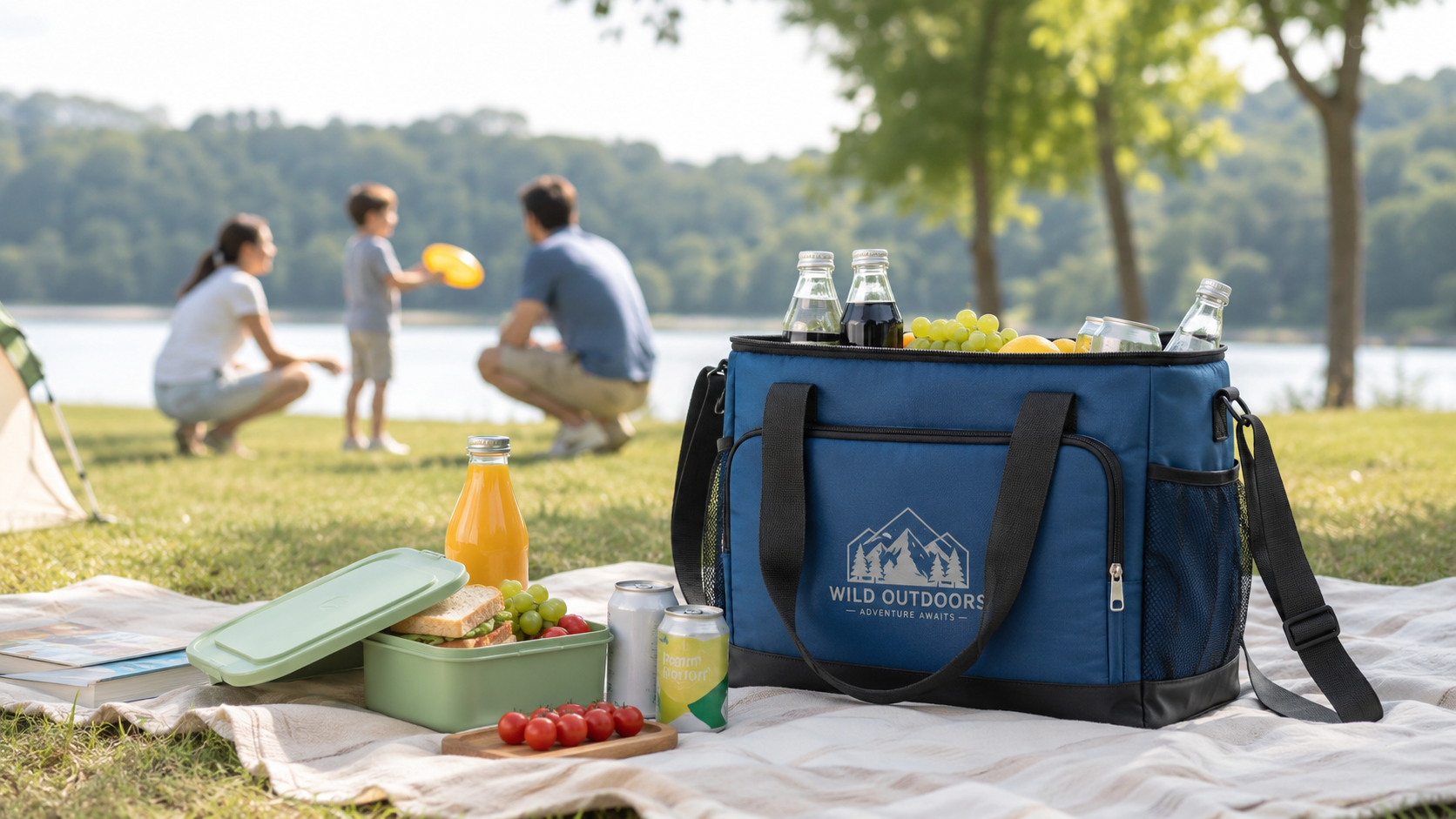
Do not judge cooler bags by appearance only. Lining quality, insulation thickness, zipper closure, and leak resistance can change the user experience. If the bag supports a food or summer campaign, these details matter more than a slightly lower unit price.
8. Cosmetic / Toiletry Bag
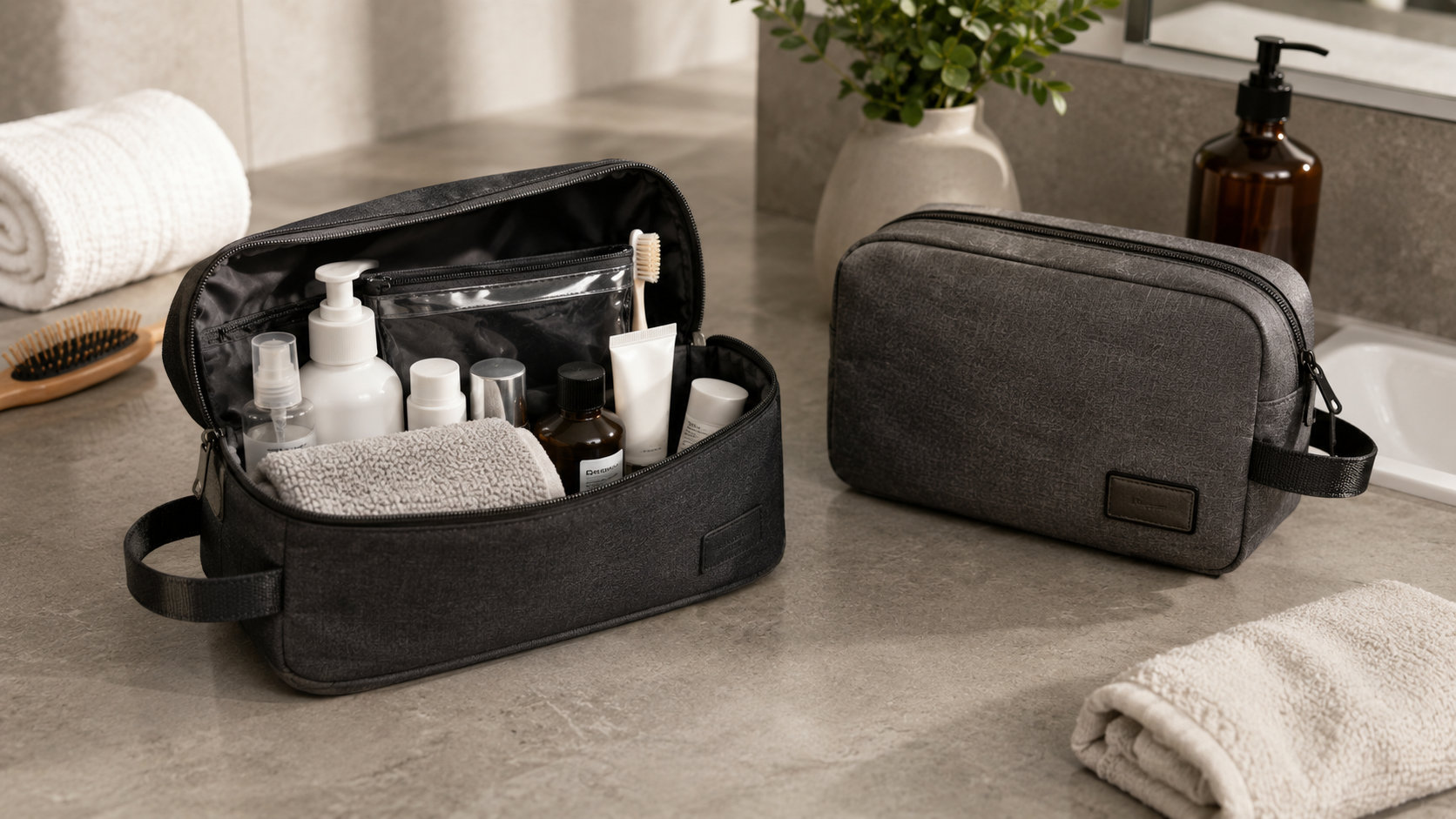
A cosmetic or toiletry bag is small, but it can make a gift set feel more organized. It is often used for beauty products, hygiene items, travel accessories, hotel amenities, or wellness kits.
This bag fits travel kits, hotel programs, beauty campaigns, and event gift sets. Materials can include polyester, PU, PVC, mesh, canvas, or waterproof fabric.
Because the logo area is limited, keep the branding simple. A woven label, small print, zipper puller, or clean front logo usually works better than large artwork. If the bag will hold liquids or toiletries, check the lining and zipper before production.
9. Travel / Weekender Bag
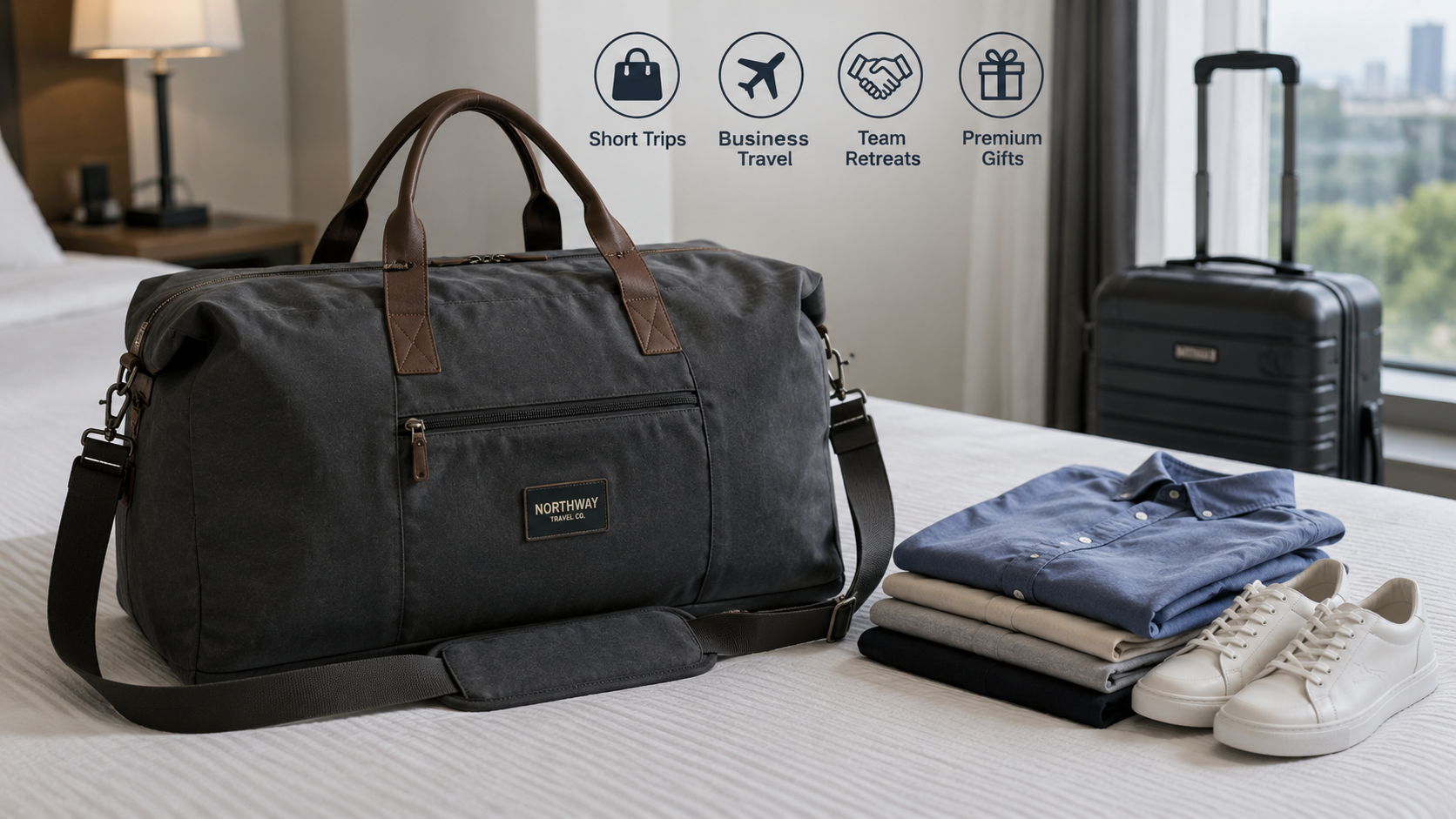
A travel or weekender bag is better for short trips, retreats, business travel, and premium travel gifts. Compared with a basic duffel bag, it usually has a more polished look.
It may include strong handles, a shoulder strap, inner lining, shoe compartment, laptop pocket, or trolley sleeve. These details make it useful for business travel kits, incentive programs, team retreats, and travel campaigns.
Because weekender bags are larger and more detailed, they can increase cost and shipping volume. Before ordering, confirm the material, lining, strap strength, zipper quality, logo position, and packing method.
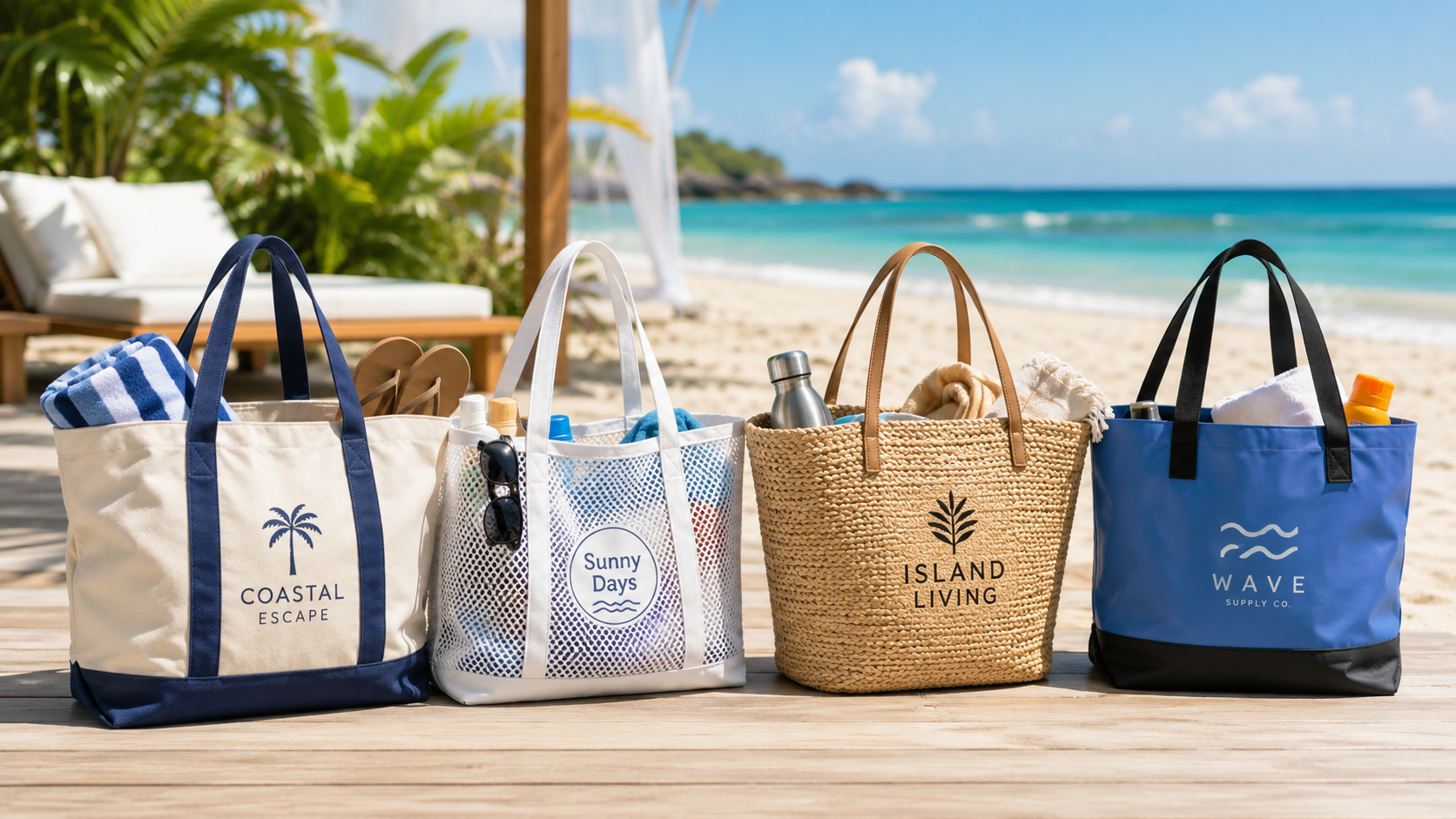
10. Beach Bag
A beach bag is designed for towels, swimwear, sunscreen, sandals, bottles, and resort items. It should be easy to carry, easy to clean, and large enough for casual outdoor use.
This type suits hotels, resorts, tourism campaigns, summer events, beach promotions, and outdoor lifestyle gifts. Common materials include mesh, canvas, polyester, straw-like materials, and waterproof fabrics.
For branding, beach bags give good visibility in leisure settings. If the bag is part of a summer campaign, it can pair with towels, caps, bottles, sunglasses, or other TOMAS summer giveaway ideas.
11. Shopping Bag
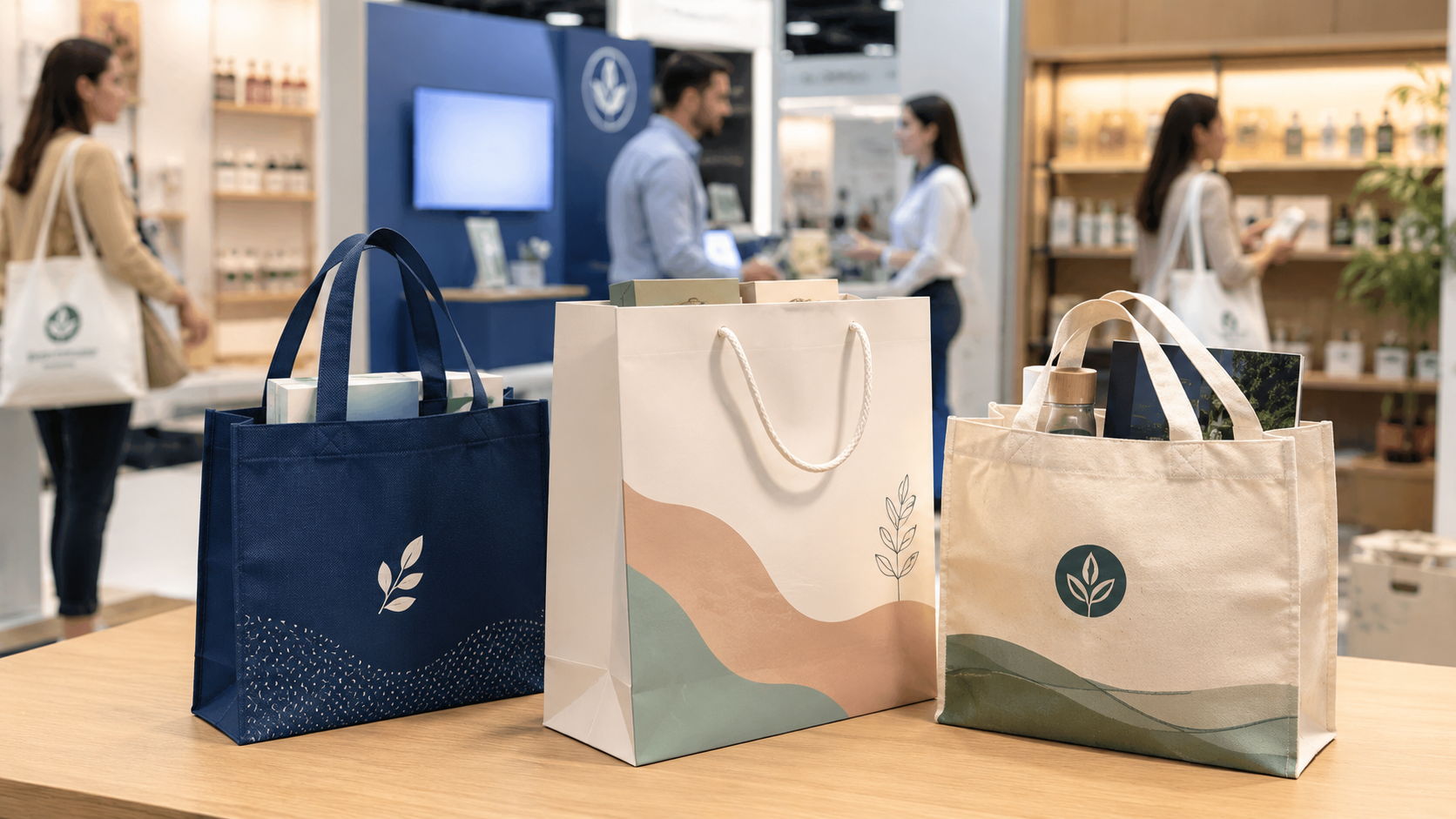
A shopping or retail bag carries store purchases, product samples, event materials, or retail gifts. It can be made from plastic, paper, non-woven fabric, cotton, canvas, or recycled material.
This bag fits retail stores, pop-up shops, exhibitions, product launches, supermarkets, and brand activations. Since people carry it in public, the logo can work like mobile brand exposure.
Material choice changes the message. A simple non-woven bag may fit high-volume promotions. A paper or fabric retail bag may work better when the product needs stronger presentation.
12. Paper Gift Bag
A paper gift bag is not meant for heavy carrying, but it improves product presentation. It works well for retail gifting, event kits, hospitality gifts, product launches, and lightweight packaging.
It may include rope handles, ribbon handles, kraft paper, matte lamination, glossy lamination, foil stamping, or spot UV. These details affect how premium the bag feels.
Paper gift bags can show a logo clearly on both sides. Buyers should check paper thickness, handle strength, finish, size, and packing method. Paper bags can bend or crease during shipping if the packing is not planned well.
13. Clear Stadium Bag
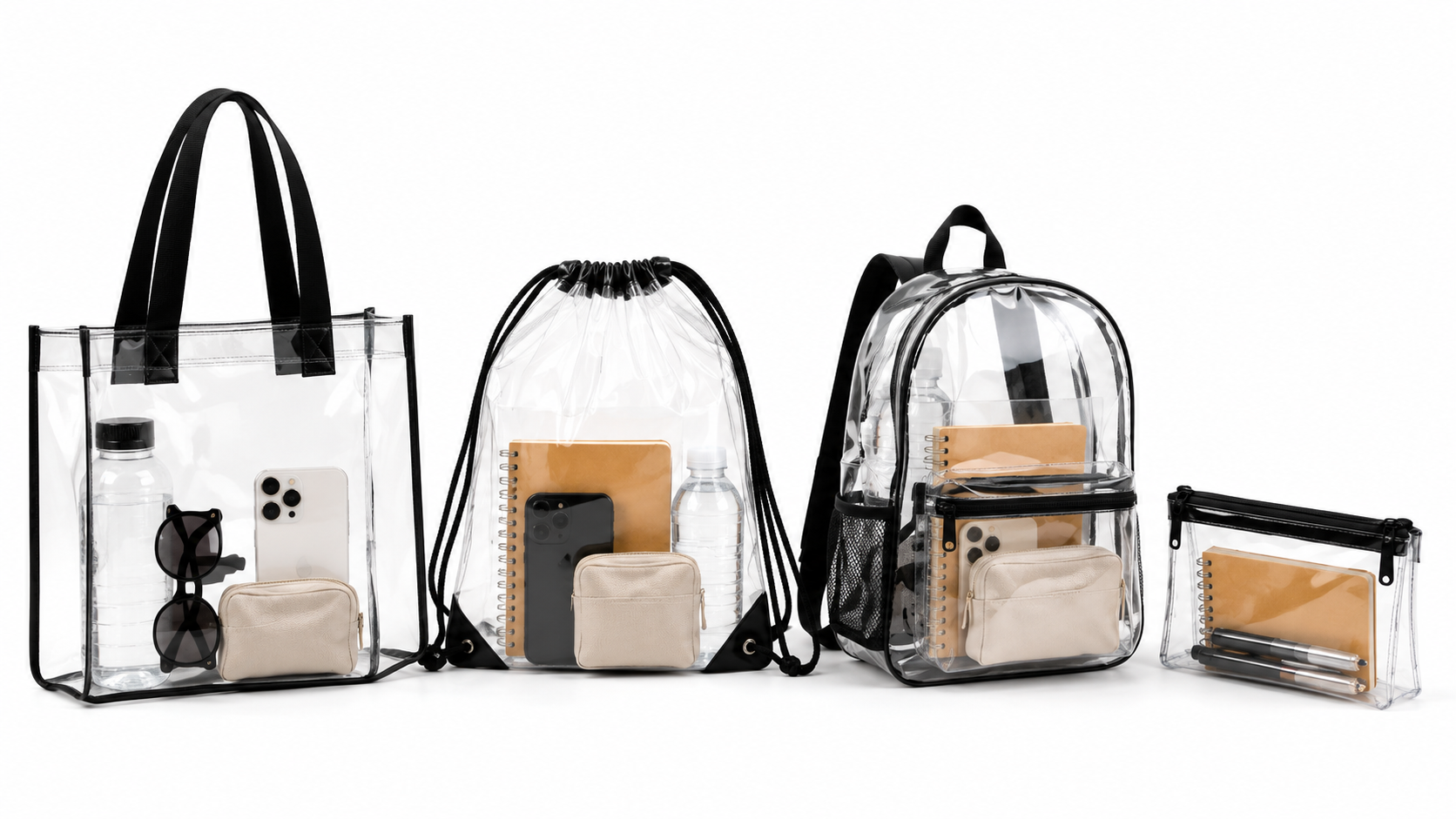
A clear stadium bag is designed for venues with security rules. It is often used at stadiums, concerts, sports events, schools, and large public venues.
The transparent design helps security staff check contents quickly. Common styles include clear tote bags, clear crossbody bags, and clear backpacks. Materials may include PVC, TPU, or similar transparent materials.
The main limitation is privacy. Users may not want to show all personal items. For event branding, clear stadium bags work best when venue rules matter and the logo does not block visibility.
14. Crossbody Bag
A sling or crossbody bag helps people reach essentials quickly. It keeps phones, wallets, passports, keys, tickets, and small accessories close to the body.
This style fits travel, festivals, tourism, city events, outdoor activities, and younger event audiences. It feels more secure than a tote because it stays close while people move.
It is not suitable for heavy loads or large gift sets. For branding, a small front logo, patch, rubber label, or zipper puller often looks more natural than a large print.
15. Waist Bag / Fanny Pack
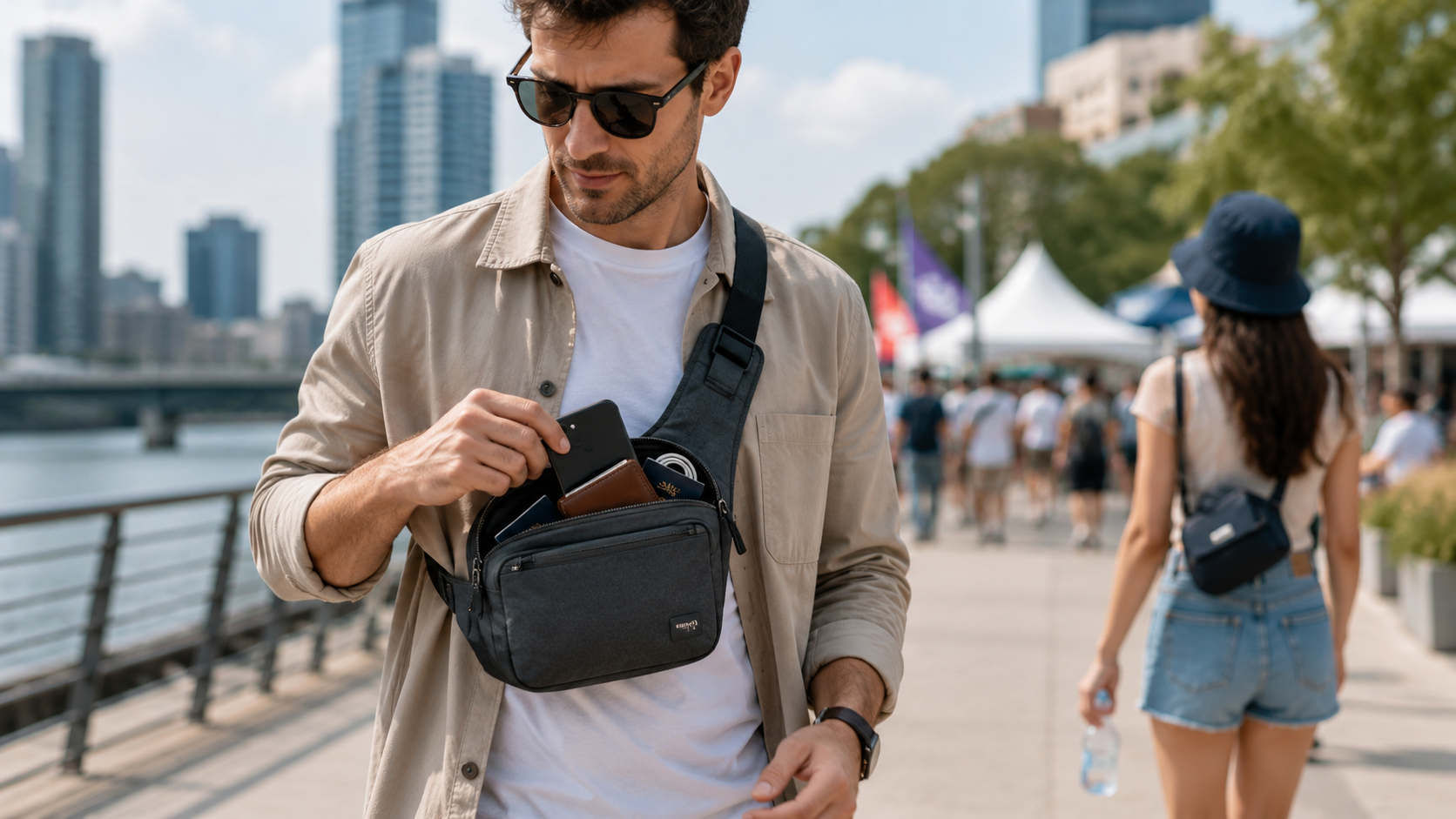
A waist bag, also called a fanny pack, is made for hands-free carry. People can wear it around the waist or across the chest.
This bag fits music festivals, marathons, sports events, tourism campaigns, volunteer programs, and active brand promotions. It keeps phones, wallets, keys, tickets, and small tools close without requiring a hand-carry bag.
Storage space is limited, so it should not be used for bulky items. Use this style for event merchandise and active campaigns where people need to move freely.

16. Garment Bag
A garment bag protects clothing such as suits, dresses, uniforms, costumes, or branded apparel. Its main role is to keep clothes clean, organized, and easier to transport.
This bag fits hotels, fashion brands, corporate uniform programs, event staff clothing, performance teams, and business travel programs. It is different from a laundry bag because it protects clothing rather than storing general items.
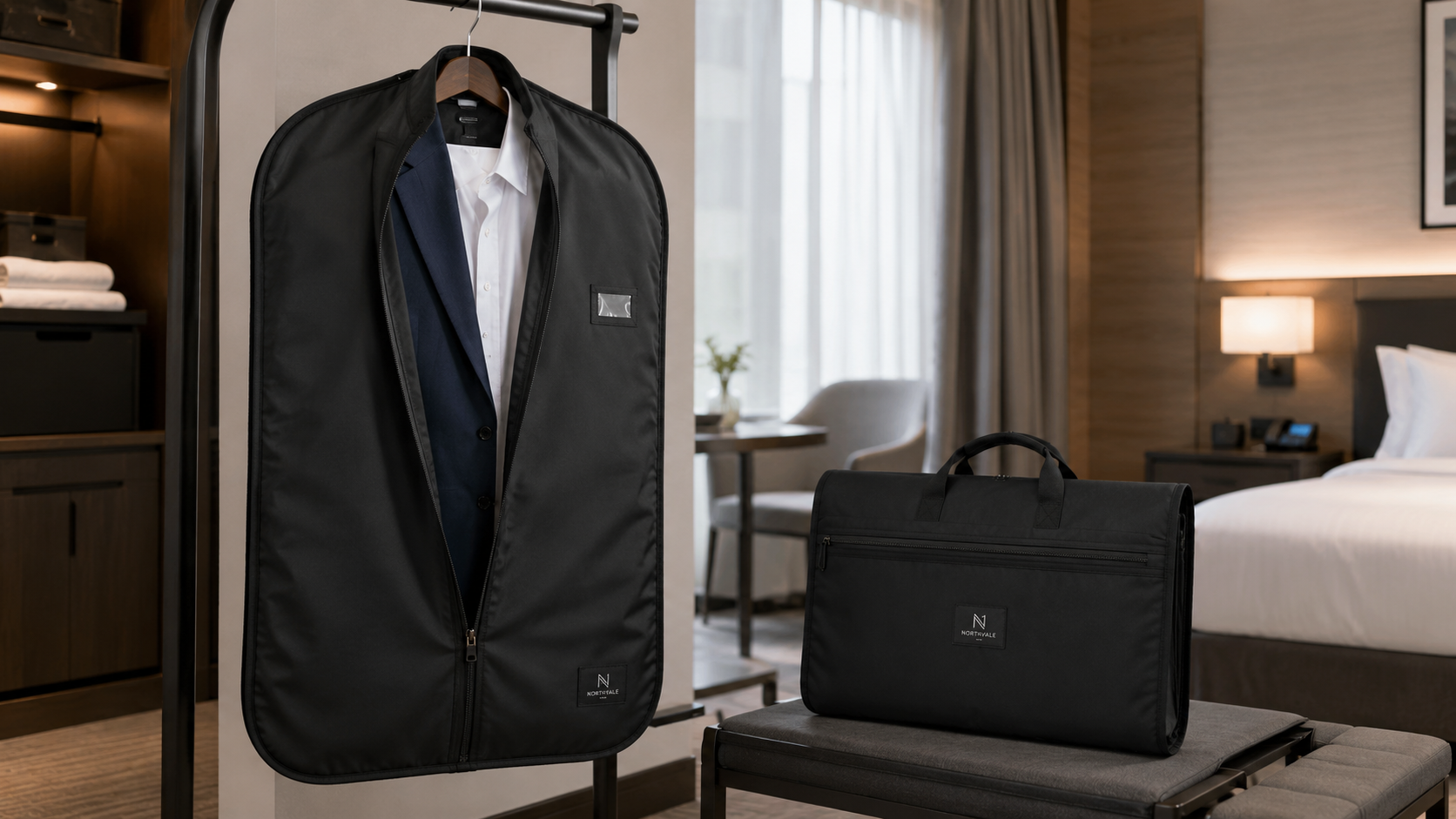
For custom branding, keep the design clean. A small logo, woven label, or simple front print usually works better than heavy artwork. Check the length, zipper, hanger opening, material thickness, and foldable structure before confirming the order.
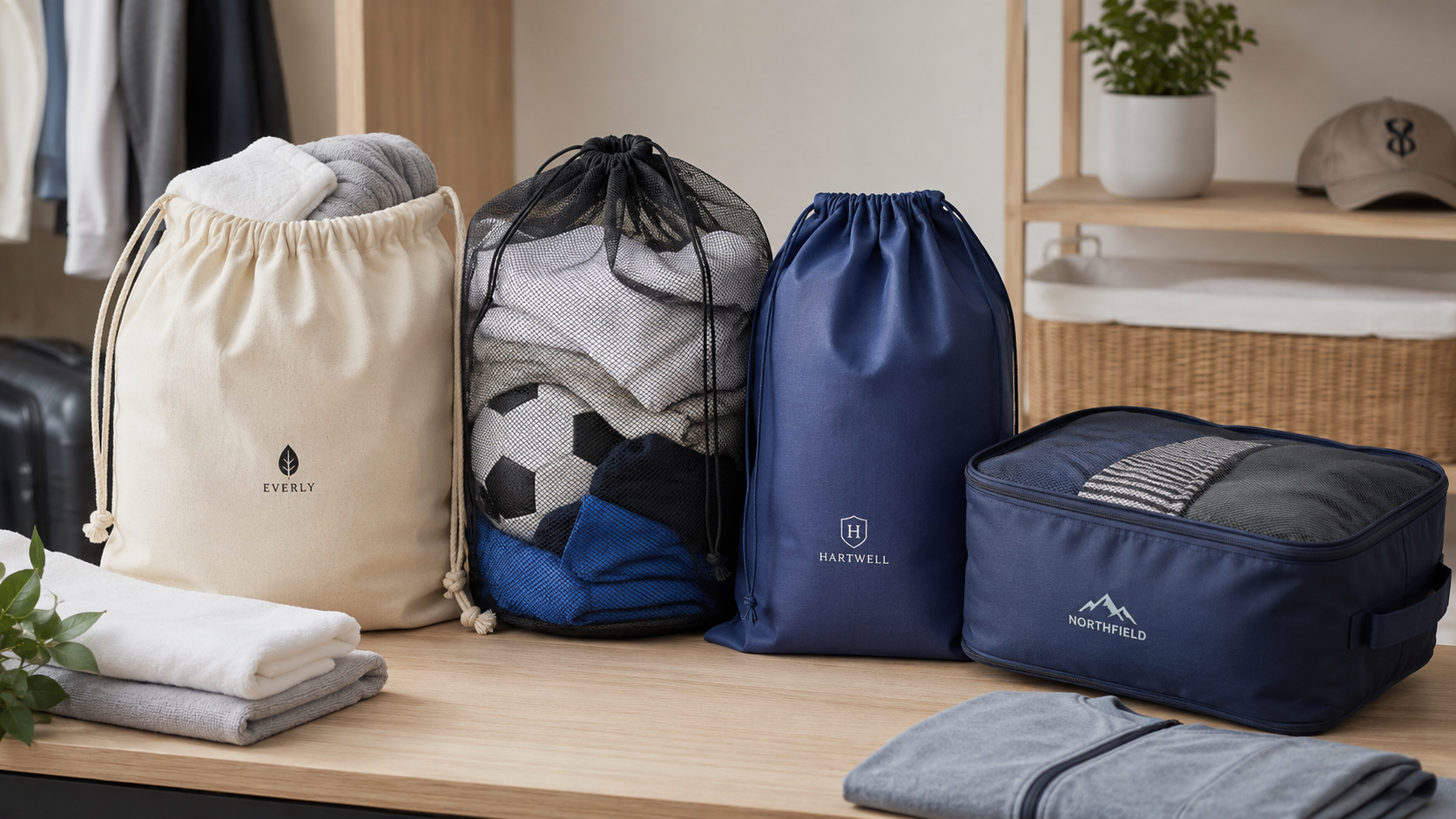
17. Laundry / Storage Bag
A laundry or storage bag is more about capacity and organization than fashion. It is used for laundry, linens, sports gear, travel items, hotel items, or general storage.
This type suits hotels, schools, dormitories, sports teams, travel kits, and practical promotional programs. Materials may include polyester, cotton, mesh, PEVA, or non-woven fabric.
They work for hotel laundry service, school welcome kits, sports team gear, or travel programs. Logo placement is usually simple and functional.
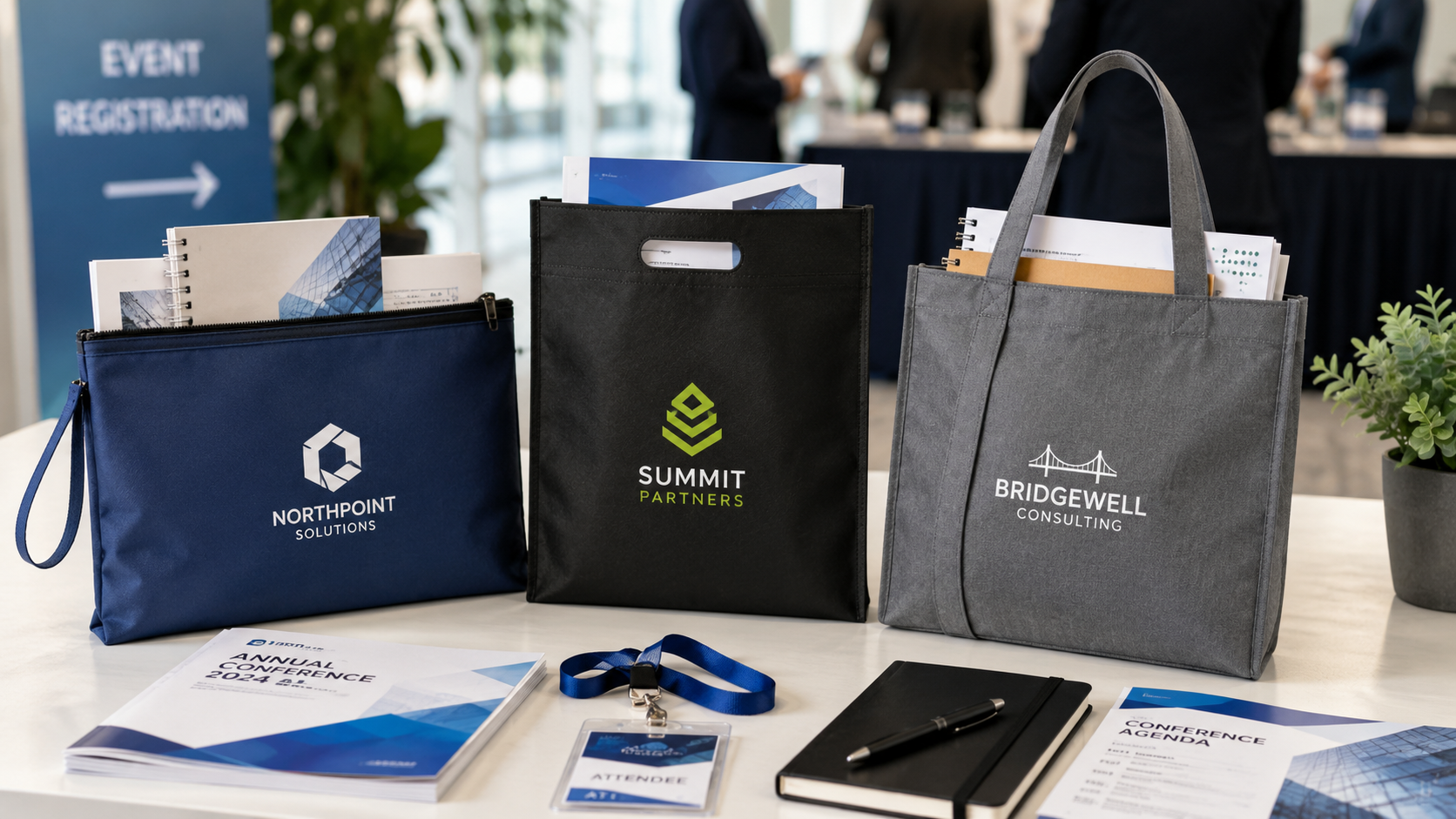
18. Conference / Document Bag
A conference or document bag is designed for brochures, notebooks, badges, documents, pens, catalogs, and event materials. It is usually lighter and simpler than a messenger bag or laptop bag.
This bag fits conferences, exhibitions, seminars, training programs, education events, and business meetings. It helps attendees keep materials organized during the event.
For custom branding, the front panel is usually the main logo area. A conference bag is practical when the goal is to distribute documents and keep event branding visible throughout the meeting or exhibition.
Other Bag Styles You May Also See
You may also see fashion-focused bag styles such as handbags, clutch bags, satchel bags, bucket bags, hobo bags, and designer shoulder bags. These are common in personal fashion and retail style guides.
For promotional projects, most buyers compare bags by use, capacity, material, logo area, and distribution needs. That is why this guide focuses on tote bags, backpacks, drawstring bags, travel bags, retail bags, conference bags, and other practical styles for events, gifts, travel, and branding.
Best Bag Types for Events, Gifts, Travel, and Retail
| Project / Use Case | Recommended Bag Types | Why |
|---|---|---|
| Trade show giveaway | Tote, drawstring, conference bag | Easy to distribute and print |
| Corporate gift | Backpack, laptop bag, messenger bag, canvas tote | Higher perceived value |
| Employee onboarding | Backpack, laptop bag, tote, toiletry bag | Useful for work and welcome kits |
| Sports event | Drawstring, duffel, waist bag, clear stadium bag | Easy to carry during activities |
| Retail packaging | Paper gift bag, shopping bag, tote bag | Supports product presentation |
| Hotel / resort | Toiletry bag, beach bag, laundry bag, garment bag | Fits guest amenities and travel needs |
| Outdoor campaign | Cooler bag, beach bag, duffel, backpack | More useful in outdoor settings |
| Travel kit | Toiletry bag, weekender bag, backpack, laundry bag | Helps organize travel items |
Use this table as a starting point, not a fixed rule. A good bag choice still depends on the recipient, product weight, use environment, logo needs, budget, and delivery schedule.
What to Check Before Ordering Custom Bags
For custom bag projects, the bag type is only the first decision. Material, stitching, handles, lining, zipper quality, logo method, packaging, and carton volume can all change the final result.
Match Material to the Bag Type
Do not choose material in isolation. The best material depends on what the bag needs to carry, how long it should last, and how the logo will be applied.
Tote and shopping bags may use non-woven fabric, cotton, canvas, jute, polyester, paper, or recycled material. Backpacks, laptop bags, and duffel bags often use polyester, nylon, or Oxford fabric. Cooler bags need outer fabric, insulation, and inner lining. Cosmetic and toiletry bags may use polyester, PU, PVC, mesh, or waterproof lining. Clear stadium bags usually use transparent PVC or TPU.
If sustainability is part of your project, avoid vague claims such as “green” or “eco-friendly” without support. The FTC Green Guides explain that environmental claims should be truthful and supported, especially when buyers compare reusable, recycled, or eco-focused bag materials.
Check Stitching, Handles, Zippers, and Lining
Bag quality is not only about fabric. A thick fabric will not save the project if the handle tears, the zipper jams, or the lining feels too thin for the items inside.
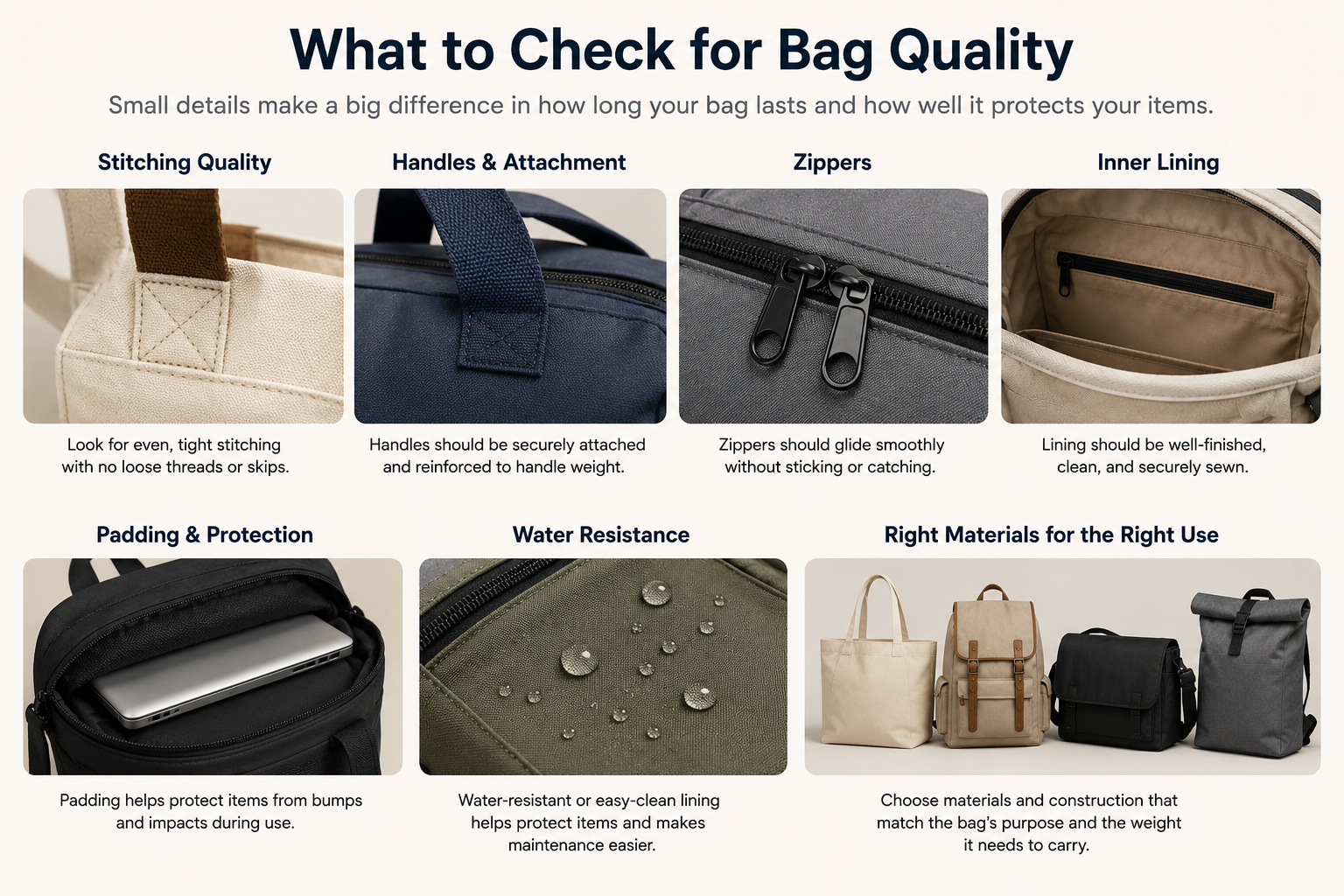
Check the stitching, reinforced handles, shoulder strap strength, zipper smoothness, inner lining, padding, insulation, and waterproof or easy-clean lining when needed. For bags that carry heavier items, handle strength and stitching matter more than appearance alone.
A simple tote bag may only need reinforced handles and clean stitching. A backpack needs stronger straps, padding, zippers, and compartments. A cooler bag needs insulation and lining quality. A paper gift bag needs enough paper thickness and handle strength to hold the product safely.
Choose Logo Placement and Decoration Method
Logo placement depends on the bag structure and material. Common placements include the front panel, pocket, strap, tag, patch, zipper puller, or packaging.
Common decoration methods include screen printing, heat transfer, embroidery, woven labels, rubber patches, and full-color printing. A large logo is not always better. A small woven label on a laptop bag may look more premium than a large front print. A large front logo may work better on tote bags, drawstring bags, conference bags, or paper gift bags.
Before production, confirm the logo file, logo size, color contrast, print position, and proof. This helps avoid a logo that looks good on screen but feels too small, too large, or poorly placed on the final bag.
Confirm Packing Size, Carton Volume, and Delivery Date
For bulk custom bags, buyers often compare unit price first. But the real project cost can change after checking packing size, carton volume, and delivery schedule.
Backpacks, duffel bags, cooler bags, and travel bags usually take more carton space than flat tote bags or drawstring bags. Paper gift bags need packing that protects the shape and finish. Gift-set bags may need to fit other products, so confirm the bag size before finalizing the full kit packaging.
Supplier note: The cheapest unit price is not always the lowest project cost. Bag size, fabric weight, lining, zipper quality, logo method, packaging, and carton volume can change the final budget. For large or structured bags, confirm packing size and shipping volume early.
FAQs
What are the main types of bags?
The main types of bags include tote bags, drawstring bags, backpacks, laptop bags, messenger bags, duffel bags, cooler bags, toiletry bags, travel bags, beach bags, retail bags, paper gift bags, clear stadium bags, sling bags, waist bags, garment bags, laundry bags, and conference bags.
Which bag type is best for events and giveaways?
Tote bags, drawstring bags, and conference bags are common for events and giveaways because they are easy to print, pack, and distribute. For sports or outdoor events, duffel bags, waist bags, clear stadium bags, and cooler bags may work better.
Which bag type is best for corporate gifts?
Backpacks, laptop bags, messenger bags, canvas totes, and travel bags usually work better for corporate gifts because they feel more practical and premium. The best option depends on the recipient, budget, logo style, and how often the bag should be reused.
What should I prepare before ordering custom bags?
Prepare the bag type, quantity, logo file, bag size, and material preference. Also share the logo position, packaging needs, budget range, and delivery date. For large or structured bags, check carton size and shipping volume before confirming the order.
Choose a Bag Around the Way People Will Use It
A custom bag project works better when the bag fits the real use first. Before choosing a style, think about what people will carry, how often they will use it, where the logo should appear, and whether the packing size fits your delivery plan. These details can help you avoid common problems such as weak handles, poor logo placement, oversized cartons, or bags that people only use once.
Start Your Custom Bag Project with TOMAS Crafts
TOMAS Crafts helps turn these details into practical custom bag solutions, from bag style selection and logo customization to sampling, quality checks, packing, and bulk order follow-up. Share your quantity, logo file, target use, budget, and deadline, and we’ll help recommend suitable options and prepare a clear quote.